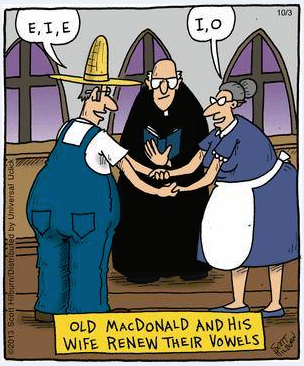
Posted by: Jack Henry | October 22, 2014

Nifty Nuggets: Colons

I’m back! Let’s get this party started!

Today I’m going to talk about colons. We use colons to introduce quotations, explanations, examples, and lists. What follows a colon can also be an explanation or summary of what precedes the colon. When not introducing a list, a colon indicates "this is what I am talking about" or "here is an example."

When using a colon, remember that the phrase preceding the colon must be a complete sentence.

Use colons in these circumstances:

· To introduce a clause or phrase that explains or restates what went before the colon

Example:

o This is the Synapsys interface: it is a customer relationship management product that presents complete profile information for members.

· To introduce a list

Example:

o The Acquire Option parameter has three possible settings: (0) None, (1) Individual, and (2) Consolidate.

· To introduce a bulleted list

Example:

o Choose one of these options:

§ Select (0) None if this service is a non-loan product which does not require information from the credit report.

§ Select (1) Individual if this service is designed to replace loans found on the credit report on a one-to-one basis.

§ Select (2) Consolidate if this service is designed to replace loans found on the credit report on a one-too-many basis.

· To separate title and subtitle (preferred instead of a hyphen)

· To express time and ratios when used between numbers

Per the JHA Style Guide for Technical Communication and Training, when using a colon to introduce a list, eliminate the words the following.

Example:

Incorrect: Entries include the following:

Correct: Entries include:

Symitar technical writers, please don’t give me the stink eye when I pass you in the hall. Do your best to avoid using the words the following when introducing a list.

Jackie Solano | Technical Editor | Symitar®

8985 Balboa Ave. | San Diego, CA 92123 | Ph. 619.542.6711 | Extension: 766711

Posted by: Jack Henry | October 22, 2014

Editor’s Corner: A Shambolic Holiday

The first time I heard the word “shambles” was in reference to my room, when Mom looked in and saw it needed a cleaning. More recently, we stayed at someone’s house and she referred to it as “shambolic,” and two days later we were in York, England, and ran into an entire area called “The Shambles,” pictured below. We were told, during our evening tour of York, that people weren’t very inventive with their names of streets in the 1400s. Castlegate is the street leading to the castle, Fishergate is where the fishmongers are, Swinegate is where you could buy three little piggies, and Grope Street (now Grape Street) was where you could buy…well, company for the evening.

So why “The Shambles”? Was this street particularly messy?

The Shambles, York, England

The answer is this: the word has evolved to mean a chaotic scene, a mess, or a disaster (like my room as a kid), but it does have an older meaning which will tie this all together. First, here are the newer definitions of shambles, from Merriam-Webster:

shambles

(noun, plural but usually singular in construction)

· a (1):a scene of great destruction <the imposing entrance … is a shambles and inside the quadrangle the great aula is demolished from a direct bomb hit — J. G. Gray>

(2)
: the result of great destruction: wreckage, wreck <have not cleaned up the shambles of bombing — Ruth Benedict><this buxom ball of fire makes a shambles of decorum — Irving Kolodin>

(3)
: the state of being wrecked <the bombers left the city in shambles>

· b: a place of mass slaughter or bloodshed <the bridge instantly became a shambles, every officer and man on that key position being either killed or wounded — Russell Grenfell>

· c (1): a scene of great disorder <the apartment became a shambles — S. J. Perelman><conference this year was an utter shambles chaired by an elderly lawyer who apparently could neither speak nor hear — A. F. Buchan>

(2): great confusion: mess <their ideals are vanity and illusion and their pretended moralities a shambles — Irwin Edman>

Before I tell you what “shambles” used to mean, I will give you one more hint. As you walk along this street you may notice hooks along the overhangs of the different stores. These are from the time the street was named, when “shambles” meant slaughterhouse. The word “shambles” also came to mean meat market and “shamble” was the name of the table where meat was exhibited for sale.

If you look back at the photo, you can see that in the middle of the street there are some trough-like low points: this was so the blood from the shops could easily flow downhill and away from the shops. It ended up in the river and at the Golden Fleece pub. The river and pub are still there—thank goodness the meat and the smells are gone!

Kara Church

Technical Editor, Advisory

Posted by: Jack Henry | October 21, 2014

Editor’s Corner: Dancing with Druids

Cheers all! Thank you Donna, Jackie, and Laura for sitting in the Editor’s Corner so I could go on vacation. While you entertained the audience and shared your wisdom on grammar and other things English, I was in England (and Scotland). Let me just say that at times, I really wondered if we all share a common language.

Right now my brain is still in a different time zone, but over the next couple of weeks I will share some of the new vocabulary I learned and maybe a few insights and stories about the land our language came from. Today I will share a few terms I learned on my trip to Stonehenge.

henge: A henge is a Neolithic earthwork, usually consisting of a circular or oval-shaped bank with an internal ditch. Maybe this would be easier to show you?

Arbor Low Henge

cursus: Cursus is the name given to large parallel lengths of banks with external ditches. They were originally thought to be Roman race courses and were therefore named cursus.

Stonehenge Cursus

lintel: (Not to be confused with lentil, the delicious legume used to make dal.) From Wikipedia: “A lintel can be a load-bearing building component, a decorative architectural element, or a combined ornamented structural item. It is often found over portals, doors, windows, and fireplaces.”

Post and Lintel Construction

sarsen: Sandstone blocks used in the construction of Stonehenge; found in quantity in the United Kingdom.

trilithon: A trilithon (or trilith) is a structure consisting of two large vertical stones (posts) supporting a third stone set horizontally across the top (lintel).

Stonehenge Trilithon

barrow: Term used in England to describe a large mound of earth (or stones) over the remains of the dead. Stonehenge is surrounded by many barrows.

Barrow near Stonehenge

For more information on Stonehenge, you can check out the Wikipedia page here.

Kara and Ray: happy, but freezing at Stonehenge.

Kara Church

Technical Editor, Advisory

Posted by: Jack Henry | October 20, 2014

Editor’s Corner: The Eight Parts of Speech

In the editing world, we’ve been talking a lot lately about jargon and specifically about how it often confuses our audience. When we talk about jargon, we’re talking about what Merriam-Webster describes as “the language used for a particular activity or by a particular group of people; a confused unintelligible language.”

Well, over the weekend, a friend asked me a grammar question. I gave her an answer that had to do with nouns, and pronouns, and adjectives, and as I was talking, I could see her eyes glaze over. And I realized that I was doing it; I was using jargon rather than plain English. So I stopped and I explained it in simpler, everyday terms.

So to redeem myself, I thought I’d give you a quick and easy synopsis of some of the basic jargon we all use when we talk about the English language: the eight parts of speech. And I’ll provide a brief explanation and a few examples (not complete lists) for each part of speech. I’ll also provide links to Wikipedia in case you want to delve deeper.

The eight parts of speech:

· Noun: A person, place, or thing [dbb – I’m using the term “thing” very broadly.]
Examples: Doug, Chicago, table, integrity, passion, hyperactivity

· Pronoun: A word that substitutes for a noun [dbb – There are many different types of pronouns:
personal, reflexive, reciprocal, possessive, demonstrative, indefinite, relative, and interrogative.]
Examples: You, myself, our, this, anyone, what, who

· Adjective: A word that describes or qualifies a noun or pronoun
Examples: big, clever, happy, frozen

· Verb: Any action, occurrence, or state of being [dbb – These are action words.]
Examples: walk, think, happen, be

· Adverb: A word that describes or qualifies an adjective, verb, clause, sentence, or other adverb [dbb – Adverbs
typically answer questions like “How?” “When?” “Where?”]
Examples: very, slowly, suddenly, now, soon

· Preposition: A word that creates relationships between other words
Examples: in, around, through, beside, from, for

· Conjunction: Words that connect sentences, clauses, or words within a clause
Examples: and, but, or, nor, yet

· Interjection: An emotional greeting or exclamation; often characterized by exclamation marks
Examples: aah, hmm, Phew!, Cheers!, Hooray!

And here’s a sad sign that proves the importance of thoughtful writing and careful editing:

Our friend, Kara, comes back to work tomorrow. Hooray!

Donna Bradley Burcher | Technical Editor, Adv. | Symitar®

8985 Balboa Ave. | San Diego, CA 92123 | Ph. 619.278.0432 | Extension: 765432

NOTICE: This electronic mail message and any files transmitted with it are intended
exclusively for the individual or entity to which it is addressed. The message,
together with any attachment, may contain confidential and/or privileged information.
Any unauthorized review, use, printing, saving, copying, disclosure or distribution
is strictly prohibited. If you have received this message in error, please
immediately advise the sender by reply email and delete all copies.

Posted by: Jack Henry | October 17, 2014

Editor’s Corner: Be Specific

One of the guidelines in the plain English standards from the JHA Style Guide for Technical Communication and Training is to write as specifically as possible (I realize you readers who are not JHA employees cannot access the link, I just want you to know I’m not making up this stuff). When you are specific in your writing, it is easier for the reader to understand. There is also less chance for confusion or misinterpretation.

Jackie Solano | Technical Editor | Symitar®

8985 Balboa Ave. | San Diego, CA 92123 | Ph. 619.542.6711 | Extension: 766711

Posted by: Jack Henry | October 16, 2014

Editor’s Corner: Anxious vs. Eager

Good morning to you all.

On Monday, I discussed two commonly confused words: envy and jealousy. Today I’m going to discuss two words that are more common in the business world but that are equally confused: anxious and eager.

Of these two words, anxious has a more negative connotation. Merriam-Webster explains that this word means “afraid or nervous especially about what may happen : feeling anxiety.” I feel anxious during a movie when I hear the creepy music that means something scary or violent is about to happen. I also feel anxious when someone says, “I have bad news.” And most people feel anxious before giving a presentation.

In contrast, the word eager has a positive connotation. According to Merriam-Webster, to be eager is to be “very excited and interested : feeling a strong and impatient desire to do something.” I feel eager when I’m getting ready to go on vacation. And I am eager to spend more time with my son before he joins the US Coast Guard.

So, although a lot of people are using these words interchangeably, I would never tell a client that I was anxious about an upcoming event, meeting, or presentation. I would put a positive spin on the situation and let the client know that I am eager to get started.

And on the other hand, I would never tell my sister that I am eager to take another trip to Las Vegas with her. She’s crazy wild. Anyway, I think Las Vegas banned her.

Donna Bradley Burcher | Technical Editor, Adv. | Symitar®

8985 Balboa Ave. | San Diego, CA 92123 | Ph. 619.278.0432 | Ext: 765432

Posted by: Jack Henry | October 15, 2014

Editor’s Corner: A or An?

Guten tag!

After last week’s “Inspiring Initialisms” email, one of our readers had a burning question about using a or an with numbers. Specifically, he asked whether it is correct to write “starts with a 1” or “starts with an 1.”

As we learned last week, a comes before words that begin with a consonant sound, while an comes before words that begin with a vowel sound. However, even after saying it out loud I was a little unsure what the number 1 sounds like, so I checked my handy-dandy online Merriam-Webster dictionary. (And if you’re giggling about the sound of the number 1, shame on you!)

Aha! By the power vested in Merriam-Webster, we pronounce the number 1 as ˈwən, which starts with the consonant w. So, according to the rule, you should write “a 1” because the number 1 starts with a consonant sound. You would still use a if you spelled out the number 1, because the word one is also pronounced ˈwən.

According to the 16th edition of the Chicago Manual of Style, section 5.72, the tricky y, h, and w sounds count as a consonant sound:

A comes before words with a consonant sound, including /y/, /h/, and /w/, no matter how the word is spelled {a eulogy} {a historic occasion} {a Ouachita tribe member}. An comes before words with a vowel sound {an LSAT exam room} {an X-Files episode} {an hour ago}.

In section 7.44, the authors further clarify that the same word can have a or an in front of it, depending on how the word is pronounced:

In the last two examples, 007 would be pronounced oh oh seven and double oh seven, respectively.

an 007 field (in a library catalog) [LB – An is in front because this 007 starts with the vowel sound
o in oh.]

a 007-style agent [LB –
A is in front because this 007 starts with the consonant sound d
in double.]

Now I’m craving some of the appropriately named A.1. sauce. Mmm.

Thanks,

Laura Bowers | Technical Writer | Symitar®

8985 Balboa Ave. l San Diego, CA 92123-1507

619.542.6935 l or Ext. 766935

NOTICE: This electronic mail message and any files transmitted with it are intended
exclusively for the individual or entity to which it is addressed. The message,
together with any attachment, may contain confidential and/or privileged information.
Any unauthorized review, use, printing, saving, copying, disclosure or distribution
is strictly prohibited. If you have received this message in error, please
immediately advise the sender by reply email and delete all copies.

Posted by: Jack Henry | October 14, 2014

Editor’s Corner: More Plain English

Hello! I’m back to tell you about the rest of the plain English standards from the JHA Style Guide for Technical Communication and Training. Here we go!

· Write as specifically as possible

o Incorrect: If you accept the default of 0 at this prompt, the specfile will not omit any open accounts based on the value in the Warning Code.

o Correct: If you accept the default of 0 at this prompt, the specfile will not omit any open accounts based on the value in the Warning Code field in the Account record.

· Break up noun clusters that have more than three nouns

o Incorrect: JHA is developing an interdepartmental employee relations improvement plan.

o Correct: JHA is developing a plan to improve relations among employees in different departments.

· Always start a paragraph with a topic sentence [JS] The first sentence in the paragraph should tell the reader what the rest of the paragraph is about.

· If anything in a paragraph does not support the topic sentence, create a new paragraph for the new information

· If you begin a command with a dependent clause, separate it from the main clause with a comma

o Incorrect: On the Tools menu select Options.

o Correct: On the Tools menu, select Options.

· Begin a caution with a simple and clear command

o Incorrect: Once locked, the Forecast cannot be unlocked.

o Correct: Make sure you have made all the needed changes to the Forecast. Once locked, the Forecast cannot be unlocked.

· Do not leave out articles

o Incorrect: ODP system has set minimum for all methods.

o Correct: The ODP system has a set minimum for all methods.

Jackie Solano | Technical Editor | Symitar®

8985 Balboa Ave. | San Diego, CA 92123 | Ph. 619.542.6711 | Extension: 766711

NOTICE: This electronic mail message and any files transmitted with it are intended
exclusively for the individual or entity to which it is addressed. The message,
together with any attachment, may contain confidential and/or privileged information.
Any unauthorized review, use, printing, saving, copying, disclosure or distribution
is strictly prohibited. If you have received this message in error, please
immediately advise the sender by reply email and delete all copies.

Posted by: Jack Henry | October 13, 2014

Editor’s Corner: Don’t Be Jealous

Good morning!

I was looking through a list of common grammar mistakes this morning, and I stumbled on two commonly misunderstood and misused words: envy and jealousy.

According to a column called 20 Common Grammar Mistakes That (Almost) Every Makes by Jon Gingerich: “The word ‘envy’ implies a longing for someone else’s good fortunes. ‘Jealousy’ is far more nefarious. It’s a fear of rivalry, often present in sexual situations. ‘Envy’ is when you covet your friend’s good looks. ‘Jealousy’ is what happens when your significant other swoons over your good-looking friend.”

So it turns out that I am envious (not jealous) that Kara is enjoying an exciting vacation in the United Kingdom.

Jealousy is what happens to my husband whenever I mention one of my ex-boyfriends (at every family get-together). I don’t have an actual photo of my husband to share, but this is what his jealous face looks like:

Donna Bradley Burcher | Technical Editor, Adv. | Symitar®

8985 Balboa Ave. | San Diego, CA 92123 | Ph. 619.278.0432 | Ext: 765432

Posted by: Jack Henry | October 10, 2014

Editor’s Corner: Plain English

Today I am going to talk about JHA’s standards for technical communication. If you do not work for JHA, you will not be able to access the following link. Don’t panic, I’m including the standards in this email.

The JHA Style Guide for Technical Communication and Training has a section dedicated to plain English and plain English standards. The following information is taken from that marvelous document.

Plain English is a clear and concise style of writing that is written in the proper tone with the reader in mind.

Plain English is:

· Faster to write

· Faster to read

· Easier to understand

Plain English is not:

· Childish writing

· Amateur writing

· A means of reducing the length or changing the meaning of your material

· A means of banning words

· A rigid set of words with grammar rules

Not only does writing in plain English help to standardize our company’s documentation, it improves the readability of our documentation.

Since it’s Friday, I’ll leave you with a few plain English standards from the JHA Style Guide for Technical Communication and Training that JHA employees should follow when writing documentation. I’ll fill you in on the rest of plain English standards next week.

· Keep your sentences as short as possible

· Prefer the active voice over the passive voice

· Always use the active imperative in instructions; this includes instructional portions of paragraphs as well as steps

o Incorrect: The parameter should be set to No.

o Correct: Set this parameter to No.

· Avoid nominalizations

o Incorrect: Begin report generation.

o Correct: Generate the report.

· Use positive language when possible

o Incorrect: Do not delete any letter that may still be in use.

o Correct: Keep the letters that you may still use.

· Use lists when appropriate

o Incorrect: The four Dashboard tabs are Financial Analysis, Operations Analysis, Performance Analysis, and Risk Analysis.

o Correct: The four Dashboard tabs are:

§ Financial Analysis

§ Operations Analysis

§ Performance Analysis

§ Risk Analysis

· Do not use different words to describe or refer to the same thing

o Incorrect: Number indicates the number of the option and defines where the setting appears on the menu.

o Correct: Number indicates the number of the option and defines where the option appears on the menu.

Jackie Solano | Technical Editor | Symitar®

8985 Balboa Ave. | San Diego, CA 92123 | Ph. 619.542.6711 | Extension: 766711

NOTICE: This electronic mail message and any files transmitted with it are intended
exclusively for the individual or entity to which it is addressed. The message,
together with any attachment, may contain confidential and/or privileged information.
Any unauthorized review, use, printing, saving, copying, disclosure or distribution
is strictly prohibited. If you have received this message in error, please
immediately advise the sender by reply email and delete all copies.

« Newer Posts - Older Posts »

Categories