Posted by: Jack Henry | July 30, 2024

Editor’s Corner: Suspect or Expect?

Good morning, friends.

While use of the words suspect and expect does not seem to be an issue for most people, a good friend asked me to explain the difference, so I thought maybe it was worth discussing here. Let’s start with some inquiry:

· When dark clouds are gathering, and you declare that it could rain this evening—do you expect it might rain or suspect it might rain?

· When Fatima bursts into the room with a red face, do you expect or suspect that she is angry?

· When you’re told that Uncle Seamus, who vowed never to get married is engaged to a very wealthy heiress, do you expect or suspect that he’s marrying her for her money?

I bet you have some good guesses about which word to choose in each of the examples above, but maybe you’re not sure why. That’s where I come in! I think, maybe, you expect me to provide a distinction between the two words. Expectation granted!

When you expect something, you have some proof or evidence that it is likely to occur. If you see dark clouds rolling in, there’s a good chance that it will rain.

When you suspect something, you have weaker proof, or maybe just a feeling—basically, you are simply guessing. Fatima’s red face and quick entrance could signal anger, but it could be something else entirely—she could be running late for an appointment, or she could have been out for a run.

The example about Uncle Seamus is a little more difficult, but there is still a pretty clear choice. We do have a suspicion that he’s gold digging since he vowed never to get married, but we really don’t have any proof, so until we have more evidence, we only suspect his motives.

To reiterate, use expect when you have proof or evidence that something will happen and use suspect when you have a feeling or a suspicion that something might happen.

I’m expecting today to be a good day. What’s my evidence? It’s a sunny day, I have a happy dog, and I’m having pizza for dinner. What can go wrong?

Donna Bradley Burcher |Technical Editor, Advisory | jack henry

Pronouns she/her/hers

Symitar Education Resources (sharepoint.com)

About Editor’s Corner

Editor’s Corner keeps your communication skills sharp by providing information on grammar, punctuation, JHA style, and all things English. As editors, we spend our days reading, researching, and revising other people’s writing. We love to spend a few extra minutes to share what we learn with you and keep it fun while we’re doing it.

Did someone forward this email to you? Click here to subscribe.

Don’t want to get Editor’s Corner anymore? Click here to unsubscribe.

Do you have a question or an idea for Editor’s Corner? Send your suggestions or feedback to Kara and <a href="mailto:DBurcher.

NOTICE: This electronic mail message and any files transmitted with it are intended
exclusively for the individual or entity to which it is addressed. The message,
together with any attachment, may contain confidential and/or privileged information.
Any unauthorized review, use, printing, saving, copying, disclosure or distribution
is strictly prohibited. If you have received this message in error, please
immediately advise the sender by reply email and delete all copies.

Good day!

We all love words—at least this gang does. English is jam-packed with wonderful words that are borrowed from other languages and peculiar old English words that have evolved in tortuous ways. Some of those words, like the word tortuous, sound like they mean something other than what they actually mean.

The word tortuous sounds like it should mean painful—because it’s very similar to the word torturous (which has an extra r). However, tortuous (without the extra r) actually means winding or twisting, which aptly describes the evolution of so many English words.

Way back in 2023, I shared a list of words that don’t mean what you think they mean, and tortuous was on that list. Today, I want to share some other words that have meanings that might surprise you. It’s always good to expand our vocabulary, and some of these words are going to be fun to torture my family with.

  • bodkin (noun): dagger, bayonet

Hester is not a violent person, but she carries a bodkin in her handbag to protect herself.

  • commodious (adj): spacious and convenient; roomy

Tanzy’s house has such commodious closets!

  • crapulous (adj): intoxicated, inebriated

Agatha called Neville a crapulous spendthrift.

  • crepuscular (adj): of, relating to, or resembling twilight; dim

Foxes tend to show crepuscular or nocturnal activity patterns.

  • funambulist (noun): tightrope walker

Freida the funambulist was the best act in the entire show!

  • halitosis (noun): offensive bad breath

She’s very sweet, but she has horrible halitosis.

  • noisome (adj): noxious, harmful

The environment at the event was uncomfortably noisome.

  • nugatory (adj): of little or no consequence

Dixon made comments that were too nugatory to merit attention.

  • prestidigitation (noun): sleight of hand; magic trick

Houdini’s powers of prestidigitation are legendary.

  • prevaricate (verb): to deviate from the truth; equivocate

Hank was willing to prevaricate on the witness stand to protect his brother.

  • probity (noun): adherence to the highest principals and ideals; uprightness

As a religious leader, she strives to be a person of indisputable probity.

  • pulchritude (noun): physical comeliness

Everyone agrees, Yuri and Tatyana are specimens of glorious pulchritude.

Now come on—you have to admit that was interesting, not nugatory. Just admit it, and then you can go on and enjoy the rest of your day. Happy Thursday!

Donna Bradley Burcher |Technical Editor, Advisory | jack henry

Pronouns she/her/hers

9660 Granite Ridge Drive, San Diego CA 92123

Symitar Education Resources (sharepoint.com)

About Editor’s Corner

Editor’s Corner keeps your communication skills sharp by providing information on grammar, punctuation, JHA style, and all things English. As editors, we spend our days reading, researching, and revising other people’s writing. We love to spend a few extra minutes to share what we learn with you and keep it fun while we’re doing it.

Did someone forward this email to you? Click here to subscribe.

Don’t want to get Editor’s Corner anymore? Click here to unsubscribe.

Do you have a question or an idea for Editor’s Corner? Send your suggestions or feedback to Kara and <a href="mailto:DBurcher.

NOTICE: This electronic mail message and any files transmitted with it are intended
exclusively for the individual or entity to which it is addressed. The message,
together with any attachment, may contain confidential and/or privileged information.
Any unauthorized review, use, printing, saving, copying, disclosure or distribution
is strictly prohibited. If you have received this message in error, please
immediately advise the sender by reply email and delete all copies.

Posted by: Jack Henry | July 23, 2024

Editor’s Corner: Time for a summer haircut?

Good morning, hot tamales! It seems the world is overheating everywhere you gowell, at least in the U.S. these days. To get away from it all, my husband and I filled a kiddie pool with ice and hopped in! No, not really. We did something boring and middle-aged: we started watching Shun.

Not the one from 1980, though I remember watching that with my dad. We started on the 2024 version. But what does my nighttime entertainment and a show about Japan have to do with English?

Im glad you asked! There was a scene with a Portuguese Jesuit priest, sporting a stunning shaved coiffure, and I ask aloud, Whats up with that hairdo, anyway?

We asked Google about it, and the response I heard was something about tonsils. That could not be right. I got on the computer and searched Google online and found my answer: tonsure. According to Wikipedia, tonsure is shaving the hair as a

sign of religious devotion or humility. The term originates from the Latin word tonsura (meaning "clipping" or "shearing") and referred to a specific practice in medieval Catholicism, abandoned by papal order in 1972.

Though abandoned by the Pope, tonsure is still practiced these days by many religions and is a symbol of modesty or giving up worldly fashion and vanity as part of religious devotion. For example, some Catholic orders, Easter Orthodox church members, Buddhists, Hindus, and Islamic people still shave their heads or part of their heads.

Tonsure occurs at different times in life as part of a religious ceremony. It could be when joining a religion or as a particular religious ritual. In India, tonsuring (or Mundan) occurs as part of a ceremony for young children. Here is a little bit more information, from hindutsav.com:

By shaving off the first natural hair of the baby and immersing it in the holy river Ganga, we purify them from the thoughts, impurity, and karma of the past life.

It is also believed that tonsuring blesses the child with a healthy and long life. It is believed that the impurities during the pregnancy are also removed by shaving off the hair.

Many religions perform the ritual of shaving a babys head after birth. Not only Hindus but Muslims, Jews, Mongolians, Polish, etc. perform Mundan or tonsure. The tradition of shaving baby hair is common in parts of Asia and some Latin American countries. While the ceremonys names may differ, it is performed in several religions and countries worldwide.

I found it interesting that this isnt just a Catholic fashion saved for the monks. It is a much broader practice covering all ages and many religions. Still, I dont plan on getting a new haircut any time soon.

Kara Church | Technical Editor, Advisory | Technical Publications

Pronouns: she/her | Call via Teams | jackhenry.com

Editors Corner Archives: https://episystechpubs.com/

Posted by: Jack Henry | July 18, 2024

Editor’s Corner: Let’s All Go to Hospital

Greetings to you!

Today’s topic has been on my mind for some years now, and I finally decided to discuss it here. It’s a small but curious difference between British and U.S. English.

Here in the States, we add the article the before the word hospital. We say, “I’m going to the hospital.” In the UK, they say, “I’m going to hospital.”

The British phrasing has always sounded odd to me. I thought that dropping the was just another quaint British quirk. And then a while back I did a little digging and found out that what I thought was an oddity of British English is actually an oddity of U.S. English. We Yanks are not consistent in this phrasing—we don’t always add the—and I realized that there really isn’t much logic behind how and when we do use the in terms like the hospital. Here are some examples of when we don’t use the:

We say, “We go back to school in August,” not “to the school.”

And we say, “After high school, I went to college,” not “to the college.”

And not that any of you have reason to say this, but hypothetically speaking, you would say, “I was convicted and went to prison,” not “to the prison.”

My research did not turn up any rule or reason for this usage or the inconsistency. This just seems to be one more regional difference between British and U.S. English.

So, put that in the boot of your car and drive off down the dual carriageway.

Donna Bradley Burcher |Technical Editor, Advisory | jack henry

Pronouns she/her/hers

9660 Granite Ridge Drive, San Diego CA 92123

Symitar Education Resources (sharepoint.com)

<![if !vml]><![endif]>

About Editor’s Corner

Editor’s Corner keeps your communication skills sharp by providing information on grammar, punctuation, JHA style, and all things English. As editors, we spend our days reading, researching, and revising other people’s writing. We love to spend a few extra minutes to share what we learn with you and keep it fun while we’re doing it.

Did someone forward this email to you? Click here to subscribe.

Don’t want to get Editor’s Corner anymore? Click here to unsubscribe.

Do you have a question or an idea for Editor’s Corner? Send your suggestions or feedback to Kara and <a href="mailto:DBurcher.

NOTICE: This electronic mail message and any files transmitted with it are intended
exclusively for the individual or entity to which it is addressed. The message,
together with any attachment, may contain confidential and/or privileged information.
Any unauthorized review, use, printing, saving, copying, disclosure or distribution
is strictly prohibited. If you have received this message in error, please
immediately advise the sender by reply email and delete all copies.

Posted by: Jack Henry | July 16, 2024

Editor’s Corner: German Words

Good morning, friends!

As most of you know, when studying English, I also love to see what other languages have to offer. Today I’m going to look at a few German words that English speakers think we could use, such as Backpfeifengesicht, “a face that is badly in need of a fist.” These words are sometimes called untranslatables:

“…single words whose definitions are wonderfully specific or complex enough that, when translated into another language, they require numerous words to express the same idea.”

From Dictionary.com, here are a few to start with. Since I don’t speak anything outside of Hogan’s Heroes German, I’m going to let the experts define how to say these terms and what they mean.

blaumachen

If you’re suffering from a case of the Mondays, you might be tempted to blaumachen [ blou-makh-in ]. Blaumachen means “to skip work” or “to play hooky” for no good reason. Blau translates to “blue” and machen means “to make,” so taken together, blaumachen is “to make blue.” What does shirking your responsibilities have to do with making something blue?

Well, the idea of blaumachen comes from “making a Blue Monday.” Traditionally in German culture, a Blue Monday (blauer Montag) was a day people chose not to work, either due to observing a celebration (or after celebrating too much). The blue is thought to originate as a reference to clothing worn on Sundays and holidays. The blue is sometimes connected to the use of the color around the period of Lent in the Lutheran church.

Luftschlösser bauen

We all have hopes and dreams, but if your dreams are extravagant, you might be accused of Luftschlösser bauen [ looft-shles-uh bou-in ], or “building castles in the air.” The German verb bauen means to “build.” Das Luftschloss (die Luftschlösser in the plural) is a “daydream” or “pipe dream,” but it literally means “air castle” (Luft means “sky,” and Schloss means “castle”).

The idea of Luftschlösser bauen runs parallel to the old French expression faire des châteaux en Espagne, “to make castles in Spain” (i.e., a difficult task in a country you don’t rule), first recorded in the 13th century. Whatever the construction and whatever the language, the expression building castles in the air is dismissive of fanciful plans that will never pan out.

quatschen

Don’t talk nonsense—or, as they may say in German, nicht quatschen. Quatschen [ kvach-in ] is a German word that translates as “to talk nonsense, babble, gossip, chatter” and is said to be a favorite of German schoolteachers trying to get their students to zip it.

The etymology of quatschen is unclear. It’s possible that it comes from the sound of stepping into mud or something else squishy. It’s also suggested that the word comes from the Low German word quat, which means “bad, evil.”

The related Quatsch! can be issued as an interjection to express disbelief or dismissal akin to the English baloney or nonsense.

A few more next time!

Kara Church | Technical Editor, Advisory | Technical Publications

Pronouns: she/her | Call via Teams | jackhenry.com

Editor’s Corner Archives: https://episystechpubs.com/
Posted by: Jack Henry | July 11, 2024

Editor’s Corner: Polysemy

Good morning, good people!

Today, I’m taking a break. It’s summer, and even though it is foggy out right now, I’m pretending to be on vacation! Here is one of Richard Lederer’s articles on English. I’ve heard from some of you about how many words in English have multiple meanings, and here is a take on the same topic from Richard and the San Diego Union-Tribune. The full article is at the link.

DEAR RICHARD: The word buck has nine different definitions as presented in dictionary.com.

This set me to wondering “Is there a definition of words with many definitions? What words in the English language are like this? Which has the most? How does this happen to begin with?” — Michael Stewart, Scripps Ranch

If you need a fancy term for multiple meanings of a word, it’s polysemy, from the Greek poly, “many,” as in polygamy, and sem, “signification, meaning,” as in semantic. Polysemy is common for nouns, verbs, and modifiers because there are more objects and ideas in the world than there are words for them, so many words have to do double (or more) duty.

Take the plain, little word run. Turns out it’s actually our longest word, in the sense that with 645 — you read that right: 645! —meanings, run takes up more room in our fattest dictionaries than any other word. How many meanings can run have beyond “to move rapidly on alternate feet”? Well, you can run a company, run for the school board, run the motor of your car, run a flag up a pole, run up your debts, run your stocking, run your mouth, run a fence around a property, run an idea past a colleague, run the numbers, run an antagonist through with your sword, run an ad in a newspaper, run into a childhood friend, never run out of meanings for run — and your nose can run and your feet can smell.

Run takes up half again as much space as its nearest polysemous competitor, put, which itself is far more polysemous than the third word in this category, set. So the three “longest” words enshrined in our dictionaries are each composed of three letters.

Rounding out the top ten most polysemous words, each but a single syllable are, alphabetically, cast, cut, draw, point, serve, strike, and through.

There you have it! Take that to your local trivia night and win…something. 😊

Kara Church | Technical Editor, Advisory | Technical Publications

Pronouns: she/her | Call via Teams | jackhenry.com

Editor’s Corner Archives: https://episystechpubs.com/

Posted by: Jack Henry | July 9, 2024

Editor’s Corner: Paralanguage and the Hand Purse

Good morning, folks. The other day I talked about a term, parasocial, that I learned at one of the B.I.G. meetings. While I was researching that, I found another term: paralanguage.

I find this term and what it represents fascinating, so here is more about it from me and Paralanguage:

Paralanguage (also called vocalics) refers to the non-verbal elements of communication that accompany spoken language. Key elements of paralanguage include:

  1. Prosody: Rhythm, intonation, and stress patterns of speech.
  2. Pitch: Highness or lowness of your voice.
  3. Volume: Loudness or softness of speech.
  4. Rate: Speed at which you speak.
  5. Non-fluency features: Hesitations, pauses, fillers, and stutters.

Paralanguage allows us to understand people even when they are speaking a different language. Imagine you are at an Italian restaurant and the two people next to you are from Italy. You don’t know much more than “Grazie!,” but you can tell that it is a serious conversation because of the distance between the couple, the frowns on their faces, their bodies tilting away from each other, and the ever-growing volume of their speech. Is it a couple meeting to confess their undying love for each other? I think not, but why? Because there are aspects of their paralanguage that we recognize as unhappy, upset, and discontent.

Note, however, that paralanguage is interpreted differently from culture to culture. For example, in Japan, looking down and avoiding eye contact is considered a sign of respect, whereas in Western cultures we see avoiding eye contact as suspicious or dishonest.

In Greece, when indicating “no,” they tilt their heads up and click their tongues—which to a lot of Americans looks like they’re nodding “yes.” To make it even more confusing, to indicate “yes,” sometimes all you get is a half-nod of the head from left to right. Americans see this as the Greeks shaking their heads “no.” Before you try “translating” paralanguage in another country, research the differences between here and there (wherever you are)!

If you’d like to read more about paralanguage, see the bazillion sections on Wikipedia.

*******************************************************************************

Here’s an example I found after originally writing this article, from a website recommended on LinkedIn Learning from the folks at The Science of People, called 60 Hand Gestures You Should Be Using And Their Meaning. This is a good example of a body language cue that has different meaning, depending on what country you are in.

The Hand Purse

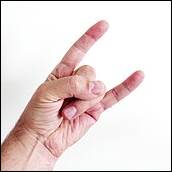
The purse can be formed when all fingertips come together on one hand and the palm is turned upward. It can also involve an up-and-down motion.

What it Means: Generally, this is used to show something is good. Often, the hand will “beat down” while key words are uttered.

The purse can also mean different things, depending on your location.

  • Greece and Turkey: “Good.”
  • Spain: “Lots of” something.
  • Malta: Implies heavy sarcasm.
  • Tunisia: Indicates caution, as in to take things slowly.
  • France and Belgium: “I am afraid.”
  • Italy: “What’s the matter, what’s up?”

I didn’t look at the whole article—but they provide some real-life examples (like Shark Tank) with people demonstrating the gestures. It’s a whole new world of paralanguage!

Kara Church | Technical Editor, Advisory | Technical Publications

Pronouns: she/her | Call via Teams | jackhenry.com

Editor’s Corner Archives: https://episystechpubs.com/

Posted by: Jack Henry | July 2, 2024

Editor’s Corner: The Last of the State Nicknames

It’s time for the last (but not least) ten state nicknames in our list from Explore. I hope you’ve learned some new information or maybe come up with a fun vacation plan to visit some of our United States. Wherever you are, I hope you have a safe and happy 4th of July!

South Dakota

  • Nicknames: Mount Rushmore State, Coyote State
    In 1992, South Dakota officially adopted the nickname the Mount Rushmore State in honor of its most famous landmark. It also is home to underrated national parks such as Badlands National Park.

Tennessee

  • Nickname: Volunteer State
    If you’ve ever wondered why the University of Tennessee’s mascot is the Volunteers, it’s tied to the state’s nickname. Tennessee clinched the nickname the Volunteer State during the Mexican-American War when the federal government called for 2,800 people to help fight and more than 30,000 Tennessean soldiers volunteered.

Texas

  • Nickname: Lone Star State
    Texas gets its nickname from the single star on its state flag and on the state seal, which were created after Texas won its independence from Mexico and became its own republic in 1836. Texas kept this design even after joining the Union in 1845 and has maintained a reputation for its independent spirit.

Utah

  • Nickname: Beehive State
    Utah’s state name is the Beehive State, and that’s not because it produces a lot of honey or has a large bee population. The state’s first Mormon settlers chose this emblem to represent cooperation and hard work and to make a religious reference to the Biblical "land of milk and honey."

Vermont

  • Nickname: Green Mountain State
    The Green Mountains don’t just run through Vermont, they indirectly gave the state its name. Vermont comes from the French "vert mont," meaning "green mountain." The British seized the territory from France after the French and Indian War, and Vermont eventually joined the Union as the 14th state in 1790.

Virginia

  • Nicknames: The Old Dominion
    Virginia was the first of the overseas dominions of the kings and queens of England, joining Ireland, Scotland, and France under English rule. As a colony, Virginia also stayed loyal to King Charles I and his son Charles II during the English Civil War. The University of Virginia references this in its mascot; supporters of either Charles were known as "Cavaliers."

Washington

  • Nicknames: Evergreen State
    Seattle realtor C.T. Conover proposed the simple nickname the Evergreen State for Washington’s lush evergreen forests. Though the nickname is widely used, it has never been officially adopted by the state legislature.

West Virginia

  • Nickname: Mountain State
    After splitting from Virginia, West Virginia became the 35th state in the Union and adopted the simple nickname the Mountain State. West Virginia is the only state that sits completely within the Appalachian Mountain system, making it one of the best places in the country for outdoor activities like hiking.

Wisconsin

  • Nickname: Badger State
    Wisconsin is probably best known for its cheese, but its nickname has nothing to do with the dairy delight. Wisconsin is known as the Badger State, but not because wild badgers are prolific there. In the 1800s, miners dug tunnels into hillsides looking for lead ore and often lived in temporary caves they’d hollowed out, earning them comparisons to burrowing badgers.

Wyoming

  • Nickname: Equality State
    Wyoming’s nickname surprisingly doesn’t come from its famous parks. Wyoming is known as the Equality State because it’s the first state in the country that allowed women to vote, serve on juries, and hold public office. However, Wyoming is also full of natural beauty and some of the most stunning views in the country.

Kara Church | Technical Editor, Advisory | Technical Publications

Pronouns: she/her | Call via Teams | jackhenry.com

Editor’s Corner Archives: https://episystechpubs.com/

Posted by: Jack Henry | June 27, 2024

Editor’s Corner: Parasocial Relationships

Good morning, fantastic people!

The other day I heard a new term during the AVID B.I.G. meeting: parasocial relationship. I will tell you a little bit about this term, but there is heap of information out there, so feel free to explore!

The term parasocial relationship, according to Wikipedia, is a type of “relationship” that started with television.

A parasocial interaction, an exposure that garners interest in a persona, becomes a parasocial relationship after repeated exposure to the media persona causes the media user to develop illusions of intimacy, friendship, and identification Positive information learned about the media persona results in increased attraction, and the relationship progresses. Parasocial relationships are enhanced due to trust and self-disclosure provided by the media persona.

The more people watch a show and learn about the actors and what they do, where they live, who they like, etc., the more they feel “directly connected to the persona, much as they are connected to their close friends, by observing and interpreting their appearance, gestures, voice, conversation, and conduct. Media personas have a significant amount of influence over media users, positive or negative.”

In the AVID meeting, the discussion was about parasocial relationships online, through social media, and reasons to be careful.

Social media introduces additional opportunities for parasocial relationships to intensify because it provides more opportunities for intimate, reciprocal, and frequent interactions between the user and persona.

As you can imagine, it would be easy to go to a site where you feel like you met someone with common experiences, feelings, problems, and more. These days, this “someone” could be a nice person like you, or they could be a fake, trying to take advantage of you.

Whether it be a celebrity, an influencer, a new friend, or a Nigerian prince, be ready to tell your buddy that you are not going to send them money!

Kara Church | Technical Editor, Advisory | Technical Publications

Pronouns: she/her | Call via Teams | jackhenry.com

Editor’s Corner Archives: https://episystechpubs.com/

Posted by: Jack Henry | June 25, 2024

Editor’s Corner: State Nicknames, List 4

Hello there!

I was thinking of cutting down the list of state nicknames to just the ones where we have employees, but I’m pretty sure I recently saw an internal webpage that had JH staff in almost every state. Here is our penultimate 10, from Explore:

New Mexico

  • Nickname: Land of Enchantment
    New Mexico officially adopted the nickname the Land of Enchantment in 1999. Today, tourists flock to the state for its charming mountain towns, outdoor adventure opportunities, and more. [KC – And for Breaking Bad tourism.]

New York

  • Nickname: Empire State
    While there’s no clear reason why New York earned the nickname the Empire State, the term has been credited as originating with George Washington, who once referred to the state of New York as "the Seat of the Empire." This nickname inspired many names of streets and buildings around the state, including the Empire State Building in New York City, one of America’s most-famous man-made marvels.

North Carolina

  • Nickname: Tar Heel State
    North Carolina widely became known as the Tar Heel State because the state was a leading producer of tar and pitch for the naval industry in the 19th century. Calling someone a "tar heel" was a derogatory slang term meaning they were working class. North Carolinians reclaimed the term as a point of pride.

North Dakota

  • Nicknames: Sioux State, Flickertail State, Peace Garden State, Rough Rider State
    North Dakota’s official nickname, the Peace Garden State, refers to the International Peace Garden on North Dakota’s border with Canada. The state also has other nicknames, including the Roughrider State, a reference to Theodore Roosevelt, who famously spent time there throughout his life.

Ohio

  • Nickname: Buckeye State
    The use of the name "Buckeye" to refer to an Ohioan could date back as early as the 18th century. The people and the prolific plant became synonymous, especially after Ohioan William Henry Harrison ran for president. The nut of this tree was so named because its shape, size and color resemble the eye of a buck deer.

Oklahoma

  • Nickname: Sooner State
    In 1889, people rushed to central Oklahoma, where the U.S. government had made millions of acres of land available to settlers on a first-come, first-served basis. On April 22 of that year at noon, a pistol was fired to signal that people could make a mad dash to claim land — but some people had snuck into the area in advance and hid to be able to claim land "sooner" than the official start time.

Oregon

  • Nickname: Beaver State
    The beaver is the official state animal as well as the mascot for Oregon State University. Demand for beaver pelts is what drove trappers further west in the United States and ultimately led to Oregon joining the Union.

Pennsylvania

  • Nickname: Keystone State
    A keystone, or capstone, is the stone piece at the apex of an arch or vault. Geographically, Pennsylvania was in the middle of the original "arch" of 13 colonies.

Rhode Island

  • Nickname: The Ocean State, The Plantation State, “Little Rhodie”
    Rhode Island has the only state nickname that’s actually a shortening of its official name. The smallest state’s full name is the State of Rhode Island and Providence Plantations. Providence Plantations is simply the name of the first settlements in Rhode Island. [KC –I don’t know about “Little Rhodie,” but that’s what my alcoholic Romantic Literature teacher called it while swinging around a bottle of booze in his office.]

South Carolina

  • Nickname: Palmetto State
    Home to plenty of charming, historic towns, South Carolina gets its state nickname, the Palmetto State, from its state tree, the sabal palmetto, which appears on its flag and seal. Besides being found in the state, the tree has historical significance. During the Revolutionary War, a palmetto-log fort on Sullivan’s Island withstood a British assault on Charleston Harbor, earning a big victory for the colonists.

Kara Church | Technical Editor, Advisory | Technical Publications

Pronouns: she/her | Call via Teams | jackhenry.com

Editor’s Corner Archives: https://episystechpubs.com/

« Newer Posts - Older Posts »

Categories