Posted by: Jack Henry | September 3, 2024

Editor’s Corner: Techie Terms

Good morning, folks!

One of you recently sent me a list of words, terms, and interesting articles that I could share with yinz (Pittsburghese right there!). Between some of the articles I received and a slightly dangerous one about emojis, here’s the one I picked to share with you today:

9 Techie Terms to Help You Stay Computer-Savvy

Note: They only had eight terms, and I’m only including five. 😊

Digerati

Smart, brainy, and tech-savvy folks probably consider themselves part of the digerati — a term referring to the elite of digitalization. Try it out on your company’s IT lead next time you see them. They may even blush at the compliment. [KC – Or don’t. They probably don’t care.]

Nagware

The old adage, “If it seems too good to be true, it probably is” is applicable to the downloading experience. If you’ve ever installed a seemingly free piece of software only to have it incessantly remind you through pop-ups or banners to actually install a paid version of the program, then you’ve encountered nagware. The name comes from the verb "nag"—meaning to bother or implore. [KC – I recently downloaded (and then deleted) a piece of nagware for a card game I like. I just wanted to buy it without ads. Instead, they said they only have a version with ads so they can make money. As I said, immediate deletion.
I’d rather pay $10 and be done with it for a year.]

Mouse Potato

Whether it’s long work weeks or online shopping sprees, the rise of computer culture keeps us chained to the mouse. Never mind being a couch potato; If you’re equally addicted to your laptop, you might earn the label of "mouse potato" instead. [KC – I like this one, though I’d call myself a “fingerling” potato since I usually use my tablet.]

These next two are a little rough, but I didn’t make them up. I’m trying to avoid the generational nastiness that sometimes shows up.

Screenager

Possibly said with the same tone as "Millennial" or "Gen Z", a "screenager" is a slightly derisive title applied to teens and 20-somethings with a penchant for computers, both in terms of time spent and tech savviness. It’s not limited to a specific generation, but a screenager could very well grow into a computer engineer or IT technician.

Vidiot

This slightly rude term combines the words "video" and "idiot" becoming somewhat synonymous with a "couch potato." Today it’s associated with YouTube or Netflix binging, but this word isn’t particularly new. It was first used in the 1940s, in reference to the rise of televisions in the home (and the people who became addicted to them).

That’s it for today. I’m calling it a self-care day to recover from the holiday.

Kara Church | Technical Editor, Advisory | Technical Publications

Pronouns: she/her | Call via Teams | jackhenry.com

Editor’s Corner Archives: https://episystechpubs.com/
Posted by: Jack Henry | August 29, 2024

Editor’s Corner: RAS Syndrome

Good morning. I think today is a good day for a chuckle, and I want to thank Jane G. for providing this one. It’s going to be short and sweet, and I hope it makes you smile.

I know a lot of you are frustrated with the redundancy of terms like the following:

  • PIN number (personal identification number number)
  • ATM machine (automated teller machine machine)
  • LCD display (liquid crystal display display)

Since the acronyms (PIN, ATM, LCD) include the final word (number, machine, display), there’s no need to repeat that final word when you mention the acronym—but as you know, many people do. And many other people are annoyed by it.

Well…according to the wacky editors at Dictionary.com, there’s a term for this redundant balderdash: RAS syndrome (redundant acronym syndrome syndrome). See what they did there? Ah, the humor. I don’t think most people appreciate how amusing editors can be.

For those of you who care, if you want to talk about personal identification numbers, call them PINs, not PIN numbers. Don’t be a redundant Rufus: talk about ATMs and LCDs, not ATM machines and LCD displays.

And if you want to see the Facebook® reel from Dictionary.com, click here.

I hope you enjoy a day of merry mirth.

Donna Bradley Burcher |Technical Editor, Advisory | jack henry

Pronouns she/her/hers

9660 Granite Ridge Drive, San Diego CA 92123

Symitar Education Resources (sharepoint.com)

About Editor’s Corner

Editor’s Corner keeps your communication skills sharp by providing information on grammar, punctuation, JHA style, and all things English. As editors, we spend our days reading, researching, and revising other people’s writing. We love to spend a few extra minutes to share what we learn with you and keep it fun while we’re doing it.

Did someone forward this email to you? Click here to subscribe.

Don’t want to get Editor’s Corner anymore? Click here to unsubscribe.

Do you have a question or an idea for Editor’s Corner? Send your suggestions or feedback to Kara and <a href="mailto:DBurcher.

NOTICE: This electronic mail message and any files transmitted with it are intended
exclusively for the individual or entity to which it is addressed. The message,
together with any attachment, may contain confidential and/or privileged information.
Any unauthorized review, use, printing, saving, copying, disclosure or distribution
is strictly prohibited. If you have received this message in error, please
immediately advise the sender by reply email and delete all copies.

Posted by: Jack Henry | August 27, 2024

Editor’s Corner: Virtual Introductions

Dear Editrix,

I have taken over a new position, and I am dealing with new people daily. Every time I communicate with a new client or vendor, typically via email, I introduce myself by saying something like, “It was nice meeting you”…but that does not seem right, meeting is in person…no? One of my vendors said, “It was nice meeting you virtually,” but that seems awkward. Please advise!

Dear Reader,

How interesting! First, I’d say that you can “meet” someone in person, on the phone, over Teams™, and in other ways. Second, it is great that you are looking for a good, accurate way to be polite. Third, I found all kinds of information to share with you! I hope some of this information helps.

When I read your email, I thought “Nice to virtually meet you,” was a nice way to distinguish between in person and a virtual meeting, but then I read an article on Indeed.com, which provided some updated information on the phrases “Nice to e-meet you” and “Nice to virtually meet you.” It said that these phrases were common, but now many people consider them outdated and discourage their use.

I found another webpage that not only offered some alternatives, but it includes a tool that generates options for different phrases you type in. The article is:

11 Other Ways to Say "Nice to Meet You" in an Email (With Samples) (rontar.com)

Here is an excerpt:

The use of “nice to meet you” is suitable for emails to new colleagues, clients, or business contacts after a first meeting, phone call, or online interaction. [KC – Emphasis mine.] It works well in emails, which are a common communication channel for professional interactions. The formality of the email can be adjusted based on the relationship with the recipient and the context of your meeting.

If you’re okay with “It was nice to meet you,” here are some similar alternatives the article provides:

  • It was a pleasure meeting you
  • Pleased to meet you
  • It’s a pleasure to meet you
  • Glad to have met you
  • It was great connecting with you
  • Happy to meet you
  • Enjoyed meeting you
  • Good to have met you
  • Pleased to make your acquaintance
  • Glad we had the chance to meet
  • Delighted to make your acquaintance
  • Pleased to connect with you
  • It’s a pleasure to make your acquaintance
  • Delighted to engage with you
  • Glad to make your connection
  • Honored to meet you

And now for the generator tool: Alternatives Generator (rontar.com). It generates some of the outdated phrases, but you can choose what you like. I entered something like “Nice to meet you virtually” at the Original Phrase prompt, and it provided the following phrases:

  • Pleasure to connect online
  • Great to e-meet you
  • Delighted to meet you virtually
  • Happy to meet you through email
  • Wonderful to connect digitally
  • A pleasure to meet you virtually
  • Glad to connect with you online
  • Nice to meet you through this platform
  • Happy to make your acquaintance virtually
  • Enjoy connecting in this digital space
  • Pleased to e-connect with you
  • Nice connecting with you online
  • How lovely to meet you here
  • Thrilled to meet you remotely
  • Good to connect this way

You can enter other phrases, too. For example, enter “You behave like an ill-mannered child,” and you’ll get anything from “Your actions are not aligned with professional standards” (formal), to “Your manner could be more polished” (semi-formal), to “Your conduct is a bit inappropriate” (informal).

Check out the Alternatives Generator and see if it provides you with something you like more. Like the one article said, the references to “electronic” and “virtual” are a bit outdated. Like I say, being polite is always in style.

Kara Church | Technical Editor, Advisory | Technical Publications

Pronouns: she/her | Call via Teams | jackhenry.com

Editor’s Corner Archives: https://episystechpubs.com/
Posted by: Jack Henry | August 22, 2024

Editor’s Corner: Tchotchkes

Some days, I look at the Merriam-Webster word of the day and say, “that’s nice.” Other days, I click the link because I’m unfamiliar with the word and I want to know more. And still other days, I come across a word like this: tchotchke. Here’s M-W definition:

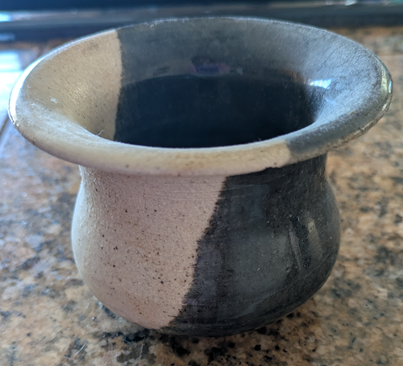
Tchotchke refers to a small object used for decoration. It’s a synonym of knickknack and trinket.

Now I know what a tchotchke is, but dang. Do I know how to spell it? No. I probably would have taken a stab at it and spelled it “chotchkey.” It’s one of those words that you hear more often than you see it spelled, or at least that’s the case for me.

So, in my reading about tchotchkes, I discovered some other words we have for miscellaneous junk and I thought I’d share them with you. I am including links to pronunciation for some of them.

· tchotchke (n.)ˈchäch-kə

knickknack, trinket

· knickknack (n.)

a small trivial article usually intended for ornament

· doodad (n.)

1: an ornamental attachment or decoration

2: an often small article whose common name is unknown or forgotten : gadget

· gewgaw (n.) ˈg(y)ü-(ˌ)gȯ

a showy trifle : bauble, trinket

· gimcrack (n.)ˈjim-ˌkrak

[KC – What you see when somebody’s athletic shorts fall down.]
M-W – a showy object of little use or value

· bauble (n.)

1: a small ornament (such as a jewel or ring)

2: a small article of equipment

3: a thing of little value : trifle

· trifle (n.)

something of little value, substance, or importance

· bibelot(n.)ˈbē-bə-ˌlō

a small household ornament or decorative object : trinket

· kickshaw

1: a fancy dish : delicacy

2: trinket, gewgaw

The background of kickshaw is kind of interesting because it is based on a late 16th century misunderstanding of the French term quelque chose which means “something.” More from M-W:

In line with the French pronunciation of the day, the "l" was dropped and the word was anglicized as "kickshaws" or "kickshoes." English speakers soon lost all consciousness of the word’s French origin and, by taking "kickshaws" as plural, created the new singular noun "kickshaw."

And some history on these many words for “a little something,” also from M-W:

Bauble appears to be the oldest among the group, with known evidence of usage dating back to the 14th century. The earliest available evidence of gewgaw and kickshaw is from the 16th century, whereas gimcrack and knickknack established themselves in the 17th century. Tchotchke, borrowed from Yiddish, is by far the most recent addition to our language, first appearing as an English word in the 20th century.

Well, there you have it. I know, I wander to and fro; it’s amazing I know where I am half of the time! Enjoy your day and try not to pick up too many tchotchkes!

Kara Church | Technical Editor, Advisory | Technical Publications

Pronouns: she/her | Call via Teams | jackhenry.com

Editor’s Corner Archives: https://episystechpubs.com/
Posted by: Jack Henry | August 20, 2024

Editor’s Corner: Animal Delusions

A few weeks ago, I received an email from A.Word.A.Day with the title Lycanthropy. Well, Ive been encouraged by a husband or two, to watch a few werewolf, vampire, alien, Godzilla, hobbit, etc., movies in my time, so I knew a lycanthrope was a werewolf. I think its a good time to look at a few more animal delusion words from the Lycanthropy article, and some more terms and etymologies from my beloved Online Etymology Dictionary.

lycanthropy (noun)
1. A delusion that one has transformed into a wolf.
2. The process of or ability to transform into a wolf.

From Greek lykos (wolf) + -anthropy (human). Earliest documented use: 1584.

cynanthropy (noun)

A delusion in which one believes oneself to be a dog.

From Greek kyon (dog) + -anthropy (human). Earliest documented use: 1594.

And then A.Word.A.Day offers a few more with just the word and the type of animal youd be transforming into:

  • boanthropy: cow or ox
  • cervanthropy: deer
  • hippanthropy: horse
  • zoanthropy: animal

The author ends the article, but thats where I decided to continue a bit with some other words we might hear in the news or community. These are from me and the etymology site (above) with a little editing to match the previous formatting.

philanthropy (noun): goodwill to fellow members of the human race

especially : active effort to promote human welfare

From Greek phil (loving) + anthros (mankind)

philogyny (noun)

Love or admiration of women

From Greek phil (loving) + gyn/i> (woman) From 1620

And since were looking at phil- lets have a look at Philadelphia!

Philadelphia (noun)City in Pennsylvania between the Delaware and Schuylkill rivers

From Greek, taken by William Penn to mean "brotherly love."

From philos "loving" (see philo-) + adelphos "brother"

misanthropy (noun)

Hatred of mankind

From Greek misos (hatred) + anthropos (man). Earliest documented use: 1683.

misogyny (noun)

Hatred of women

From Greek miso- (hatred) + gyn/i> (woman). From 1650.

apanthropy (noun)

A desire to be away from people; a love of solitude.

From Greek apo- (away) + -anthropy (human). Earliest documented use: 1753.

Whoa. That got a little heavy. I just love etymologies, though, because the little bits and pieces of words you learn can be put together with other bits, and sometimes thats all you need to figure out what a new word means! English is fascinating!

And from What We Do in the Shadows (2014) – IMDb the movie, my favorite line:

Some silly, fun work from New Zealanders Jemaine Clement and Taika Waititi.

Kara Church | Technical Editor, Advisory | Technical Publications

Pronouns: she/her | Call via Teams | jackhenry.com

Editors Corner Archives: https://episystechpubs.com/

Posted by: Jack Henry | August 15, 2024

Editor’s Corner: Consonants and Vowels

In elementary school, we learned about vowels: A E, I, O, U, and sometimes Y. And we learned that all the other letters in our alphabet are called consonants. But have you ever wondered why the letters are broken into those two categories? It all comes down to how we make the sounds represented by the letters.

Here is a brief explanation from Dictionary.com:

According to phoneticians, a vowel is a speech sound that is made without significant constriction of the flow of air from the lungs. The tongue can be at various heights in the mouth (such as high, mid, or low) and at various positions (front, central, or back). The lips can be variously rounded. Vowels can vary in pitch and loudness, too.

Here’s the part where you get to act like a kid. Say “ahh,” but then flick your tongue all around your mouth, wriggle your lips and jaws around, let out the noise at different volumes, but don’t ever fully stop that airflow. You are vowel-ing!

If you do restrict or close your airflow in a significant way, you’re in consonant territory. Where that restriction or closure occurs in your vocal tract determines what consonants you are making. “B” sounds are produced by bringing the lips together, for instance (bilabials). K sounds are produced by bringing the back of the tongue up to your soft palate (velars). Th sounds are made when the tongue goes between the teeth (interdentals).

It is a different article called “Is It True ‘W’ Can Be Used as a Vowel?” that brought this topic to my attention. The article says that the letter W is “a bit of both”—a consonant and a vowel (like Y). I couldn’t think of any words in which W functioned as a vowel, and I’m guessing you’re also having a hard time coming up with any. It turns out that there are “a precious few” words that English has borrowed from the Welsh language. I’ve listed two words below, neither of which I’ve ever used or heard, but that doesn’t mean they aren’t in an English dictionary—specifically the Oxford English Dictionary:

  • cwm (pronounced koom or kuhm) is a steep-walled semicircular basin in a mountain
  • crwth (pronounced crooth) refers to an ancient Celtic musical instrument

In both words, the W makes the same oo sound we make in English (as in room or tooth). Isn’t that interesting?

Every language has both vowels and consonants, but the sounds they produce and the number of sounds that can be produced vary for each unique language. I’m reminded of how hard it is for me to trill my Rs like Spanish speakers do and how odd it felt to pronounce the guttural R when I took French classes in school—these are sounds we don’t use in English. But they are beautiful to my ears, and I am so grateful to live in an area where I hear many different, musical languages spoken every day. Thank you, consonants and vowels—I am forever grateful.

Donna Bradley Burcher |Technical Editor, Advisory | jack henry

Pronouns she/her/hers

9660 Granite Ridge Drive, San Diego CA 92123

Symitar Education Resources (sharepoint.com)

About Editor’s Corner

Editor’s Corner keeps your communication skills sharp by providing information on grammar, punctuation, JHA style, and all things English. As editors, we spend our days reading, researching, and revising other people’s writing. We love to spend a few extra minutes to share what we learn with you and keep it fun while we’re doing it.

Did someone forward this email to you? Click here to subscribe.

Don’t want to get Editor’s Corner anymore? Click here to unsubscribe.

Do you have a question or an idea for Editor’s Corner? Send your suggestions or feedback to Kara and <a href="mailto:DBurcher.

NOTICE: This electronic mail message and any files transmitted with it are intended
exclusively for the individual or entity to which it is addressed. The message,
together with any attachment, may contain confidential and/or privileged information.
Any unauthorized review, use, printing, saving, copying, disclosure or distribution
is strictly prohibited. If you have received this message in error, please
immediately advise the sender by reply email and delete all copies.

Posted by: Jack Henry | August 13, 2024

Editor’s Corner: Ditto, man!

Most days I wake up feeling a little tired but happy to greet the new day. It seems like almost anything is possible when you’re just getting started. And then your spouse walks into the office and says something like, “You should do an Editor’s Corner on the meaning of Cc, Bcc, and ditto machines! Some of my younger coworkers don’t know what they are.”

Then, I just feel old.

Well, my friends. If you were brought up never knowing a typewriter or ditto machine, I’m here to give you a little bit of history about the writing-related terms my hubby mentioned.

Let’s start with Cc and Bcc. Cc stands for “carbon copy” and Bcc stands for “blind carbon copy.” You might have heard the terms explained as “blind courtesy copy” and “courtesy copy,” but those are newer definitions used for folks that don’t understand the reference to carbon.

The references to carbon come from the days when a typist would put several pieces of paper together, with a piece of carbon paper between each blank paper. That way, they could type once, but end up with several carbon copies of the note or letter.

The blind carbon copy was a version of the message that was generated for “an additional recipient, without the primary recipient being aware.” (Blind carbon copy – Wikipedia)

The article in Wikipedia further explains how we use the address field in email:

To: Primary recipients

Cc: Carbon copy to secondary recipients—other interested parties

Bcc: Blind carbon copy to tertiary recipients who receive the message. The primary and secondary recipients cannot see the tertiary recipients. Depending on email software, the tertiary recipients may only see their own email address in Bcc, or they may see the email addresses of all primary and secondary recipients but will not see other tertiary recipients.

It is common practice to use the Bcc: field when addressing a very long list of recipients, or a list of recipients who should not (necessarily) know each other, e.g., in mailing lists.

There are many reasons to use Bcc, but that is for a different topic. For those of you who have only used the Microsoft® version of Cc and Bcc, here is a picture of the carbon sheets that used to go between the papers in the typewriter:

And then there is the term “ditto.” This term is probably older than you think. According to the Online Etymology Dictionary, it is from the 1620s.

ditto: “In the month of the same name," Tuscan dialectal ditto "(in) the said (month or year)," literary Italian detto, past participle of dire "to say," from Latin dicere "speak, tell, say.”

Italians used the word to avoid repetition of month names in a series of dates, and in this sense it was picked up in English. Its generalized meaning of "the aforesaid, the same thing, same as above" is attested in English by 1670s.

Here are some more definitions and examples from Merriam-Webster:

ditto

adverb:as before or aforesaid : in the same manner

—used to indicate that a previous statement also applies to something or someone else

"I’m ready for a break." "Ditto." [=so am I]

verb: to restate in support or agreement : echo

A resident dittoed the council members’ comments.—Gwen Davis

noun: a thing mentioned previously

—used to avoid repeating a word; often symbolized by inverted commas or apostrophes

Mr. Thomas Potter, then, was a clerk in the city, and Mr. Robert Smithers was a ditto in the same …—Charles Dickens

adjective: having the same characteristics : similar

It’s a ditto day …, with no change in the numbers of confirmed, probable, active or recovered cases …—thespinoff.co.nz

And here is a ditto machine, using something similar to the carbon papers that typists used. The copies from these machines were generally purple, though they could be green or red or other colors. And because of the fluid used with them, they had a very distinct smell when Sister Mary brought them back to the classroom!

Kara Church | Technical Editor, Advisory | Technical Publications

Pronouns: she/her | Call via Teams | jackhenry.com

Editor’s Corner Archives: https://episystechpubs.com/

Posted by: Jack Henry | August 8, 2024

Editor’s Corner: Zeugma

Good morning, fellow verbivores!

I was just taking a breather from JH Connect slide shows, when I stumbled on something Merriam-Webster did for fun. They published names for different rhetorical devices, then asking people to send in examples of the terms as exemplified in music.

I’ve picked out a term that I didn’t recognize to discuss for today: zeugma.

Here is a definition of zeugma from another dictionary site, Your Dictionary:

In grammatical terms, a zeugma is when a verb or adjective modifies two or more nouns to form one idea. Essentially, one word is applied to two or more other words in different ways.

What are some examples? So glad you asked! The first few are from the MerriamWebster contest; they are songs you might know:

"You held your breath and the door for me"
— Alanis Morissette, "Head Over Feet"

"I’m a thousand miles from anywhere
My pocketbook and my heart both just got stolen"
— Jewel, "Down So Long"

“She blew my nose and then she blew my mind”
— The Rolling Stones, "Honky Tonk Women"

And then from Your Dictionary, I have a list of zeugma examples, which are statements. I thought they were clever, funny, or both. Enjoy!

  • All over Ireland, the farmers grew potatoes, barley, and bored.
  • He fished for trout and compliments.
  • He opened his mind and his wallet every time he went out with her.
  • She firmly held her tongue and her hand.
  • On our first date, I held my breath and the car door for her.
  • When he came to pick me up, I opened my door and my heart to him.
  • The disgruntled worker took his belongings and his leave.
  • She kicked that bad habit and soon after the bucket.
  • The student observed the specimen with a microscope and some disgust.
  • The storm sank my boat and my dreams.
  • You are free to execute your laws and your citizens as you see fit. (Star Trek: Next Generation)

Overly dramatic? Maybe, but that is why I find them amusing! I hope you have an enjoyable day.

Kara Church | Technical Editor, Advisory | Technical Publications

Pronouns: she/her | Call via Teams | jackhenry.com

Editor’s Corner Archives: https://episystechpubs.com/

Posted by: Jack Henry | August 6, 2024

Editor’s Corner: Upspeak and vocal fry

Oh my goodness, we are suddenly super busy! Today I’d like to quickly delve into a couple of things related to speech. The first thing is called upspeak, the second is called vocal fry.

When you are speaking English and the pitch of your voice raises, it is called a “rising inflection.” In English, you most often hear this rising inflection at the end of a question, for example: “Are you go to Swami’s?” That higher pitch is called “upspeak” or “uptalk,” but upspeak has become more than just that word at the end of a sentence. Sometimes, rising inflection is used at the end of sentences and clauses, whether they are questions or not.

I was looking for an example, and some of them were too long, but here is a good one from a woman who demonstrates “uptalk” vs. “straight talk.”

https://www.youtube.com/watch?v=NQWej-hMiZI

There are other countries where this has been noticed, so it isn’t just American English or Southern California valley girls. I read that it occurs in England (the British blame it on Scandinavians), Australia, Northern Ireland, and other places.

Vocal fry is something similar. According to this article What is vocal fry? it is when…

“…(S)omeone doesn’t use enough breath to speak or sing. The lack of breath causes a creaky sound as the vocal cords come into close contact. It usually happens at the ends of phrases, as the pitch of the sentence goes down and tapers off.”

While neither of these kinds of speech are gender-specific, my next example says that vocal fry is a female phenomenon. I’m including it because the minute you hear it, you will understand exactly what a vocal fry is.

Club Comix Vocal Fry

Many vocal coaches recommend against both of these types of speech, particularly if you want to sound authoritative, professional, and sure of yourself.

My favorite example is full of bad language, but I find it hilarious. If you aren’t easily offended, you can do a search for “Loudermilk and vocal fry” after work.

Kara Church | Technical Editor, Advisory | Technical Publications

Pronouns: she/her | Call via Teams | jackhenry.com

Editor’s Corner Archives: https://episystechpubs.com/

Posted by: Jack Henry | August 1, 2024

Editor’s Corner: Names for Groups of Animals

Greetings, fellow humans. At the zoo the other evening, my spouse and I were trying to remember names for groups of animals. We started with our own species, and due to the mass of people around us, we settled on the term crowd: we were part of a pretty big crowd of people. But our game got a lot more fun when we started remembering or looking up names for groups of animals.

At the front of the San Diego Zoo, there is a flamboyance of flamingos. They are striking, for sure. And that led us down a very entertaining rabbit hole: as you may know, a group of rabbits is called a colony or a warren. Following is a partial list of lesser-known names for groups of animals:

  • A troop of baboons
  • A colony, cloud, or cauldron of bats
  • A caravan of camels
  • A coalition of cheetahs
  • A bed of clams
  • A band of coyotes
  • A convocation of eagles
  • A parade of elephants
  • A charm of finches
  • A tower of giraffes
  • A cloud or hoard of gnats
  • A bloat of thunder of hippopotami
  • A cackle of hyenas
  • A shadow of jaguars
  • A troop or mob of kangaroos
  • An ascension or exaltation of larks
  • A conspiracy of lemurs
  • A leap of leopards
  • An aggregation of manatees
  • A watch of nightingales
  • A parliament of owls
  • A prickle of porcupines
  • A gaze of raccoons
  • An unkindness of ravens
  • A stench of skunks
  • A dray or scurry of squirrels
  • A fever of stingrays
  • A wisdom of wombats
  • A descent of woodpeckers
  • A zeal of zebras

What should we call a group of Jack Henry associates? A jump? A jaunt? A jewel? Or maybe you can think of something else…

Have a lovely Thursday, my people.

Donna Bradley Burcher |Technical Editor, Advisory | jack henry

Pronouns she/her/hers

Symitar Education Resources (sharepoint.com)

<![if !vml]><![endif]>

About Editor’s Corner

Editor’s Corner keeps your communication skills sharp by providing information on grammar, punctuation, JHA style, and all things English. As editors, we spend our days reading, researching, and revising other people’s writing. We love to spend a few extra minutes to share what we learn with you and keep it fun while we’re doing it.

Did someone forward this email to you? Click here to subscribe.

Don’t want to get Editor’s Corner anymore? Click here to unsubscribe.

Do you have a question or an idea for Editor’s Corner? Send your suggestions or feedback to Kara and <a href="mailto:DBurcher.

NOTICE: This electronic mail message and any files transmitted with it are intended
exclusively for the individual or entity to which it is addressed. The message,
together with any attachment, may contain confidential and/or privileged information.
Any unauthorized review, use, printing, saving, copying, disclosure or distribution
is strictly prohibited. If you have received this message in error, please
immediately advise the sender by reply email and delete all copies.

« Newer Posts - Older Posts »

Categories