Posted by: Jack Henry | October 24, 2024

Editor’s Corner: Can/Could, Will/Would, Might/May

Good morning to you all.

When talking or writing about events that are not actually happening now—but they will, could, or might happen—we English speakers have a few options to choose from, and these choices can be a bit confusing.

Today, at the request of my friend, Ike, I’m going to share three often confusing word pairs and explain how to make the best choice for your situation. At least, that’s my intention. Let’s see how it goes.

Here are the word pairs that Ike and I would like to share:

  • can vs. could
  • will vs. would
  • might vs. may

First let’s look and can vs. could.

  • Can is used to refer to something that has a strong possibility of occurring:

Yes, I can run five miles.

  • Could is used to refer to something that has a weaker possibility:

I guess I could run five miles.

  • When indicating ability or possibility, can is used for present tense and could is used for past tense:

When I was running every day, I could run 10 miles, but now I can only run five.

Next we’ll examine will vs. would.

  • Will is used to express expectations, determinations, and capabilities.

I will beat my brother at the karaoke contest Saturday night.

  • Would is used to express hypothetical statements.

If we were to enter a karaoke contest, I would beat my brother.

  • Will is also used to form the future tense:

We will be having a karaoke contest at the next family get-together.

  • Would is the past tense of will:

Last week, my brother and I would have had a karaoke contest, but I had laryngitis.

And finally, let’s explore might vs. may.

  • May is used to indicate something that is likely to happen.

I may bring a date to Dori’s party.

  • Might is used to describe something that is unlikely to happen or situations that did not occur but could have.

If I could gather enough nerve, I might ask Shawna to Dori’s party.

If I had seen Shawna today, I might have asked her to Dori’s party.

I hope that sheds some light

On how you may use might

And how you can use could

And how you will use would

Have a lovely day.

Donna Bradley Burcher |Technical Editor, Advisory | jack henry

Pronouns she/her/hers

Remote – CA

About Editor’s Corner

Editor’s Corner keeps your communication skills sharp by providing information on grammar, punctuation, JHA style, and all things English. As editors, we spend our days reading, researching, and revising other people’s writing. We love to spend a few extra minutes to share what we learn with you and keep it fun while we’re doing it.

Did someone forward this email to you? Click here to subscribe.

Don’t want to get Editor’s Corner anymore? Click here to unsubscribe.

Do you have a question or an idea for Editor’s Corner? Send your suggestions or feedback to Kara and <a href="mailto:DBurcher.

NOTICE: This electronic mail message and any files transmitted with it are intended
exclusively for the individual or entity to which it is addressed. The message,
together with any attachment, may contain confidential and/or privileged information.
Any unauthorized review, use, printing, saving, copying, disclosure or distribution
is strictly prohibited. If you have received this message in error, please
immediately advise the sender by reply email and delete all copies.

Posted by: Jack Henry | October 22, 2024

Editor’s Corner: Octopus

Good morning, folks!

A former employee and current friend sent me this article about the different plural endings of the term octopus, from Merriam-Webster. I think this article is perfect for October (which was the eighth month of the old Roman calendar) since octopus means eight feet.

Essentially, the article is about how we like to change the endings of words in English.

The three plurals for octopus come from the different ways the English language adopts plurals. Octopi is the oldest plural of octopus, coming from the belief that words of Latin origin should have Latin endings.

Octopuses was the next plural, giving the word an English ending to match its adoption as an English word.

Lastly, octopodes stemmed from the belief that because octopus is originally Greek, it should have a Greek ending.

When I was I kid, up until through college, they taught us those words from Latin kept their Latin endings, so here are a few examples of what they used to tell us the singular and plural were and what we’ve converted them to in English. I remember about halfway through my editing career, the “powers that be” decided we would start using the English endings on words since we speak English.

Singular Latin plural English plural
octopus octopi octopuses
stadium stadia stadiums
bacterium bacteria We still use bacteria
referendum referenda referendums
aquarium aquaria aquariums
amoeba amoebae amoebas
antenna antennae antennas
index indices indexes
appendix appendices appendixes

Then there’s data and datum, with stories of their own. Even spellcheck is giving me errors for datum!

In any case, this is the long story about how to refer to more than one octopus, and you can read more here. I tried to find you a short video about how smart they are, but I must be looking in the wrong place. Eight cheers for the eight-legged octopus!

Kara Church | Technical Editor, Advisory | Technical Publications

Pronouns: she/her | Call via Teams | jackhenry.com

Editor’s Corner Archives: https://episystechpubs.com/

Posted by: Jack Henry | October 17, 2024

Editor’s Corner: Have you ever seen a tinky?

Hello dear people,

I’m reading a book for our Knowledge Enablement business group book club (actually, I don’t know the real name). I do know the name of the book, though. It’s called Because Internet, by Gretchen McCulloch. Two chapters in and I love it. It is about the change in language, punctuation, emojis, linguistics, how different generations write and speak, and much more. So far, my favorite thing is this German phrase: “I will slap your ears with the cooking spoon, you monkey!”

Okay, there’s more in there besides that, but I’m telling you, the Germans have the best punishments and insults from what I can tell in the different translations I find.

Seriously, though, the following is actually one of the things McCulloch mentioned, and I thought I would check it out. It is the DARE Dictionary. DARE stands for the Dictionary of American Regional English. The link only gives you access to a short list of words, unless you want to pay $50, so we are exploring “on the cheap.”

The first term that caught my eye was pinkle-tink. I thought maybe it was an adjective, like, “That shirt is a lovely pinkle-tink green.” But no, pinkle-tink is a thing. The definition still did not tell me what it is. Pinkle-tink, a word used in the Martha’s Vinyard, Nantucket, Massachusetts area, is defined as:

pinkle-tink (noun)

also pinkwink, tinky

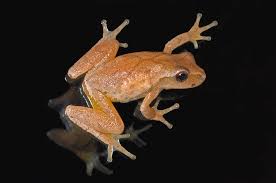
a spring peeper

What the heck? A spring peeper? A pervert looking through the window in the springtime is a pinkle-tink, a pinkwink, or a tinky? That sounds like the folks in the Martha’s Vinyard area think voyeurs are cute. No, that couldn’t be what a pinkle-tink is.

I read further and saw “a peeper, a tiny tree frog.” Well, that’s more like it! I don’t think there’s much of a chance I’ll ever be rich enough to hang out in Martha’s Vinyard, so they won’t have to worry about me calling 911 for a tinky sighting.

Spring peeper

Tom the peeper

Kara Church | Technical Editor, Advisory | Technical Publications

Pronouns: she/her | Call via Teams | jackhenry.com

Editor’s Corner Archives: https://episystechpubs.com/

Posted by: Jack Henry | October 15, 2024

Editor’s Corner: Kitschy gnomes

Twice in the last few months, the topic of garden gnomes has come up. No, I don’t have a display of them at my house or anything.

The first person who asked about them was Doni (Adonis) my cousin’s husband. While he described how much he loved them in his beautiful Greek accent, my cousin stood behind him shaking her head and mouthing “Nooooo!” I told him that they would be too delicate and heavy to tote back to Greece and explained that he already had his hands full with the cowboy hat he bought for his son.

Then, a couple days ago, I was talking to one of my doctors, and we got side-tracked on the topic of crafting. She told me she was going to make a gnome garden or do some gnome crafting to add to her kitschy garden. We then moved on to the word kitschy; what it means, how to say it, and more.

I said, “Yeah, I just wrote an article about it.” I was wrong. I didn’t write about kitschy, I wrote about tchotchkes. So here, for Doni and my doctor, is a little bit more on kitschy.

From Merriam-Webster:

kitsch (pronounced kitch, like kitchen)

1: something that appeals to popular or lowbrow taste and is often of poor quality

2: a tacky or lowbrow quality or condition

From the Online Etymology Dictionary

kitsch (n.)

1926, from German kitsch, literally "gaudy, trash," from dialectal kitschen "to smear." Earlier as a German word in English.

Some synonyms for kitschy are:

  • garish
  • gaudy
  • glitzy
  • tacky
  • tasteless
  • inelegant
  • schlocky

And schlocky? Also from Merriam-Webster, and then the Online Etymology Dictionary:

schlocky (adj)

: of low quality or value

schlock (n)

1915, "cheap, shoddy, or defective goods," from American Yiddish shlak, from German Schlacke "dregs, scum, dross" (see slag (n.)). Alternative etymology [OED] is from Yiddish shlogn "to strike" (cognate with German schlagen; see slay). Mostly commercial at first, by mid-20c. in reference to fiction, movies, television programming, etc. Derived form schlockmeister is by 1953; "purveyor of cheap products," though originally it had a more specific sense in showbiz.

I think of the gnomes book that our parents’ friends had on the coffee table. My brother and I always sought it out when we were at their house. Gnomes make me laugh. When I asked AI if gnomes were kitschy, it responded:

Yes, garden gnomes are often considered kitschy. The term "kitschy" refers to objects that are seen as being in poor taste due to their excessive garishness or sentimentality, but they can sometimes be appreciated in an ironic or knowing way. Garden gnomes fit this description as they are often viewed as overly sentimental and somewhat tacky decorations. However, some people might appreciate them for their nostalgic or humorous value.

Basically, go forth and do whatever makes you happy, kitschy or not.

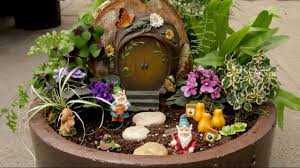
Gnomes in a planter.

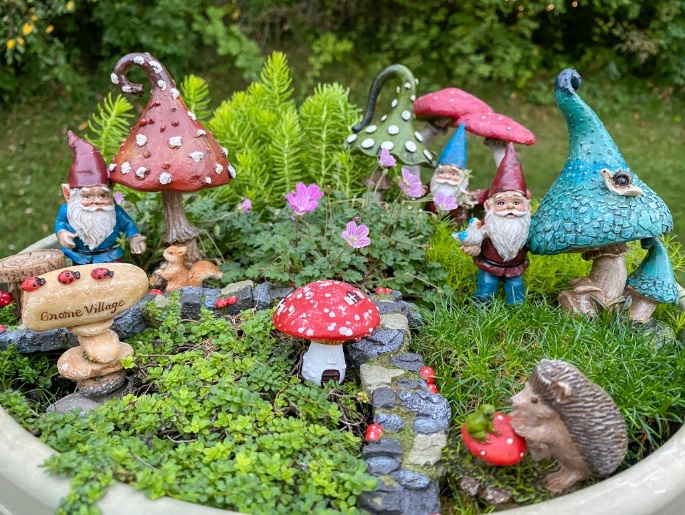
Gnomes going to town with mushrooms and a hedgehog.

Gnomes hiding in a wheelbarrow.

Kara Church | Technical Editor, Advisory | Technical Publications

Pronouns: she/her | Call via Teams | jackhenry.com

Editor’s Corner Archives: https://episystechpubs.com/

Posted by: Jack Henry | October 10, 2024

Editor’s Corner: Grimoire

Hello my Halloween witches and warlocks. As promised, I have another word I discovered when looking up the word sigil. Todays word is grimoire.

I know a lot of people love that suave French accent, but this word sounds a little creepy. Im going to delve deeper and see what Wikipedia and the Online Etymology Dictionary have to say. First, from Wikipedia:

A grimoire (also known as a "book of spells", "magic book", or a "spellbook") is a textbook of magic, typically including instructions on how to create magical objects like talismans and amulets, how to perform magical spells, charms, and divination, and how to summon or invoke supernatural entities such as angels, spirits, deities, and demons. In many cases, the books themselves are believed to be imbued with magical powers. The only contents found in a grimoire would be information on spells, rituals, the preparation of magical tools, and lists of ingredients and their magical correspondences.

The article has so many links and a lot to say about books of magic across the world. If you want something to do while you prepare for Halloween, you can read about magic. And now from the Online Etymology Dictionary:

grimoire (n.)

magician’s manual for invoking demons, 1849, from French grimoire, altered from grammaire "incantation; grammar" (see grammar).

grammar (n.)

late 14c., "Latin grammar, rules of Latin," from Old French gramaire "grammar; learning," especially Latin and philology, also "(magic) incantation, spells, mumbo-jumbo" (12c., Modern French grammaire), an "irregular semi-popular adoption" of Latin grammatica "grammar, philology," perhaps via an unrecorded Medieval Latin form *grammaria.

The classical Latin word is from Greek grammatike (tekhn "(art) of letters," referring both to philology and to literature in the broadest sense, fem. of grammatikos (adj.) "pertaining to or versed in letters or learning," from gramma "letter.

A much broader word in Latin and Greek; restriction of the meaning to "systematic account of the rules and usages of language" is a post-classical development.

Ohh. Grimoire and grammar? Perhaps that explains the fear some people have when they approach the subject of language?

And two more words from the articles above, with definitions from Merriam-Webster.

talisman (noun)

1: an object held to act as a charm to avert evil and bring good fortune

2: something producing apparently magical or miraculous effects

amulet (noun)

: a charm (such as an ornament) often inscribed with a magic incantation or symbol to aid the wearer or protect against evil (such as disease or witchcraft)

Stay safe!

Kara Church | Technical Editor, Advisory | Technical Publications

Pronouns: she/her | Call via Teams | jackhenry.com

Editors Corner Archives: https://episystechpubs.com/

Posted by: Jack Henry | October 8, 2024

Editor’s Corner: Sigil

Tis the season to be jolly, fa la la la la…

Wait! No, that’s months away! Now, tis the season to be scary!

I tell you; I’ve been wracking my brain for something new and exciting. I’ve read articles about “fall vs. autumn,” terms that mean “scary,” and the history of October as a word. I think in the past, we’ve covered a lot of this material.

Then, last night, as I was watching yet another Marvel-related show (Agatha All Along), I had to grab my pen and write down sigil. The show is about witches, so I figured that a sigil was something like a spell. The witches wonder who “put this sigil” on one of the characters.

So, what is a sigil? According to Wikipedia:

A sigil is a type of symbol used in magic. The term usually refers to a pictorial signature of a spirit (such as an angel, demon, or deity). In modern usage, especially in the context of chaos magic, a sigil refers to a symbolic representation of the practitioner’s desired outcome.

The term sigil derives from the Latin sigillum (pl. sigilla or sigils), meaning "seal". In medieval magic, the term sigil was commonly used to refer to occult signs which represented various angels and demons which the practitioner might summon.

In the ceremonial magic of the Middle Ages, sigils were used in the summoning of these beings and were the pictorial equivalent to their true name.

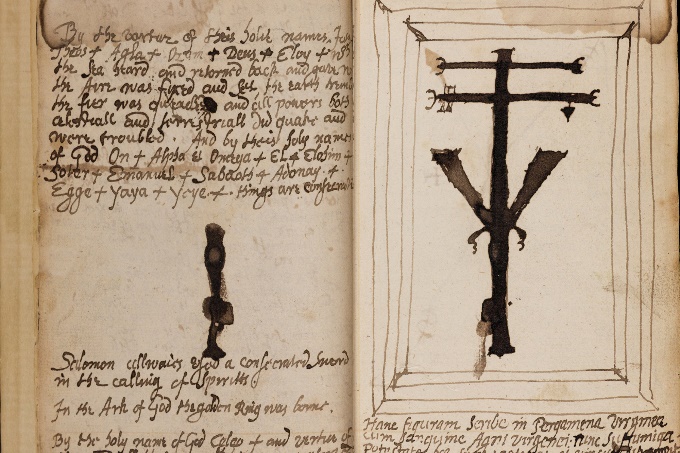
This is the demon Gamegin’s sigil, and there are more here.

As mentioned above, there is also something called chaos magic, which “Emerg(ed) in England in the 1970s as part of the wider neo-pagan and esoteric subculture.” Here is a more modern sigil.

There is so much more to learn about here, if that’s your thing. My thing is words, and I found another one in the article that intrigues me, but I’ll save that for next time.

Kara Church | Technical Editor, Advisory | Technical Publications

Pronouns: she/her | Call via Teams | jackhenry.com

Editor’s Corner Archives: https://episystechpubs.com/

Posted by: Jack Henry | October 3, 2024

Editor’s Corner: Shindig

Dear Editrix,

Have you explained where the term “shindig” came from? I was watching a movie and one of the characters talked about how they used to throw a big “shindig.”

Sincerely,

Ms. S.

Dear Ms. S,

While I use the term shindig, I can’t say I’ve ever looked into where it comes from. It sounds kind of painful, but I would classify it as a “get together.” Let’s have a look to see what Merriam-Webster says, and maybe the Online Etymology Dictionary, shall we?

M-W:

1a: a social gathering with dancing

b: a usually large or lavish party

2: shindy (a noisy quarrel, a brawl)

Hmmm. Dancing, a party, maybe a fight or two—that sounds like my kind of fun! My husband would agree with the dancing and lavish party, the fighting, not so much.

Let’s see where the word comes from.

Online Etymology Dictionary:

shindig (n.)

"a dance, a ball; rowdy party, lively gathering," 1851, U.S. colloquial, probably from earlier slang shindy "a spree, row, disturbance, merrymaking" (1821). That also was the name of an early game resembling hockey (1846); in this sense the word is perhaps from shinty (1771), the name of a Scottish game akin to hockey, for which see shinny.

shinny (n.)

also shinney, name of a hockey-like game, bandy-ball, 1670s, Scottish English, a word of obscure origin. Perhaps it is from Gaelic sinteag "a bound, a leap." OED suggests origin from shin ye "the cry used in the game." The form shinty is attested by 1771.

Okay, this all sounds too good to be true: a party, dancing, a little arguing, and a game like hockey? Woo hoo! It doesn’t get better than that. Sometimes you have to go with the flow and let your id have its day to play.

Kara Church | Technical Editor, Advisory | Technical Publications

Pronouns: she/her | Call via Teams | jackhenry.com

Editor’s Corner Archives: https://episystechpubs.com/

Dear Editrix,

I’ve noticed that almost everyone says a phrase a bit differently than I learned it. My father would always say, “If you think that, you’ve got another THINK coming.” My interpretation: you better think about that again.

These days, I hear virtually everyone say, “you’ve got another THING coming.” To me, that doesn’t make sense.

Quizzically yours,

Mr. A

Dear Mr. A,

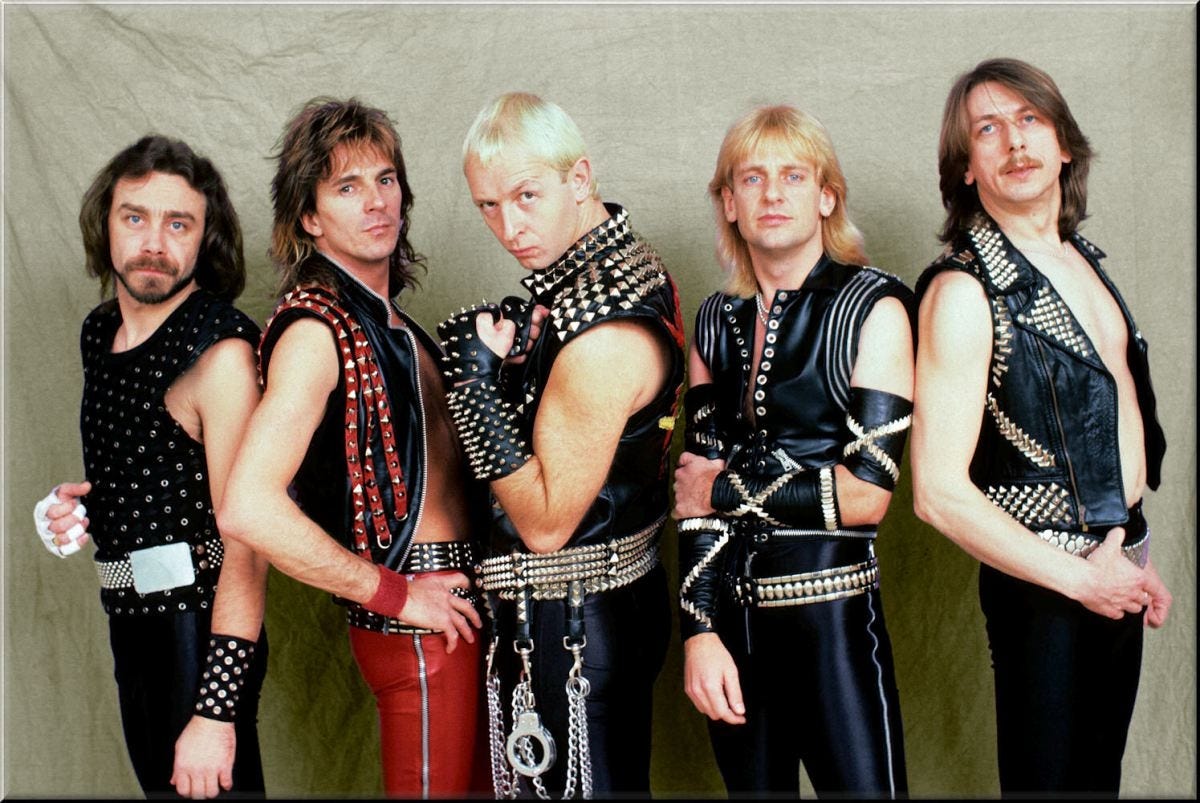
My initial response was to bring up Judas Priest and their song, named “You got another thing comin’.” I wasn’t really a fan, but my familiarity with the phrase came from that time long ago in 1982. I figured “thing” was the right word because that’s what they said so forcefully. As promised, though, here I am to tell you what I found.

First, you are correct! The initial phrase is from Britain, and it is “You have another think coming.” For those of you who aren’t familiar with the phrase, it basically means you are wrong about something. Whatever you might have said, you need to spend some more time thinking about it because you are wrong.

Second, the phrase has been used in Britain longer than the U.S. In Britain, think isn’t just a verb, it is also a noun. Here’s an example from Merriam-Webster:

Take the first week of the Christmas holidays to have a think. If the prospect of returning to university in January is still unattractive or fills you with dread, then maybe it’s time to take stock.

Third, the phrase moved over to the U.S. in the mid-nineteenth century. Some suspect that while it was used with the noun “think,” it also became an eggcorn. People would mishear the phrase “think coming,” run it together as “thinkcoming,” and then finally it became “thing coming.”

Now, a little more from M-W:

Semantically, the noun think is more fitting than thing: you think something and express your thought; then someone thinks you are wrong in your thinking and suggests you think about it again. (Notice the symmetry that think brings.) But the fact is the word thing is much more familiar, and it is trending with millennials…who use the expression. If that trend continues, "another think coming" could well become an archaism.

In summary: Another think coming is the older of the two, dating in use to the mid-19th century, and originated in British English. Another thing coming appears to have come about in American English several decades later, probably as a result of confusion regarding the original phrase. Another thing is the more recent turn of phrase and now is more common, though it is frequently criticized.

Mr. A., I’m so glad you asked the question, and the dictionary’s article definitely proved your point. Judas Priest is a British band. I wonder why they chose the more American phrase?

Kara Church | Technical Editor, Advisory | Technical Publications

Pronouns: she/her | Call via Teams | jackhenry.com

Editor’s Corner Archives: https://episystechpubs.com/

Posted by: Jack Henry | September 26, 2024

Editor’s Corner: Apocope

Good morning. I have a new word to share with you today (at least, it’s new to me). The word is apocope (pronounced uh-POK-uh-pee). It originates from a Greek word meaning “to cut off.” That’s a hint. Can you guess what it might mean to us English speakers?

If you guess the truncation (the cutting off or shortening) of words, you are correct! Apocope is the omission of one or more letters, sounds, or syllables from the end of a word. I’ll give you some examples of how apocope has influenced the evolution of words from Old English (before 1100 A.D) and Middle English (1150–1500 A.D), and then I’ll provide some more recent examples.

The Old English words singan and lufu evolved into the words we now use: sing and love.

In Middle English, we used to pronounce the final e in the words roote and sweete, but we’ve dropped that final sound in modern English.

And as I mentioned, it’s not just an evolutionary event. We currently use apocope to shorten many words. Here are some examples that I’m sure you’ll recognize:

  • advertisement > ad
  • abdominal (muscles) > abs
  • barbeque > barbie (chiefly Australian)
  • decaffeinated > decaf
  • demonstration > demo
  • obituary > obit
  • photograph > photo
  • zoological (garden) > zoo

We also use apocope when we shorten people’s names:

  • Barbara > Barb
  • Curtis > Curt
  • Deborah > Deb
  • Jennifer > Jen
  • Michael > Mike
  • Robert > Rob
  • Zachary > Zach

All this time, I’ve been apocopating, and I didn’t even know it. I wonder what else I’ve been doing that I’m not aware of?!

Donna Bradley Burcher |Technical Editor, Advisory | jack henry

Pronouns she/her/hers

Remote – CA

About Editor’s Corner

Editor’s Corner keeps your communication skills sharp by providing information on grammar, punctuation, JHA style, and all things English. As editors, we spend our days reading, researching, and revising other people’s writing. We love to spend a few extra minutes to share what we learn with you and keep it fun while we’re doing it.

Did someone forward this email to you? Click here to subscribe.

Don’t want to get Editor’s Corner anymore? Click here to unsubscribe.

Do you have a question or an idea for Editor’s Corner? Send your suggestions or feedback to Kara and <a href="mailto:DBurcher.

NOTICE: This electronic mail message and any files transmitted with it are intended
exclusively for the individual or entity to which it is addressed. The message,
together with any attachment, may contain confidential and/or privileged information.
Any unauthorized review, use, printing, saving, copying, disclosure or distribution
is strictly prohibited. If you have received this message in error, please
immediately advise the sender by reply email and delete all copies.

Posted by: Jack Henry | September 24, 2024

Editor’s Corner: Bring to Bear

Good morning!

The other day, I received an email from one of you about the phrase: brought to bear. (In present tense, “bring to bear.”) The speaker of the phrase said she uses it a lot but thought it might be interesting to find out more about it.

Wow! I don’t think I have ever used this phrase, nor have I brought anything to a bear, so I am definitely interested in this term.

While looking around, I found a great site that has idioms from all over the world. The site is called CrossIdiomas.com, and it’s definitely worth a visit!

First, what does “bring to bear” mean? Bring to bear means to apply mental effort or physical force—whatever resources you have—to make sure something occurs. Basically, doing whatever you have to do, to solve a problem. Here is the history from CrossIdiomas.com:

The idiom “bring to bear” is a commonly used phrase in the English language, which means to apply or exert something with force or influence. This idiomatic expression has its roots in the world of hunting, where it was originally used to describe the act of aiming a firearm at a target. Over time, the meaning of this phrase evolved and expanded into various contexts beyond hunting.

The origins of this idiom can be traced back to the 18th century when hunting was a popular sport among aristocrats and wealthy individuals. In those days, hunters would use firearms such as rifles and shotguns that required them to bring their weapon into position before firing accurately. The phrase “bring to bear” referred specifically to the action of bringing one’s gun into position for shooting.

As time passed, this term began appearing outside the context of hunting as well. It started being used figuratively in other areas such as business, politics, and military strategy. Today, it is widely used across different fields and industries as an idiomatic expression that refers to applying force or influence towards achieving a particular goal.

Here are some different uses of the term:

One common variation of this idiom is to use it in reference to a person’s expertise or knowledge. For example, someone might say “I will bring my years of experience to bear on this problem” when they want to emphasize their ability to solve a difficult issue. In this case, the phrase implies that the person has a unique set of skills or knowledge that they can apply towards finding a solution.

Another way that this idiom can be used is in reference to physical force or pressure. For instance, if someone wants to move a heavy object, they might say “I need to bring all my strength and energy to bear on this task.” In this case, the phrase emphasizes the idea that physical effort and exertion are required in order to achieve success.

Finally, another variation of this idiom involves using it in reference to emotional or psychological factors. For example, someone might say “I need to bring all my courage and determination to bear on this challenge” when facing a difficult situation. In such cases, the phrase suggests that inner strength and resilience are necessary for overcoming obstacles.

Well, I never would’ve guessed that this phrase comes from hunting! I always appreciate your questions and curiosity. Have a lovely autumn day!

Kara Church | Technical Editor, Advisory | Technical Publications

Pronouns: she/her | Call via Teams | jackhenry.com

Editor’s Corner Archives: https://episystechpubs.com/

« Newer Posts - Older Posts »

Categories