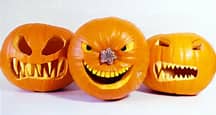
Posted by: Jack Henry | December 10, 2024

Editor’s Corner: Flumes

Good morning!

Today I’m not going to subject you to all of my blathering. Just a short definition of an English word, and maybe one or two photos.

I asked my friend Luna, whose wife is from Kauai, what we had to see on the trip I’ve been telling you about. She sent me a list of things to see, places to eat, and experiences to try. One of the “must see” items was “inner tubing down the flumes.” I had never heard the word “flume,” so I thought I better look it up before I made a reservation for trouble.

According to Wikipedia, a flume is a…

…human-made channel for water, in the form of an open declined gravity chute whose walls are raised above the surrounding terrain, in contrast to a trench or ditch. Flumes are not to be confused with aqueducts, which are built to transport water; flumes use flowing water to transport materials.

Okay, I’m in! I looked it up on the internet and asked my hubby if he was up for it, and he said yes.

The flumes in this area were designed for the sugar cane trade, to carry water and cane down the mountain. We got to the starting point for the adventure, and they fitted us with helmets, gloves, cave lights, and checked that we were wearing Crocs for the water. We had our swimsuits on, and the drive up the mountain began.

Once we got there, we got in the inner tubes, and let’s just say the mountain water was “refreshing.” There were five tunnels, and they looked something like this:

We went spinning and washing down through the tunnels, laughing and screaming; and in one tunnel, we sang happy birthday to my husband. The acoustics were great. There is no such thing as a great photo wearing a helmet, having your butt dunked in cold water, and looking into the sun without glasses, but here you go! Flumes are fun!

Kara Church | Technical Editor, Advisory | Technical Publications

Pronouns: she/her | Call via Teams | jackhenry.com

Editor’s Corner Archives: https://episystechpubs.com/

Posted by: Jack Henry | December 5, 2024

Editor’s Corner: Farm Fresh

Good morning, people!

Today is day two of our Hawaiian discoveries. I think today Ill write a little bit about fruit. Yes, fruit. Kauai is the garden island of Hawaii, and we visited several types of gardens while we were there. The Hawaiians refer to some of these places as plantations, which definitely leaves a bad taste in my mouth, but thats what they call them.

A little history first. Over the years, Hawaiian land was taken over and used for crops such as sugar cane, which requires a lot of work. Just like the contiguous U.S. used slaves, Hawaiis conquerors used Hawaiians. Some were paid with credit that they could only use at the stores owned by their employers. Others were paid 90 cents a day for a full day of back-breaking work. When Hawaii became a state in 1959, those practices stopped, and many the businesses left because they couldnt afford the living wage.

But this is getting depressing. On the plus side: statehood meant no more slavish treatment. And as far as the land, much of it was preserved and protected when the big businesses left. This fruit plantation that we went to is in business because they use the fruit and vegetables they grow for farm to table service in their restaurant. They do train tours and walking tours around the plantation. Oh yes, and they make rum, which has a lot to do with them staying in business.

So, lets check out what we saw on the walking tour! (The walking tour allowed you to take home fruit and vegetables for the road. Avocado lovers wouldve been in heaven.)

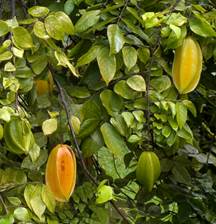
First, hua h/b> or star fruit.

If you slice a star fruit sideways, it looks like a star. I know, duh! You might find it at the store, but farmers tend to pick them too early when sending them far away. The fruit on this tree was ripe, crunchy, juicy, and so delicious!

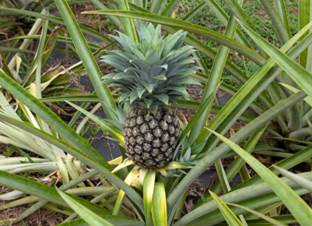
Next, hala kahiki, or pineapple. Apparently, many people think pineapples grow on trees. Nope, they grow on a bush that takes a couple of years to bear fruit. Mmmm.

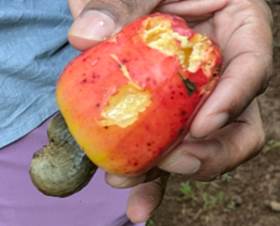
We walked, we tried tons of citrus fruits, and then we came to the part that blew my mind. Here is a photo of this amazing thing. What is this ugly mug? An apple? Yes, its called a cashew apple, and it tastes awful. And what is that parasitic-looking, cashew-like thing on the bottom?

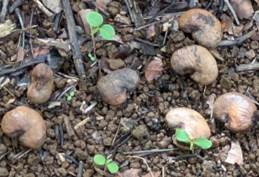
Well, here are some without the apples:

These are cashews! They are still in their protective coverings, and they must be roasted before you eat them, to get rid of the poison inside them. Who knew? No wonder they are so expensive! I couldnt find a Hawaiian name for these.

The last thing that I have to tell you about is the farm. The farm had a couple of cows, a horse, llamas, and a bazillion wild pigs. The pigs break into the corral because they know theyll get free food. We fed all of them: gluten free tortillas for the pigs and llamas, grass cubes for the cows and horse.

For the sake of size, Ill only include the llama mamma, who has beautiful eyes.

Next time, less history and one word.

Kara Church | Technical Editor, Advisory | Technical Publications

Pronouns: she/her | Call via Teams | jackhenry.com

Editors Corner Archives: https://episystechpubs.com/

Posted by: Jack Henry | December 3, 2024

Editor’s Corner: Aloha!

Aloha!

It’s been a long time since I’ve gone on vacation, but those of you who have spent years with me know that I love to share what I’ve learned when I get home from a trip. This year, we traveled in the United States, to Kauai, Hawaii.

Hawaii is a special place for many reasons, but one is that native Hawaiians have a different language from English. While policies in America’s past aimed to assimilate the Indigenous people by teaching them English, there has been a resurgence of teaching the Hawaiian language to kids in school.

Here is just a short list of common Hawaiian words: Glossary of Common Hawaiian Vocabulary. Though many of the people we met said they were not fluent in Hawaiian, the Indigenous tour guides had great vocabularies. For example, the guide we had at the old sugarcane plantation knew the Hawaiian fruit plant names, the captain of the catamaran knew the mountain and seaside place names, the gardener knew the names of the plants, etc.

What I’m here to talk about today, though, are some of the specific things I learned while on my trip. A few things are about the culture, some about the words I learned, and then there are photos.

I think this might take a few “episodes” of Editor’s Corner. I hope you can enjoy the ride!

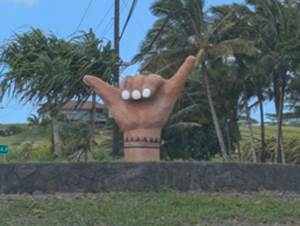
I’ll do something common and brief today: the shaka sign. This giant shaka photo is from a roundabout near our hotel:

From Wikipedia: The shaka sign, sometimes known as "hang loose" is a gesture with friendly intent often associated with Hawaii and surf culture. It consists of extending the thumb and smallest finger while holding the three middle fingers curled, and gesturing in salutation while presenting the front or back of the hand; the wrist may be rotated back and forth for emphasis.

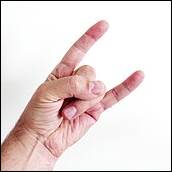
This should not be confused with your favorite devil rock hand gesture “the sign of the horns,” which is not about hanging loose.

I’ll have more for you next time, from the different adventures we went on.

Until then, mahalo*!

*thanks, gratitude, respect…what a great word!

Kara Church | Technical Editor, Advisory | Technical Publications

Pronouns: she/her | Call via Teams | jackhenry.com

Editor’s Corner Archives: https://episystechpubs.com/

Posted by: Jack Henry | November 26, 2024

Editor’s Corner: Happy Thanksgiving!

Hello to those of you who are working at least part of this week! It is Thanksgiving soon, probably my favorite holiday: a time of good meals with friends and family.

But then again, I am not sure why it is my favorite holiday, because since I was younger, I’ve had some Thanksgivings that were everything from strange to horrifying. Today is my effort to help you remember that perfection is a myth, and that bad things happen to good people.

So, my Thanksgiving fun started in my teen years. My parents divorced and we were supposed to celebrate at my mom’s boyfriend’s house. The turkey was in the oven, and I was moping around like an angry teenager. Suddenly, the power went out in the cold, wet Seattle autumn, and we were turkeyless. Not to worry! We went to the International District and had Chinese food next to the site of the Wah Mee Massacre.

Then there was the time that my brother and I were dragged to the house of a woman my dad was dating. I think all of Nantucket was there from the East Coast, and we didn’t know anybody. It was so fancy, I think Martha Stewart was the guest cook. I couldn’t wait to leave. Oh yeah, and this woman’s son pulled a knife on my brother. Fun times.

Just a few years ago my mom was visiting, and she insisted on preparing a big dinner. She started by thawing our turkey in a five-gallon (used) paint bucket. My husband and I were out Wednesday night looking for an unpoisoned turkey that weighed more than eight pounds. (And after years of working in a grocery store, I will tell you this is the one night of the year you don’t want to be anywhere near a grocery store.)

Oh wait, I forgot about the new recipe my aunt in Greece sent over to us a couple of years ago! We invited friends and neighbors over to our little house, and Mom tried this fantastic recipe. There was only one problem: my aunt gave her the wrong measurements for seasonings, and it was like a salt lick. One of our friends liked it, so there was that.

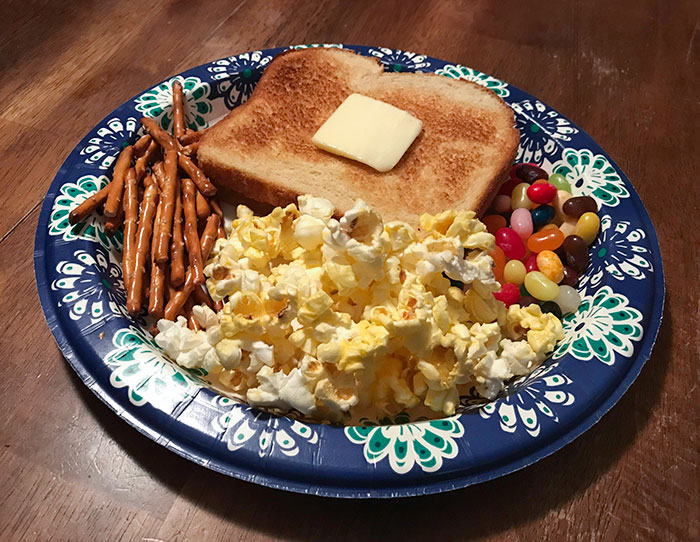
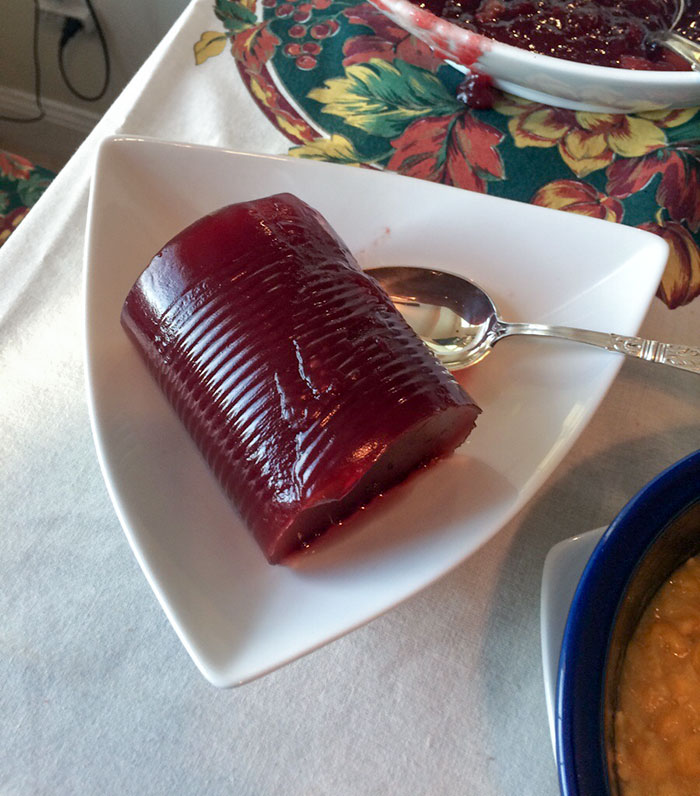
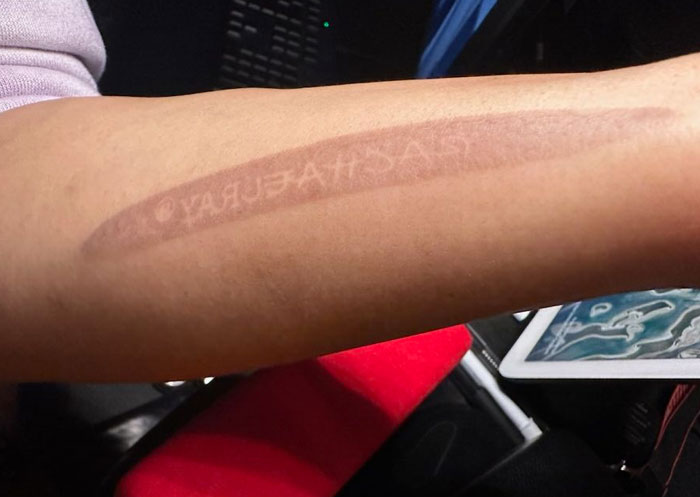
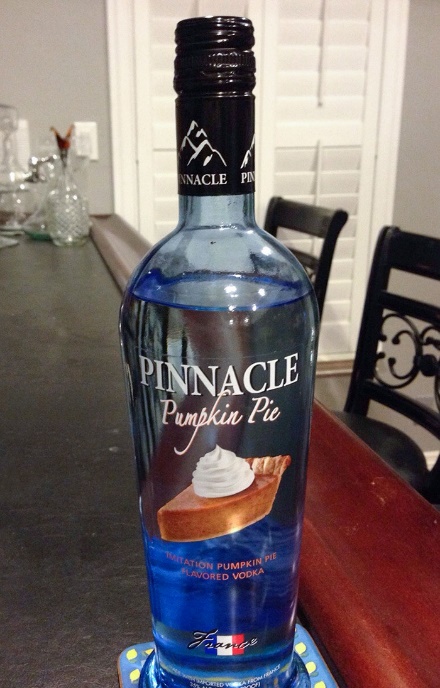
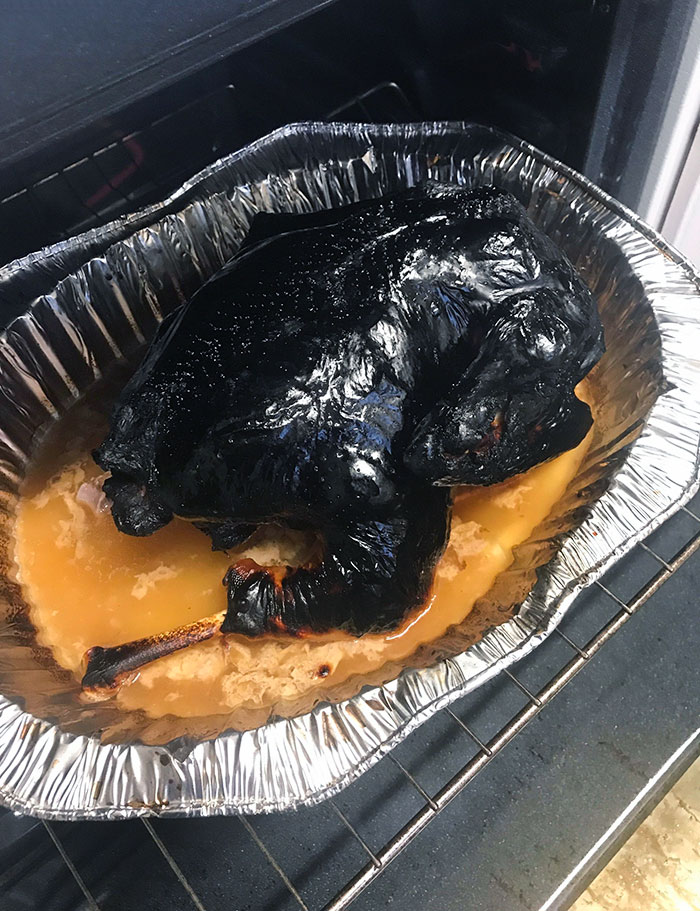
In honor of those who have had equally challenging holidays, this one’s for you! Some excerpts from 50 People Who Had A Terrible Time During Thanksgiving (New Pics) | Bored Panda.

My Mom and Sister Are Gone for Thanksgiving, So We Had to Improvise

Presentation Is Key This Thanksgiving

I Accidently Branded Rachael Ray’s Name on Myself With One of Her Roasting Trays

My Sister Was Supposed to Bring a Dessert For Thanksgiving

Happy Thanksgiving

A very happy Thanksgiving to you all!

Kara Church | Technical Editor, Advisory | Technical Publications

Pronouns: she/her | Call via Teams | jackhenry.com

Editor’s Corner Archives: https://episystechpubs.com/

Posted by: Jack Henry | November 21, 2024

Editor’s Corner: Mistranslations, Part 2

Good morning!

Today I offer you the second half of the translation I shared with you the other day, from: 5 of The Funniest Examples of Translations Gone Wrong

  • In an advertisement by a Hong Kong dentist: “Teeth extracted by the latest Methodists.”
  • Instructions for a soap bubble gun: “While solution is not toxic it will not make child edible.”
  • Detour sign in Kyushu, Japan: “Stop: Drive Sideways.”
  • Sign at Mexican disco: “Members and non-members only.”
  • A sign posted in Germany’s Black Forest: “It is strictly forbidden on our black forest camping site that people of different sex, for instance, men and women, live together in one tent unless they are married with each other for that purpose.”
  • Japanese hotel room: “Please to bathe inside the tub.”
  • On a South African building: “Mental health prevention centre.”
  • From Soviet Weekly: “There will be a Moscow Exhibition of Arts by 15,000 Soviet Republic painters and sculptors. These were executed over the past two years.”
  • Instructions on a Korean flight: “Upon arrival at Kimpo and Kimahie Airport, please wear your clothes.”
  • Aeroflot advert: “Introducing wide boiled aircraft for your comfort.”
  • Belgrade hotel elevator: “To move the cabin, push button for wishing floor. If the cabin should enter more persons, each one should press a number of wishing floor. Driving is then going alphabetically by national order.”
  • Athens hotel: “Visitors are expected to complain at the office between the hours of 9 and 11 A.M. daily.”

Kara Church | Technical Editor, Advisory | Technical Publications

Pronouns: she/her | Call via Teams | jackhenry.com

Editor’s Corner Archives: https://episystechpubs.com/

Posted by: Jack Henry | November 19, 2024

Editor’s Corner: Translation Mishaps, Part 1

Hello!

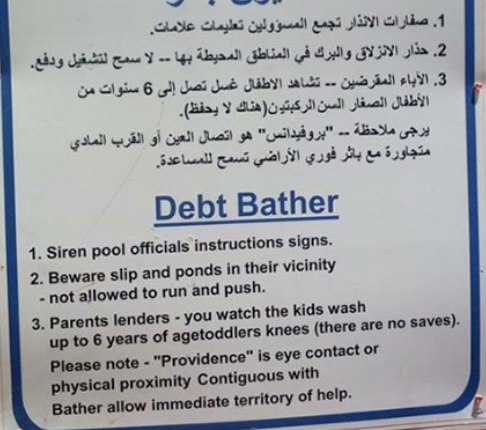
One of my favorite things about traveling to foreign countries, particularly those where English is not the primary language, is translations. Whether it be at restaurants, hotels, parks, or other attractions, there are some fantastic ones out there.

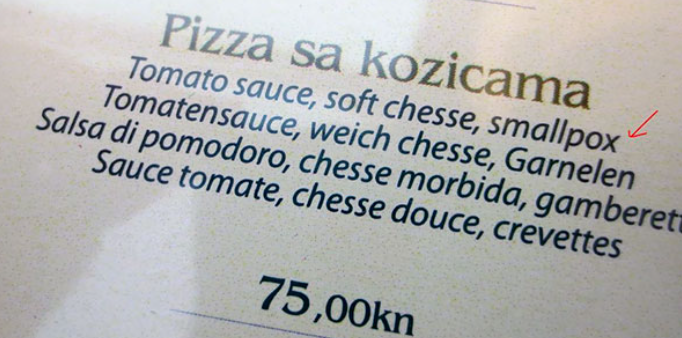
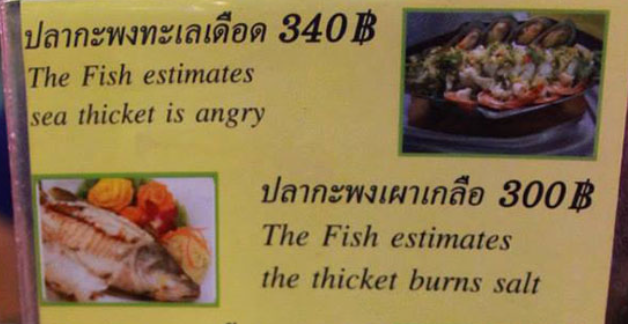
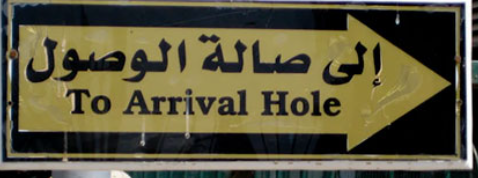
Today I’ll provide a few written ones, along with a few photos. Next time, I’ll give you the second half of the list and a few more photos. Enjoy!

From: 5 of The Funniest Examples of Translations Gone Wrong

  • Cocktail lounge, Norway: “Ladies are Requested Not to have Children in the Bar.”
  • Tokyo: “When passenger of foot heave in sight, tootle the horn. Trumpet him melodiously at first, but if he still obstacles your passage then tootle him with vigor.”
  • On an Athi River highway: “TAKE NOTICE: When this sign is under water, this road is impassable.”
  • Tokyo hotel’s rules and regulations: “Guests are requested NOT to smoke or do other disgusting behaviors in bed.”
  • Hotel lobby, Bucharest: “The lift is being fixed for the next day. During that time we regret that you will be unbearable.
  • In Nairobi restaurant: “Customers who find our waitresses rude ought to see the manager.”
  • In a New Zealand restaurant: “Open seven days a week, and weekends too.”
  • On the menu of a Swiss restaurant: “Our wines leave you nothing to hope for.”
  • Hotel elevator, Paris: “Please leave your values at the front desk.”
  • A menu in Vienna: “Fried milk, children sandwiches, roast cattle, and boiled sheep.”
  • Hotel in Japan: “You are invited to take advantage of the chambermaid.”
  • At a Korean restaurant in Auckland, New Zealand: “We do not re-use the food.”
  • Outside Paris dress shop: “Dresses for street walking.”
  • In a Rhodes tailor shop: “Order your summers suit. Because is big rush we will execute customers in strict rotation.”
  • Airline ticket office, Copenhagen: “We take your bags and send them in all directions.”
  • In a Bangkok dry cleaner’s: “Drop your trousers here for best results.”

Kara Church | Technical Editor, Advisory | Technical Publications

Pronouns: she/her | Call via Teams | jackhenry.com

Editor’s Corner Archives: https://episystechpubs.com/

Posted by: Jack Henry | November 7, 2024

Editor’s Corner: Famous typos

Good morning, my little pumpkin spice readers!

I was searching for some funny translations or a fantastic English fact to send you when I received an email from my mom. She sent the following link, which became today’s topic: typos. The article she sent is called 5 of the Most Famous Typos in History — History Facts.

I’ve seen some hilarious typos and accidentally made some of my own typos, so let’s see what the history buffs came up with.

  1. The Wicked Bible. The first typo they mention is from 1631. A couple of royal printers were tasked with a reprint of the King James Bible. They dutifully accomplished the task, but when it came to the Seventh Commandment, “Thou shall not commit adultery,” they left out the “not.” A bible encouraging people to commit adultery horrified the current king, and he demanded all copies be burnt. He also fined the men and took away their license. Approximately 20 copies survived and are rare collectors’ items.
  2. NASA’s $1 Million Typo. Much later, NASA earned this claim to fame in 1962. A misplaced hyphen resulted in a programming error, which called for the destruction of a shuttle that had just taken off for Venus. In the article, NASA said it wasn’t a missing hyphen, it was the “omission of an overbar for the symbol R for radius (R instead of R̅) in an equation,” as well as a guidance antenna on the atlas, which caused the failure.” The cost? $18.5 million (over $180 million today).
  3. Lincoln Memorial. The marble statue of Lincoln was created in 1922. As they prepared for the dedication, someone noticed a typo in the marble-carved transcription of one of his speeches. It said, “WITH HIGH HOPE FOR THE EUTURE.” Eventually, the error was corrected by filling in the bottom line of the “E,” but the flub is still visible to those looking for it.”
  4. D or d. In 1934, the second edition of Webster’s New International Dictionary was published. It included a special non-word, dord, between two real words. “Dord was listed as a noun referring to density in the fields of physics and chemistry. The intended entry was actually ‘D or d.’” The error remained undiscovered for five years.
  5. Google. This is straight from the article:
    In 1996, Larry Page and Sergey Brin, the co-founders of Google, named their new search engine “BackRub.” [KC – What the heck were these guys doing?] As their project grew, the tech duo began looking for a new name, and fellow Stanford student Sean Anderson reportedly suggested the name “googolplex,” the name of an incredibly large number (1 followed by a “googol” of zeroes). Page suggested the shorter “googol,” which is the mathematical expression for the number 1 followed by 100 zeros. Anderson typed the domain name to check its availability, but reportedly accidentally searched for “google.com.” The name stuck, and on September 15, 1997, Page and Brin registered the domain, a word that, while a happy accident, nonetheless succinctly reflected their mission to organize the world’s information.

That’s all I have for today!

Kara Church | Technical Editor, Advisory | Technical Publications

Pronouns: she/her | Call via Teams | jackhenry.com

Editor’s Corner Archives: https://episystechpubs.com/

Posted by: Jack Henry | November 5, 2024

Editor’s Corner: Odd Jobs

Good morning!

I was trying to think of some topics for the next couple of weeks, and I thought I’d check Merriam-Webster for ideas. I saw this photo and I had to see what the topic was:

The topic? Odd Jobs Quiz.

I was curious, so I looked at the quiz. It reminded me of an article that I wrote years ago about English names that are derived from jobs our ancestors had.

Here are some of the jobs from the quiz. Enjoy!

cooper

Coopers make and repair wooden barrels and tubs. Cooper can be traced to the Latin cupa meaning “cask.” People with the last name Cooper probably have a barrel maker somewhere in their lineage.

sawyer

Lumber cutter; someone who saws.

fletcher

A person who makes arrows. The term fletcher comes from the Anglo-French word for “arrow.”

tanner

A tanner is someone who tans the hides of animals to produce leather goods. [KC – Or someone who spends a lot of time
in the sun.]

chandler

A maker or seller of tallow or wax candles and usually soap.

Chandler can be added to other products to indicate someone is a retailer in that specific area (e.g., a yacht chandler).

I had to look at the etymology for chandler to see if they mention “chandeliers.” It can’t be a coincidence that both candles and chandeliers are sources of light. According to the Online Etymology Dictionary:

"maker or seller of candles," late 14c., attested as a surname from late 13c. (also, from early 14c. "candle-holder;" see chandelier), from Old French chandelier (n.2) "candle-maker, candle-seller; person in charge of lighting a household, monastery, etc.," from Medieval Latin candelarius "a candle-maker," from candela "candle" (see candle). Native candleman is attested from mid-13c. By 1580s the word also came to mean "dealer in provisions, merchant."

wainwright

A wagon-builder.
wain from the Old English for “wagon;” wright comes from an Old English word for “worker.”

lapidary

A cutter, polisher, or engraver of precious stones usually other than diamonds.

Derived from the Latin lapis meaning “stone,” a lapidary cuts, polishes, and engraves precious gems. The word can also be used as an adjective to describe that which is precise and elegant.

stevedore

Stevedores load and unload ships at a port. Stevedore can be traced to the Spanish estibar, meaning “to pack.”

haberdasher

In the U.S., haberdasher means “a dealer in men’s clothing and accessories.” In British English, it refers to someone selling sewing supplies like needle and thread. [KC – Before I moved here from Seattle, I lived over a haberdashery. They only sold hats, but there was something very freaky about it, especially at night.]

farrier

Farriers specialize in shoeing horses, a practice that includes shaping the shoe as well as trimming and cleaning the hoof. Farrier can be traced back to the Latin word ferrum meaning “iron.”

sexton

A sexton is “a church officer or employee who takes care of the church property and performs related minor duties (such as ringing the bell for services and digging graves).”

cordwainer

I grabbed this information from the Online Etymology Dictionary because it is a more thorough definition:

"shoemaker, leatherworker," originally "a worker in Cordovan leather," mid-14c.; mid-12c. as a surname, from Anglo-French cordewaner, from Old French cordoan "(leather) of Cordova," the Spanish city whose leather was famous for quality.

catchpole

A catchpole usually refers to a sheriff’s deputy who arrests those who fail to pay a debt. Catchpole comes from the Anglo-French cachepole meaning “chicken chaser.”

Kara Church | Technical Editor, Advisory | Technical Publications

Pronouns: she/her | Call via Teams | jackhenry.com

Editor’s Corner Archives: https://episystechpubs.com/

Posted by: Jack Henry | October 31, 2024

Editor’s Corner: Happy Halloween!

Good morning, folks!

Since I’ve kinda been on a Halloween kick lately, I thought I’d continue with something I don’t think I’ve covered before.

I was reading the history of something or other yesterday, and I stumble on pumpkins. Nope, I’m not going to talk about the history of pumpkins, but I am going to talk about where we got the word jack-o’-lantern from. (Usually, it’s defined as an illuminated face carved into a pumpkin.)

First, just the basics: vegetable carving. Who doesn’t love carving a vegetable? According to this article from History.com, “the practice of carving ghoulish faces on vegetables may have roots in Ireland, where large turnips served as early canvasses.” The people would carve out the turnips and put candles in them to light them up. “Irish immigrants brought the tradition to America, home of the pumpkin, and it became a part of Halloween festivities.”

That is the custom of vegetable carving and lighting, but that’s not all we borrowed from the Irish. We borrowed the name “jack-o’-lantern” from an Irish folk tale about a man named “Stingy Jack.” Here is an edited version of his story (for space).

The Legend of Stingy Jack

Stingy Jack invited the devil to have a drink with him. True to his name, Stingy Jack didn’t want to pay for his drink, so he convinced the devil to turn himself into a coin that Jack could use to buy their drinks. Once the devil did so, Jack decided to keep the money and put it into his pocket next to a silver cross, which prevented the devil from changing back into his original form.

Jack eventually freed the Devil, under the condition that he would not bother Jack for one year and that, should Jack die, he would not claim his soul. The next year, Jack again tricked the devil into climbing into a tree to pick a piece of fruit. While he was up in the tree, Jack carved a sign of the cross into the tree’s bark so that the devil could not come down until the devil promised Jack not to bother him for 10 more years.

Soon after, Jack died. As the legend goes, god would not allow such an unsavory figure into heaven. The devil, upset by the trick Jack had played on him and keeping his word not to claim his soul, would not allow Jack into hell. He sent Jack into the dark night with only a burning coal to light his way. Jack put the coal into a carved-out turnip and has been roaming the Earth with it ever since. The Irish began to refer to this ghostly figure as “Jack of the Lantern,” and then, simply “Jack O’Lantern.”

In Ireland and Scotland, people began to make their own versions of Jack’s lanterns by carving scary faces into turnips and placing them into windows or near doors to frighten away Stingy Jack and other wandering evil spirits.

So this (Stingy) Jack of the Lantern, eventually became Jack o’ lantern, and then jack-o’-lantern, and we Americans decided to use our own favorite carving model, the pumpkin.

There is more information out there about how this tradition became a Halloween standard, but this was the best explanation I found for the word jack-o’-lantern.

Kara Church | Technical Editor, Advisory | Technical Publications

Pronouns: she/her | Call via Teams | jackhenry.com

Editor’s Corner Archives: https://episystechpubs.com/

Posted by: Jack Henry | October 29, 2024

Editor’s Corner: Halloween, Witchcraft, and Black Magic Words

Good morning, my little chickadees!

I hope you are all well today. It’s been a fun month for watching scary movies and looking up words like sigil and grimoire, so I thought “Why stop now?” I read a great article on the history of “Trick or Treat” and one on jack-o’-lanterns (more to come on that topic), but I settled on a collection of words from Merriam-Webster’s article called 8 Words for Witchcraft and Black Magic.

I’m not going to print the whole thing here; I am just going to share pieces of it with you and maybe a little commentary here and there. See the full article for all eight items.

necromancy

noun 1 : conjuration of the spirits of the dead for purposes of magically revealing the future or influencing the course of events 2 : magic, sorcery

The first part of necromancy has its roots in the Greek word nekros, meaning "dead body" or "dead person." The second part has its roots in the Greek word manteuesthai, meaning "to divine, prophesy." Necromancy was practiced in ancient times by the Assyrians, Babylonians, Egyptians, Greeks, Romans, and Etruscans, but in medieval Europe it was condemned by the church and could get you in a bit of trouble.

goety

[KC – Pronounced go-et-tea, with the middle “et” kind of quiet and the emphasis on “tea.” Not goatee, like the facial hair.]

noun: black magic or witchcraft in which the assistance of evil spirits is invoked

Goety (which chillingly traces back to a Greek word meaning "to groan, weep, lament") is historically contrasted with theurgy, which refers to the art or technique of compelling or persuading a god or beneficent or supernatural power to do or refrain from doing something.

bruja

noun: witch, sorceress

Bruja has been referring to witches in English since the 19th century, but it was doing that job in Spanish long before that. Unlike most Spanish words, bruja (and its masculine counterpart brujo) comes not from Latin but from a non-Indo-European source, from an unknown word that is also ancestor to Portuguese bruxa and Catalan bruixa, meaning "witch."

diablerie

[Ooh, I like it already. It sounds like “diablo” (devil, Spanish) with the French word for pastry shop (pâtisserie)—where they make devils instead of devil’s food
cake!]

noun 1 : black magic: sorcery 2 a: a representation in words or pictures of black magic or of dealings with the devil b: demon lore

Like the more common diabolical, which means "of, relating to, or characteristic of the devil," the 18th century French borrowing diablerie traces back to Latin diabolus, meaning "devil."

incantation

noun: a use of spells or verbal charms spoken or sung as a part of a ritual of magic; also: a written or recited formula of words designed to produce a particular effect.

Incantation traces back to the Latin cantare, meaning "to sing"—the same source of the words chant and enchant. Another cantare word is the archaic, obscure, and semantically unexpected excantation, which refers to an act of freeing by enchantment.

gramarye (or gramary)

[KC – Pronounced grammar-ee. At first I was thinking, grammar-yay or even better…Grand Marnier! But no, it is related to the word we had the other day, grimoire.]

noun: necromancy, magic, enchantment

Gramarye comes from a Middle French word meaning "book of sorcery," but also "grammar" or "grammar book." Though modern English speakers don’t tend to mix their grammar with their sorcery, in medieval times the Latin word grammatica (and its lexical descendants in other languages) referred to (among other things) learning in general, which in those dark ages was understood by the unschooled populace of Europe to include magic and astrology.

Fun stuff, huh? These words are completely enjoyable…from a distance!

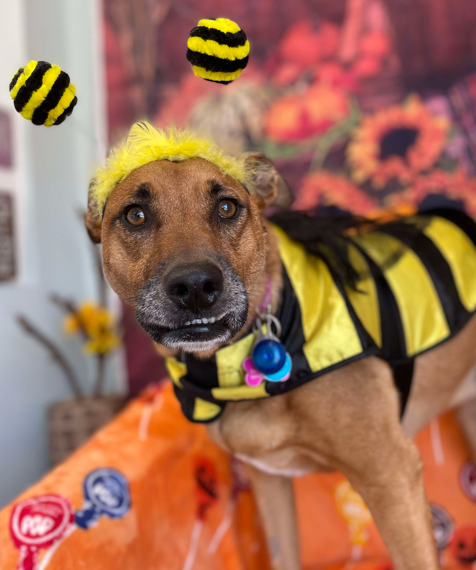
And from Sylvie, happy (almost) Halloween!
Kara Church | Technical Editor, Advisory | Technical Publications

Pronouns: she/her | Call via Teams | jackhenry.com

Editor’s Corner Archives: https://episystechpubs.com/

« Newer Posts - Older Posts »

Categories