Posted by: Jack Henry | April 18, 2016

Editor’s Corner: Mood Changers

Don’t let the subject line fool you. This is not going to be an article about that sinking feeling you get when you open your email to find an urgent, panicked message from your boss. This is about grammar; so give a sigh of relief, and let’s talk moods.

The term mood changers refers to words that alert readers to a change in mood from the previous clause or sentence. We also call these words transitions.

The list below is a partial list of mood changing words from William Zinsser’s book, On Writing Well (Zinsser 1998, 74):

Yet

However

Nevertheless

Still

Instead

Thus

Therefore

Meanwhile

But

Later

Subsequently

Zinsser points out that it is much easier for readers to process a sentence when writers use one of these words to shift direction.

Here are some examples showing how these mood-changing transitions can signify a shift:

· She said she raised her son to be independent, yet she continued to do his laundry and pack his lunch.

· The house was reported to be haunted by an evil spirit; nevertheless, he decided to spend the night.

· The police officers patrolled the main street; meanwhile, the robbers broke in from the alley.

· The software program had not been updated in years. Subsequently, it crashed.

Notice that the mood-changing words can be used to transition within one sentence or to begin a second sentence. Either way, they mark a shift in the mood of the text.

I haven’t had my tea yet and I feel a shift in my mood coming on, so I’ll sign off before this turns into the Cranky Editor’s Corner.

Donna Bradley Burcher | Senior Technical Editor | Symitar®

8985 Balboa Ave. | San Diego, CA 92123 | Ph. 619.278.0432 | Extension: 765432

Symitar Technical Publications Writing and Editing Requests

NOTICE: This electronic mail message and any files transmitted with it are intended
exclusively for the individual or entity to which it is addressed. The message,
together with any attachment, may contain confidential and/or privileged information.
Any unauthorized review, use, printing, saving, copying, disclosure or distribution
is strictly prohibited. If you have received this message in error, please
immediately advise the sender by reply email and delete all copies.

Posted by: Jack Henry | April 15, 2016

Editor’s Corner: April Q&A from CMOS

Good morning and happy Friday!

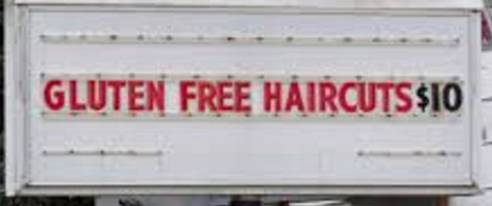
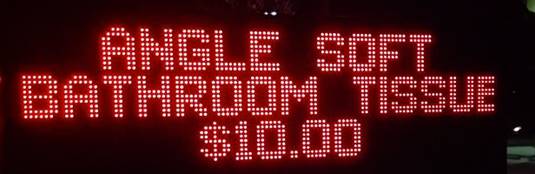
I’m getting quite a few fun photos from you with errors on signs and public punctuation problems. You have until May 13 (midday, Pacific Time), so keep your eyes open for more and send them to my email address. You get one point for each submission. I’ll pick a “Best in Show” winner and a random winner, so the more you send in, the better your chances are.

Today, I have a few items for you from the April Q&A in the Chicago Manual of Style.

Q. If a sentence is a question and ends with a quote which is not a question, should a question mark be used, and if so, where should it be placed?

A. Put a sentence-ending question mark outside the quoted statement: Can you believe he said “I like your face-lift”?

Q. Dear wise and knowledgeable CMOS person, a fellow writer and editor and I can’t agree. She insists that “well-trained dog” shouldn’t have a hyphen. I think it must have that hyphen. We were both pretty tired when this cropped up, so we ended up barking a bit at each other. We’d like to resolve this bone of contention by appealing to you, whom we both respect and trust. Whatever you say, we’ll abide by.

A. If the dog is well trained (no hyphen), it is a well-trained dog.

KC – To break that down:

· This dog is well trained. (Well is an adverb.)

· Your fluffy Doodle-Poodle is a well-trained dog! (Well-trained is an adjective.)

Kara Church

Technical Editor, Advisory
619-542-6773 | Ext: 766773

Symitar Documentation Services

NOTICE: This electronic mail message and any files transmitted with it are intended
exclusively for the individual or entity to which it is addressed. The message,
together with any attachment, may contain confidential and/or privileged information.
Any unauthorized review, use, printing, saving, copying, disclosure or distribution
is strictly prohibited. If you have received this message in error, please
immediately advise the sender by reply email and delete all copies.

Posted by: Jack Henry | April 14, 2016

Editor’s Corner: Rewriting

I recently read an article that included this quote from author James Michener: “I’m not a very good writer, but I’m an excellent rewriter.” I’ve heard several people say that they are not good writers. Writing isn’t easy for everyone, but the key to good writing is rewriting.

People (regardless of their writing skills) should revise and edit their writing with the goal of making it easy for others to understand. Remember that a first draft is a step in the writing process that allows writers to get out their ideas; it can take several drafts to ensure that the writing is clear and concise. And if you really want to make sure that your message is clear, ask a co-worker to review your documentation and to provide feedback.

Jackie Solano | Technical Editor | Symitar®

8985 Balboa Ave. | San Diego, CA 92123 | Ph. 619.542.6711 | Extension: 766711

Symitar Documentation Services

Posted by: Jack Henry | April 13, 2016

Editor’s Corner: Dibs

Now and then when I’m walking the dogs or daydreaming, I’ll think of a word or phrase or song from childhood that I never questioned at the time. The more I think of London Bridge falling down or the monkey chasing the weasel or “Jinx, buy me a Coke!” the more odd these memories seem. The other day, I came across one of those words in an article from The Grammarist, and I thought I’d pass it along to you.

Dibs and Calling Dibs

Dibs is a word used when laying claim to something. Calling dibs on something is an assertion of one’s rights. The idea of dibs, calling dibs or calling first dibs goes back to an eighteenth century children’s game called dibstones. Dibstones was a game akin to jacks, played with sheep knuckles. Children would announce “Dibs!” as they picked up each sheep knuckle, or called dibs. Eventually the term grew to include any instance when someone laid claim to something or asserted his right to possess it. For a time, dibs also referred to money.

After reading that and looking for a photo of a sheep, I stumbled upon more information about this sort of game in Wikipedia.

Knucklebones, Fivestones, or Jacks, is a game of ancient origin, usually played with five small objects, or ten in the case of jacks. Originally the "knucklebones" (actually the astragalus, a bone in the ankle, or hock[1]) were those of a sheep, which were thrown up and caught in various manners. Modern knucklebones consist of six points, or knobs, proceeding from a common base, and are usually made of metal or plastic. The winner is the first player to successfully complete a prescribed series of throws, which, though similar, differ widely in detail. The simplest throw consists in tossing up one stone, the jack, and picking up one or more from the table while it is in the air. This continues until all five stones have been picked up. Another throw consists in tossing up first one stone, then two, then three and so on, and catching them on the back of the hand. Different throws have received distinctive names, such as "riding the elephant," "peas in the pod," and "horses in the stable."

I have dibs on this sheep’s knuckles!

Kara Church

Technical Editor, Advisory
Symitar Documentation Services

Posted by: Jack Henry | April 12, 2016

Editor’s Corner: Casing

No, I’m not talking about sausage casing—I’m talking about letter casing. More specifically, I have a passage from The Grammar Devotional, by Mignon Fogarty (Grammar Girl) on camel case.

CamelCase

CamelCase (also known as medial capitals, intercaps, hump-backing, CapWords, and BiCapitalials, among other names) is the practice that has now become trendy of promoting a letter in the middle of a word to uppercase. Most often the capital letter in the middle seems to result from squishing two words together that would normally be separated by a space (e.g., MySpace), but occasionally the capital just seems to pop up at a convenient syllable (e.g., OutKast).

Although the phenomenon can be traced back to at least the 1950s, it gained steam among computer programmers (probably because spaces are often discouraged or disallowed in programming, so a convenient way to highlight multiple words in a file name or variable is to capitalize the first letter of each squished-together word). More recently, marketers decided it was a trendy way to make a company name stand out.

If a formal company name uses CamelCase (e.g., YouTube, PayPal, TiVo), use that form in your writing. But other than honoring official names, leave the camel at the zoo—don’t go around calling a plain old help desk a HelpDesk. It is definitely unnecessary!

Thanks to Pam W. for this photo. I’m afraid I paid after I existed!

Kara Church

Technical Editor, Advisory

Symitar Documentation Services

Posted by: Jack Henry | April 11, 2016

Editor’s Corner: Punctuation of Appositives

Good morning.

I imagine your first question after reading the subject line is, what the heck is an appositive? I’m right there with you. So, let’s start with a definition. An appositive is a word or phrase that is equivalent and has the same meaning as another word or phrase in the same sentence. For example, the appositive in the following sentence is in italics:

· Yahoo’s CEO, Marissa Mayer, was the company’s first female engineer and became the youngest CEO when she took over at age 37.

In the example, Marissa Mayer is an appositive for Yahoo’s CEO. In other words, Marissa Mayer and Yahoo’s CEO are the same person.

And here’s some information on how to punctuate appositives. When you use an appositive in the middle of your sentence, you need to encase it in commas as in the example above. Here are a couple more examples:

· My dog, Rover, doesn’t like other dogs. [my dog = Rover]

· During dinner, John, the loudest person at the table, told an off-color joke. [John = the loudest person at the table]

And if you use an appositive at the end of your sentence, place a comma before the appositive and a period after it, like this:

· No one wanted to sit next to John, the loudest person at the table.

Donna Bradley Burcher | Senior Technical Editor | Symitar®

8985 Balboa Ave. | San Diego, CA 92123 | Ph. 619.278.0432 | Ext: 765432

Posted by: Jack Henry | April 8, 2016

Editor’s Corner: Loose the Jargon

Do you sometimes feel like the editors badger you about using jargon and business-speak? Do you feel stifled because we want you to use simple language?

We badger out of love—for your readers. The problem is that every business sector creates their own jargon—abbreviations, acronyms, and buzzwords—that everyone else in their field knows, but outsiders don’t. A good example is legalese. If you’re not a lawyer, you probably have a hard time deciphering any legal document. Can I get an amen?

One of my colleagues (thanks, Ron!) recently shared an article called Did the IRS Flunk English? A Rant About Why You Can’t Do Your Taxes from the Acrolinx website, and I’m sharing an excerpt today as a warning and as a reminder of what not to do.

Read this paragraph from an IRS income tax form, and weep. And then, please (I would get on my knees and beg, but I’m dressed up today), think twice before using jargon and business-speak. You don’t want to make others feel like you are about to feel.

In case bond as provided in section 7324(3) shall have been executed and the property returned before seizure thereof by virtue of process in the proceedings in rem authorized in subsection (a) of this section, the marshal shall give notice of pendency of proceedings in court to the parties executing said bond, by personal service or publication, and in such manner and form as the court may direct, and the court shall thereupon have jurisdiction of said matter and parties in the same manner as if such property had been seized by virtue of the process aforesaid.

Donna Bradley Burcher | Senior Technical Editor | Symitar®

8985 Balboa Ave. | San Diego, CA 92123 | Ph. 619.278.0432 | Ext: 765432

Posted by: Jack Henry | April 7, 2016

Editor’s Corner: Endemic, Epidemic, Pandemic

Each year on April 7, the World Health Organization (WHO) celebrates World Health Day by drawing attention to an important global health issue. This year’s theme is "beat diabetes."

In discussions about global health, you might hear the words endemic, epidemic, and pandemic. Picking the right word to describe a disease depends on how quickly the disease spreads, and over how large of an area.

Endemic
If a disease does not spread, but is constant in a region, it is endemic (from the Greek en, in + dmos, people).

Malaria is endemic in some warmer regions, including sub-Saharan Africa and South Asia. Malaria cases are steadily declining, and malaria does not spread to other regions because the Anopheles mosquito does not live in colder climates.

Epidemic
If a disease spreads rapidly, but is confined to one region, it is an epidemic (from the Greek epi, on + dmos, people).

Recent epidemics include yellow fever in Angola, Zika virus in the Americas, H1N1 (swine flu) in India, and Ebola in West Africa.

Pandemic
If a disease spreads rapidly and is not confined to one region, it becomes a pandemic (from the Greek pan, all + dmos, people).

Pandemics can be devastating. In the 14th century, the bubonic plague killed 75100 million people across Europe and Asia. The 1918 Spanish influenza pandemic killed 4050 million people. Fortunately, pandemics are rare.

Diabetes: Endemic, Epidemic, or Pandemic?
The WHO calls diabetes an epidemic because it has spread so quickly. The number of people living with diabetes has nearly quadrupled since 1980 to 422 million. Low- and middle-income countries have seen an especially rapid increase.

Unlike most epidemics, diabetes is not contagious. Diabetes is treatable, and type 2 diabetes (which accounts for about 90 percent of diabetes) is preventable. The WHO is focusing on improving access to insulin in low-income countries and promoting lifestyle measures like engaging in regular physical activity and eating a healthy diet.

Ben Ritter | Technical Editor | Symitar
8985 Balboa Avenue | San Diego, CA 92123
619-682-3391 | or ext. 763391 | www.Symitar.com

Symitar Documentation Services

NOTICE: This electronic mail message and any files transmitted with it are intended
exclusively for the individual or entity to which it is addressed. The message,
together with any attachment, may contain confidential and/or privileged information.
Any unauthorized review, use, printing, saving, copying, disclosure or distribution
is strictly prohibited. If you have received this message in error, please
immediately advise the sender by reply email and delete all copies.

Posted by: Jack Henry | April 6, 2016

Editor’s Corner: April/May Contest!

April has just begun and it seems like a good time for another Editor’s Corner contest. In the past few weeks, I’ve received (and used) some funny photos you’ve submitted. Rather than having you write Tom Swifties or mondegreens for me, how about we switch it up a little and have you send photos?

What I’m looking for is poor punctuation, bad spelling, and atrocious advertising. I’d also settle for some fun and proper uses of English if you can find any. Just remember, the language should be tame enough for me to publish these photos at work.

Who is eligible? All recipients of Editor’s Corner who reside in the United States. If you get someone new to sign up for Editor’s Corner, I will enter your name twice! (Once for your photo and once for the new reader.)

What do you have to do? Take a photo as decribed or shown above that will make us laugh, and send it to kchurch.

What do I win? We have two prizes: t-shirts with the messages pictured below.

When do I have to turn in my photos? Well, I’m going to give you a nice long entry period since I’ll be out of the office for parts of April and May. How about Friday, May 13 at noon (PT)? That gives you over a month to keep your eyes open and your cameras (or phones) ready for all sorts of situations. During my vacation in Greece, I’m hoping to get a few of my own poorly translated Greek menu photos to share with you!

Why should I do this? Because it is fun! Because a few of you out there do it anyway! Because you might win a t-shirt!

Kara Church

Technical Editor, Advisory

Symitar Documentation Services

Posted by: Jack Henry | April 5, 2016

Editor’s Corner: In To and Into

By request, I am returning to this topic, which many find tricky: When should you use into and when should you use in to? Let’s start with definitions.

In and to are two words that sound just like the single word into. In is an adverb and to is a preposition. When they land next to each other in a sentence, they can cause confusion because they sound like the single word. Here are some examples of how these two words show up next to each other:

· She went in to attend the meeting.

· The SWAT team moved in to rescue the hostages.

As you can see, in is telling us where people are going, but to is part of the infinitive verb (to attend, to rescue).

Into is a single word and is categorized as a preposition. It expresses the movement of something toward or into something else and it generally answers the question where:

· I walked into my brother’s room.

· I jumped into the swimming pool.

· He logged into the system.

So, next time you aren’t sure if you need the single word into or the two words in to, consider whether you are answering the question “Where?” If yes, it’s likely that into is the word you are looking for.

If you still need help and learn better with pictures, try the Purdue OWL.

Kara Church

Technical Editor, Advisory

619-542-6773 | Ext: 766773

Symitar Documentation Services

NOTICE: This electronic mail message and any files transmitted with it are intended
exclusively for the individual or entity to which it is addressed. The message,
together with any attachment, may contain confidential and/or privileged information.
Any unauthorized review, use, printing, saving, copying, disclosure or distribution
is strictly prohibited. If you have received this message in error, please
immediately advise the sender by reply email and delete all copies.

« Newer Posts - Older Posts »

Categories