Posted by: Jack Henry | May 16, 2016

Editor’s Corner: Pleasantries

Last Monday we discussed greetings, and today I have some follow-up information about the meanings and origins of other common pleasantries. Click here to read the entire article. Enjoy your day!

How Do You Do?
This pleasantry, often responded to with an identical greeting but sometimes returned with something like, “I am well. And how are you?” is nearly obsolete but survives in the contraction “Howdy,” which is used without affectation in some regions of the United States, though some people use it as a self-conscious colloquialism.

Thank You
This pleasantry, short for “I thank you” but still considered formal, is often replaced by “Thanks,” which derives from a different comment, “I give you thanks.” The colloquial “Thanks a lot” is often uttered sarcastically, so it should be avoided in writing; the same is true of “Thanks a million.” An even more casual alternative is “Thanx.” (Thank, by the way, is cognate with think.)

Welcome
The two parts of this greeting are misleading in their apparent etymological origins: The first half does not have anything to do with well, and the second half is only tangentially related to come. The first part of the Old English word wilcuma means “will” and the second part means “guest,” not “come”; the sentiment is that it was a host’s will that a guest would arrive.

You’re Welcome
This response to “Thank you” and its variants, a slight contraction of “You are welcome,” literally means that one should feel entitled to whatever cordiality or service one has received from the person who gives the response.

Donna Bradley Burcher | Senior Technical Editor | Symitar®

8985 Balboa Ave. | San Diego, CA 92123 | Ph. 619.278.0432 | Extension: 765432

Symitar Technical Publications Writing and Editing Requests

NOTICE: This electronic mail message and any files transmitted with it are intended
exclusively for the individual or entity to which it is addressed. The message,
together with any attachment, may contain confidential and/or privileged information.
Any unauthorized review, use, printing, saving, copying, disclosure or distribution
is strictly prohibited. If you have received this message in error, please
immediately advise the sender by reply email and delete all copies.


Posted by: Jack Henry | May 13, 2016

Editor’s Corner: Love and Marriage

Happy Friday!

I want to thank all of you who have entered the photo contest. I will let you know who the two winners are next week (in case I get any other submissions today) and I’ll start sharing all of the entries with you. Good luck to all of you participants!

Now, as I promised yesterday, I have some articles and information to share with you about the influence of the Greek language on English. Today’s article is about the suffix –gamy. This suffix is derived from the Greek words for husband, wife, and marry, and it translates as “something to do with marriage or reproduction.” Unfortunately, in modern Greek, there is a form of the word that also equates to our “F word,” so be careful before you start repeating what you hear from your Greek friends!

From an article in Daily Writing Tips, here are your marriage-related words involving the Greek suffix –gamy.

· bigamy: marriage with a second wife or husband when already married. Bigamy became a criminal offense in England and Wales in 1640, and a federal offense in the United States in 1862.

· deuterogamy: marriage a second time; marriage after the death of a first husband or wife.

· digamy: another word for deuterogamy.

· endogamy: (anthropology) The custom of marrying only within the limits of a clan or tribe.

· exogamy: (anthropology) The custom by which a man is bound to take a wife outside his own clan or group.

· hypergamy: marriage with a partner of higher social standing.

· homogamy: marriage between partners of equal social status.

· hypogamy: marriage of a woman into a lower caste or into a tribe of lower standing than her own.

· misogamy: hatred of or opposition to marriage.

· monogamy: The condition, rule, or custom of being married to only one person at a time. Once it meant not remarrying after the death of a first spouse.

· pantagamy: A communal system of marriage in which all the men and women of a household or community are regarded as married to each other.

· polygamy: The practice or custom of having more than one spouse at the same time.

· octogamy: Marriage with eight spouses (successively or at the same time). Even the much-married Wife of Bath had only five husbands, but several modern celebrities have achieved the status of octogamist.

Mykonos at Sunset

Kara Church

Technical Editor, Advisory

Symitar Documentation Services

Posted by: Jack Henry | May 12, 2016

Editor’s Corner: It Was All Greek to Me!

Kαλημέρα! (Good morning!)

Yes, I have returned from My Big Fat Greek Orthodox Easter and it was everything I dreamed it would be! I’ve been trying to come up with some helpful new words learned, but unfortunately my “nephews” (15 and 18 years old) did not teach me much that I can share with you and still have a job.

Instead, I have found a few articles about the connection between Greek and English words that I will provide you with in the upcoming days.

For now, here is a photo of the island, Delos, and its ruins, one of the coolest places we visited:

Delos is the supposed birthplace of the twin gods Apollo and Artemis. Here is a bit of information on these two from their Wikipedia articles:

· Apollo:

The ideal of the kouros (a beardless, athletic youth), Apollo has been variously recognized as a god of music, truth and prophecy, healing, the sun and light, plague, poetry, and more.

· Artemis:

The Hellenic goddess of the hunt, wild animals, wilderness, childbirth, virginity and protector of young girls, bringing and relieving disease in women; she often was depicted as a huntress carrying a bow and arrows. [KC-How can someone be the goddess of virginity and childbirth? I’m still trying to figure that out.]

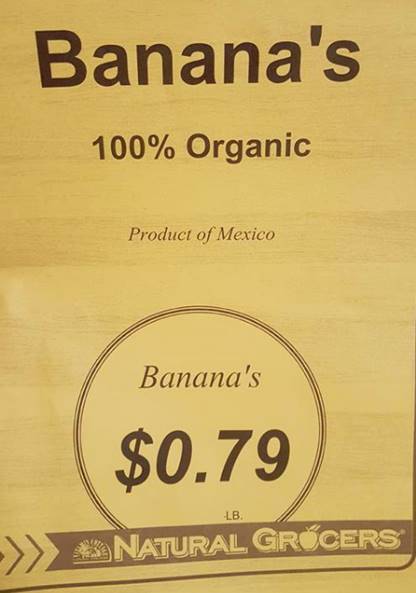
And as a reminder, tomorrow is the last day for photo contest entries! Remember, I’m looking for poor punctuation, bad spelling, atrocious advertising, and any public mistakes on signage that you think deserves attention. I brought one home from the new Acropolis Museum (amazing):

I’m not sure why they felt the need to translate faba (fava) as anything but fava beans, but I ordered the “spit beans” from Santorini anyway. They were delicious!

Kara Church

Technical Editor, Advisory

Symitar Documentation Services

Posted by: Jack Henry | May 11, 2016

Editor’s Corner: Commonly Confused Words

The words there, their, and they’re along with the words your and you’re are often confused because they are pronounced similarly (respectively). Here’s the difference between these words (definitions from Merriam-Webster):

· there: in or at that place : at that location

Please do not sit there.

· their: relating to or belonging to certain people, animals, or things

Their flight was canceled.

· they’re: contraction of “they are”

They’re going to be late.

· your: relating to or belonging to you

Your presentation was informative.

· you’re: contraction of “you are”

You’re welcome.

Jackie Solano | Technical Editor | Symitar®

8985 Balboa Ave. | San Diego, CA 92123 | Ph. 619.542.6711 | Extension: 766711

Symitar Documentation Services

Posted by: Jack Henry | May 10, 2016

Editor’s Corner: Premier, Part Two

In response to my last post about premier and premiere, some readers wrote to ask about the Canadian title premier. How is it spelled, and what does it mean?

How Is Premier Spelled?

Whenever the word premier is used to refer to a government official, it is spelled premier. Remember the definition that we learned last week:

· premier (adjective): first in position, rank, or importance

When we talk about "a premier" or "the premier," we are using premier as a noun instead of an adjective, but it still refers to a person who is first in position, rank, or importance.

What Does Premier Mean?

The title premier means different things in different countries.

In Canada, premier refers to the head of government for one of Canada’s 10 provinces or 3 territories (a title roughly equivalent to governor in the United States).

These leaders were formerly known as prime ministers. The word premier was used to avoid confusion with the head of the national government, also called the prime minister. Premier is now the official title.

Australia and South Africa similarly use the title premier to refer to the head of government for a state or province.

Other countries (including Cambodia, China, Croatia, the Czech Republic, Italy, Macedonia, and Serbia) use premier to refer to the head of government for the entire country. In some of these countries, premier is the official title; in others, it is a colloquialism for prime minister.

Ben Ritter | Technical Editor | Symitar®
8985 Balboa Avenue | San Diego, CA 92123
619-682-3391 | or ext. 763391 | www.Symitar.com

Symitar Documentation Services

NOTICE: This electronic mail message and any files transmitted with it are intended
exclusively for the individual or entity to which it is addressed. The message,
together with any attachment, may contain confidential and/or privileged information.
Any unauthorized review, use, printing, saving, copying, disclosure or distribution
is strictly prohibited. If you have received this message in error, please
immediately advise the sender by reply email and delete all copies.
Posted by: Jack Henry | May 9, 2016

Editor’s Corner: Greetings

Greetings!

Have you ever thought about the meanings and origins of our common greetings and pleasantries? Today, I have a list of some of these terms along with some interesting background information. This information comes from the Daily Writing Tips website. You can click here to read the entire article.

Farewell
This short version of “I hope you fare well” (fare here means “do”) was originally said as a parting comment to a person leaving the company of one or more other people; the departing person would traditionally respond “Good-bye.” Now, it is sometimes used in distinction with “Good-bye,” which has a connotation of finality, whereas “Farewell” implies that the parties will meet again.

Good Day and Good Night
These abbreviated versions of “I wish you a good day/night” are almost invariably said when a person parts company with one or more others.

Good Morning, Good Afternoon, and Good Evening
Unlike “Good day” and “Good night,” these expressions are usually uttered as greetings at the appropriate time of day or night, though they are sometimes said in parting.

Good-bye
This comment, given when one party or another departs, is a contraction of “God be with ye”; it’s often spelled goodbye.

Greetings
The root word of this outdated but occasionally employed comment, an abbreviation of “I give you greetings,” originally meant “to come in contact with.”

Hello
The greeting hello likely derives from the Old High German call hala (also hola), meaning “fetch,” which was originally used to hail the operator of a ferryboat and expanded as general usage for getting someone’s attention and then as a greeting. A great variety of spellings, probably as a result of various pronunciations, persisted well into the twentieth century. Hello became more popular toward the end of the 1800s as it prevailed as the dominant form of greeting when calling someone on a telephone. Holler (meaning “a shout”), and possibly hullabaloo (meaning “a commotion”), are related.

Hi
“Hi,” used as an informal alternative to “Hello,” is unrelated to that word, though it also derives from a word used to attract attention: hey. It originally was uttered as an exclamation of surprise.

Donna Bradley Burcher | Senior Technical Editor | Symitar®

8985 Balboa Ave. | San Diego, CA 92123 | Ph. 619.278.0432 | Extension: 765432

Symitar Technical Publications Writing and Editing Requests

NOTICE: This electronic mail message and any files transmitted with it are intended
exclusively for the individual or entity to which it is addressed. The message,
together with any attachment, may contain confidential and/or privileged information.
Any unauthorized review, use, printing, saving, copying, disclosure or distribution
is strictly prohibited. If you have received this message in error, please
immediately advise the sender by reply email and delete all copies.

Posted by: Jack Henry | May 6, 2016

Editor’s Corner: When Do I Capitalize “Mom”?

Good morning, and happy Friday!

I’m sure I don’t have to remind you that it’s Mother’s Day on Sunday, and if you did forget, shame on you!

Over the years, a few people have asked me when to capitalize familial terms like mom, dad, or granny. Here’s your answer. It comes from an article on the Daily Writing Tips website.

Capitalize mom and related words when the term is a form of direct address substituting for a name: You’re asking, “Can I go see a movie, Mom?” just as you would ask, “Can I go see a movie, Jane?”

When you speak of your mother to another person, substituting mom for her name, the word, for the same reason, is capitalized: Compare “I asked Mom if I could go see a movie” and “I asked Jane if I could go see a movie.”

But if you precede mom with a pronoun [dbb – like my or your], it is a generic noun, equivalent to a designation for any other person: “I asked my mom if I could go see a movie” is equivalent to “I asked my dentist if I could go see a movie.”

I wish all of you moms a very happy Mother’s Day.

Donna Bradley Burcher | Senior Technical Editor | Symitar®

8985 Balboa Ave. | San Diego, CA 92123 | Ph. 619.278.0432 | Ext: 765432

Posted by: Jack Henry | May 5, 2016

Editor’s Corner: Premier and Premiere

Last week, I wrote about the commonly confused words principal and principle. This week, we’ll demystify another confusing word pair: premier and premiere.

The English words premier and premiere come from the same French adjective, which is spelled premier or première.

The adjective premier entered English in the 15th century. The noun premiere didn’t come until much later (in 1889), and the verb premiere later still (in 1927).

Premier

Merriam-Webster defines premier as follows:

· premier (adjective): first in position, rank, or importance

When you want to say that something is the best (as in "San Diego’s premier taco shop" or "Alaska’s premier joke-teller"), the correct spelling is premier.

Premiere

Premiere is short for première représentation, a French phrase meaning first presentation. The French shortened the phrase before it made its way to English; we just removed the accent over the second e.

Merriam-Webster defines premiere as follows:

· premiere (noun): the first performance or exhibition (as of a play)

· premiere (verb): to give a first public performance or showing of

When you want to say that something debuted to the public (like a movie, a play, or a television series), the correct spelling is premiere.

Premiere can be a noun ("I camped overnight for the premiere of The Force Awakens") or a verb ("The first movie to premiere at Grauman’s Chinese Theatre was Robin Hood in 1922").

How to Remember the Difference

You have your choice of two mnemonics:

· The first showing of a movie is its premiere. Movie and premiere both end with e.

· A premiere relates to entertainment. Entertainment starts with e.

Ben Ritter | Technical Editor | Symitar®
8985 Balboa Avenue | San Diego, CA 92123
619-682-3391 | or ext. 763391 | www.Symitar.com

Symitar Documentation Services

NOTICE: This electronic mail message and any files transmitted with it are intended
exclusively for the individual or entity to which it is addressed. The message,
together with any attachment, may contain confidential and/or privileged information.
Any unauthorized review, use, printing, saving, copying, disclosure or distribution
is strictly prohibited. If you have received this message in error, please
immediately advise the sender by reply email and delete all copies.

Posted by: Jack Henry | May 4, 2016

Editor’s Corner: Get your athleisure on!

According to a blog on Merriam-Webster’s unabridged website, more than 1,400 new terms and phrases were added to the unabridged version of the dictionary. Here are a few of the new words:

athleisure: casual clothing designed to be worn for exercising and for general use

nomophobia: fear of being without access to a working cell phone

dox: to publicly identify or publish private information about (someone) especially as a form of punishment or revenge

microlending: the lending of money in small amounts to impoverished individuals and groups who are unable to obtain loans from mainstream banks

waggle dance: a series of figure-eight movements performed by a bee to indicate the direction and abundance of a distant food source

dipsogenic: producing thirst

urban fantasy: a genre of imaginative fiction featuring supernatural characters or elements in an urban setting

meet-cute: a cute, charming, or amusing first encounter between romantic partners (as in a movie)

TMI (abbreviation): too much information

FOMO: fear of missing out

hella (adverb): very, extremely

hella (adjective): a lot of

wacky tobacky: marijuana

Jackie Solano | Technical Editor | Symitar®

8985 Balboa Ave. | San Diego, CA 92123 | Ph. 619.542.6711 | Extension: 766711

Symitar Documentation Services

NOTICE: This electronic mail message and any files transmitted with it are intended
exclusively for the individual or entity to which it is addressed. The message,
together with any attachment, may contain confidential and/or privileged information.
Any unauthorized review, use, printing, saving, copying, disclosure or distribution
is strictly prohibited. If you have received this message in error, please
immediately advise the sender by reply email and delete all copies.

Posted by: Jack Henry | May 3, 2016

Editor’s Corner: Beg the Question

In Donna’s recent post about the most hated clichés, the phrase beg the question caught my attention. I find this cliché especially annoying because it’s not just overused; it’s also usually misused.

What Begging the Question Means

Begging the question refers to a logical fallacy in which the conclusion of an argument is used as evidence in the same argument.

For example, consider the following sentence: "Of course the mayor is honest; he said so himself!" If you break down the logic of this argument, it goes something like this:

1. The mayor is honest.

2. Because the mayor is honest, the things he says are true.

3. The mayor said he is honest.

4. Therefore, the mayor is honest.

If you already believe that the mayor is honest, this argument might seem fine (you didn’t need convincing, anyway). But if you think the mayor is dishonest, this argument won’t change your mind. Instead of providing evidence of the mayor’s honesty, it’s just begging the question: assuming the thing it’s supposed to prove.

What Begging the Question Doesn’t Mean

Begging the question doesn’t mean inviting an obvious question. Most editors (including those who follow the Chicago Manual of Style) would consider the following sentence to be incorrect: "The mayor resigned, which begs the question, ‘Who will be the new mayor?’" Instead, they would say, "The mayor resigned, which raises the question, ‘Who will be the new mayor?’"

However, this incorrect usage has become so common that some sources now consider it acceptable. For example, Merriam-Webster’s Collegiate Dictionary now includes the following definition:

· beg the question: to elicit a question logically as a reaction or response

Although this usage is common and may continue to become more widely accepted, for now, it’s best to say raises the question.

Ben Ritter | Technical Editor | Symitar®
8985 Balboa Avenue | San Diego, CA 92123
619-682-3391 | or ext. 763391 | www.Symitar.com

Symitar Documentation Services

NOTICE: This electronic mail message and any files transmitted with it are intended
exclusively for the individual or entity to which it is addressed. The message,
together with any attachment, may contain confidential and/or privileged information.
Any unauthorized review, use, printing, saving, copying, disclosure or distribution
is strictly prohibited. If you have received this message in error, please
immediately advise the sender by reply email and delete all copies.

« Newer Posts - Older Posts »

Categories