Posted by: Jack Henry | July 12, 2016

Editor’s Corner: A Couple (of)

This is one of those topics I find interesting because there seems to be an old rule behind it, but it’s not a rule I learned. The question is whether you have to use the word “of” after “a couple.” For example, is it “I’d like a couple of margaritas, please,” or can you just say, “I’d like a couple margaritas”?

I’ve been corrected for forgetting the “of” in some of my Editor’s Corners (though the bartenders never seem to mind my grammar). Then, one of you asked the same question about “of.” Basically, everything I could find about using “a couple of” said that you need the “of.” Here is some additional information I found.

The Chicago Manual of Style says that “(u)sing couple as an adjective is poor phrasing. Add of {we watched a couple of movies}.”

I also read that you can only use “a couple” if you are referring to two people, such as “The couple looked through Bed, Bath, and Beyond for potential wedding gifts.”

Looking a little deeper, I found this from our favorite dictionary, Merriam-Webster, about using the phrase “a couple of” plus the word “more”:

…(M)any people consider a couple of + more ungrammatical, so it shouldn’t be used in formal or academic writing.

In formal and informal English, a couple of can be used with a plural noun, or with an adjective + plural noun, as in these examples:

· a couple of times (= approximately two times)

· a couple of years ago (= approximately two years ago)

· a couple of new chairs (= approximately two new chairs)

A couple of can also be used with the numbers dozen, hundred, thousand, million, and billion to mean that there are approximately two times that number, as in:

· a couple of dozen students (= approximately 24 students)

· a couple of hundred years ago (= approximately two hundred years ago)

A couple of cannot be used with other numbers (a couple of fifty people).

Lastly, here is a little bit more about whether “couple” should be considered singular or plural.

From the New York Times blog:

Couple may be either singular or plural. Used in reference to two distinct but associated people, couple should be construed as a plural: The couple were married in 1952. The couple argued constantly; they [not it] even threw punches. When the idea is one entity rather than two people, couple may be treated as a singular: Each couple was asked to give $10; The couple was the richest on the block. In general, couple causes fewer problems when treated as a plural.

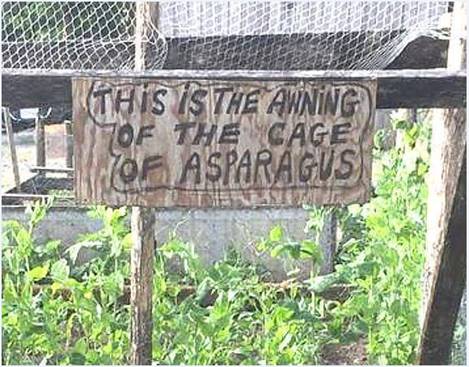
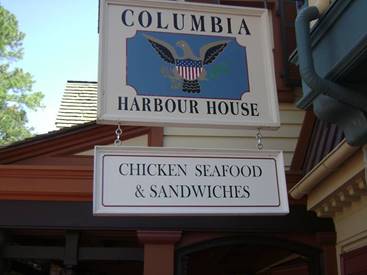
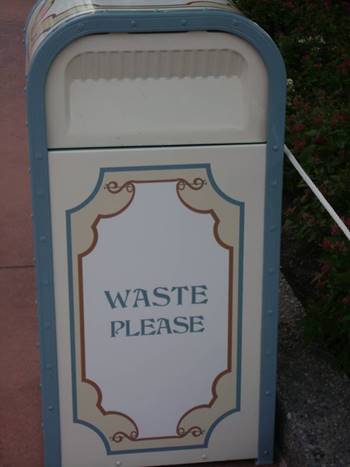
Here are a couple of photos from the contest to lighten the rest of your day (from Jamie Roller):

Kara Church

Technical Editor, Advisory

Symitar Documentation Services

Posted by: Jack Henry | July 11, 2016

Editor’s Corner: Golf Terms

Good morning. It’s a beautiful day today. If I were a golfer, this would be a great day to play. I think I would enjoy playing golf, but I’ve never tried it. Ask my husband—I don’t need another expensive hobby.

A while back, I talked about the meaning of the phrase chip in, and Steve (a friend of the Editor’s Corner), chipped in with a golf-related definition (golfers chip in when they hit a chip shot into the cup). That got me to thinking about other golf-related terms. We all know some common golf terms: birdie, bogey, eagle, and par. And although the following terms may not be new to you regular golfers, I thought they were interesting.

· Banana ball: A slice that curves in a banana like shape from left to right (for right-handed golfers).

· Bent grass: The type of grass that is found in mostly northern climates.

· Casual water: Any temporary puddles of water on the course that are not supposed to be there, like say for instance after a rainstorm. There is no penalty for a player to move his or her ball out of casual water.

· Dogleg: A hole that goes straight for a while then has a bend (or “dogleg”) to the left or right.

· Duffer: One who hits a lot of bad shots. Can also be called a “hacker.” [dbb – OK, I’ve heard this one, but I didn’t know it was a golf term.]

· Fat shot: The club hits the ground behind the ball and results in a poorly struck shot that usually doesn’t go very far.

· Mulligan: An extra shot that your opponent may allow you to take when you hit a really bad first shot. [dbb – Again, not a new term, but who knew it had anything to do with golf? Well, not me, anyway.]

· Sandbagger: A golfer who purposely pretends to be a worse golfer than he or she really is in order to gain an edge in competition.

· Waggle: The movement of the club head just prior to the player taking a swing.

· Whiff: Swinging and missing the ball.

· Worm burner: A shot that skims very low along the ground, thus killing any worms that may be poking their heads up.

If you’d like to read more, click here. Enjoy this lovely day, even if you can’t squeeze in a game of golf.

Donna Bradley Burcher | Senior Technical Editor | Symitar®

8985 Balboa Ave. | San Diego, CA 92123 | Ph. 619.278.0432 | Extension: 765432

Symitar Technical Publications Writing and Editing Requests

NOTICE: This electronic mail message and any files transmitted with it are intended
exclusively for the individual or entity to which it is addressed. The message,
together with any attachment, may contain confidential and/or privileged information.
Any unauthorized review, use, printing, saving, copying, disclosure or distribution
is strictly prohibited. If you have received this message in error, please
immediately advise the sender by reply email and delete all copies.

Posted by: Jack Henry | July 8, 2016

Editor’s Corner: Parentheses and Plurals

Today’s tidbit is a little bit more information from the book But Can I Start a Sentence with “But”? Advice from the Chicago Manual of Style Q&A.

Q. Is it correct to use parentheses to indicate the possibility of a noun as a singular or plural? Example: Child(ren).

A. I wouldn’t do it. It’s not so much an issue of correctness as of ickiness.

Q. In a policy, I have to indicate that the word facility could be plural. The person editing the document has written it as facility(s). What is the correct way to portray nouns that end in y when necessary to indicate they could be singular or plural?

A. “Facility or facilities” and “one or more facilities” are both clear. And often the simple singular does just fine in implying one or more: “In the event that your facility is struck by terrorists, this contract is void.” You can see that if two facilities were struck by terrorists, the clause would apply to both.

We are definitely in agreement with the CMOS when it comes to the icky factor of using parentheses to indicate a noun might be singular or plural. Not only does it look indecisive, the second you start using verbs it causes more problems. (The child(ren) is (are) going to the store. Ew!)

When writing, spell it out for your reader (as in the second answer “facility or facilities”) or use the single (or plural) version of the noun throughout the document. Your readers know whether they have one facility or two, one server or three, a single wire or fifteen wires—and they can “translate” the verbs from “is” to “are” accordingly.

Kara Church

Technical Editor, Advisory

619-542-6773 | Ext: 766773

Symitar Documentation Services

NOTICE: This electronic mail message and any files transmitted with it are intended
exclusively for the individual or entity to which it is addressed. The message,
together with any attachment, may contain confidential and/or privileged information.
Any unauthorized review, use, printing, saving, copying, disclosure or distribution
is strictly prohibited. If you have received this message in error, please
immediately advise the sender by reply email and delete all copies.


Posted by: Jack Henry | July 7, 2016

Editor’s Corner: Prefixes, Part 2: A- Strikes Back

Several readers wrote to tell me that they enjoyed last month’s post about the prefix be-, so in the spirit of Hollywood blockbuster season, I churned out a sequel. This week, let’s discuss the prefix a-.

From Greek

Sometimes, a- means not or without, as in words like atypical (not typical), asocial (not social), amoral (neither moral nor immoral), and apolitical (having no interest or involvement in political affairs).

This meaning of the prefix a- comes from Greek. When used in this sense, a-:

  • Usually accompanies words with Greek roots (like typikos and politikos) or Latin roots (like socialis and moralis).
  • Is usually pronounced with a long a sound (as in day or fade).

From German

What about words like asleep (in a state of sleep) and afoot (on foot)? Why don’t they mean "not sleeping" and "not on foot"?

In addition to Greek and Latin, English borrowed many words from German. Old English used the prefix a- in a variety of ways unrelated to the Greek meaning. Merriam-Webster includes the following definitions:

  • on : in : at <abed>
  • in (such) a state or condition <afire>
  • in (such) a manner <aloud>
  • in the act or process of <gone a-hunting> <atingle>

When used in this sense, a-:

  • Usually accompanies words with roots in Old High German (like slf, sleep; fuot, foot; betti, bed; fiur, fire; and hlt, loud).
  • Is usually pronounced with a neutral vowel sound (as in about or supply).

With the exception of asleep, I think these words sound quaint. Unless you’re trying to write in an old-fashioned style, I recommend using equivalent prepositional phrases when they exist (like on foot, in bed, on fire, and out loud).

Ben Ritter | Technical Editor | Symitar
8985 Balboa Avenue | San Diego, CA 92123
619-682-3391 | or ext. 763391 | www.Symitar.com

Symitar Documentation Services

NOTICE: This electronic mail message and any files transmitted with it are intended
exclusively for the individual or entity to which it is addressed. The message,
together with any attachment, may contain confidential and/or privileged information.
Any unauthorized review, use, printing, saving, copying, disclosure or distribution
is strictly prohibited. If you have received this message in error, please
immediately advise the sender by reply email and delete all copies.

Posted by: Jack Henry | July 6, 2016

Editor’s Corner: Q&A on Acronyms

Dear readers,

I bought a book a couple of weeks ago, the second I found out about it. It is from the Chicago Manual of Style and is based on their monthly Q&A section. I read through it eagerly and look forward to bringing bits and pieces of it to you. It’s called But Can I Start a Sentence with “But”? Advice from the Chicago Manual of Style Q&A. Today’s two entries are about acronyms.

Q. I am proofing an engineering document. There is a section titled “System Engineering Instructions Team (SEIT).” However, this acronym is already defined in the body of a previous section. The argument is that the section in question should simply be titled “SEIT.” However, I don’t think the section title should be reduced to “SEIT” because the reader may not know what SEIT means upon first glance at the table of contents. I say it’s okay to redefine the acronym if it suddenly becomes the title of a major section. Is it ever okay to redefine an acronym after it has already been defined?

A. Of course it’s okay! What good is a rule that says you can’t help the reader when it seems like a good idea? Redefine an acronym whenever a reader might reasonably have forgotten it.

Q. When you write about a GIF in a text, can you just refer to it as a GIF on first reference or do you have to write “graphic interchange format (GIF)”? I don’t think the long version is actually helpful; more people know it as GIF. And I’d be using it as a noun.

A. You never have to do anything that isn’t helpful. If a style guide says you do, you need a better guide.

And now, more from our photo contest in April and May.

From Amber Batriz:

And from George Duda:

Kara Church

Technical Editor, Advisory

Symitar Documentation Services

Posted by: Jack Henry | July 5, 2016

Editor’s Corner: Pie in the Sky

Good morning, folks. I hope you enjoyed your weekend!

One of our coworkers sent me an article that mentioned the phrase “pie in the sky” and then provided the Korean equivalent, which is “rice cake in a picture.” I tried to think of what, exactly, the idiom “pie in the sky” meant. I gave it my best guess and then checked in with The Free Dictionary and its idioms. Here are a few of their examples.

Pie in the Sky

· McGraw-Hill Dictionary of American Idioms and Phrasal Verbs. © 2002 by The McGraw-Hill Companies, Inc.

1. Fig. a future reward after death, considered as a replacement for a reward not received on earth. Don’t hold out for pie in the sky. Get realistic. If he didn’t hope for some heavenly pie in the sky, he would probably be a real crook.

2. Fig. having to do with a hope for a special reward. (This is hyphenated before a nominal.) Get rid of your pie-in-the-sky ideas! What these pie-in-the-sky people really want is money.

· Cambridge Dictionary of American Idioms Copyright © Cambridge University Press 2003.

Something good that is unlikely to happen. Our leaders need to offer more than pie in the sky when they talk about political and social issues.

· The American Heritage® Dictionary of Idioms by Christine Ammer.

An empty wish or promise, as in His dream of being hired as a sports editor proved to be pie in the sky. This expression was first recorded in 1911 in a rallying song of a union, the International Workers of the World (or "Wobblies"): "Work and pray, live on hay, you’ll get pie in the sky when you die."

Thank goodness, we are Jack Henrians rather than Wobblies!

Kara Church

Technical Editor, Advisory

619-542-6773 | Ext: 766773

Symitar Documentation Services

NOTICE: This electronic mail message and any files transmitted with it are intended
exclusively for the individual or entity to which it is addressed. The message,
together with any attachment, may contain confidential and/or privileged information.
Any unauthorized review, use, printing, saving, copying, disclosure or distribution
is strictly prohibited. If you have received this message in error, please
immediately advise the sender by reply email and delete all copies.
Posted by: Jack Henry | July 1, 2016

Editor’s Corner: July 4 and Presidents of the U.S.

Hello and happy Friday!

My dear friend, Ron, left a copy of this article about U.S. presidents on my desk. Since the next Presidents’ Day is in February 2017, I thought now would be the second most appropriate time to share this with you, since the Independence Day is coming soon.

This article about presidential names is by Richard Lederer, from the San Diego Union-Tribune.

Ulysses S. Grant, our 18th president, came into this world as Hiram Ulysses Grant. When his name was mistakenly entered on the West Point register as Ulysses Simpson Grant , he eagerly embraced the error because he detested the initials H.U.G. and loved having the initials U. S. , as in “United States,” “Uncle Sam” and “Unconditional Surrender.”

Using the nicknames below, identify the real name of each American president. The answers repose at the end of this column.

1. The Great Emancipator

2. Old Hickory

3. The Father of His Country

4. The Sage of Monticello

5. Ike

6. The King of Camelot

7. Tricky Dicky

8. Silent Cal

9. Tippecanoe

10. Old Rough and Ready

11. The Gipper

12. The New Dealer

13. The Rough Rider

14. Big Bill

15. The Bachelor President

Presidents have more than their share of intriguing middle names. Two of them—Ronald Wilson Reagan and William Jefferson Clinton—match the last names of two of their predecessors. Using each middle name listed, identify the full name of each American president:

1. Abram

2. Baines

3. Birchard

4. Delano

5. Fitzgerald

6. Gamaliel

7. Hussein

8. Knox

9. Milhous

10. Quincy

Anybody can ascend to the presidency of the United States. Jefferson did it, Nixon did it and Truman did it. So any Tom, Dick and Harry can become president!

What is the most popular first name among presidents? The answer isn’t Tom, Dick or Harry. It’s James. Six presidents share that first name— Madison, Monroe, Polk, Buchanan, Garfield and Carter (the first president to use his nickname). Tied for second place are William with four—Harrison, McKinley, Taft and Clinton—and John with four—Adams, Quincy Adams, Tyler and Kennedy. Massachusetts is the birth state of three presidents named John—John Adams, John Quincy Adams and John F. Kennedy.

Despite 14 presidents with the first names James, John and William, 19 of our chief executives, starting with Thomas Jefferson and ending with Barack Obama, have first names not shared by any other in the office. Our next president will likely be the 20th.

For the remainder of the article, click here.

For the answers, scroll down a little. Enjoy the holiday!

Quiz 1 (Nickname) Answers:

1. Abraham Lincoln

2. Andrew Jackson

3. George Washington

4. Thomas Jefferson

5. Dwight Eisenhower

6. John Fitzgerald Kennedy

7. Richard Nixon

8. Calvin Coolidge

9. William Henry Harrison

10. Zachary Taylor

11. Ronald Reagan

12. Franklin Roosevelt

13. Theodore Roosevelt

14. William Howard Taft

15. James Buchanan

Quiz 2 (Middle Name) Answers:

1. James Abram Garfield

2. Lyndon Baines Johnson

3. Rutherford Birchard Hayes

4. Franklin Delano Roosevelt

5. John Fitzgerald Kennedy

6. Warren Gamaliel Harding

7. Barrack Hussein Obama

8. James Knox Polk

9. Richard Milhous Nixon

10. John Quincy Adams

Kara Church

Technical Editor, Advisory

619-542-6773 | Ext: 766773

Symitar Documentation Services

NOTICE: This electronic mail message and any files transmitted with it are intended
exclusively for the individual or entity to which it is addressed. The message,
together with any attachment, may contain confidential and/or privileged information.
Any unauthorized review, use, printing, saving, copying, disclosure or distribution
is strictly prohibited. If you have received this message in error, please
immediately advise the sender by reply email and delete all copies.

Posted by: Jack Henry | June 30, 2016

Editor’s Corner: Fewer vs. Less

The words fewer and less are often misused. Although both words refer to a smaller quantity of something, there is a difference. Here’s the general rule for these two words:

· If you can count it, use fewer

· If you can’t count it, use less

Use fewer for count nouns, such as books, pens, computers, fingers, and shoes.

· We had fewer students in attendance this year.

Use less for non-count (mass) nouns, such as water, milk, air, weather, wood, and respect.

· There seemed to be less traffic this morning.

There are exceptions to this rule. Use the word less for time, money, distance, and weight. For example:

· It will take Ron less than 27 seconds to eat the entire cake.

· Don’t complain because you have less than $1.00 in your bank account.

· I live less than three miles from work.

· I can’t believe you bought a turkey that weighs less than 12 pounds to feed 75 people.

If you stick to the general rule and remember the exceptions, you will be less confused and make fewer mistakes.

Now go and refresh my mint julep. You may use fewer ice cubes, but don’t you dare give me less bourbon!

Jackie Solano | Technical Editor | Symitar®

8985 Balboa Ave. | San Diego, CA 92123 | Ph. 619.542.6711 | Extension: 766711

Symitar Documentation Services

Posted by: Jack Henry | June 29, 2016

Editor’s Corner: Rock Bands and Collective Nouns

I was reading this article from Grammar Girl and I thought I’d share it with you, since several of you have asked me similar questions about collective nouns. Enjoy!

Question:

Grammar Girl, when referring to a rock band, do I use the single form “is” or “are”? Does the band name dictate the usage?

Answer:
Collective nouns, such as the word band, are generally singular in the United States; but for band names, most people go by the rule that if the band name sounds plural (like the Beatles or Black Eyed Peas), they treat the name as plural, and if the band name sounds singular (like Fall Out Boy or Coldplay), they treat the name as singular.

So in the US, you’d see sentences such as “The Black Eyed Peas were amazing at the Rose Bowl” (treating Black Eyed Peas as plural because it sounds plural), and “Coldplay is hitting the road this summer,” (treating Coldplay as singular because it sounds singular).

But now I need to point out a British English versus American English difference:

British writers are more likely than American writers to treat all band names as plural. For example, it’s easy to find British publications writing about the recent Coldplay tour with lines such as “Coldplay are the headliners,” and “Coldplay are asking their fans to submit requests for European tour dates.”

That’s your Quick and Dirty Tip: If you’re in the US, treat band names like they sound—singular if they sound singular and plural if they sound plural—but if you’re writing with British English, treat all band names as plural.

Contest Photo:

Here’s a submission from John Steinman, an answer to problems with the homonyms there, their, and they’re!

Kara Church

Technical Editor, Advisory

Symitar Documentation Services

Posted by: Jack Henry | June 28, 2016

Editor’s Corner: Zero, You’re My Hero

Hello fellow co-workers, clients, and friends!

One of you very intelligent folks brought up this topic in an email to me: What do you think about people speaking and replacing the number zero with the letter “O”? My first thought was, “Ooh, I do that sometimes when I am saying a credit card number or phone number, and sometimes I’ll say both.” My second thought was, “It’s wrong, but I don’t even realize it until after I’ve said it.”

I decided to see what the experts have to say, and I was really surprised. First, from Paul Brian’s Common Errors in English Usage, I expected him to chastise people like me. Here’s what he had to say:

When reciting a string of numbers such as your credit card number it is common and perfectly acceptable to pronounce zero as “oh.” But when dealing with a registration code or other such string of characters which mixes letters and numbers, it is important to distinguish between the number 0 and the letter O. In most typefaces, a capital O is rounder, fatter, than a zero, but that is not always the case. What looks unambiguous when you type it may come out very unclear on the other end on a computer that renders your message in a different typeface.

In technical contexts, the distinction is often made by using zeros with slashes through them, but this can create as many problems as it solves: those unfamiliar with the convention will be confused by it, numbers using such characters may not sort properly, and slashed zeros created in some fonts change to normal zeros in other fonts.

Our other expert, Grammar Girl, takes it a little farther by saying:

“…it’s actually OK in certain contexts.

For example, it’s fine—even normal—to say “oh” when you’re reading a series of numbers such as:

· A zip code (90210)

· A room number (room 404)

· A phone number (555-206-1234)

· A credit card number (1024 5026 9046 8065)

Of course, we can’t forget agent designations: James Bond (Agent 007).

You pronounce it ‘zero’ when you are talking about math or science. For example, you would say ‘five minus zero equals five’ or that the temperature is ‘below zero.’”

I read somewhere else that saying “oh” instead of zero is an American phenomenon. It still feels a little wrong to say “oh,” though, when you are talking about the number zero.

Photo Contest

This came in after the deadline, but I liked it so much I’m including it today. From Mia Murray:

Kara Church

Technical Editor, Advisory

619-542-6773 | Ext: 766773

Symitar Documentation Services

NOTICE: This electronic mail message and any files transmitted with it are intended
exclusively for the individual or entity to which it is addressed. The message,
together with any attachment, may contain confidential and/or privileged information.
Any unauthorized review, use, printing, saving, copying, disclosure or distribution
is strictly prohibited. If you have received this message in error, please
immediately advise the sender by reply email and delete all copies.

« Newer Posts - Older Posts »

Categories