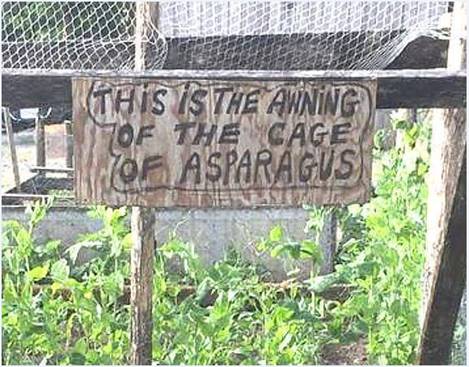
Posted by: Jack Henry | August 11, 2016

Editor’s Corner: Horoscope and Skeptic

It’s been a while since I’ve shared an excerpt from Words of a Feather: A Humorous Puzzlement of Etymological Pairs, by Murray Suid. Today seems like a great day to return to this book on my desk and tell you what Mr. Suid has to say about horoscopes and skeptics.

Horoscope & Skeptic

Skeptics tend not to believe in the possibility of gaining predictive information by studying the horoscope. But here’s something they should believe: horoscope and skeptic are words of a feather. And this is their lucky day to learn all about it.

Horoscope comes from the Middle French horoscope, which traces back to the Latin horoscopus, which in turn was borrowed from the Greek compound horoskopos, which combined hora, “hour,” plus skopos, “watching.” In the context of astrology, this refers to watching the hour of one’s birth. According to astrologers, knowing the positions of the celestial bodies at the birth hour is critical for correctly interpreting the horoscope. At this point, our skeptic readers may be curious to know: “What’s the connection between this mumbo-jumbo and us?” Here’s the answer: Skeptic, originally used to name a member of a philosophical school existing more than two millennia ago, comes from the Greek skeptesthai, “to look,” which traces back to skopos, which we just learned is the source of the second half of horoscope. Horoscopists fix their attention on the pattern of the stars, while skeptics use their perceptive skills to look at everything. Why do some people believe in astrology while others laugh at it? It could be a matter of when you’re born…or not.

Kara Church

Technical Editor, Advisory

619-542-6773 | Ext: 766773

Symitar Documentation Services

NOTICE: This electronic mail message and any files transmitted with it are intended
exclusively for the individual or entity to which it is addressed. The message,
together with any attachment, may contain confidential and/or privileged information.
Any unauthorized review, use, printing, saving, copying, disclosure or distribution
is strictly prohibited. If you have received this message in error, please
immediately advise the sender by reply email and delete all copies.


Posted by: Jack Henry | August 10, 2016

Editor’s Corner: In Hospital

Dear Editrix,

In the US, we say “Joe is in the hospital”. In the UK, they say “Joe is in hospital.”

What’s the deal?

Thanks!

Mark

Dear Mark,

I found this article written by Robert Charles Lee, a Brit who “works in American English.” Here is his response to your question (written in British English, thus the different spelling of hospitalization).

Sincerely,

Editrix

Situation with British English

In some ways, British English is more subtle than American English, considering the longer history of the ‘overall’ English of the British Isles. The in hospital vs. in the hospital is an example of such a subtlety.

As far as British English goes, there is clear distinction between the two. The general rule is that:

1. absent the definite/indefinite article, it describes or implies a wider act or a more commonly occurring event, and

2. present the article, it describes a more specific, often physical, act.

"He went to hospital" explains that he went there for the purpose that the place was designed for. In other words, it describes the wider act or sense of admission, hospitalisation and treatment.

By contrast, "he went to the hospital" explains that he went to visit a particular hospital. The sense or implication is to visit (say) a friend hospitalised there. It describes the act of physically visiting the place, not for the purpose of that building.

Likewise, "he just got out of hospital" implies he’s well enough to be discharged recently, whereas "he just got out of the hospital" is just having physically departed (fled, escaped) the confines of an actual hospital facility.

Similarly, "I went to school" talks about attending classes in an educational establishment, whereas "I went to the school" is just visiting the physical establishment.

Situation with American English

The truth is, American English does roughly the same thing with some nouns, so this isn’t special or exclusive to British English.

British just do it with a few more nouns than American do. Americans do say:

· go to school

· go to college

· go to work

· go on vacation (rather than ‘go on a holiday’)

· soldiers go to war, and reporters go to the war zone

Even in American English [KC – In italic, below], the definite and indefinite articles (the, a, an) before the noun will be omitted if the meaning is (as in British English) of a state or condition and not of a specific place:

· going to jail (going to be locked up)

· going to the jail (visiting a particular jail in the next town, etc.)

· in love

· in hospital

· at university

· under fire

And a little Spanish humor from Jackie Solano:

***For those of you unfamiliar with Spanish, soy means “I am.”

Kara Church

Technical Editor, Advisory

Symitar Documentation Services

Posted by: Jack Henry | August 10, 2016

Editor’s Corner: When to Use Abbreviations

Good morning, friends and neighbors.

In technical and business writing, abbreviations are used generously—too generously. Some years ago, when I was a new Symitar employee, I was overwhelmed by all the abbreviations. I created a spreadsheet and referred to it often.

The problem with abbreviations is that not everyone knows what they stand for. That’s why, in most cases, your friendly editors ask that you spell out the word or words on the first usage, followed by the abbreviation in parentheses, and then you can use the abbreviation alone afterward.

Of course, there are exceptions. There are always exceptions!

· Titles of senior corporate executives (CEO, CFO, COO, etc.) are typically abbreviated. You do not need to spell them out.

· CD and DVD are abbreviations that do not need to be spelled out. In fact, people may not even know what the letters stand for, so it might be confusing if you do spell them out. The same is true for URL. Some other well-known abbreviations that you do not need to spell out are IRS, NASA, vs., and etc. And the list goes on.

· OK is preferred over okay because OK is likely a derivation of oll korrect, a humorous way to indicate that something is all correct (traced back to 1838).

Just ask yourself, if the abbreviation you’re using will be clear to everyone. Make sure it’s not an abbreviation that will flummox newbies or people outside your department, company, or profession. If you’re not sure, spell it out the first time you use it.

If you’d like to read more about abbreviations, click here. If you’d like to see a bowl of puppies, click here.

Donna Bradley Burcher | Senior Technical Editor | Symitar®

8985 Balboa Ave. | San Diego, CA 92123 | Ph. 619.278.0432 | Extension: 765432

Symitar Technical Publications Writing and Editing Requests

NOTICE: This electronic mail message and any files transmitted with it are intended
exclusively for the individual or entity to which it is addressed. The message,
together with any attachment, may contain confidential and/or privileged information.
Any unauthorized review, use, printing, saving, copying, disclosure or distribution
is strictly prohibited. If you have received this message in error, please
immediately advise the sender by reply email and delete all copies.

Posted by: Jack Henry | August 9, 2016

Editor’s Corner: Scents of a Different Sort

Friday evening was late museum and food truck night at Balboa Park, so we went over there with some friends. What a fabulous thing to do on a summer night! After each of us picked our truck of choice (Thai, German, Japanese, and New York Deli), we went to the Natural History Museum. While we were there, we went up to the photo gallery and that’s where the word nerds went wild!

All of the photos were of natural scenes, from the Grand Canyon to a single leaf. One of the photos had a “glow” to it. “It’s luminescent…or is that iridescent?” “I’m not sure, maybe it is phosphorescent?” Out came the phones and people started looking up words. I, on the other hand, started taking dictation so I could look these up for Editor’s Corner and report back on these light-related words that end in –scent (the adjective) or –escence (the noun).

And here we are today! From our friends at Merriam-Webster:

· bioluminescence: the emission of light from living organisms (such as fireflies, dinoflagellates, and bacteria) as the result of internal, typically oxidative chemical reactions.

· fluorescence: the emission by a substance of electromagnetic radiation especially in the form of visible light as the immediate result of and only during the absorption of radiation from some other source; also : the property of emitting such radiation.

· incandescence: the quality or state of being white, glowing, or luminous with intense heat <incandescent carbon> b : strikingly bright, radiant, or clear.

· iridescence: play of structural colors producing rainbow effects that is exhibited in various bodies as a result of interference in a thin film (as of a soap bubble or mother-of-pearl) or of diffraction of light reflected from a closely ribbed or corrugated surface (as of the plumage of certain birds) and is readily distinguished from the inherent colors of substances by its variation with the angle of incidence of the illumination.

· luminescence: an emission of light that is not ascribable directly to incandescence and therefore occurs at low temperatures, that is produced by physiological processes (as in the firefly), by chemical action, by friction, by electrical action (as the glow of gases in vacuum tubes when subjected to electric oscillations of high frequency or as the glow of certain bodies when subjected to cathode rays), by certain bodies while crystallizing, by suddenly and moderately heating certain bodies previously exposed to light or to cathode rays, or by exposure to light, or that occurs in radioactivity.

· phosphorescence: luminescence that is perceptible with characteristic rate of decay after the exciting cause ceases to act.

And an unscented photo from my uncle:

Kara Church

Technical Editor, Advisory

Symitar Documentation Services

Posted by: Jack Henry | August 8, 2016

Editor’s Corner: Using Hyphens for a String of Words

Let’s face it—it can be confusing to know when to use hyphens. I won’t be able to cover everything you need to know about hyphens today, but I will explain why and when you need to use hyphens to string more than two words together.

When a string of words is used to describe a noun, and that string precedes the noun, those describing words are hyphenated. You might want to re-read that last sentence. It’s important because when you’re talking about whether to add hyphens, you need to remember that the describing words must come before the noun.

Take this sentence, for example:

· Her father was a behind-the-scenes manager.

The phrase behind the scenes precedes the noun manager, and it describes what kind of manager the father was.

If you were to place the phrase after the noun, you would not use hyphens.

· Her father managed her from behind the scenes.

Here’s another example:

· The movie was replete with over-the-top characters.

The phrase over the top precedes the noun characters, and it describes what the characters were like.

Again, if you were to place the phrase after the noun, you would not use hyphens.

· The movie was replete with characters that were over the top.

And here’s a final example that many people have trouble with:

· He had a four-year-old daughter.

· His daughter was four years old.

I hope you have a productive and fun-filled day!

Donna Bradley Burcher | Senior Technical Editor | Symitar®

8985 Balboa Ave. | San Diego, CA 92123 | Ph. 619.278.0432 | Extension: 765432

Symitar Technical Publications Writing and Editing Requests

NOTICE: This electronic mail message and any files transmitted with it are intended
exclusively for the individual or entity to which it is addressed. The message,
together with any attachment, may contain confidential and/or privileged information.
Any unauthorized review, use, printing, saving, copying, disclosure or distribution
is strictly prohibited. If you have received this message in error, please
immediately advise the sender by reply email and delete all copies.
When I was a kid, I remember my mom and dad correcting my plural endings for certain Latin words. “It’s not cactuses, it’s cacti.” “A lot of mushrooms aren’t funguses, they’re fungi.” So, like an obedient child, I learned appendix/appendices, criterion/criteria, curriculum/curricula, etc.

Imagine my horror, then, when I was double-checking the proper plural of apex or something, and I found that the rules had changed over the past forty years. I don’t remember if it was the Chicago Manual of Style or one of the books they published, but I learned that there is a movement to get away from the Latin endings of the words. The thought is that since we’ve adopted the words as part of English, we should apply English rules to the plural. Conversely, if we were speaking Latin, then we’d use the Latin rules for the plural words.

I’m sharing chunks of the list over a couple of days, but if you want to see the complete list in order, go ahead and check out Daily Writing Tips. You can see from the list that both English and Latin endings are given, if they exist. You can be the judge of which endings you still hear more often.

Words ending in a, plural -s or -ae

· alga: algae or algas

· antenna: antennas or antennae (only antennae is correct for the sensory organs on animals; antennas in more common in other contexts)

· formula: formulas or formulae

· larva: larvae or larvas

· nebula: nebulae or nebulas: the former ending is employed in astronomy, and the latter applies in medical contexts

· vertebra: vertebrae or vertebras (vertebrae is sometimes incorrectly used to refer to a single vertebra)

Words ending in ex, plural -exes or -ices

· apex: apexes or apices

· index: indexes or indices

· vortex: vortices or vortexes

Words ending in eau, plural -eaus or -eaux

· bureau: bureaus or bureaux (the latter form is rare for this word and the other two in this category)

· château: châteaus or châteaux

· plateau: plateaus or plateaux

Words ending in ion, plural -ia

· criterion: criteria [KC – I guess we’ll just call this “Forever Latin.”]

· ganglion: ganglia or ganglions

Words ending in on, plural -a or -ons

· automaton:automotons or automata

· phenomenon: phenomena or phenomenons

Words ending in us, plural -uses or -i

· alumnus/alumna: alumni or alumnae (alumnus refers to a man and alumna to a woman, alumni pertains to men or to men and women and alumnae to women; alumni is often employed in the singular, and alum/alums are used informally as gender-neutral singular and plural forms)

· bacillus: bacilli

· cactus: cacti or cactuses

· focus: foci or focuses

· fungus: fungi or funguses

· hippopotamus: hippopotamuses or hippopotami

· locus: loci

· narcissus: narcissi or narcissuses or narcissus

· platypus: platypuses or platypi

· radius: radii or radiuses

· stimulus: stimuli

· syllabus: syllabi or syllabuses

· terminus: termini or terminuses

Words ending in oo, plural -oos

· cockatoo: cockatoos

· kangaroo: kangaroos

· zoo: zoos

Assorted

· cherub: cherubim or cherubs (the former alternative applies to angels and the latter pertains to depictions of winged children or to cherubic-looking people)

· rhinoceros: rhinoceroses or rhinoceros or rhinoceri

· seraph: seraphim or seraphs

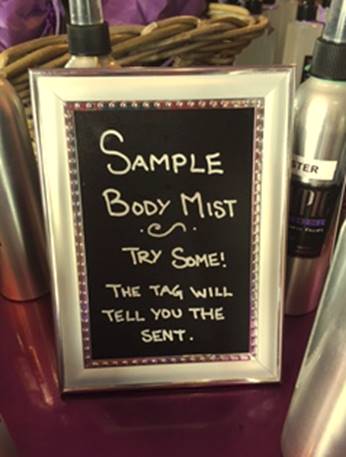
And a great photo from Jane Gredvig. Happy Friday!

Kara Church

Technical Editor, Advisory

Symitar Documentation Services

Posted by: Jack Henry | August 4, 2016

Editor’s Corner: Why pie?

I recently found myself trapped in car with a bunch of chatty eight-year-olds who questioned the origin of shut your piehole (shut your mouth). And no, I didn’t yell this phrase at them. They didn’t question the meaning of the phrase; they specifically wanted to know why the word pie was used instead of some other culinary treasure, like pizza, bacon, tater tots, or donuts. After listening to some zany theories, I decided to look into the etymology.

According to The Phrase Finder, the phrase shut your cakehole originated in the UK in the 20th century but is now considered archaic. Americans started using the equivalent, shut your piehole, in the ‘80s. It is unknown if piehole originated from cakehole.

Although the origin of shut your piehole is unclear, the word piehole is in the dictionary. You should probably avoid using this phrase or word during your next meeting. If necessary, you can use the phrase in your next cross-stitching project instead:

Jackie Solano | Technical Editor | Symitar®

8985 Balboa Ave. | San Diego, CA 92123 | Ph. 619.542.6711 | Extension: 766711

Symitar Documentation Services

Posted by: Jack Henry | August 3, 2016

Editor’s Corner: Groupies

A long time ago, when some of you were just tiny babes, I shared a list of collective nouns for animals with you. What do I mean by collective nouns? I mean that rather than saying “a group of geese,” we use a collective noun and call them “a gaggle.” Instead of a “bunch of bees,” we use the collective noun “swarm.”

As part of the San Diego Zoo’s 100th anniversary, Richard Lederer has being doing articles on words involving animals. Sunday’s article included the following collective nouns, which I’ve reformatted for easier reading:

· a barren of mules

· a bloat of hippos

· a business of ferrets

· a caravan of camels

· a cete of badgers

· a coalition of cheetahs

· a dazzle of zebras

· a dray of squirrels

· a leap of leopards

· a memory of elephants

· a mischief of mice

· an obstinacy of buffalo

· a pace of asses

· a pod of seals

· a pride of lions

· a route of wolves

· a shrewdness of apes

· a singular of boars

· a skulk of foxes

· a sleuth of bears

· a sounder of swine

· a tower of giraffes

· a trip of goats

· a troop of monkeys

· a warren of rabbits

For the remainder of the article, click here.

NOTICE: This electronic mail message and any files transmitted with it are intended
exclusively for the individual or entity to which it is addressed. The message,
together with any attachment, may contain confidential and/or privileged information.
Any unauthorized review, use, printing, saving, copying, disclosure or distribution
is strictly prohibited. If you have received this message in error, please
immediately advise the sender by reply email and delete all copies.

Posted by: Jack Henry | August 2, 2016

Editor’s Corner: Very, very necessary!

Several of you have sent this link to me, so I think it must be one of your pet peeves. The subject is using other words instead of “very” all the time. The list sounds suspiciously like something Judge Judy would invent for the word “like,” which she chastises people for using every day.

This page might take a few seconds to load, but it contains quite a few alternatives to “very”:

http://www.proofreadingservices.com/pages/very

Enjoy!

Photo Contest (from May)

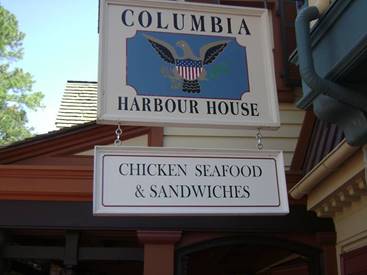
These two lovelies are from Katie Bennett.

Mmmm. Chicken seafood. My favorite!

Well, if they’re going to ask you to waste, at least they’re polite about it.

Kara Church

Technical Editor, Advisory

Symitar Documentation Services

Posted by: Jack Henry | August 1, 2016

Editor’s Corner: Feckless, Hapless, Reckless, Ruthless

Last week, I wrote about the word uncouth, which is an example of an unpaired word (a word that would appear to have a related word but does not). Here are four more unpaired words, all with the suffix -less. All definitions are from Merriam-Webster.

Feckless

Definition: weak, ineffective

Etymology: Middle English effect became Scottish feck, which gave us feckless (now standard English) and feckful (still chiefly Scottish).

Is feckful a word? Yes, but it’s not common outside of Scotland. The related words effective, efficient, effectual, and efficacious are more widely known.

Hapless

Definition: having no luck; unfortunate

Etymology: Old Norse happ ("good luck") became Middle English hap.

Is hapful a word? No. Instead, we say that someone favored by luck or fortune is happy.

Reckless

Definition: marked by lack of proper caution; careless of consequences

Etymology: Old English reccan became Middle English reck ("to take heed").

Is reckful a word? No, but reck is still around (it means "worry, care"), and so is the related word reckon.

Ruthless

Definition: having no pity; merciless, cruel

Etymology: Middle English ruen ("to rue") became ruthe, which became Modern English ruth ("compassion for the misery of another").

Is ruthful a word? Yes. It means "full of ruth."

Ben Ritter | Technical Editor | Symitar®
8985 Balboa Avenue | San Diego, CA 92123
619-682-3391 | or ext. 763391 | www.Symitar.com

Symitar Documentation Services

NOTICE: This electronic mail message and any files transmitted with it are intended
exclusively for the individual or entity to which it is addressed. The message,
together with any attachment, may contain confidential and/or privileged information.
Any unauthorized review, use, printing, saving, copying, disclosure or distribution
is strictly prohibited. If you have received this message in error, please
immediately advise the sender by reply email and delete all copies.

« Newer Posts - Older Posts »

Categories