Posted by: Jack Henry | March 27, 2025

Editor’s Corner: Gearing up for April

You may remember, back in February my friend Ron sent a series of questions about Valentine’s Day, including “Why does Valentine’s Day Suck?” He sent a new set of questions for April. I saw him in between his submission of Valentine’s Day questions and now, and he seemed to be in much better spirits. The questions I got this time were:

1. Why can people be fools only on April 1?

2. What is the origin of the word etymology?

3. Is there a synonym for thesaurus?

There was also a rhetorical question about the delights of retirement, but I won’t tease you with that since most of us aren’t there yet. So, let’s get to the questions!

1. Why can people be fools only on April 1?

Ron, you know that’s a lie. People can be fools every day, all day, forever. I found some interesting things about April 1, and there’s enough out there for a full article, so that will come closer to the day. Until then, you must wait and wonder.

2. What is the origin of the word etymology?

From Etymology Online (with a few edits for space)
late 14c., ethimolegia "facts of the origin and development of a word," from Old French etimologie, ethimologie (14c., Modern French étymologie), from Latin etymologia, from Greek etymologia "analysis of a word to find its true origin.”

In classical times, with reference to meanings; later, to histories. Classical etymologists, Christian and pagan, based their explanations on allegory and guesswork, lacking historical records as well as the scientific method to analyze them, and the discipline fell into disrepute that lasted a millennium. Flaubert ["Dictionary of Received Ideas"] wrote that the general view was that etymology was "the easiest thing in the world with the help of Latin and a little ingenuity."

As practiced by Socrates in the Cratylus, etymology involves a claim about the underlying semantic content of the name, what it really means or indicates. This content is taken to have been put there by the ancient namegivers: giving an etymology is thus a matter of unwrapping or decoding a name to find the message the namegivers have placed inside….

By late-14c. a sense had developed of "conjugation and categorization of words," apparently from a misunderstanding of etymology as dealing in tenses, and it is listed with prosody, orthography and syntax as an element of grammar:

…for the beginners of any language whatsoever, [etymologie] is so necessarie, that without it, they could not understand or learne it: The which by the Latin Grammarians hath beene, and is called Declension and Coniugation. [John Minsheu, "A Spanish Grammar," 1599.]

OED considers this sense to be "now historical."

3. Is there a synonym for thesaurus?

Why yes, there are several offerings for you. They don’t really seem to be synonyms, but the first three were provided by Merriam-Webster as the top rated, and the remainder are from M-W’s lesser-rated suggestions and Microsoft® Word’s Shift+F7 search.

  • dictionary
  • glossary
  • vocabulary
  • lexicon
  • gloss
  • wordbook
  • nomenclator
  • phrasebook
  • wordlist

As I said, I’ll return to question 1 later.

Kara Church | Technical Editor, Advisory | Technical Publications

Pronouns: she/her | Call via Teams | jackhenry.com

Editor’s Corner Archives: https://episystechpubs.com/
Posted by: Jack Henry | March 25, 2025

Editor’s Corner: Standing Pat

Hey Kara,

I used the phrase “standing pat” in an email, and I used it without really questioning it, but I then thought “standing pat,” how did that come about?

Dear Tony,

You know, that is an odd phrase, isn’t it? I found this explanation from CrossIdiomas.com (with some edits for the sake of space):

The idiom “stand pat” has a rich history that dates back to the 19th century. It is believed to have originated in the game of poker, where it was used to describe a player who refused to take any more cards and instead chose to play with the hand they were dealt.

Over time, the term “stand pat” began to be used more broadly as a metaphor for someone who refuses to change their position or beliefs, even when faced with new information or evidence. This can be seen in political debates, business negotiations, and personal relationships.

The phrase gained widespread popularity in the early 20th century thanks in part to its use by United States President Calvin Coolidge. He famously declared that he would “stand pat” on his policies during his re-election campaign, solidifying the phrase’s place in American vernacular.

Today, “stand pat” continues to be used as a way of describing someone who is stubbornly resistant to change. It serves as a reminder that sometimes it is important to reassess our positions and remain open-minded if we want to achieve success and growth.

Usage and Variations of the Idiom “stand pat”

One variation of this idiom is “stick to your guns.” This means that you should remain steadfast in your beliefs and not back down, even if others are pressuring you to do so. Another variation is “hold firm,” which also suggests staying resolute in one’s stance.

In some cases, the phrase “stand pat” can have a negative connotation, implying stubbornness or inflexibility. However, it can also be seen as a positive trait when applied appropriately. For example, a leader who stands pat on their values and principles despite opposition may be viewed as strong and principled.

I hope that answers your questions and addresses your curiosity!

Kara Church | Technical Editor, Advisory | Technical Publications

Pronouns: she/her | Call via Teams | jackhenry.com

Editor’s Corner Archives: https://episystechpubs.com/
Posted by: Jack Henry | March 20, 2025

Editor’s Corner: Livers and Lilies

Happy Spring!

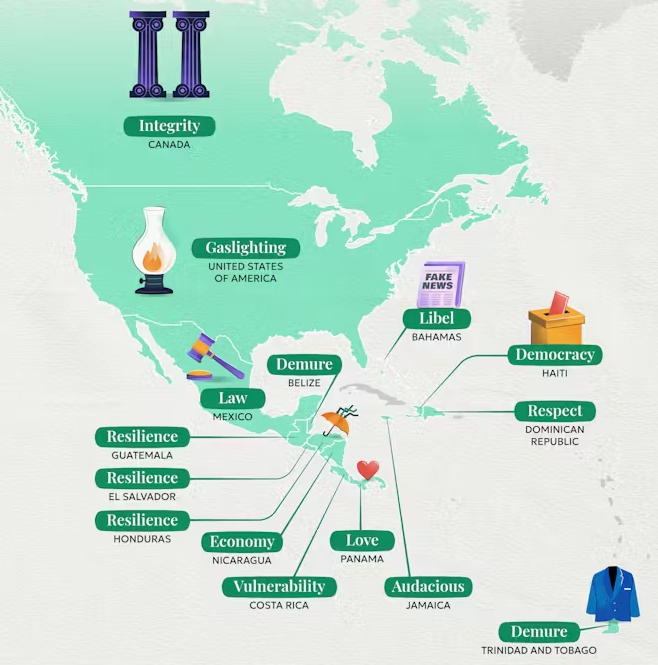
Today I was looking through my emails at some words of the day I hadn’t looked at yet. What caught my eye was the term lily-handed. I’d never seen nor heard that term before. I wondered if it was anything like lily-livered. Suddenly I found myself reading about livers and bad moods. Here are some things from Phrase Finder about lily-livered. We’ll get to lily-handed later.

What’s the meaning of the phrase ‘Lily-livered’?

Cowardly.

Why would that mean cowardly?

One clue is that our Middle Ages predecessors believed the liver to be in control of our emotions. It was thought to be the organ that created blood and that a poorly functioning liver was the cause of mental or physical weakness. Anyone who was choleric, bilious or irritable was labelled ‘liverish’. There were numerous ‘livery’ conditions:

  • liver-hearted, or lily-livered – craven, cowardly
  • liver-faced – mean spirited
  • liver-lipped – pale and feeble
  • liver-sick – suffering from dropsy, or the diseases we now call cirrhosis and hepatitis

By contrast, a robust liver supplying ample blood was thought to create rosy cheeks glowing with ruddy good health. References to ‘ruddy’ meaning ‘healthy’ date from the 14th century.

The second part of the explanation is that the lily was synonymous with whiteness. The White or Madonna Lily seems to have a whiteness that is whiter than other whites and the plant was grown in medieval gardens as a symbol of purity.

In the same way as ‘liver’, ‘lily’ has been used as a prefix in several descriptive terms, in this case describing conditions that exemplify purity or paleness– lily-cheeked, lily-fingered, lily-handed, lily-wristed and so on.

So, putting the two adjectives together we get ‘lily-livered’, that is, ‘having a pale and bloodless liver’.

Of course, I had to find out what the definitions for the lily words were, especially lily-handed. (Definitions from all over the internet.)

  • lily-cheeked – white or fair (as a lily)
  • lily-fingered
    • positively used: white as a lily, delicately fair
    • negatively used: pale; fragile; weak.
    • used to describe someone doesn’t do any hard labor work
  • lily-handed
    • characterized by a delicate and pale-skinned beauty
    • having hands that are white due to lack of outdoor work; unaccustomed to physical labor
    • fastidious and foppish
  • lily-wristed
    • lacking courage
    • cowardly

So as beautiful as lilies are, they seem to have earned a little negative “flavor.” Or maybe it’s that hard work has gained more favor? I suspect it is all more of a class-related thing, but I’m not going to go there right now. I’ve done rough-handed work, lily-handed work, and danced in a dumpster: it all has its ups and downs.

Kara Church | Technical Editor, Advisory

Pronouns: she/her | Call via Teams | jackhenry.com

Editing Requests

NOTICE: This electronic mail message and any files transmitted with it are intended
exclusively for the individual or entity to which it is addressed. The message,
together with any attachment, may contain confidential and/or privileged information.
Any unauthorized review, use, printing, saving, copying, disclosure or distribution
is strictly prohibited. If you have received this message in error, please
immediately advise the sender by reply email and delete all copies.

Posted by: Jack Henry | March 18, 2025

Editor’s Corner: Pet Peeves

Hey folks! A few weeks ago, I got a question from one of you about peeves. Pet peeves to be exact. What is a peeve? Do you have one for a pet? I know that I have a few—I’ve even shared them with you over the years. In fact, here are my top 3 (of 10) from 10 years ago: Editor’s Corner: Top 10 Peeves for 2015 (1 through 3) | Editor’s Corner.

But let’s first define what we are talking about (according to Merriam-Webster):

peeve (noun): something that is a source of irritation; problem; irritant; nuisance.

peevish (adjective): easily irritated or annoyed; snappish; crotchety [KC – I don’t
hear Americans saying this, but in the British shows that I watch I hear it frequently.]

pet peeve (noun): a frequent subject of complaint

Now, for some specifics about pet peeves. A pet peeve isn’t just something that bothers people in general. For example, a person yelling at us for no reason is not a pet peeve—most of us would not enjoy that.

A pet peeve is personal. It is something that many people would shrug off or not even notice. For example, one sees and hears the word impacted a lot these days, used in place of affected. For example, “Three clients were impacted by this power loss.” Well, when I was growing up, the word impacted meant “immovably pressed in,” and was only used for two specific occasions: teeth and butts (constipation). I know, yuck. Using the word impacted to mean affected is a pet peeve of mine, and I will edit it out if you send a document using it that way.

I realize words change and times change, but what I grew up with sticks with me, and this peeve is one of my pets.

Here are some examples from The Grammarist, of pet peeves in sentences:

  • Her pet peeve made her miserable; she hated being able to hear anyone breathing, making her hypersensitive and often cranky when in the presence of others.
  • People’s geographical ignorance has become a huge pet peeve of mine. It’s absolutely maddening when people are stupid enough to think I come from a different country because I live in New Mexico.
  • He never thought he had any pet peeves since he was such an easygoing person. However, he seriously found himself getting enraged by the lack of vehicular turn-signal use he was experiencing in the new town he had moved to.

And one addition about the origin of the phrase, also from The Grammarist:

Pet peeve came into use in the early 20th century from the combination of the word pet, meaning “an especially cherished thing,” and the word peeve, meaning “irritated or exasperated.”

I hope I didn’t make any of you feel peevish today!

Kara Church | Technical Editor, Advisory | Technical Publications

Pronouns: she/her | Call via Teams | jackhenry.com

Editor’s Corner Archives: https://episystechpubs.com/
Posted by: Jack Henry | March 13, 2025

Editor’s Corner: Coming Soon!

Oh my goodness. I just wrote about Mardi Gras and now we’re coming up to St. Patrick’s day on Monday. The time machine is moving so quickly, and I just can’t seem to catch up.

I did a bit of research on Irish traditions and folklore for a department project, and I’ll share some of the things I learned. First, details about the name of St. Patrick’s Day from Merriam-Webster.

Random people asked the dictionary folks if it should be “St. Patrick’s Day, St. Patty’s Day, or St. Paddy’s Day.” I’m filtering the responses for you.

  1. Don’t ever call it St. Patty’s Day. Patty is a nickname for Patricia, and the patron saint of Ireland was a dude. He supposedly drove the snakes out of Ireland and into the sea, among other things.
  2. It could be considered an insult, so don’t call it St. Paddy’s Day, either. Since the 1700s, “Paddy has been used in English as a disparaging name for an Irishman or, in informal British English, as ‘a fit of temper.’” If you have to shorten it, use St. Pat’s Day.
  3. Feast days named after saints use the saint’s proper name. In this case, the Irish version (Pádraig) or Patrick is preferred.

Moving on to some things unrelated to what to call the day…the saying is that if you don’t wear green on St. Patrick’s Day, people can give you a pinch. Remember Human Resources and the round-house kick before you try something like this.

Corned beef and cabbage are the traditional foods for the day. Irish beer and whisky are the traditional drinks. Vegans and non-drinkers, there are options out there, but you might want to sit this one out.

Leprechauns! My first recommendation is Sean Connery’s debut (as the main star) in Darby O’Gill and the Little People. (1957) Fun film.

I also read something yesterday that said leprechauns carry two pouches. One holds a silver coin and the other holds a gold coin. The silver coin can be given to anyone—but it always returns to the leprechaun’s pouch. The gold coin can be used for the leprechaun to get out of trouble, which apparently happens a lot when people capture them and try to find their pots of gold. They cleverly convince the captor they’ll give them a taste of gold by giving them the coin. When the person looks away, the leprechaun disappears (since that is one of their special tricks). The gold coin then turns to ash.

I hope you have a fun St. Patrick’s Day!

Kara Church | Technical Editor, Advisory | Technical Publications

Pronouns: she/her | Call via Teams | jackhenry.com

Editor’s Corner Archives: https://episystechpubs.com/
Posted by: Jack Henry | March 11, 2025

Editor’s Corner: Whether Weather

Happy almost Spring!

The other day I received this from one of you wonderful readers:

I was wondering—are those just misspellings or are they homophones (sound the same but are spelled differently and have different meanings) and homographs (spelled the same but sound different and have different meanings)?

Homomphones:

  • there/their/they’re
  • break/brake
  • steak/stake
  • see/sea
  • eight/ate

Homographs:

Quarter quarter (to cut in four, or ¼ of something) quarter (an american 25 cent piece)
bat bat (a wooden stick you hit a ball with) bat (a winged mammal)
bar bar (a place you hang out to play darts and drink) bar (serving of chocolate) bar (piece of metal)
right right (a direction you turn) right (correct) right (a power or privilege)

Okay, so that’s the grammar. But what I was interested in was what do these alternate spellings mean, if anything? Let’s see!

(I had to hunt around for these. I used AI, Merriam-Webster, Oxford dictionaries, and others.)

rane Verb: (mildly archaic) steal; commit robbery
hale Adjective: free from defect, disease, or infirmity; healthy, vigorous
verb: haul or pull
gail Proper noun: Gail, female name meaning “joy.” Diminutive of Abigail meaning “my father’s joy.”
drissle Misspelling of drizzle (noun): light rain falling in very fine drops.
thundre Misspelling of thunder (noun): the sound that follows a flash of lightning and is caused by sudden expansion of the air in the path of the electrical discharge
litnin Misspelling of lightning (noun): the flashing of light produced by a discharge of atmospheric electricity
tawnaydoes Misspelling of tornado (noun): a mobile, destructive vortex of violently rotating winds having the appearance of a funnel-shaped cloud
frizzing Verb: form into small tight curls; to fry or sear with a sizzling noise
colde Adjective: an archaic spelling of the word "cold". "Cold" means having a low temperature, especially when compared to the human body

So some are archaic spellings, some are misspellings, and some are homophones. I thought it was a cute meme. I know, you’re wondering, did I have to take it this far? Yeah, I did. It’s who I am. 😊

Kara Church | Technical Editor, Advisory | Technical Publications

Pronouns: she/her | Call via Teams | jackhenry.com

Editor’s Corner Archives: https://episystechpubs.com/
Posted by: Jack Henry | March 6, 2025

Editor’s Corner: Nerds and Friends

Hello, folks!

The other day I referred to myself and a coworker as “word nerds.” I didn’t think much of it, but then the very next day I received this comic strip from another reader:

For those of you who grew up in the 1980s, I think the terms nerd, geek, dork, and dweeb might make you cringe. For others, they might not seem too bad. These are the dictionary.com definitions, with some added extras in brackets from Merriam-Webster.

dork: “a silly, out-of-touch person who tends to look odd or behave ridiculously around others” [KC – “socially awkward, unstylish person.” And my dad told me it was a “bad word” when we were kids. The article says the same, so be careful if you use it around your elders.]

nerd: “socially awkward” and “an intelligent but single-minded person obsessed with a nonsocial hobby or pursuit” [KC – “a person devoted to intellectual, academic, or technical pursuits or interests.”]

geek: “a digital-technology expert or enthusiast” and “a person who has excessive enthusiasm for and some expertise about a specialized subject or activity” [KC – And a mouthful from M-W about geeks:

1: a person often of an intellectual bent who is disliked

2: an enthusiast or expert especially in a technological field or
activity

computer geek

3: a carnival performer often billed as a wild man whose act usually
includes biting the head off a live chicken or snake]

dweeb: “wimp; a stupid or uninteresting person.”

I’m happy to say, that despite how awful some of these things sound, they’ve turned around a little over the years. Again, from dictionary.com:

Today, being a geek or a nerd no longer implies that you’ll receive a horrible wedgie and get thrown in a locker. Based on popular usage of these terms, geeks and nerds are a new brand of cool kid.

Geeks and nerds, unite!

Kara Church | Technical Editor, Advisory | Technical Publications

Pronouns: she/her | Call via Teams | jackhenry.com

Editor’s Corner Archives: https://episystechpubs.com/

Posted by: Jack Henry | March 4, 2025

Editor’s Corner: Mardi Gras

Good morning, my friends!

I remember knowing full well what Ash Wednesday was when I was a kid, because my brother and I went to Catholic school. We knew it was a day that we’d write something on a piece of paper, like “I promise I will be nice to my brother,” or “I promise not to hit my sister” and then take it to church. Father Canole burned our promises, said some prayers, and the primary outcome was that we’d spend the day walking around with crosses of ash on our foreheads. Ash Wednesday was the start of lent: Forty days of fasting and penance until Easter.

What they didn’t tell us was that the Tuesday before Ash Wednesday was known as Fat Tuesday, Mardi Gras (French for Fat Tuesday), or Shrove Tuesday. Let’s have a quick look at the day, especially at how it is celebrated in New Orleans.

From History.com:

The first American Mardi Gras took place on March 3, 1699, when French explorers Pierre Le Moyne d’Iberville and Sieur de Bienville landed near present-day New Orleans, Louisiana. They held a small celebration and dubbed their landing spot Point du Mardi Gras. (Some argue the port city of Mobile, Alabama was actually the first to observe the event.)

In the decades that followed, New Orleans and other French settlements began marking the holiday with street parties, masked balls, and lavish dinners. When the Spanish took control of New Orleans, however, they abolished these rowdy rituals, and the bans remained in force until Louisiana became a U.S. state in 1812.

On Mardi Gras in 1827, a group of students donned colorful costumes and danced through the streets of New Orleans, emulating the revelry they’d observed while visiting Paris. Ten years later, the first recorded New Orleans Mardi Gras parade took place, a tradition that continues to this day.

In 1857, a secret society of New Orleans shopkeepers called the Mistick Krewe of Comus organized a torch-lit Mardi Gras procession with marching bands and rolling floats, setting the tone for future public celebrations in the city.

Since then, krewes have remained a fixture of the Carnival scene throughout Louisiana. Other lasting customs include throwing beads and other trinkets, wearing masks, decorating floats and eating King Cake.

Did you know? Rex, one of the oldest Mardi Gras krewes, has been participating in parades since 1872 and established purple, gold, and green as the iconic Mardi Gras colors.

Louisiana is the only state in which Mardi Gras is a legal holiday. However, elaborate carnival festivities draw crowds in other parts of the United States during the Mardi Gras season as well, including Alabama and Mississippi. Each region has its own events and traditions.

Whatever your religion, whatever you eat, and whatever you celebrate, I wish you a happy Mardi Gras!

Kara Church | Technical Editor, Advisory | Technical Publications

Pronouns: she/her | Call via Teams | jackhenry.com

Editor’s Corner Archives: https://episystechpubs.com/
Posted by: Jack Henry | February 27, 2025

Editor’s Corner: Fun in the Sun

Hello and a happy Thursday to all y’all!

It was my dad’s 84th birthday last week, and I was lucky enough to spend it with him, my stepmom, some cousins, friends, and several humpback whales…in Mexico. I spent most of the time chatting with Pops, taking advantage of the time we had together.

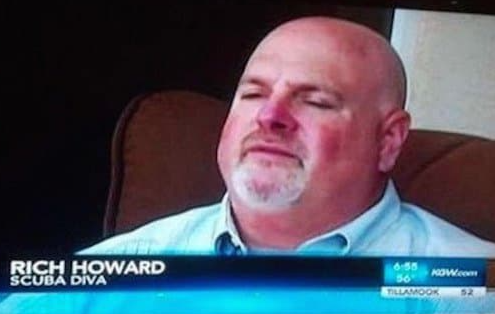
During one of our coffee-drinking marathons by the pool (and Banderas Bay), we were talking about snorkeling. I said “snorkeling” and Dad said, “skin diving.” I was wondering if these two terms mean the same thing. Sometimes we use different terms just because of our ages and where we grew up.

Today I got my answer about snorkeling, skin diving, and a third activity: freediving. I’m skipping scuba diving, and covering the basics I found on the Dive In webpage.

Snorkeling

Many of us have snorkeled, and according to the article, it is the most popular of the three activities. Essentially, gear for snorkeling is “full-foot snorkel fins, masks, snorkels, and possibly a buoyancy vest.” Or, if you don’t want a life vest, there’s always a “noodle” that will help you float. Outside of the gear, the key with snorkeling is staying near the top of the water and looking down below at the coral, sea turtles, and barracudas.

Skin diving

Skin diving is an old term, for the days before masks and goggles (and I’m guessing fins). This gearless activity isn’t just cruising along the top of the water and looking down. It is actually swimming, and then when you think you see an amazing fish, or something the pirates of the Caribbean left behind, you dive down to check it out. If you’re doing it the old-fashioned way without a mask, you probably just dove down and found an old aluminum can shining there.

These days, skin divers use snorkels at the surface, and masks and fins to dive down and further investigate what they found.

Freediving

Okay, I hadn’t heard of this. This is the newest of the activities, and I personally don’t get it. Freediving is a competitive activity where people breathe in as much air as possible, then try to dive as deep as they can. Sometimes they follow ropes back up, so they can get to the surface faster. Breathing in a lot of air quickly and repeatedly is exactly what they tell you NOT to do in swimming classes. Hyperventilating can cause you to pass out in the water, so I don’t recommend it. Additionally, rising too quickly from deep to shallow water can give you the bends. Still, I’ll provide you with this:

Herbert Nitsch is the current freediving record-holder, swimming to a depth of 830.8 feet (253.2 m) on one breath! He has earned the title “the Deepest Man on Earth.”

The equipment is also a little bit different. “Masks are typically smaller than standard scuba or snorkeling masks, more similar to swim goggles. …fins are much longer than dive fins.” Snorkels aren’t used.

I hope you learned as much as I did!

Kara Church | Technical Editor, Advisory | Technical Publications

Pronouns: she/her | Call via Teams | jackhenry.com

Editor’s Corner Archives: https://episystechpubs.com/

Posted by: Jack Henry | February 25, 2025

Editor’s Corner: So-so

Hello, folks.

I think I’ve mentioned today’s topic before, but I really lost myself in it this time! What have I mentioned? That it is interesting how so many languages have a rhyming response that basically means “so-so.” For example, “How are you feeling today, Abdul?” “I was really sick yesterday, but today I’m feeling so-so.” (He’s not feeling great, but he’s not as sick as he was. According to M-W, it means “neither very good nor very bad.”)

I made a table of the items that I found with Google™ translate. I’m sorry if they didn’t get them translated correctly—the one’s I’m familiar with are good. You be the judge if you speak any of the other languages. I picked the languages randomly, but as you’ll see, so many of them are the same word repeated, or something that rhymes. I did not include the multitude of different texts (Greek, Arabic, Japanese), just how they’d are pronounced.

Language Term used to mean “so so”
Arabic nisf nisf
Catalan tan així
Chinese mǎma hūhu
Czech tak-tak
English so-so

frobly-mobly

Finnish niin niin
French comme ci comme ça
German soso
Greek etsi k’etsi
Hawaiian ʻano
Hebrew kech-kech
Igbo so-so
Irish mar sin-sin
Italian cosi cosi
Japanese mā mā
Kikongo yo yina-yo yina
Latin sic-so
Malay jadi-jadi
Maori na-na
Mongolian tiim tiim
Romanian asa-asa
Samoan e a la e a la
Spanish mas o menos

asi asi

Swedish så som så
Turkish şöyle böyle
Welsh felly-felly
Yiddish azoy-azoy

I figured there must be some very smart people out there who could tell me more about this phenomenon. I wasn’t sure what to look for, but I did find this on Wikipedia. I’m cutting and pasting a little because it gets sort of heavy.

In linguistics, reduplication is a…process in which the root or stem of a word…or the whole word is repeated exactly or with a slight change.

Bingo! I was so happy! Here’s a little more:

Examples can be found in language as old as Sumerian, where it was used in forming some color terms, e.g., babbar "white", kukku "black".

Reduplication is the standard term for this phenomenon in the linguistics literature. Other occasional terms include cloning, doubling, duplication, repetition, and tautonym (when it is used in biological taxonomies, such as Bison bison).

Another article I read wasn’t specifically about the term so-so, but about how (in English) we like to create these reduplicative terms, particularly to make things sound silly. Here’s something someone sent me for another topic. I think maybe from Merriam-Webster:

  • willy-nilly
  • easy-peasy
  • jiggery-pokery
  • flim-flam
  • skimble-skamble
  • ricky-tick
  • hurly-burly
  • super-duper

I never took a linguistic class, but I always love when I discover this type of thing!

Kara Church | Technical Editor, Advisory | Technical Publications

Pronouns: she/her | Call via Teams | jackhenry.com

Editor’s Corner Archives: https://episystechpubs.com/
« Newer Posts - Older Posts »

Categories