Posted by: Jack Henry | September 19, 2017

Editor’s Corner: Grizzle my grizzay

As I mentioned the other day, my mom and I spent last week in New York City. I’m always on the lookout for new words or topics for the Editor’s Corner, and in the museums we visited, I came across several terms I hadn’t seen or heard before.

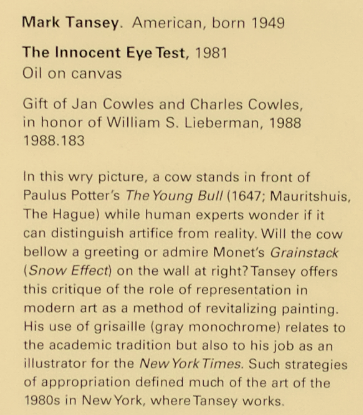
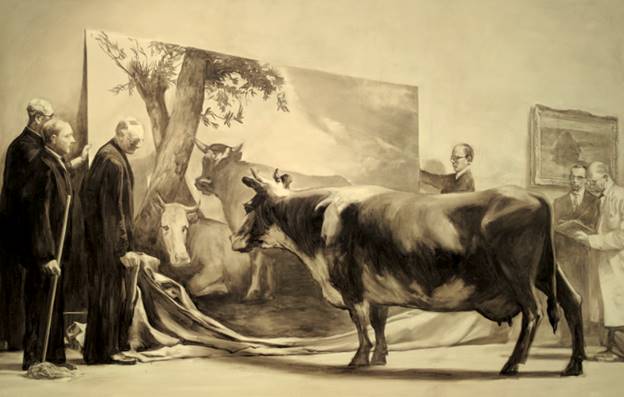
On our last day, at the Metropolitan Museum of Art, when I saw the word “grisaille,” I imagined Snoop Dog saying, “fo’ shizzle, my grizzle,” and it made me laugh. (Translation: I concur, my gray painting.) I guessed that the word grisaille was based on the French word for gray (gris), which it is. Here’s a little more about the word from Merriam-Webster, along with a photo of the painting and the description next to the painting.

grisaille

noun

1a : painting in monochrome usually in shades of gray often as decoration to simulate sculptured relief or as underpainting for a glaze finish

b : a covering of a dark base in porcelain and enamelwork with varying thicknesses of white so as to produce a cameo effect with the dark color showing through

c : a coating of glasswork with white to produce an opalescent effect or as backing for a decorative pattern of colored glass

2: a fancy dress fabric originally of silk with a fine crosswise rib and a grayish color resulting from interweaving black-and-white threads

Kara Church

Technical Editor, Advisory

Symitar Documentation Services

Posted by: Jack Henry | September 18, 2017

Editor’s Corner: Liberty and Keystones

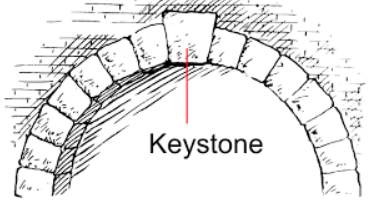
Because both of my parents are from Pennsylvania originally, I have always been aware that Pennsylvania is known as “The Keystone State.” I didn’t, however, know exactly what a keystone was. As I rode around Manhattan on a boat, the guide mentioned that the Statue of Liberty is holding a keystone in her arm: not a bible or a tablet, but a keystone.

It seemed like the perfect time to find out exactly what a keystone is, and why lovely Lady Liberty is holding one.

Here is an excerpt about it from a government site:

Liberty’s keystone-shaped tablet is cradled in the left arm. It is a representation of law written down for citizens of the nation to see and read. Upon it, “July 4, 1776” recognizes the date on which the American colonies declared their independence from England. The Roman numerals were incorporated into the design to acknowledge conceptual ties to the goddess of Liberty from the Roman era.

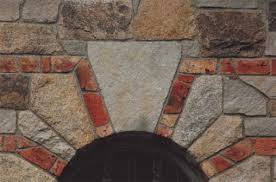
The keystone in architectural design is a critical component. The stone specifically cut into this shape supports all others within an arch. Therefore, the tablet pays homage to our republic’s keystone document: The Declaration of Independence. The declaration was initially read aloud to the general public in Pennsylvania, also known as the nation’s “Keystone State.”

And here are definitions of the literal and figurative keystones, along with a few more examples:

keystone

noun: keystone; plural noun: keystones

1. a central stone at the summit of an arch, locking the whole together.

2. the central principle or part of a policy, system, etc., on which all else depends.

Kara Church

Technical Editor, Advisory

Symitar Documentation Services

Posted by: Jack Henry | September 14, 2017

Editor’s Corner: Cookies

Hurricane Harvey and Hurricane Irma are interfering with Donna’s email, so I am playing carrier pigeon today. From Ms. Bradley-Burcher:

My friend, Eric N., called me a smart cookie the other day, and then he made me prove it by asking me where the idiom smart cookie comes from.

I found this explanation in the Online Etymology Dictionary:

1703, American English, from Dutch koekje "little cake," diminutive of koek "cake," from Middle Dutch koke (see cake (n.)). Slang application to persons attested since 1920. Phrase that’s the way the cookie crumbles "that’s the way things happen" is from 1957.

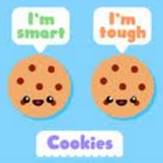
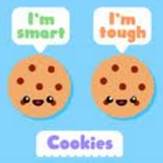
A website called “About English Idioms” says that starting in 1920, the term cookie was used to refer to a person or to “an alluring young woman.” The phrase smart cookie was first used in 1948 and it can refer to both men and women, as can the term tough cookie.

The writer of the article goes on to say that she’s never heard of anyone using the terms smart cookie or tough cookie in everyday speech. She’s obviously never met Eric!

Donna

Posted by: Jack Henry | September 14, 2017

Editors Corner: Smart Cookie

My friend, Eric N., called me a smart cookie the other day, and then he made me prove it by asking me where the idiom smart cookie comes from.

I found this explanation in the Online Etymology Dictionary:

1703, American English, from Dutch koekje "little cake," diminutive of koek "cake," from Middle Dutch koke (see cake (n.)). Slang application to persons attested since 1920. Phrase that’s the way the cookie crumbles "that’s the way things happen" is from 1957.

A website called “About English Idioms” says that starting in 1920, the term cookie was used to refer to a person or to “an alluring young woman.” The phrase smart cookie was first used in 1948 and it can refer to both men and women, as can the term tough cookie.

The writer of the article goes on to say that she’s never heard of anyone using the terms smart cookie or tough cookie in everyday speech. She’s obviously never met Eric!

Donna Bradley Burcher | Senior Technical Editor | Symitar®

8985 Balboa Ave. | San Diego, CA 92123 | Ph. 619.278.0432 | Ext: 765432

Posted by: Jack Henry | September 14, 2017

Editor’s Corner:

My friend, Eric N., called me a smart cookie the other day, and then he made me prove it by asking me where the idiom smart cookie comes from.

I found this explanation in the Online Etymology Dictionary:

1703, American English, from Dutch koekje "little cake," diminutive of koek "cake," from Middle Dutch koke (see cake (n.)). Slang application to persons attested since 1920. Phrase that’s the way the cookie crumbles "that’s the way things happen" is from 1957.

A website called “About English Idioms” says that starting in 1920, the term cookie was used to refer to a person or to “an alluring young woman.” The phrase smart cookie was first used in 1948 and it can refer to both men and women, as can the term tough cookie.

The writer of the article goes on to say that she’s never heard of anyone using the terms smart cookie or tough cookie in everyday speech. She’s obviously never met Eric!

Donna Bradley Burcher | Senior Technical Editor | Symitar®

8985 Balboa Ave. | San Diego, CA 92123 | Ph. 619.278.0432 | Ext: 765432

Posted by: Jack Henry | September 13, 2017

Editor’s Corner: Pretenders

A few weeks ago, I sent out information from an email I received from GrammarBook.com. Just recently, I received another great article on a peeve of mine: made up words. I love the fun we can have with English and some of the contests that you see about making up words, but that’s not really what I’m talking about.

I’m talking about an almost systematic invention of new words that we already have a good word for. For example, using architect as a verb instead of the word design. (“He architected a new plan for the bread maker’s workflow.” Ick!) Another example is using conversate, when we have this really cool word already that means to talk, speak, chat, or engage in conversation, and that word is converse.

Anyway, before I start irritating myself, here is the article I want to share with you.

Putting Out the Patrol for Made-Up Words

Estimates of English’s total word count vary, but linguists agree the number ranks near the top of the world’s vocabularies. A May newsletter article cited English as having as many as 300,000 distinctly usable words.

With so many residents in a vernacular, impostors posing as real words are bound to slip in. They start as mistakes but last long enough to wiggle into pockets of speech. Before long, they spread out, gaining confidence and popularity until they set their sights on the real prize: placement in a dictionary.

While casual conversation provides the most refuge for these con artists, their common usage still often lets them cross into composition’s more-managed domain.

Here are but a few made-up words we and our readers have singled out as guilty from the line-up of suspects:

Imposter: administrate (v)
Real Word: administer
Imposter: participator (n)
Real Word: participant
Imposter: commentate (v)
Real Word: comment
Imposter: preventative (adj)
Real Word: preventive
Imposter: orientate (v)
Real Word: orient
Imposter: supposably (adj, adv)
Real Word: supposedly
Imposter: conversate (v)
Real Word: converse
Imposter: undoutably (adj, adv)
Real Word: undoubtedly
Imposter: irregardless (adj, adv)
Real Word: regardless
Imposter: vice-a-versa (adv)
Real Word: vice versa
Imposter: exploitive (adj)
Real Word: exploitative
Imposter: whole nother (adj)
Real Words: another, whole other
Imposter: firstly (secondly, thirdly, etc.) (adv)
Real Word: first (second, third, etc.)
Imposter: incentivize (v)
Real Words: encourage, motivate, reward

A few of these invaders, such as irregardless and preventative, have already cleared the fence, crossed their covert tunnels, and arrived safely in dictionaries. That alone does not validate them, nor does it mean we should permit them into our writing.

You also probably noted several made-up words in the list include the suffix -ate. This is a common ploy some words will use to create more versions of themselves.

The suffix -ize operates much the same way. In addition to incentivize, keep an eye on words such as actualize, collectivize, intellectualize, and normalize. Some words, such as finalize, prioritize, memorize, and ostracize, need their three-letter caboose to deliver their meaning, but most -ize words are pitching tents where houses are built.

Made-up words present another call for us to lead the way in upholding concise, grammatical writing. By remaining vigilant, we can help halt the advance of the pretenders.

Kara Church

Technical Editor, Advisory

619-542-6773 | Ext: 766773

Symitar Documentation Services

NOTICE: This electronic mail message and any files transmitted with it are intended
exclusively for the individual or entity to which it is addressed. The message,
together with any attachment, may contain confidential and/or privileged information.
Any unauthorized review, use, printing, saving, copying, disclosure or distribution
is strictly prohibited. If you have received this message in error, please
immediately advise the sender by reply email and delete all copies.
Posted by: Jack Henry | September 12, 2017

Editor’s Corner: New York, New York

Hello, everyone! It’s only been a week since I’ve written to you, but it has been a whirlwind of a time. I just arrived home from an exciting week in New York City with my mom. We walked, bussed, boated, “Lyfted,” and took the subway all over the place! Oh yes, we also ran in Central Park (not from anyone, mind you).

Here’s a look at the skyline from our boat tour around Manhattan:

And your word of the day, from the Museum of Modern Art, is odalisque. According to Merriam-Webster, an odalisque is “a female slave or concubine in a harem.” At the museum, it was used to describe different sculptures and paintings of reclining nude females. No pictures of those for you!

One more thing: before I left, I caused some uproar among folks by sending out an article on spatulas. Who knew that would be so exciting? Since I’m just getting back in the groove today, here is a little something I found for you at the Museum of Modern Art design store. I don’t think it’s a flipper or a turner or a spatula. I think, like one of our Editor’s Corner readers, they called it a “spoonula” or something. I did not buy one.

Kara Church

Technical Editor, Advisory

Symitar Documentation Services

Have you ever looked at a cloud and seen an animal? Looked at the moon and seen a face? Looked at a semicolon and a parenthesis and seen someone winking at you? 😉

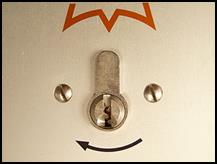
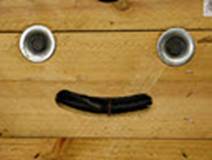
The human brain has a tendency to find familiar shapes (especially faces) in random patterns, and there’s a word for that: pareidolia.

Wikimedia Commons

Merriam-Webster defines pareidolia (pronounced "pair-eye-dole-ia") as "the tendency to perceive a specific, often meaningful image in a random or ambiguous visual pattern."

Psychiatrist Karl Ludwig Kahlbaum coined the German word Pareidolie in 1866. It made its way into English two years later.

Pareidolia comes from Greek para- ("beside") + eídōlon ("image, reflection"). Eídōlon is also the root of the word idol (meaning "a likeness of something").

Wikimedia Commons

Why do humans see faces where they don’t exist? One theory is that making fast (but sometimes inaccurate) visual judgments helps us survive.

Imagine that you’re hiking and you see a snake lying across the trail. You stop dead in your tracks.

Wikimedia Commons

But as you carefully inch closer, you realize it’s not a snake at all; it’s just a stick.

Being startled by a harmless stick might make you feel silly, but ignoring a real snake could be much worse.

Differentiating a happy friend from an angry foe is useful in the same way—even if it means occasionally mistaking a wooden crate for a smiling person.

Wikimedia Commons

Ben Ritter | Technical Editor | Symitar®
8985 Balboa Avenue | San Diego, CA 92123
619-682-3391 | or ext. 763391 | www.Symitar.com

Symitar Documentation Services

NOTICE: This electronic mail message and any files transmitted with it are intended
exclusively for the individual or entity to which it is addressed. The message,
together with any attachment, may contain confidential and/or privileged information.
Any unauthorized review, use, printing, saving, copying, disclosure or distribution
is strictly prohibited. If you have received this message in error, please
immediately advise the sender by reply email and delete all copies.

Posted by: Jack Henry | September 8, 2017

Editor’s Corner: Plural Nouns, Part 2

I’m back with more about plural nouns. Thanks for waiting for me.

Yesterday I shared information about regular and irregular plural nouns. Today, I want to discuss unchanging nouns, because someone recently asked me about them. A few examples were listed in the previous table (sheep, deer, fish). Just as the name implies, these nouns don’t change from singular to plural.

I did a little research and found that many of these unchanging nouns are names of animals and fish; however, some additional examples of unchanging nouns are aircraft and offspring. OK, now we have a partial list of unchanging nouns, but we still don’t have an answer to the question “Why are some nouns the same in the singular and plural form?”

Wikipedia says, “As a general rule, game and other animals are often referred to in the singular for the plural in a sporting context…whereas in another context such as zoology or tourism the regular plural would be used.”

I’m skeptical about that last comment, careful English speakers don’t say sheeps or mooses, and even in a wildlife/zoology context, I have not heard deers or fishes. Maybe I’ll research that further.

The other answer has to do with etymology. When we borrow plural words from other languages, we often obey the spelling rules of the language of origin. That creates a lot of irregular and some unchanging nouns.

The best thing to do is to memorize both the irregular plural and the unchanging nouns. And when in doubt, consult a dictionary.

If you have five minutes to watch a clip of Brian Regan’s funny (and clean) standup routine about plural nouns, the “i before e” rule, and other school-related humor, click this link. Thanks to my friend, Mark W. for providing the memory and the link.

Donna Bradley Burcher | Senior Technical Editor | Symitar®

8985 Balboa Ave. | San Diego, CA 92123 | Ph. 619.278.0432 | Extension: 765432

Symitar Technical Publications Writing and Editing Requests

NOTICE: This electronic mail message and any files transmitted with it are intended
exclusively for the individual or entity to which it is addressed. The message,
together with any attachment, may contain confidential and/or privileged information.
Any unauthorized review, use, printing, saving, copying, disclosure or distribution
is strictly prohibited. If you have received this message in error, please
immediately advise the sender by reply email and delete all copies.

For the next couple of days, I am going to tackle the topic of plural nouns. Today, I’ll discuss regular plural nouns, then we’ll look at an incomplete list of irregular plural nouns. Tomorrow, we’ll move on to unchanging nouns. Can’t wait? Let’s get started!

For most regular plural nouns, all you have to do is add an -s to the noun.

· book/books

· idea/ideas

If the word ends in –y, you change the –y to –ie and add an –s.

· galaxy/galaxies

· armory/armories

But ask any English language learner, and you’ll quickly find out that, in English, there are a lot of other rules for pluralizing nouns and a passel of irregular plural nouns too. I found the following list on the University of Victoria website. It’s not comprehensive, but it’s a good start.

Most of you know these rules instinctively. But imagine having to memorize them all now! English is not an easy language to learn.

Tune in tomorrow for information about the final item in the table: unchanging nouns (you lucky ducks!).

Donna Bradley Burcher | Senior Technical Editor | Symitar®

8985 Balboa Ave. | San Diego, CA 92123 | Ph. 619.278.0432 | Extension: 765432

Symitar Technical Publications Writing and Editing Requests

NOTICE: This electronic mail message and any files transmitted with it are intended
exclusively for the individual or entity to which it is addressed. The message,
together with any attachment, may contain confidential and/or privileged information.
Any unauthorized review, use, printing, saving, copying, disclosure or distribution
is strictly prohibited. If you have received this message in error, please
immediately advise the sender by reply email and delete all copies.

« Newer Posts - Older Posts »

Categories