Hello and welcome! It’s time for the second half on English words from Greek and Roman mythical creatures, courtesy of Mental Floss. Here is a link to the first half of the set, in case you missed it: Part 1.
MONEY
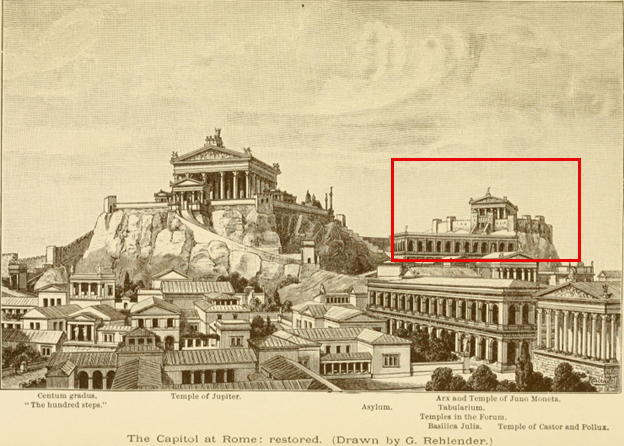
Both money and the coin-producing mint where it is made take their names from Juno Moneta, an epithet for the Roman goddess Juno specifically associated with an ancient temple erected in her honor on Rome’s Capitoline Hill. The temple later housed the city’s mint, where Roman currency was made, and as a result, her name came to be associated with cash flow and monetary production.
MORPHINE
The sleep-inducing qualities of morphine led to its discoverer, the German pharmacist Friedrich Sertürner, giving it a name derived from Morpheus, an ancient god of dreams. Morpheus is said to have been one of the three sons of the sleep god Hypnos, or Somnus, who, along with his brothers, were responsible for the nightly visions we see when we dream; Morpheus’s name, ultimately, literally means “maker of shapes.” [KC – I had to check on Hypnos’ other sons. “Morpheus, who sent human-shaped dreams; Phobetor (also called Icelus), who sent animal and monster-shaped dreams; and Phantasos, who sent dreams of inanimate objects
and surreal landscapes.”]
MUSIC
The Muses were nine sister goddesses in the ancient world, each of whom was seen as presiding over and providing inspiration in a different field of the arts or sciences: Clio (history), Euterpe (music), Thalia (comedy), Melpomene (tragedy), Terpsichore (dancing), Erato (lyric poetry), Polymnia (sacred poetry), Urania (astronomy), and Calliope (epic poetry).
Some of their names have gone on to inspire words relating to their artistic field, such as terpsichorean (relating to dancing) and thalian (comic, comedic). But the names of the Muses as a whole are the origin of both music (which was once a far more general term, relating to any musical, poetic, or artistic field), and a museum where creative works might be collected or displayed.
NARCISSIST
Another character from mythology whose name inspired that of a flower was the beautiful Greek youth Narcissus, who pined away by the side of a mountain spring, having become enraptured by his own reflection in its waters. The narcissus flower (better known as a daffodil) is said to have sprung from the earth where he died—while Narcissus’s fascination with his own beauty gave us a word for someone who is similarly obsessed with their appearance or self-importance.
NEMESIS
Derived ultimately from a Greek word meaning a distribution or doling out of something, Nemesis was the name of a Greek (and later Roman) goddess of retribution and divine vengeance, who was tasked with either punishing or rewarding people for their evil or benevolent actions. It is from her that the word came to be used for anything that proves an eternal enemy, or risks bringing about a person’s downfall. [KC
– Divine vengeance. That has a great ring to it!]
PANIC
In Greek mythology, Pan was the goat-legged, panpipe-playing god of woods, pastures, herds, and fertility, who was often said to reside in isolated woodlands and mountainsides.
Among the many curious stories associated with him was the belief that his voice or disembodied cries could cause herds of animals or crowds of people to stampede, seemingly for no reason—while lone walkers in the woods where he dwelled would typically attribute the unnerving calls and sounds of the wilderness to him. Pan’s ability to seemingly alarm people without being seen, ultimately, is the origin of our word panic.
TANTALIZE
In Greek legend, Tantalus was an ancient king of Lydia who fell into such disfavor with the gods that in the underworld he was condemned to forever stand up to his neck in water that ebbed away from him as he leaned to take a drink, and beneath a fruit tree whose branches were lifted away by the wind whenever he reached up to pick them.
Eternally hungry but unable to eat, and eternally thirsty but unable to drink, his name has since come to be used for a kind of drinks holder [KC
– See the following image] that keeps its decanters visible yet under lock and key—while his dastardly punishment of temptation inspired the verb tantalize.

VOLCANO
The word volcano was adopted into English via either Italian or Spanish but can be ultimately traced back to the name of Vulcan, the Roman god of fire. [KC
– And not a mention of Mr. Spock!]
Kara Church | Technical Editor, Advisory | Knowledge Enablement
Pronouns: she/her | Call via Teams | jackhenry.com
Editor’s Corner Archives: https://episystechpubs.com/
 Editor's Corner
Leave a comment