Hello there, folks! Today I have a couple more terms that have morphed through the years and through English, Dutch, and French. Again, these started as architectural terms, but their definitions have expanded. The first is bulwark. From Merriam-Webster:
1a: a solid wall-like structure raised for defense:rampart
b: breakwater, seawall
2: a strong support or protection
This is a photo of a traditional bulwark:
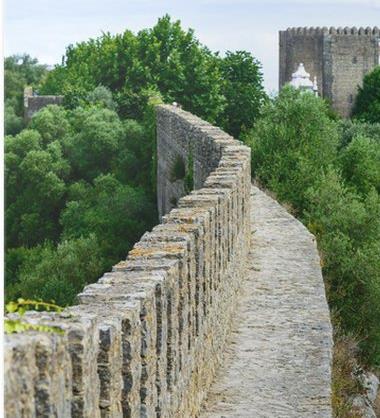
And this is a covered bulwark:
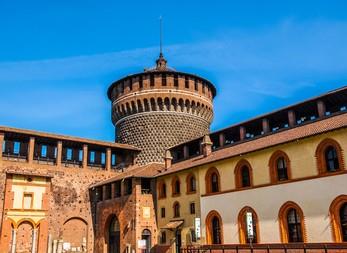
Sforza Castle Milan, Italy
Here is the modern meaning of bulwark (from AI):
“Any person, thing, or system that provides strong support, protection, or a safeguard against danger, doubt, or external threats, like a dam protecting against floods, a policy acting as a bulwark against societal ills, or a strong institution safeguarding liberty. It’s used figuratively for strong defenses, both physical (breakwater, cybersecurity) and abstract (moral principles, national policy).”
And here is the etymology, which links to another term, boulevard. First, from the Online Etymology Dictionary:
bulwark (noun)
early 15c., "a fortification outside a city wall or gate; a rampart, barricade," from Middle Dutch bulwerke or Middle High German bolwerc, probably from bole "plank, tree trunk" + werc "work". Thus "bole-work," a construction of logs. Figurative sense "means of defense or security" is from mid-15c. A doublet of boulevard.
Now let’s see where the etymology of boulevard comes from:
boulevard(n.)
1769, "broad street or promenade planted with rows of trees," from French boulevard, originally "top surface of a military rampart" (15c.), from a garbled attempt to adopt Middle Dutch bolwerc "wall of a fortification" (see bulwark) into French, which at that time lacked a -w- in its alphabet.
The notion is of a promenade atop demolished city walls, which would be wider than the old streets. Originally in English with conscious echoes of Paris; in U.S., since 1929, used of multi-lane limited-access urban highways. Early French attempts to digest the Dutch word also include boloart, boulever, boloirque, and bollvercq.
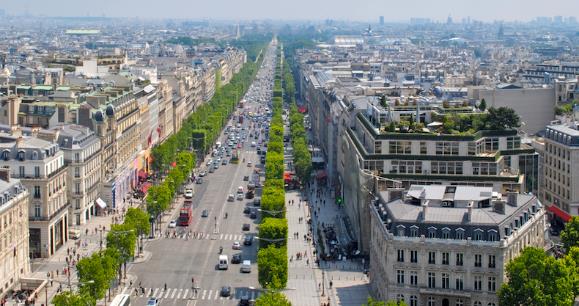
Modern-day boulevards are much bigger than roads on top of demolished city walls, but as with English words, time can change a lot. Here is a Parisian boulevard today:
Kara Church | Technical Editor, Advisory | Knowledge Enablement
Pronouns: she/her | Call via Teams | jackhenry.com
Editor’s Corner Archives: https://episystechpubs.com/
 Editor's Corner
Leave a comment