Today I have 17 Scary Sayings for ‘Ghost’ From Across the United States, Part II for you. Enjoy!
Duppy
In Alabama and Louisiana, you might say “duppy” when referring to a ghost. According to the Dictionary of American Regional English (DARE), the word comes from Bube, a Bantu language of West Africa. The OED’s earliest citation in English is from British historian Edward Long’s 1774 book The History of Jamaica (“Those of deceased friends are duppies”), while DARE’s is from a 1919 issue of the Journal of American Folklore: “ … the ghost-story, the tale based on a belief about ‘hants’ or ‘bugies’ or ‘duppies.’”
Hide-Behind
This term—which has variants like high-behind and nigh-behind—refers to a ghost or imaginary creature that always hides behind some object. Henry Tryon’s 1939 book Fearsome Critters describes the hide-behind as a 6-foot-tall “highly dangerous animal” with “grizzly-like claws.” Conveniently enough, it’s “never known to attack an inebriate.” According to Vance Randolph’s 1951 We Always Lie to Strangers: Tall Tales from the Ozarks, the monster is “a lizard as big as a bull” that “lies in wait for human beings on the trails at night.”
Catawampus
A word for an imaginary monster or hobgoblin in the South and South Midland states, catawampus also means “fierce, unsparing, destructive,” according to the OED, and originated as a humorous formation, the first part of which might have been influenced by catamount, a puma or cougar.
Swogon
This Maine term for a spirit might come from Swamp Swogon as quoted in Holman Day’s Up in Maine: “For even in these days P.I.’s shake / At the great Swamp Swogon of Brassua Lake./ When it blitters and glabbers the long night through,/ And shrieks for the souls of the shivering crew.” Another Maine word, swogun (also spelled swagin, swagan, and other variations) refers to bean soup.
Akua
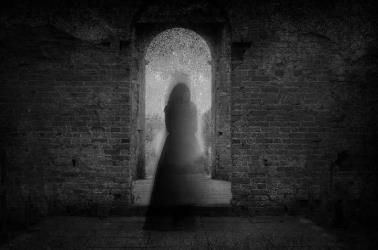
In Hawaii, an akua is a god, spirit, or supernatural being. The OED has atua, which it says is a Polynesian word with the same meaning.
Stepney
This expression is used among Gullah speakers on the Georgia and South Carolina coasts. It could mean hunger or hard times, and may also be personified as a malevolent spirit. Where the word comes from isn’t clear.
Plat-eye
Careful of plat-eyes if you’re roaming around in South Carolina at night. These hobgoblins or malevolent spirits are said to rise out of graves. The phrase platt-eye prowl refers to the time of night they’re said to roam.
Go-Devil
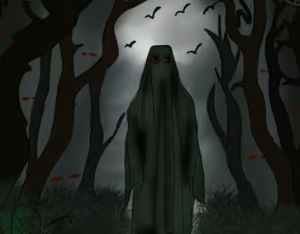
Another South Carolina expression, a go-devil is an evil spirit or someone made up to look like one. The term also refers to various machines and devices in agriculture, forestry, the oil industry, and logging.
Hag (or Hag Spirit)
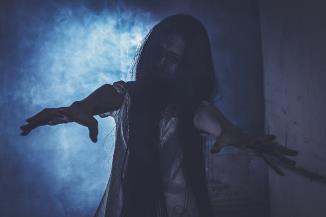
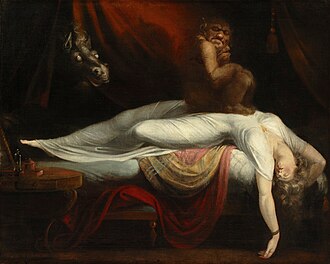
While commonly known as a witch, in the Southeast the term hag or hag spirit might also refer to the evil spirit of a dead person. Said spirit is supposed to cause nightmares by “riding” the luckless dreamer. Hag-ridden, according to the OED, means afflicted by nightmares or oppressed in the mind.
Rawhead and Bloodybones
In addition to being an excellent name for a death metal band, rawhead and bloodybones is a South and South Midland expression for a specter or hobgoblin. It’s an old term: DARE’s earliest citation in American English is from 1637, while in British English it’s 1566, according to the OED, whose definitions for both words border on terrifying: rawhead refers to something that is “typically imagined as having a head in the form of a skull, or one whose flesh has been stripped of its skin,” while bloodybones is sometimes described as a bogeyman “said to lurk in ponds waiting to drown children.”
On that note, I hope you have a happy Halloween, free from duppies, hide-behinds, rawheads, and hags—be nice and don’t frighten the kids!
Kara Church | Technical Editor, Advisory | Knowledge Enablement
Pronouns: she/her | Call via Teams | jackhenry.com
Editor’s Corner Archives: https://episystechpubs.com/
 Editor's Corner
Leave a comment