Hello, my friends! Last week was a little crazy, so I apologize for poor service from Editor’s Corner. My husband and I had been waiting for years to go somewhere far away together (Ireland) and then there was COVID. After that was his kidney transplant, which tied him to the U.S. for three years. But this year, we finally did it!
And we returned without luggage, and with COVID. Well, I still have it today, but my head is not in that dizzy state, so I’m going to try to share some fun and interesting things with you.
The first surprise that I had on this trip was the language. I didn’t think there would be any studying to do, since they speak English. Surprise! While they do speak English, the first language of the country is Gaelic. They just call it Irish, so that’s what I’ll call it. The other day I sent a photo of a sign in Irish, followed by the English. Here’s another example:
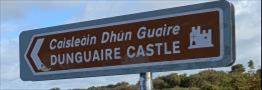
I asked someone about it, and he said the farther into the countryside you go, the more likely you are to hear Irish than English, and it is the first language taught. The structure of Gaelic and English grammar are very different, as you can see from these examples.
- “Go raibh maith agat” (Thank you) translates literally to "May good be at you."
- "Tá brón orm" (I’m sorry), means "It is that sorrow is on me."
I could not understand even a little bit of it. On the train, I’d eavesdrop occasionally and hear a mix of Irish and English. It reminded me of hearing Spanish in San Diego, with English thrown in here and there…only the words I understood in Ireland were usually swearing. During one train ride, there was some serious shade being thrown at one man because of his taste in barbers, then even worse were some choice words about the barber’s girlfriend.
Here are a few words that stood out to me in Ireland.
| Spelling | Pronunciation | Meaning |
| gaol | jail (yes, pronounced jail) | a place of confinement for those who are accused of committing crimes; the hoosegow, the slammer, the brig |
| lough | loch or lock | lake |
| quay | key (the dictionary says kay and quay are also acceptable pronunciations, but you only hear “key” in Ireland) | a structure built parallel to the bank of a waterway for use as a landing place |
| kill, kil | kill | church |
| Ireland | Oyerland | originates from the old Irish word Eire for “land of abundance” and “fertile land” |
And a more general observation, the thicker the accent, the less likely you are to hear “th” pronounced as we would, like in “thirty,” “thorough,” “Thursday,” “thought,” “thanks.” Instead, it is pronounced without the “h,” so just a hard “t.”
Tirty, torough, Tursday, tought, tanks. The guide who took us down the creepy stairs into the catacombs under St. Michan’s church kept saying “terty-taird” and it took a while to get thirty-third from that.
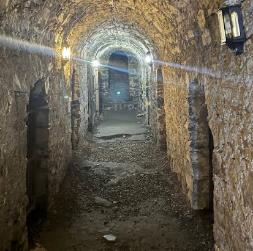
St. Michan’s crypts
And here’s an unrelated detail, but with a few photos. The most colorfully decorated places we saw were the pubs. Live flowers, live music, food, and of course, drinks. And some of the pubs were as old as the towns!
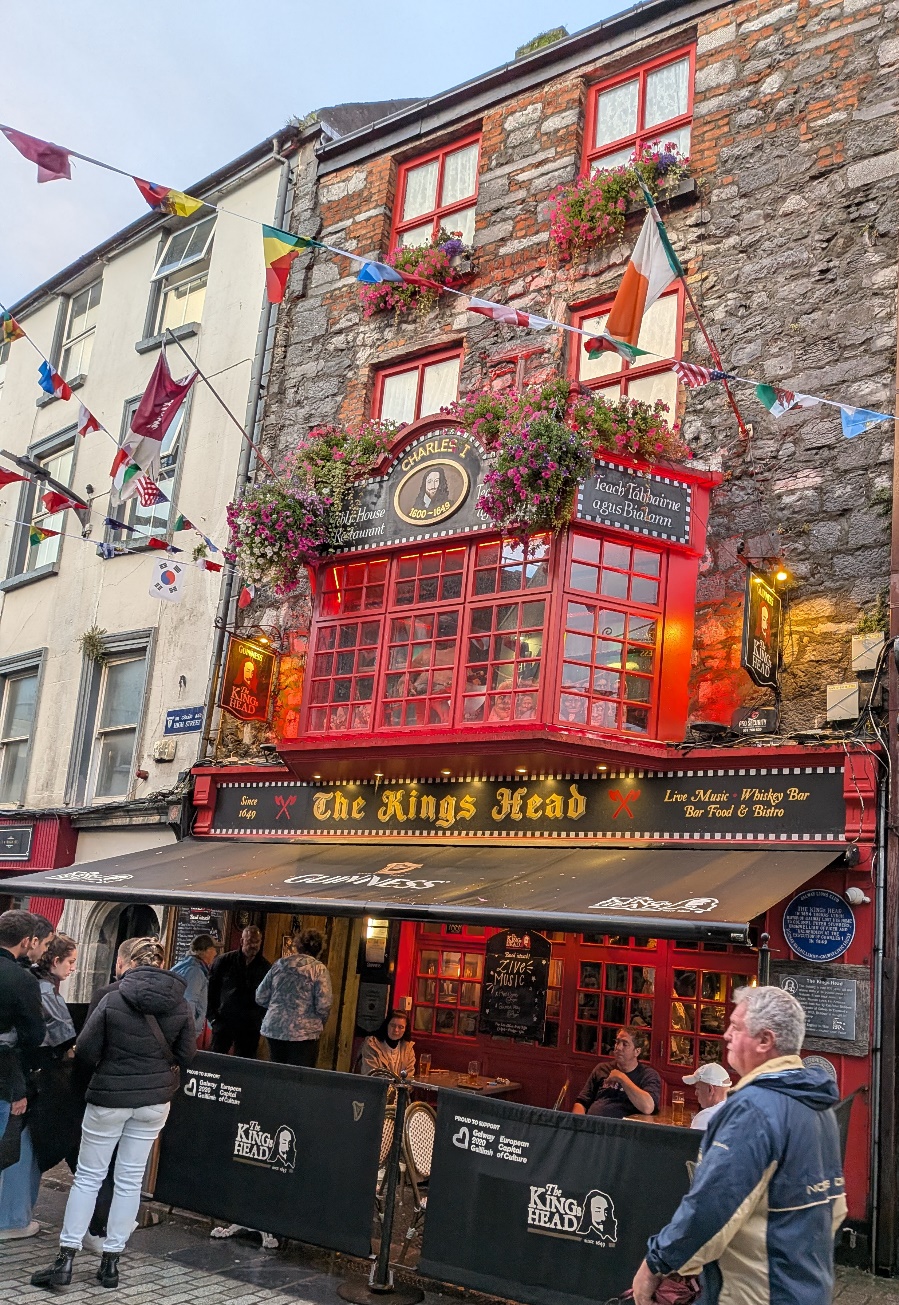
The King’s Head, Galway
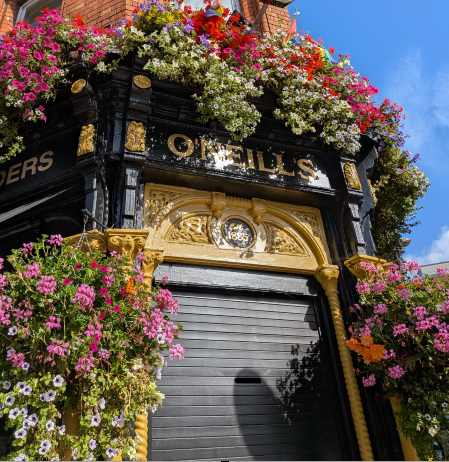
O’Neill’s, Dublin
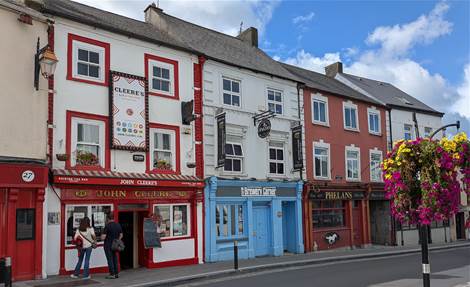
Tic, tac, toe—three in a row, Killarney
Kara Church | Technical Editor, Advisory | Technical Publications
Pronouns: she/her | Call via Teams | jackhenry.com
Editor’s Corner Archives: https://episystechpubs.com/
 Editor's Corner
Leave a comment