Happy Tuesday, my friends. We’re getting toward the end of the colors I’ve been talking about over the past few weeks, from Merriam-Webster’s color quiz. I’m going to skip teal and tangerine, since teal is common (blue-green) and tangerine is the color of the fruit, which most of us are familiar with. (It looks like a baby orange.)
I’ll start with the definitions from M-W, a little color swatch from the quiz, the etymologies from the Online Etymology Dictionary, and maybe a photo of the color in the real world.
Okay, from my least favorite to most favorite.
puce
A dark red.

Okay, a few things before the etymology. 1) M-W created this quiz and provided the swatches, yet they define this as a dark red? 2) Puce is the ugliest name for a color I’ve heard. I don’t want to remember it, but my friend Jane taught me how to relate the ugly word to a tolerable color: puce is pink. Not according to Merriam-Webster, but I think Jane is right about it being pink, not dark red.
Now the etymology:
"brownish-purple," literally "flea-color," 1787, from French puce "flea-color; flea," from Latin pucilem (nominative pulex) "flea.”
Perhaps so called as the color of the scab or stain that marked a flea-bite; flea-bitten was a color word in English to describe whiter or gray spotted over with dark-reddish spots (by 1620s, often of the skins of horses, dogs, etc.). That it could be generally recognized as a color seems a testimony to our ancestors’ intimacy with vermin.
Great! A color named after a flea bite. Let’s paint a wall that color! Here’s a color card of puce from my internet search:

And another image for the color puce:

claret
1: a red Bordeaux wine
2: a dark purplish red

Okay, no arguments there. Etymology?
mid-15c., "light-colored wine," from Old French (vin) claret "clear (wine), light-colored red wine" (also "sweetened wine," a sense in English from late 14c.), from Latin clarus "clear" (see clear (adj.)). Narrowed English meaning "red wine of Bordeaux" (excluding burgundy) first attested 1700. Used in pugilistic slang for "blood" from c. 1600.
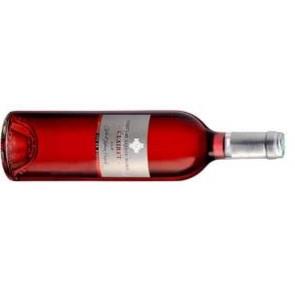
And voilá!
wisteria
: any of a genus (Wisteria) of mostly woody leguminous vines of China, Japan, and the southeastern U.S. [KC – We had them in Seattle and have them down here in San Diego, too. They don’t seem to have many boundaries. They are beautiful and smell so delicious!]

also Wistaria, genus of woody vines, 1819, formed by Thomas Nuttall, English botanist, and named in recognition of American anatomist Caspar Wistar (1761-1818) of Philadelphia + abstract noun ending -ia. The form in -e- apparently is a misprint.
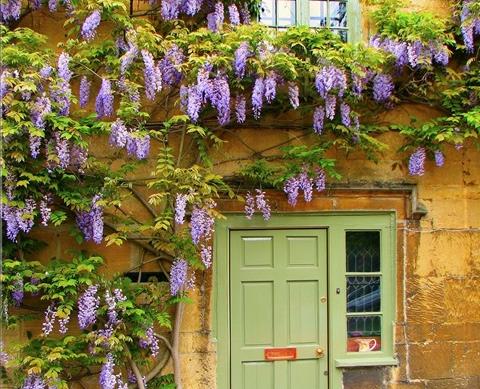
I hope your day smells as good as wisteria does!
Kara Church | Technical Editor, Advisory | Knowledge Enablement
Pronouns: she/her | Call via Teams | jackhenry.com
Editor’s Corner Archives: https://episystechpubs.com/
 Editor's Corner
Leave a comment