Dear Editrix,
Have you ever done an article on the phrase, “wracking my brain?”
Sincerely,
Curious Accountant
Dear Curious,
No, I haven’t covered this phrase before, and it looks like there is a lot to cover, so let’s see what English has to offer!
There are two spellings: rack and wrack. While they have been used interchangeably since the 1800s, they are actually different words with different histories. Here is a little information from Merriam-Webster:
…(R)ack is thought to be from the Middle Dutch word recken, meaning “to stretch,” and wrack comes from the Middle English word for a shipwreck, wrak—and (they) do retain different meanings. However, wrack has so often been used as a variant spelling of rack, especially when used in the phrases “(w)rack one’s brain” and “(w)racked with pain,” that many dictionaries now list it as a variant.
M-W says that some style guides, like the New York Times, now say “go with rack,” which will avoid confusion; but then M-W provides information for how to sort between the two, in case you are a stickler (like many of us old-timey editors are). M-W also provides contradictory rules from various style guides. Here is the general set of rules, based on the terms’ etymologies:
Rack and wrack are often confused, and there are some ways in which one may easily distinguish between the two words. When employing one of them as a noun, you are almost certainly looking for rack. You hang your clothes on a rack, eat a rack of lamb, and, if you are a medieval torture enthusiast, attach someone to a rack to be stretched until bones are broken or joints dislocated.
Some guides have expressed the opinion that since the verb rack comes from an instrument that stretches people (not in a fun way), this word should be used in settings which are related to strain, torture, and stress. And since wrack comes from a background of nautical destruction, this word should be used to indicate either wreckage (storm-wracked) or destruction (wrack and ruin).
If you are one who wants to speed up the change of the language, the article recommends just using the spelling rack for all meanings. I just wanted to give you the history of each so you can make a well-informed decision when you talk about torture or the Titanic.
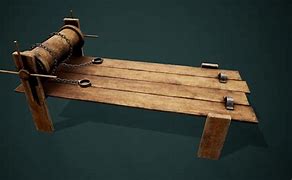
Hmmm…I don’t think this is what Nordstrom
had in mind when the named their second business.
Kara Church | Technical Editor, Advisory | Technical Publications
Pronouns: she/her | Call via Teams | jackhenry.com
Editor’s Corner Archives: https://episystechpubs.com/
 Editor's Corner
Leave a comment