Good morning, my little chickadees!
I hope you are all well today. It’s been a fun month for watching scary movies and looking up words like sigil and grimoire, so I thought “Why stop now?” I read a great article on the history of “Trick or Treat” and one on jack-o’-lanterns (more to come on that topic), but I settled on a collection of words from Merriam-Webster’s article called 8 Words for Witchcraft and Black Magic.
I’m not going to print the whole thing here; I am just going to share pieces of it with you and maybe a little commentary here and there. See the full article for all eight items.
necromancy
noun 1 : conjuration of the spirits of the dead for purposes of magically revealing the future or influencing the course of events 2 : magic, sorcery
The first part of necromancy has its roots in the Greek word nekros, meaning "dead body" or "dead person." The second part has its roots in the Greek word manteuesthai, meaning "to divine, prophesy." Necromancy was practiced in ancient times by the Assyrians, Babylonians, Egyptians, Greeks, Romans, and Etruscans, but in medieval Europe it was condemned by the church and could get you in a bit of trouble.
goety
[KC – Pronounced go-et-tea, with the middle “et” kind of quiet and the emphasis on “tea.” Not goatee, like the facial hair.]
noun: black magic or witchcraft in which the assistance of evil spirits is invoked
Goety (which chillingly traces back to a Greek word meaning "to groan, weep, lament") is historically contrasted with theurgy, which refers to the art or technique of compelling or persuading a god or beneficent or supernatural power to do or refrain from doing something.
bruja
noun: witch, sorceress
Bruja has been referring to witches in English since the 19th century, but it was doing that job in Spanish long before that. Unlike most Spanish words, bruja (and its masculine counterpart brujo) comes not from Latin but from a non-Indo-European source, from an unknown word that is also ancestor to Portuguese bruxa and Catalan bruixa, meaning "witch."
diablerie
[Ooh, I like it already. It sounds like “diablo” (devil, Spanish) with the French word for pastry shop (pâtisserie)—where they make devils instead of devil’s food
cake!]
noun 1 : black magic: sorcery 2 a: a representation in words or pictures of black magic or of dealings with the devil b: demon lore
Like the more common diabolical, which means "of, relating to, or characteristic of the devil," the 18th century French borrowing diablerie traces back to Latin diabolus, meaning "devil."
incantation
noun: a use of spells or verbal charms spoken or sung as a part of a ritual of magic; also: a written or recited formula of words designed to produce a particular effect.
Incantation traces back to the Latin cantare, meaning "to sing"—the same source of the words chant and enchant. Another cantare word is the archaic, obscure, and semantically unexpected excantation, which refers to an act of freeing by enchantment.
gramarye (or gramary)
[KC – Pronounced grammar-ee. At first I was thinking, grammar-yay or even better…Grand Marnier! But no, it is related to the word we had the other day, grimoire.]
noun: necromancy, magic, enchantment
Gramarye comes from a Middle French word meaning "book of sorcery," but also "grammar" or "grammar book." Though modern English speakers don’t tend to mix their grammar with their sorcery, in medieval times the Latin word grammatica (and its lexical descendants in other languages) referred to (among other things) learning in general, which in those dark ages was understood by the unschooled populace of Europe to include magic and astrology.
Fun stuff, huh? These words are completely enjoyable…from a distance!
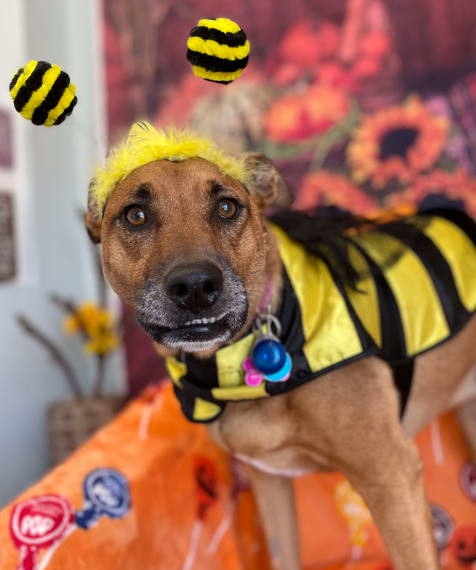
And from Sylvie, happy (almost) Halloween!
Kara Church | Technical Editor, Advisory | Technical Publications
Pronouns: she/her | Call via Teams | jackhenry.com
Editor’s Corner Archives: https://episystechpubs.com/
 Editor's Corner
Leave a comment