Good morning, folks. The other day I talked about a term, parasocial, that I learned at one of the B.I.G. meetings. While I was researching that, I found another term: paralanguage.
I find this term and what it represents fascinating, so here is more about it from me and Paralanguage:
Paralanguage (also called vocalics) refers to the non-verbal elements of communication that accompany spoken language. Key elements of paralanguage include:
- Prosody: Rhythm, intonation, and stress patterns of speech.
- Pitch: Highness or lowness of your voice.
- Volume: Loudness or softness of speech.
- Rate: Speed at which you speak.
- Non-fluency features: Hesitations, pauses, fillers, and stutters.
Paralanguage allows us to understand people even when they are speaking a different language. Imagine you are at an Italian restaurant and the two people next to you are from Italy. You don’t know much more than “Grazie!,” but you can tell that it is a serious conversation because of the distance between the couple, the frowns on their faces, their bodies tilting away from each other, and the ever-growing volume of their speech. Is it a couple meeting to confess their undying love for each other? I think not, but why? Because there are aspects of their paralanguage that we recognize as unhappy, upset, and discontent.
Note, however, that paralanguage is interpreted differently from culture to culture. For example, in Japan, looking down and avoiding eye contact is considered a sign of respect, whereas in Western cultures we see avoiding eye contact as suspicious or dishonest.
In Greece, when indicating “no,” they tilt their heads up and click their tongues—which to a lot of Americans looks like they’re nodding “yes.” To make it even more confusing, to indicate “yes,” sometimes all you get is a half-nod of the head from left to right. Americans see this as the Greeks shaking their heads “no.” Before you try “translating” paralanguage in another country, research the differences between here and there (wherever you are)!
If you’d like to read more about paralanguage, see the bazillion sections on Wikipedia.
*******************************************************************************
Here’s an example I found after originally writing this article, from a website recommended on LinkedIn Learning from the folks at The Science of People, called 60 Hand Gestures You Should Be Using And Their Meaning. This is a good example of a body language cue that has different meaning, depending on what country you are in.
The Hand Purse
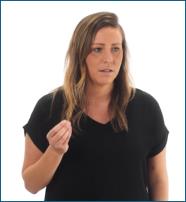
The purse can be formed when all fingertips come together on one hand and the palm is turned upward. It can also involve an up-and-down motion.
What it Means: Generally, this is used to show something is good. Often, the hand will “beat down” while key words are uttered.
The purse can also mean different things, depending on your location.
- Greece and Turkey: “Good.”
- Spain: “Lots of” something.
- Malta: Implies heavy sarcasm.
- Tunisia: Indicates caution, as in to take things slowly.
- France and Belgium: “I am afraid.”
- Italy: “What’s the matter, what’s up?”
I didn’t look at the whole article—but they provide some real-life examples (like Shark Tank) with people demonstrating the gestures. It’s a whole new world of paralanguage!
Kara Church | Technical Editor, Advisory | Technical Publications
Pronouns: she/her | Call via Teams | jackhenry.com
Editor’s Corner Archives: https://episystechpubs.com/
 Editor's Corner
Leave a comment