Posted by: Jack Henry | October 6, 2017

Editor’s Corner: Economic or Economical?

I recently wrote a post about the words historic and historical. And that research got me thinking about the words economic and economical. Are these words interchangeable?

They are often used interchangeably, but they have distinct meanings. According to the Oxford English Dictionary, economic means “relating to economics or the economy.” The word economical means “giving good value or return in relation to the resources used or money spent; sparing in the use of resources or money.”

Daily Writing Tips has this take on this word pair:

So, government policies to do with finance would be economic but fuel-efficient cars would be described as more economical.

The main confusion arises when writers use “economic” when they really mean “economical.” Take, for example, the phrase “economical with the truth,” a euphemism for lying brought into popular usage by the British civil servant Robert Armstrong.

Armstrong used the phrase correctly, but many do not, referring instead to being “economic with the truth.” A simple web search will reveal many thousands of instances of this phrase, although it is essentially meaningless.

In colloquial English, the distinction between the two words is often blurred, but it is always useful to know the correct meanings.

As an aside, the adverb for both words is the same: economically.

I’ll sign off now to make sure that this post is an economical use of your time.

Donna Bradley Burcher | Senior Technical Editor | Symitar®

8985 Balboa Ave. | San Diego, CA 92123 | Ph. 619.278.0432 | Extension: 765432

Symitar Technical Publications Writing and Editing Requests

NOTICE: This electronic mail message and any files transmitted with it are intended
exclusively for the individual or entity to which it is addressed. The message,
together with any attachment, may contain confidential and/or privileged information.
Any unauthorized review, use, printing, saving, copying, disclosure or distribution
is strictly prohibited. If you have received this message in error, please
immediately advise the sender by reply email and delete all copies.
Posted by: Jack Henry | October 5, 2017

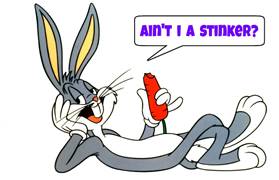
Editor’s Corner: A History of the Word Ain’t

I expect the subject line of this email to cause some controversy (or at least some cringing). Plenty of people contend that ain’t is not a word. Those who allow that it is a word, still consider it to be nonstandard, at best. Ain’t has definitely proven to be one of our more notorious English contractions.

But what’s actually wrong with it, other than the belief that it is improper? Let’s break it down and look at the history.

While researching topics for the Editor’s Corner recently, I learned that in the 18th century, most contractions (can’t, won’t, shouldn’t, ain’t, etc.) were frowned upon. Interestingly, all these contractions, except ain’t, are now considered acceptable. They’re informal, but they are not considered wrong. However, there is still a very strong stigma against the contraction ain’t. Most people consider it to be improper and crude—but we use it for fun (for example, “Ain’t gonna happen!” and “Say it ain’t so!”).

When you break it down, the phrasal contraction “ain’t I”(short for “am I not”) makes more sense and is more grammatically correct than “aren’t I,” (which is short for “are I not”). This example illustrates that what becomes “standard English” is not always logical. Like I’ve said before, language rules are determined by how we actually use language—no matter what the experts say.

Now, I am not saying we should start using ain’t in our professional writing. Obviously, we should stick with standard usage and follow commonly accepted rules, which leaves ain’t out of the picture unless we’re communicating informally. But isn’t it interesting how this poor little contraction got such a bad rap? It just ain’t right.

Donna Bradley Burcher | Senior Technical Editor | Symitar®

8985 Balboa Ave. | San Diego, CA 92123 | Ph. 619.278.0432 | Ext: 765432

Posted by: Jack Henry | October 3, 2017

Editor’s Corner: Homonyms, Part 1

Way back in the day, more than five years ago, I did several Editor’s Corner articles on homonyms. According to the dictionary, homonym can mean either:

· One of two or more words pronounced alike, but different in meaning or derivation or spelling (as in to, too, and two) [also known as a homophone]

· One of two or more words spelled alike but different in meaning or derivation or pronunciation (as the bow of a ship, a bow and arrow) [also known as a
homograph]

One of the most common sets of homonyms you’ll see is they’re/their/there.

Today and tomorrow, I will share the list of homonyms and definitions from the group at Daily Writing Tips.

1.
add: increase
ad: abbreviation for advertisement

2.
aid: help
aide: one who helps

3.
block: area bounded by streets, or an obstacle or a solid object
bloc: group with ideas or ideology in common

4.
cannon: piece of artillery
canon: collection of works, or regulation, or standards or rules or a collection of them

5.
canvas: durable, heavy protective material
canvass: debate, examine, or go out in search of responses

6.
chomp: bite down
champ: bite down (same meaning, but idiom is “champ at the bit”)

7.
compliment: praise
complement: complete or enhance

8.
conscious: aware
conscience: adherence to or regard for fairness or moral strength

9.
council: deliberative or legislative body
counsel: legal adviser

10.
discrete: separate
discreet: modest, prudent, unobtrusive

11.
fair: event for entertainment, exhibition, and trade
fare: specific type of food

12.
phase: carry out or introduce a stage, or adjust for synchronicity
faze: disturb

Kara Church

Technical Editor, Advisory

Symitar Documentation Services

Posted by: Jack Henry | October 2, 2017

Editor’s Corner: Smishing

Some of you may already be familiar with the term smishing. For those of you who aren’t, smishing is a scam in the form of a text message. The “smisher” attempts to get you to log on to a fraudulent website or to call a phone number and provide personal information.

The word smishing is a portmanteau of SMS (short message service) and the word phishing. Merriam-Webster is tracking the usage of the word smishing to determine if it should be added to the dictionary.

This article provides some tips on how to avoid becoming a victim of smishing. Remember to think before you click.

Jackie Solano | Technical Editor | Symitar®

8985 Balboa Ave. | San Diego, CA 92123 | Ph. 619.542.6711 | Extension: 766711

Symitar Documentation Services

NOTICE: This electronic mail message and any files transmitted with it are intended
exclusively for the individual or entity to which it is addressed. The message,
together with any attachment, may contain confidential and/or privileged information.
Any unauthorized review, use, printing, saving, copying, disclosure or distribution
is strictly prohibited. If you have received this message in error, please
immediately advise the sender by reply email and delete all copies.

Posted by: Jack Henry | September 29, 2017

Editor’s Corner: In the Pink

Happy Friday!

I hope that your upcoming weekend looks safe, warm, and minus any hurricanes, fires, or other natural disasters.

In past articles, we’ve talked about different colors and associated phrases and meanings, and today I’d like to share an article with you about the phrase “in the pink.” From The Grammarist:

In the pink is an idiom that dates back at least the 1600s, but has a very unexpected origin. An idiom is a figure of speech that is a word, group of words or phrase that has a figurative meaning that is not easily deduced from its literal definition. We will examine the definition of the idiomatic phrase in the pink, where it came from and some examples of its use in sentences.

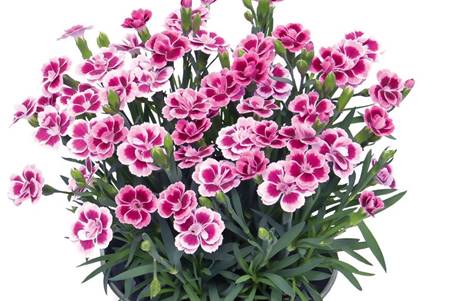
In the pink is an English idiom that means to be at the peak of health, to be in perfect condition. The expression in the pink to mean to be at the peak of health goes back to the 1500s when the word pink did not refer to a color. At that time, the word pink referred to a certain type of flower called dianthus, still referred to as pinks in the English vernacular, today. Pinks, the flowers, were considered the pinnacle of floral design and so the word pink came to mean anything that was the pinnacle of excellence. The word pink is derived from the Danish term pinck oogen, which translates as half-closed eyes or small eyes, a clear reference to the appearance of the dianthus flower. Unbelievably, the word pink to mean a color was not used until the end of the 1700s, and not in general use until the 1800s.

Examples:

As a world famous media personality, she has good reason to be in the pink. (The Daily Mail)

“He’s in the pink of health considering his age,” Abella said. (The Philippine Star)

Dianthus Pink Kisses

Kara Church

Technical Editor, Advisory

Symitar Documentation Services

Posted by: Jack Henry | September 28, 2017

Editor’s Corner: Historic or Historical?

Last week, I wrote a post about historical swear words. And the word historical made me think. I know that many of us are confused about whether to use the word historic or the word historical. I looked up this word pair to see if there is an easy way to remember which word to use in specific circumstances. It turns out there is a nifty mnemonic.

First, let’s start with definitions for each.

· Historic means “something important or influential in history.”

· Historical means “anything from the past.”

You visit historic sites (important sites like Stonehenge or the Coliseum); you share historical Elizabethan swear words with your friends.

The mnemonic to help you remember which word to use comes from William Safire: “Any past event is historical, but only the most memorable are historic.”

If you want to read more about these two words, the Grammar Girl website has an interesting article.

Donna Bradley Burcher | Senior Technical Editor | Symitar®

8985 Balboa Ave. | San Diego, CA 92123 | Ph. 619.278.0432 | Extension: 765432

Symitar Technical Publications Writing and Editing Requests

NOTICE: This electronic mail message and any files transmitted with it are intended
exclusively for the individual or entity to which it is addressed. The message,
together with any attachment, may contain confidential and/or privileged information.
Any unauthorized review, use, printing, saving, copying, disclosure or distribution
is strictly prohibited. If you have received this message in error, please
immediately advise the sender by reply email and delete all copies.

Posted by: Jack Henry | September 27, 2017

Editor’s Corner: Cyber

Dear Editrix,

Can you offer some tips on the use of the term cybersecurity…or is it cyber security?

Thanks!

Secure in the South

Dear Secure,

What great timing you have! Here on the JHA island of Symitar, we just enjoyed a fantastic educational conference, and it was full of presentations about the topic of cybersecurity. Being one of the editors of these presentations, I noticed that different people used different rules for cyber. Some used it as a prefix (cyberattack) and others used it as an adjective (cyber attack).

We should definitely all be using the same terminology here. At JHA, we use the Chicago Manual of Style (CMOS) and Merriam-Webster as our primary resources. In this case, CMOS did not offer any help, but Merriam-Webster did.

According to our favorite dictionary, cyber should be used as a prefix. (Incidentally, the AP Style Guide agrees.) Following are some of the more common cyber-related words, along with the preferred spelling:

· cyberattack

· cyberbullying

· cybercafe

· cybersecurity

· cyberspace

· cyberstore

I hope this helps!

Kara

Kara Church

Technical Editor, Advisory

619-542-6773 | Ext: 766773

Symitar Documentation Services

NOTICE: This electronic mail message and any files transmitted with it are intended
exclusively for the individual or entity to which it is addressed. The message,
together with any attachment, may contain confidential and/or privileged information.
Any unauthorized review, use, printing, saving, copying, disclosure or distribution
is strictly prohibited. If you have received this message in error, please
immediately advise the sender by reply email and delete all copies.
Posted by: Jack Henry | September 26, 2017

Editor’s Corner: Mukilteo

Here I am up in the Pacific Northwest again, working from my parents’ home. Over the weekend, I was lucky enough to hang out with my friend Liesel, my favorite buddy from high-school swim team. We met near the ferry she takes to Whidbey Island, from Mukilteo. I looked up Mukilteo and found out that the name means “good camping ground.”

I thought I’d look up some other city names from the area and see what they mean. For the complete, unedited list, you can click here. And my apologies to anyone that doesn’t like the term “Indian”; this article is full of it.

· Cle Elum: Salish term meaning “swift water.”

· Enumclaw: This was a traditional campsite for the Duwamish Indians. Translations of “Enumclaw” range from “place of evil spirits” (probably a European misconception of Native sacred places), “thundering mountain,” and “loud, rattling noise.”

· Issaquah: The hunting and fishing ground of the Snoqualmie Indians. According to some accounts, the Indians called the area “Ishquoh” which may have meant “the sound of the birds.” When pronounced in Indian, the word has a glottal stop which English-speakers have difficulty with and so they pronounced it as “squak” In 1899, the town was officially designated as Issaquah.

· Newhalem: Based on a Salish word which means “goat snare.”

· Okanogan: Based on the Salish word “okanagen” which means “rendezvous.”

· Quilcene: This was originally the home of the Twana Indians who apparently called it Kwil-sid. The name may mean “salt water people.”

· Salkum: Probably means “boiling up,” which refers to a section on the Cowlitz River where the falls are located.

· Seattle: is named for Suquamish Chief Sealth.

· Sequim: Located in the homeland of the S’Klallam Indian tribe, the bay was called Such-e-kwai-ing which means “quiet water” and was then Anglicized into Sequim (which is pronounced “skiwm”.)

· Tacoma: The Salish-speaking Indians in the area referred to it as Shubahlup which means “the sheltered place.” American settlers later named it Tacoma which is supposedly from Takohoma which has been reported to mean “frozen waters,” or “nourishing breast,” or “near to heaven” which may refer to the nearby Mt. Rainier.

· Tenino: This name comes from the Chinook word which means “meeting place” in reference to it being a meeting ground and trading place. In addition, the Tenino are a Shaptian-speaking tribe related to the Umatilla and the Celilo.

· Twisp: Appears to be from the Chinook word “t-wapsp” which means “yellow jacket.”

· Walla Walla: Named for the Walla Walla Indian tribe, a Sahaptian-speaking group linguistically and culturally related to the Palouse and Wanapam. Walla Walla is often translated as “many waters.”

· Wapato: From the Chinook word “wapatoo” which means “potato” referring to the camas root which was commonly used for food.

Washington State Ferry in Mukilteo

Kara Church

Technical Editor, Advisory

Symitar Documentation Services

Posted by: Jack Henry | September 25, 2017

Editors Corner: Lightning and Lightening

One of our readers noticed that people have a tendency to mix up the words lightning and lightening. In todays post, I hope to enlighten you about the difference between the two words and provide a tip for spelling them correctly.

First, here are some definitions (from Merriam-Webster):

lightning: the flashing of light produced by a discharge of atmospheric electricity

lighten: to make light or clear : ILLUMINATE

With some commonly confused words, the similarities are coincidental. However, lightning and lightening are closely related. Both words come from the Middle English word lightenen (also spelled lihtenen). Its easy to see the connectiona flash of lightning lightens the sky.

I know that Editors Corner readers like mnemonics. I couldnt find any good ones for lightning and lightening, so I made my own. I hope it helps.

Tip: Lightning strikes quickly, so write lightning as quickly as possible (by leaving out the letter E).

The word lightening can also refer to reducing the weight of something. In this case, the similarity between light (not dark) and light (not heavy) does seem to be a coincidence.

Although both words come from Old English loht (also spelled lht), if you trace them farther back, light (meaning not dark) is similar to Latin lux (light), and light (meaning not heavy) is similar to Latin levare (to raise).

Ben Ritter | Technical Editor | Symitar
8985 Balboa Avenue | San Diego, CA 92123
619-682-3391 | or ext. 763391 | www.Symitar.com

Symitar Documentation Services

NOTICE: This electronic mail message and any files transmitted with it are intended
exclusively for the individual or entity to which it is addressed. The message,
together with any attachment, may contain confidential and/or privileged information.
Any unauthorized review, use, printing, saving, copying, disclosure or distribution
is strictly prohibited. If you have received this message in error, please
immediately advise the sender by reply email and delete all copies.

Posted by: Jack Henry | September 22, 2017

Editor’s Corner: Bluetiful

The Crayola shade Dandelion is out and Bluetiful is in. Crayola recently announced the name of a new blue crayon called Bluetiful,and not everyone is happy about the new name because it isn’t a real word.

Bluetiful is a portmanteau of the words blue and beautiful.

Earlier this year, Crayola asked fans to vote for one of five possible names for the new crayon. The options were: Blue Moon Bliss, Bluetiful, Dreams Come Blue, Reach for the Stars, and Star Spangled Blue. Bluetiful was the winner.

Whether you love or hate the new name, it sure is a heck of a lot easier for kids to say than YInMn blue, which is the blue pigment that inspired the new crayon. YInMn blue is named after the elements that it contains: yttrium, indium, and manganese, and oxygen. Click here to learn more about YInMn blue.

If you are upset about the name of the new crayon, click here for a fun activity that, hopefully, makes you feel better.

Jackie Solano | Technical Editor | Symitar®

8985 Balboa Ave. | San Diego, CA 92123 | Ph. 619.542.6711 | Extension: 766711

Symitar Documentation Services

NOTICE: This electronic mail message and any files transmitted with it are intended
exclusively for the individual or entity to which it is addressed. The message,
together with any attachment, may contain confidential and/or privileged information.
Any unauthorized review, use, printing, saving, copying, disclosure or distribution
is strictly prohibited. If you have received this message in error, please
immediately advise the sender by reply email and delete all copies.

« Newer Posts - Older Posts »

Categories