Posted by: Jack Henry | November 15, 2017

Editor’s Corner: We’re back to haunt you!

Yes, I completely blew the timing on this. I would love to have read it before Halloween so I could share it with you then—but things happen, people change, and sometimes mistakes are made.

Being interested in all aspects of life (including death), I couldn’t let this collection of creepy words wait until next year. From The Grammarist, I offer you four alternative terms for our final resting places. (Photos collected and added by yours truly.)

Sepulcher, crypt, catacomb and mausoleum are all places where the dead are laid to rest. However, there are some differences between the terms. We will examine the definitions of the words sepulcher, crypt, catacomb, and mausoleum, where these words came from.

A sepulcher (American spelling) or sepulchre (British spelling) is a small room in which a dead body is laid to rest. Most properly, a sepulcher is cut out of rock and is in more of a natural setting, though the word has been expanded to be a synonym for tomb or mausoleum. The word sepulcher is derived from the Latin word sepulcrum, meaning place where someone is buried.

A crypt is a small room or a vault in which a dead body is laid to rest, situated under a church. A crypt may be a room that is large enough to function as a chapel or simply an area large enough to hold a coffin. Crypts are often located in the wall or under the floor of a church. The word crypt is derived from the Greek word krypte which means hidden.

A catacomb is an underground cemetery, especially referring to the tunnels built by the ancient Romans. The catacombs under Paris, France and Rome, Italy are famous and extensive. The word catacomb is perhaps derived from the Latin term cata tumbas which translates as at the graves.

A mausoleum is an above-ground tomb or building composed of granite or marble. A mausoleum usually has doors and a vestibule, as it houses more than one set of remains. The word mausoleum comes from Greek name Mausoleion, which is the enormous tomb built around 350 BC for Mausolos, a self-appointed king of Caria. Mausoleums may hold either coffins or urns or boxes containing ashes.

Kara Church

Technical Editor, Advisory

Symitar Documentation Services

Posted by: Jack Henry | November 13, 2017

Editor’s Corner: “Onto” and “On To”

In my previous post (about phrasal verbs), I used the phrase “logging on to your computer.” Some of you noticed that I wrote on to as two words (“logging on to” instead of “logging onto”) and asked whether it’s ever correct to write onto as one word.

Great question! Sometimes onto is correct, and other times, on to is correct. They are not interchangeable, and choosing between the two is not simply a personal preference.

When to Use Onto

Onto is a preposition meaning “to a position or point on or upon” (thanks, Merriam-Webster).

Use onto when you’re writing about putting something on top of something else. For example, when you put a vase onto a table, the vase is physically on top of the table. When you climb onto your roof, you are physically on top of your roof.

You should also write onto as one word when you’re using it to mean “in or into a state of awareness or knowledgeability about.” (Imagine an undercover agent saying, “I think they’re onto me.”) Unless you’re writing the next great spy thriller, you probably don’t use the word in this sense very often.

When to Use On To

Use on to when on is part of a phrasal verb (like log on).

When you’re deciding between onto and on to, it’s possible to look for phrasal verbs, but it’s probably easier to ask yourself, “Am I talking about putting something on top of something else?” If the answer is yes, use onto. If the answer is no, use on to.

Ben Ritter | Technical Editor | Symitar®
8985 Balboa Avenue | San Diego, CA 92123
619-682-3391 | or ext. 763391 | www.Symitar.com

Symitar Documentation Services

NOTICE: This electronic mail message and any files transmitted with it are intended
exclusively for the individual or entity to which it is addressed. The message,
together with any attachment, may contain confidential and/or privileged information.
Any unauthorized review, use, printing, saving, copying, disclosure or distribution
is strictly prohibited. If you have received this message in error, please
immediately advise the sender by reply email and delete all copies.

Posted by: Jack Henry | November 9, 2017

Editor’s Corner: Test

Apologies. I am testing the email addresses for Editor’s Corner.

NOTICE: This electronic mail message and any files transmitted with it are intended
exclusively for the individual or entity to which it is addressed. The message,
together with any attachment, may contain confidential and/or privileged information.
Any unauthorized review, use, printing, saving, copying, disclosure or distribution
is strictly prohibited. If you have received this message in error, please
immediately advise the sender by reply email and delete all copies.

Posted by: Jack Henry | November 8, 2017

Editor’s Corner: Indubitably v. Undoubtedly

To whom it may concern, I apologize if you are receiving this email and weren’t on our list before. I just recreated the list, and with one eye out of commission and a 1400-person list, so some things may be out of whack. Let me know if you DO NOT want you daily fix of Editor’s Corner. (But it’s great, so you should want to take a little break each day to read it.)

Thanks!

**************************************************************

Dear Editrix,

What is the difference between indubitably and undoubtedly? Is one better than the other? I’ve seen them both and I don’t know if there’s a subtle difference or why we have two words for what appears to be the same thing.

Doubting Thomasina

Dear Thomasina,

What an interesting question! I tried to answer this question in my head as I drove home, and I couldn’t think of a difference in use of the words. I definitely hear undoubtedly more often. Indubitably seems like one of those words that is reserved for Arthur Conan Doyle (Sherlock Holmes), and I seem to recall it as the last word in the Schoolhouse Rock lyrics for “Lolly, Lolly, Lolly (Get Your Adverbs Here!).”

Here is part of an article from The Grammarist that sounds like it was made for us!

Indubitably and undoubtedly are two words that are sometimes found confusing.

Indubitably means beyond a doubt, without question, plainly true. The word indubitably first appeared in the mid-1400s, it is derived from the Latin word indubitabilis which means that which is not doubtable.

Undoubtedly also means beyond a doubt, without question, plainly true. The word undoubtedly also first appeared in the mid-1400s, it is derived from the Old French word douter meaning to be afraid or doubtful and the prefix un- which means not. Indubitably and undoubtedly are synonyms, which are two words that mean the same thing. The word undoubtedly is used much more often than the word indubitably, as the word indubitably carries the connotation of a more formal word.

Kara Church

Technical Editor, Advisory

619-542-6773 | Ext: 766773

Symitar Documentation Services

NOTICE: This electronic mail message and any files transmitted with it are intended
exclusively for the individual or entity to which it is addressed. The message,
together with any attachment, may contain confidential and/or privileged information.
Any unauthorized review, use, printing, saving, copying, disclosure or distribution
is strictly prohibited. If you have received this message in error, please
immediately advise the sender by reply email and delete all copies.

Posted by: Jack Henry | November 7, 2017

Editor’s Corner: Kiddies, kitties, caddies, or catties

From: Kara Church
Sent: Tuesday, November 7, 2017 8:21 AM
To: kchurch@symitar.com
Subject: Editor’s Corner: Kiddies, kitties, caddies, or catties

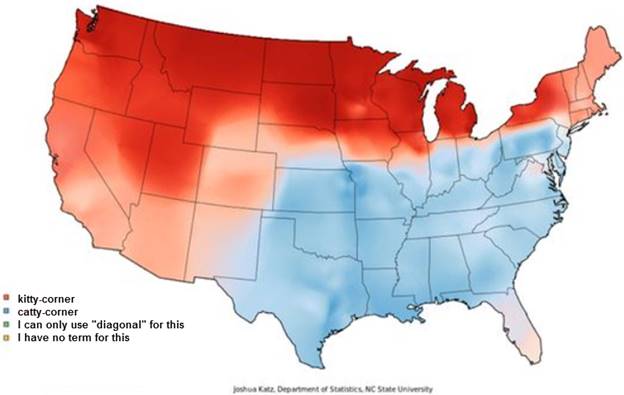
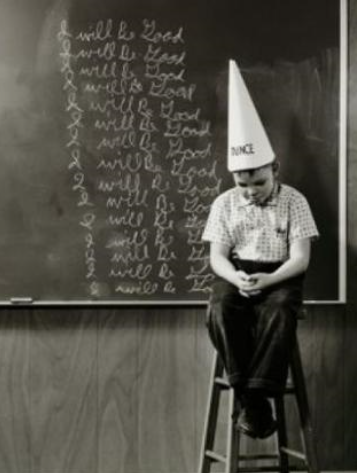
One of you asked me a few weeks ago about the term kiddie-corner. Because of the spelling, I was thinking it must be something like a corner where you sit Beaver Cleaver when he misbehaves in class. And then I realized it was the spelling that was throwing me off and you were asking about the term kitty-corner!

This expression (kitty-corner, catty-corner, and cater-corner) means diagonally opposite. According to Common Errors in English Usage, the term comes from misspelling the French word quatre (“four”) prefixed to “corner.” Although the word has nothing to do with cats or kittens, in various dialects all three spellings are acceptable: “catty,” “cater” or “kitty.”

(As the author notes, “caddy-corner” is not acceptable unless you are talking about somebody in a corner holding your golf bags, and I would add that “kiddie-corner” is not an appropriate spelling unless someone has been stuck in the corner for being naughty.)

Kara Church

Technical Editor, Advisory

Symitar Documentation Services

Posted by: Jack Henry | November 6, 2017

Editor’s Corner: A big fuss over two letters

Dear Editrix,

I know you aren’t really there for every little question everyone on earth has, but I’m a little confused. [KC – Ha ha! If you only knew!] I was writing a document this week, and Microsoft® Word suggested that “all of” was unnecessary, and that “all” was more succinct. So I changed it to “all” and then my reviewer commented that I had grammar issues in my document and sent it back for me to add the “of” back in.

I must admit, adding the “of” seems more natural to me. Could you please help me understand?

Here’s an example:

  • Our goal is to make hot air balloons available to all of JHA by the end of the year.

Of Mice and Men

Dear Of Mice and Men,

You always have the best questions! I have been wondering about the use of “of” in this case and in other cases, so let’s talk about your example today. According to some interesting information, the word “of” comes with lots of rules. For example, you always say “a couple of” something. “A couple dogs ran my way,” is incorrect. “A couple of porcupines chased me,” is correct.

And from the Cambridge website, here is some information about other times to use (or not use) “of.”

All of

We use all of before personal pronouns (us, them), demonstrative pronouns (this, that, these, those) and relative pronouns (whom, which). The personal pronoun is in the object form:

I need to speak to all of you for a few minutes.

He brought gifts for all of us.

We had to contact the insurance firm and the airline, all of which took a lot of time. (all of which = ‘contacting the insurance firm and the airline’)

With demonstratives (this, that, these, those), we can say all of or all without of:

[talking about a pile of kitchen waste]

All (of) this has to go out into the rubbish bin.

We often use of after all in definite noun phrases (i.e., before the, possessives and demonstratives), but it is not obligatory:

All (of) the workers were given a pay-rise at the end of the year.

I gave all (of) my old books to my sister when she went to university.

What shall we do with all (of) this cardboard? Throw it out?

All without of

We use all, not all of, before indefinite plural nouns referring to a whole class of people or things:

All cats love milk.

Not: All of cats love milk.

This book was written for all children, everywhere.

We use all, not all of, before uncountable nouns:

All junk food is bad for you.

Not: All of junk food is bad for you.

I love all music, not just classical.

So, after all of that, I am thinking that, in your original example, if you translate “JHA” to “employees,” you would just say: “We plan to make hot air balloons available to all employees.” You would not say: “We plan to make hot air balloons available to all of employees.”

If you translate JHA to “the company,” you would say: “We plan to make hot air balloons available to all of the company (a bit awkward).” We would not say: “We plan to make hot air balloons available to all the company.”

I guess in this case it depends what “JHA” is. Is it the people? Is it the buildings? Is it the company? Or is it an “indefinite plural noun referring to a whole class of people”? I think you could make an argument either way.

Perhaps if there is doubt, it’s time to rewrite the sentence altogether?

Kara Church

Technical Editor, Advisory

619-542-6773 | Ext: 766773

Symitar Documentation Services

NOTICE: This electronic mail message and any files transmitted with it are intended
exclusively for the individual or entity to which it is addressed. The message,
together with any attachment, may contain confidential and/or privileged information.
Any unauthorized review, use, printing, saving, copying, disclosure or distribution
is strictly prohibited. If you have received this message in error, please
immediately advise the sender by reply email and delete all copies.

Posted by: Jack Henry | November 3, 2017

Editor’s Corner: Use

Last week I sent out an article that contained a peeve of mine about the word impactful. Several of you wrote in to share your peeves with me, and asked me to put out some reminders to others about these topics. Today’s peeve is the use of the word utilize in place of use.

You may recognize this topic since we’ve written about it before. “What is wrong with the word utilize? It means use. It’s in the dictionary. What’s the problem?”

The problem is that the word use does mean the same thing, yet people ignore it and employ its more complicated counterpart utilize. Use is straightforward. It’s short. It doesn’t add syllables just to make your papers longer or more fancy. We editors like the word use. It seems most of your coworkers prefer it, too.

It seems that utilize is almost like a drug to some people. It might be okay once in a while when you have come down with something or you need a word version of NoDoz® to keep you awake. But once people start to use it, they become addicted. They tell their kids to “utilize the big fork for your entrée.” Or perhaps, they utilize dried fruit in their granola. Maybe they even utilize blue pencils for fun.

Be a pal. Choose use.

Kara Church

Technical Editor, Advisory

619-542-6773 | Ext: 766773

Symitar Documentation Services

NOTICE: This electronic mail message and any files transmitted with it are intended
exclusively for the individual or entity to which it is addressed. The message,
together with any attachment, may contain confidential and/or privileged information.
Any unauthorized review, use, printing, saving, copying, disclosure or distribution
is strictly prohibited. If you have received this message in error, please
immediately advise the sender by reply email and delete all copies.

Posted by: Jack Henry | November 2, 2017

Editor’s Corner: Accents

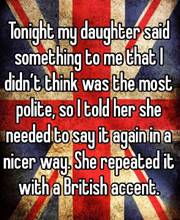
My husband was born and raised on the outskirts of London, England, and after many years in the United States, he still has a strong accent. We have many friends from different parts of the United Kingdom, and they have unique accents of their own. Even though some of the cities they come from seem relatively close to each other (by American standards), the accents are very different.

We have our own fair share of accents here in the United States. San Diegans sound different from Bostonians. People in Wisconsin sound different from people in Alabama.

As we cooked dinner the other night, my husband and I were wondering, how do accents develop?

So, I got busy researching, and I found an interesting article called “The Science of Accents,” written by Esther Inglis-Arkell, which discusses how accents evolve among different groups. Interestingly, the article states that animals have accents too: “Goats say bahhhh with different accents, depending on where they live. Gibbons sing different songs, depending on which groups they’re raised in.”

It appears that, over time, pronunciation simply deviates when groups are isolated from each other. So though the Pilgrims spoke with an English accent, as time passed, their pronunciation shifted away from their English ancestors. And as they moved about and settled in different parts of the country, their accents diverged even more.

So now we are left with a bunch of different accents all over the United States (and all over the world). Everyone has an accent except San Diegans. It’s so weird.

Donna Bradley Burcher | Senior Technical Editor | Symitar®

8985 Balboa Ave. | San Diego, CA 92123 | Ph. 619.278.0432 | Ext: 765432

Posted by: Jack Henry | November 1, 2017

Editor’s Corner: Done versus Finished

Dear Editrix,

When I was in elementary school, as children often do when completing assignments, someone would often shout out, “Teacher, I’m done.” My teacher’s response was always “How long have you been in the oven?” I never knew if she was correcting the student’s grammar or if she was being glib. It raises the question of whether the term applies only to cooking, or is it proper to use done when one is finished with a task?

Curious in Missouri

Dear Curious,

I read a lot of information about this topic, and I also remember on What Not to Wear hearing Stacy always say, “Stick a fork in me, I’m done.” I just figured her use of that (instead of finished), was a joke. Now I see that it was probably something her teacher used to say.

What I could find, overall, is that teachers used to say that “done” is for food, and “finished” is for people completing a task. But that is more “old school.” What Grammar Girl reports is this:

Done vs. Finished

When you push back from the Thanksgiving table and say, "I’m done," a cranky relative may attempt to correct you by replying, "A turkey is done; you’re finished."

Although done has been used to mean "finished" for centuries, admonitions against it started surfacing in the early 1900s. The first style guide that advised against using done to mean "finished” didn’t give a reason for the declaration, and the current Merriam-Webster Dictionary of English Usage speculates that the advice was based on bias against the usage’s "Irish, Scots, and U.S." origin.

The "rule" against done has been widely taught in schools, but no historical pattern or logic supports it, and most credible modern usage guides either don’t address it at all (e.g., AP Stylebook, Chicago Manual of Style, The Cambridge Guide to English Usage) or simply note that done and finished are interchangeable (e.g., Garner’s Modern American Usage, Merriam-Webster Dictionary of English Usage, The Columbia Guide to Standard American English).

Take that, Aunt Ruth!

Go forth, be free, and be done or finished. It’s up to you! I promise I won’t come back and nag you with jokes from your third-grade teacher about being a piece of food in the oven and “done.”

Stick a fork in me…I’m done!

Kara Church

Technical Editor, Advisory

Symitar Documentation Services

Posted by: Jack Henry | October 31, 2017

Editor’s Corner: Crackerjack and Cracker Jacks

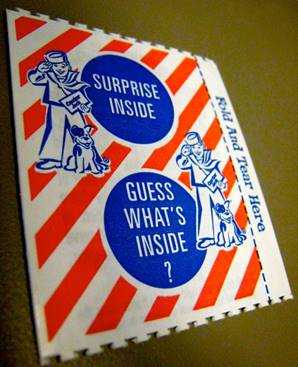
When I was young, one of my dad’s less salty insults to other drivers was, “Where’d you get your license? A Cracker Jack box?” I supposed it was an insult when comparing someone’s driver’s license to a plastic toy or fake tattoo in a box of candy, so I figured the term crackerjack was something insulting. But recently, I read this article from The Grammarist and had a surprise.

Crackerjack is an American word that has been adopted the world over.

Crackerjack means having a quality of excellence. Crackerjack may be used as an adjective or a noun. It is a closed compound word, which is a word composed of two words that are joined without a space or hyphen between them.

The word crackerjack has its roots in the world of American horse racing in the 1880s. At that time, it was usually rendered as two words as in cracker jack to mean a top quality horse. The term migrated to other sports, and eventually, mainstream English. Today, the term is usually written as two words when referring to the American snack of candied popcorn and peanuts that comes in a box. Traditionally, Cracker Jack included a small toy trinket in each box, but the company recently replaced the toy trinket with a QR code. [KC – What a swindle! I’d rather have a fake tattoo!] Note that the term crackerjack was in use before the snack was invented in 1893.

From there, I went to the Online Etymology Dictionary and found similar information supporting The Grammarist’s article:

cracker-jack (n.)

also crackerjack, "something excellent," 1893, U.S. colloquialism, apparently a fanciful construction, earliest use in reference to racing horses. The caramel-coated popcorn-and-peanuts confection was said to have been introduced at the World’s Columbian Exposition (1893). Supposedly a salesman gave it the name when he tasted some and said, "That’s a cracker-jack," using the then-popular expression. The name was trademarked 1896. The "Prize in Every Box" was introduced 1912.

"Your brother Bob is traveling, isn’t he?"

"Yep. He’s with one of the big racing teams. I tell you, he’s a cracker-jack! Wins a bushel of diamonds and gold cups every week." ["Life," Aug. 1, 1895]

Kara Church

Technical Editor, Advisory

Symitar Documentation Services
« Newer Posts - Older Posts »

Categories