Posted by: Jack Henry | March 18, 2025

Editor’s Corner: Pet Peeves

Hey folks! A few weeks ago, I got a question from one of you about peeves. Pet peeves to be exact. What is a peeve? Do you have one for a pet? I know that I have a few—I’ve even shared them with you over the years. In fact, here are my top 3 (of 10) from 10 years ago: Editor’s Corner: Top 10 Peeves for 2015 (1 through 3) | Editor’s Corner.

But let’s first define what we are talking about (according to Merriam-Webster):

peeve (noun): something that is a source of irritation; problem; irritant; nuisance.

peevish (adjective): easily irritated or annoyed; snappish; crotchety [KC – I don’t
hear Americans saying this, but in the British shows that I watch I hear it frequently.]

pet peeve (noun): a frequent subject of complaint

Now, for some specifics about pet peeves. A pet peeve isn’t just something that bothers people in general. For example, a person yelling at us for no reason is not a pet peeve—most of us would not enjoy that.

A pet peeve is personal. It is something that many people would shrug off or not even notice. For example, one sees and hears the word impacted a lot these days, used in place of affected. For example, “Three clients were impacted by this power loss.” Well, when I was growing up, the word impacted meant “immovably pressed in,” and was only used for two specific occasions: teeth and butts (constipation). I know, yuck. Using the word impacted to mean affected is a pet peeve of mine, and I will edit it out if you send a document using it that way.

I realize words change and times change, but what I grew up with sticks with me, and this peeve is one of my pets.

Here are some examples from The Grammarist, of pet peeves in sentences:

  • Her pet peeve made her miserable; she hated being able to hear anyone breathing, making her hypersensitive and often cranky when in the presence of others.
  • People’s geographical ignorance has become a huge pet peeve of mine. It’s absolutely maddening when people are stupid enough to think I come from a different country because I live in New Mexico.
  • He never thought he had any pet peeves since he was such an easygoing person. However, he seriously found himself getting enraged by the lack of vehicular turn-signal use he was experiencing in the new town he had moved to.

And one addition about the origin of the phrase, also from The Grammarist:

Pet peeve came into use in the early 20th century from the combination of the word pet, meaning “an especially cherished thing,” and the word peeve, meaning “irritated or exasperated.”

I hope I didn’t make any of you feel peevish today!

Kara Church | Technical Editor, Advisory | Technical Publications

Pronouns: she/her | Call via Teams | jackhenry.com

Editor’s Corner Archives: https://episystechpubs.com/
Posted by: Jack Henry | March 13, 2025

Editor’s Corner: Coming Soon!

Oh my goodness. I just wrote about Mardi Gras and now we’re coming up to St. Patrick’s day on Monday. The time machine is moving so quickly, and I just can’t seem to catch up.

I did a bit of research on Irish traditions and folklore for a department project, and I’ll share some of the things I learned. First, details about the name of St. Patrick’s Day from Merriam-Webster.

Random people asked the dictionary folks if it should be “St. Patrick’s Day, St. Patty’s Day, or St. Paddy’s Day.” I’m filtering the responses for you.

  1. Don’t ever call it St. Patty’s Day. Patty is a nickname for Patricia, and the patron saint of Ireland was a dude. He supposedly drove the snakes out of Ireland and into the sea, among other things.
  2. It could be considered an insult, so don’t call it St. Paddy’s Day, either. Since the 1700s, “Paddy has been used in English as a disparaging name for an Irishman or, in informal British English, as ‘a fit of temper.’” If you have to shorten it, use St. Pat’s Day.
  3. Feast days named after saints use the saint’s proper name. In this case, the Irish version (Pádraig) or Patrick is preferred.

Moving on to some things unrelated to what to call the day…the saying is that if you don’t wear green on St. Patrick’s Day, people can give you a pinch. Remember Human Resources and the round-house kick before you try something like this.

Corned beef and cabbage are the traditional foods for the day. Irish beer and whisky are the traditional drinks. Vegans and non-drinkers, there are options out there, but you might want to sit this one out.

Leprechauns! My first recommendation is Sean Connery’s debut (as the main star) in Darby O’Gill and the Little People. (1957) Fun film.

I also read something yesterday that said leprechauns carry two pouches. One holds a silver coin and the other holds a gold coin. The silver coin can be given to anyone—but it always returns to the leprechaun’s pouch. The gold coin can be used for the leprechaun to get out of trouble, which apparently happens a lot when people capture them and try to find their pots of gold. They cleverly convince the captor they’ll give them a taste of gold by giving them the coin. When the person looks away, the leprechaun disappears (since that is one of their special tricks). The gold coin then turns to ash.

I hope you have a fun St. Patrick’s Day!

Kara Church | Technical Editor, Advisory | Technical Publications

Pronouns: she/her | Call via Teams | jackhenry.com

Editor’s Corner Archives: https://episystechpubs.com/

Posted by: Jack Henry | March 11, 2025

Editor’s Corner: Whether Weather

Happy almost Spring!

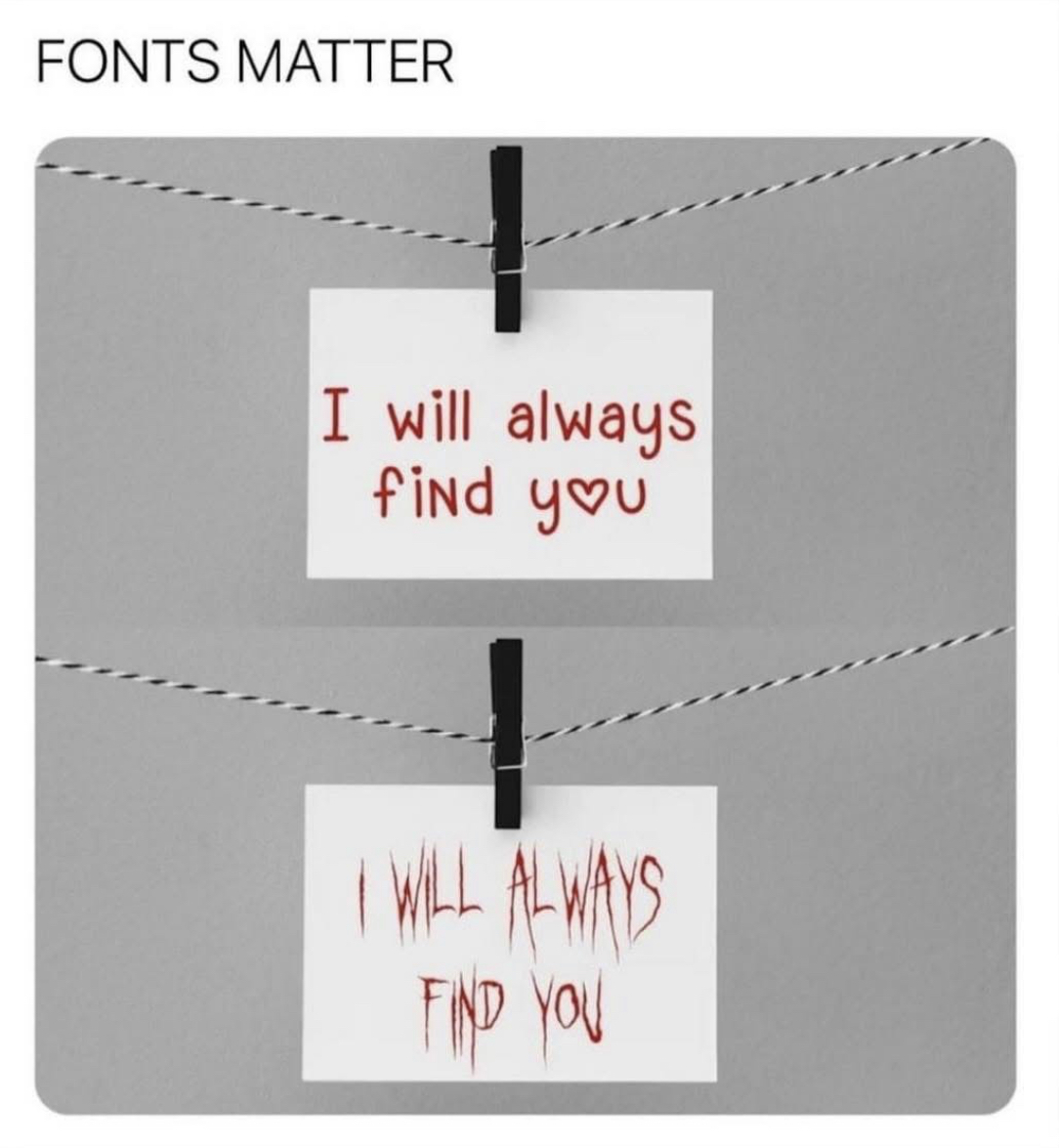
The other day I received this from one of you wonderful readers:

I was wondering—are those just misspellings or are they homophones (sound the same but are spelled differently and have different meanings) and homographs (spelled the same but sound different and have different meanings)?

Homomphones:

  • there/their/they’re
  • break/brake
  • steak/stake
  • see/sea
  • eight/ate

Homographs:

Quarter quarter (to cut in four, or ¼ of something) quarter (an american 25 cent piece)
bat bat (a wooden stick you hit a ball with) bat (a winged mammal)
bar bar (a place you hang out to play darts and drink) bar (serving of chocolate) bar (piece of metal)
right right (a direction you turn) right (correct) right (a power or privilege)

Okay, so that’s the grammar. But what I was interested in was what do these alternate spellings mean, if anything? Let’s see!

(I had to hunt around for these. I used AI, Merriam-Webster, Oxford dictionaries, and others.)

rane Verb: (mildly archaic) steal; commit robbery
hale Adjective: free from defect, disease, or infirmity; healthy, vigorous
verb: haul or pull
gail Proper noun: Gail, female name meaning “joy.” Diminutive of Abigail meaning “my father’s joy.”
drissle Misspelling of drizzle (noun): light rain falling in very fine drops.
thundre Misspelling of thunder (noun): the sound that follows a flash of lightning and is caused by sudden expansion of the air in the path of the electrical discharge
litnin Misspelling of lightning (noun): the flashing of light produced by a discharge of atmospheric electricity
tawnaydoes Misspelling of tornado (noun): a mobile, destructive vortex of violently rotating winds having the appearance of a funnel-shaped cloud
frizzing Verb: form into small tight curls; to fry or sear with a sizzling noise
colde Adjective: an archaic spelling of the word "cold". "Cold" means having a low temperature, especially when compared to the human body

So some are archaic spellings, some are misspellings, and some are homophones. I thought it was a cute meme. I know, you’re wondering, did I have to take it this far? Yeah, I did. It’s who I am. 😊

Kara Church | Technical Editor, Advisory | Technical Publications

Pronouns: she/her | Call via Teams | jackhenry.com

Editor’s Corner Archives: https://episystechpubs.com/
Posted by: Jack Henry | March 6, 2025

Editor’s Corner: Nerds and Friends

Hello, folks!

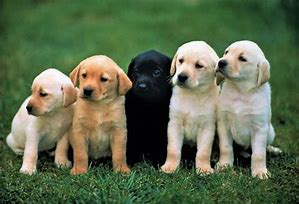
The other day I referred to myself and a coworker as “word nerds.” I didn’t think much of it, but then the very next day I received this comic strip from another reader:

For those of you who grew up in the 1980s, I think the terms nerd, geek, dork, and dweeb might make you cringe. For others, they might not seem too bad. These are the dictionary.com definitions, with some added extras in brackets from Merriam-Webster.

dork: “a silly, out-of-touch person who tends to look odd or behave ridiculously around others” [KC – “socially awkward, unstylish person.” And my dad told me it was a “bad word” when we were kids. The article says the same, so be careful if you use it around your elders.]

nerd: “socially awkward” and “an intelligent but single-minded person obsessed with a nonsocial hobby or pursuit” [KC – “a person devoted to intellectual, academic, or technical pursuits or interests.”]

geek: “a digital-technology expert or enthusiast” and “a person who has excessive enthusiasm for and some expertise about a specialized subject or activity” [KC – And a mouthful from M-W about geeks:

1: a person often of an intellectual bent who is disliked

2: an enthusiast or expert especially in a technological field or
activity

computer geek

3: a carnival performer often billed as a wild man whose act usually
includes biting the head off a live chicken or snake]

dweeb: “wimp; a stupid or uninteresting person.”

I’m happy to say, that despite how awful some of these things sound, they’ve turned around a little over the years. Again, from dictionary.com:

Today, being a geek or a nerd no longer implies that you’ll receive a horrible wedgie and get thrown in a locker. Based on popular usage of these terms, geeks and nerds are a new brand of cool kid.

Geeks and nerds, unite!

Kara Church | Technical Editor, Advisory | Technical Publications

Pronouns: she/her | Call via Teams | jackhenry.com

Editor’s Corner Archives: https://episystechpubs.com/
Posted by: Jack Henry | March 4, 2025

Editor’s Corner: Mardi Gras

Good morning, my friends!

I remember knowing full well what Ash Wednesday was when I was a kid, because my brother and I went to Catholic school. We knew it was a day that we’d write something on a piece of paper, like “I promise I will be nice to my brother,” or “I promise not to hit my sister” and then take it to church. Father Canole burned our promises, said some prayers, and the primary outcome was that we’d spend the day walking around with crosses of ash on our foreheads. Ash Wednesday was the start of lent: Forty days of fasting and penance until Easter.

What they didn’t tell us was that the Tuesday before Ash Wednesday was known as Fat Tuesday, Mardi Gras (French for Fat Tuesday), or Shrove Tuesday. Let’s have a quick look at the day, especially at how it is celebrated in New Orleans.

From History.com:

The first American Mardi Gras took place on March 3, 1699, when French explorers Pierre Le Moyne d’Iberville and Sieur de Bienville landed near present-day New Orleans, Louisiana. They held a small celebration and dubbed their landing spot Point du Mardi Gras. (Some argue the port city of Mobile, Alabama was actually the first to observe the event.)

In the decades that followed, New Orleans and other French settlements began marking the holiday with street parties, masked balls, and lavish dinners. When the Spanish took control of New Orleans, however, they abolished these rowdy rituals, and the bans remained in force until Louisiana became a U.S. state in 1812.

On Mardi Gras in 1827, a group of students donned colorful costumes and danced through the streets of New Orleans, emulating the revelry they’d observed while visiting Paris. Ten years later, the first recorded New Orleans Mardi Gras parade took place, a tradition that continues to this day.

In 1857, a secret society of New Orleans shopkeepers called the Mistick Krewe of Comus organized a torch-lit Mardi Gras procession with marching bands and rolling floats, setting the tone for future public celebrations in the city.

Since then, krewes have remained a fixture of the Carnival scene throughout Louisiana. Other lasting customs include throwing beads and other trinkets, wearing masks, decorating floats and eating King Cake.

Did you know? Rex, one of the oldest Mardi Gras krewes, has been participating in parades since 1872 and established purple, gold, and green as the iconic Mardi Gras colors.

Louisiana is the only state in which Mardi Gras is a legal holiday. However, elaborate carnival festivities draw crowds in other parts of the United States during the Mardi Gras season as well, including Alabama and Mississippi. Each region has its own events and traditions.

Whatever your religion, whatever you eat, and whatever you celebrate, I wish you a happy Mardi Gras!

Kara Church | Technical Editor, Advisory | Technical Publications

Pronouns: she/her | Call via Teams | jackhenry.com

Editor’s Corner Archives: https://episystechpubs.com/
Posted by: Jack Henry | February 27, 2025

Editor’s Corner: Fun in the Sun

Hello and a happy Thursday to all y’all!

It was my dad’s 84th birthday last week, and I was lucky enough to spend it with him, my stepmom, some cousins, friends, and several humpback whales…in Mexico. I spent most of the time chatting with Pops, taking advantage of the time we had together.

During one of our coffee-drinking marathons by the pool (and Banderas Bay), we were talking about snorkeling. I said “snorkeling” and Dad said, “skin diving.” I was wondering if these two terms mean the same thing. Sometimes we use different terms just because of our ages and where we grew up.

Today I got my answer about snorkeling, skin diving, and a third activity: freediving. I’m skipping scuba diving, and covering the basics I found on the Dive In webpage.

Snorkeling

Many of us have snorkeled, and according to the article, it is the most popular of the three activities. Essentially, gear for snorkeling is “full-foot snorkel fins, masks, snorkels, and possibly a buoyancy vest.” Or, if you don’t want a life vest, there’s always a “noodle” that will help you float. Outside of the gear, the key with snorkeling is staying near the top of the water and looking down below at the coral, sea turtles, and barracudas.

Skin diving

Skin diving is an old term, for the days before masks and goggles (and I’m guessing fins). This gearless activity isn’t just cruising along the top of the water and looking down. It is actually swimming, and then when you think you see an amazing fish, or something the pirates of the Caribbean left behind, you dive down to check it out. If you’re doing it the old-fashioned way without a mask, you probably just dove down and found an old aluminum can shining there.

These days, skin divers use snorkels at the surface, and masks and fins to dive down and further investigate what they found.

Freediving

Okay, I hadn’t heard of this. This is the newest of the activities, and I personally don’t get it. Freediving is a competitive activity where people breathe in as much air as possible, then try to dive as deep as they can. Sometimes they follow ropes back up, so they can get to the surface faster. Breathing in a lot of air quickly and repeatedly is exactly what they tell you NOT to do in swimming classes. Hyperventilating can cause you to pass out in the water, so I don’t recommend it. Additionally, rising too quickly from deep to shallow water can give you the bends. Still, I’ll provide you with this:

Herbert Nitsch is the current freediving record-holder, swimming to a depth of 830.8 feet (253.2 m) on one breath! He has earned the title “the Deepest Man on Earth.”

The equipment is also a little bit different. “Masks are typically smaller than standard scuba or snorkeling masks, more similar to swim goggles. …fins are much longer than dive fins.” Snorkels aren’t used.

I hope you learned as much as I did!

Kara Church | Technical Editor, Advisory | Technical Publications

Pronouns: she/her | Call via Teams | jackhenry.com

Editor’s Corner Archives: https://episystechpubs.com/
Posted by: Jack Henry | February 25, 2025

Editor’s Corner: So-so

Hello, folks.

I think I’ve mentioned today’s topic before, but I really lost myself in it this time! What have I mentioned? That it is interesting how so many languages have a rhyming response that basically means “so-so.” For example, “How are you feeling today, Abdul?” “I was really sick yesterday, but today I’m feeling so-so.” (He’s not feeling great, but he’s not as sick as he was. According to M-W, it means “neither very good nor very bad.”)

I made a table of the items that I found with Google™ translate. I’m sorry if they didn’t get them translated correctly—the one’s I’m familiar with are good. You be the judge if you speak any of the other languages. I picked the languages randomly, but as you’ll see, so many of them are the same word repeated, or something that rhymes. I did not include the multitude of different texts (Greek, Arabic, Japanese), just how they’d are pronounced.

Language Term used to mean “so so”
Arabic nisf nisf
Catalan tan així
Chinese mǎma hūhu
Czech tak-tak
English so-so

frobly-mobly

Finnish niin niin
French comme ci comme ça
German soso
Greek etsi k’etsi
Hawaiian ʻano
Hebrew kech-kech
Igbo so-so
Irish mar sin-sin
Italian cosi cosi
Japanese mā mā
Kikongo yo yina-yo yina
Latin sic-so
Malay jadi-jadi
Maori na-na
Mongolian tiim tiim
Romanian asa-asa
Samoan e a la e a la
Spanish mas o menos

asi asi

Swedish så som så
Turkish şöyle böyle
Welsh felly-felly
Yiddish azoy-azoy

I figured there must be some very smart people out there who could tell me more about this phenomenon. I wasn’t sure what to look for, but I did find this on Wikipedia. I’m cutting and pasting a little because it gets sort of heavy.

In linguistics, reduplication is a…process in which the root or stem of a word…or the whole word is repeated exactly or with a slight change.

Bingo! I was so happy! Here’s a little more:

Examples can be found in language as old as Sumerian, where it was used in forming some color terms, e.g., babbar "white", kukku "black".

Reduplication is the standard term for this phenomenon in the linguistics literature. Other occasional terms include cloning, doubling, duplication, repetition, and tautonym (when it is used in biological taxonomies, such as Bison bison).

Another article I read wasn’t specifically about the term so-so, but about how (in English) we like to create these reduplicative terms, particularly to make things sound silly. Here’s something someone sent me for another topic. I think maybe from Merriam-Webster:

  • willy-nilly
  • easy-peasy
  • jiggery-pokery
  • flim-flam
  • skimble-skamble
  • ricky-tick
  • hurly-burly
  • super-duper

I never took a linguistic class, but I always love when I discover this type of thing!

Kara Church | Technical Editor, Advisory | Technical Publications

Pronouns: she/her | Call via Teams | jackhenry.com

Editor’s Corner Archives: https://episystechpubs.com/
Posted by: Jack Henry | February 14, 2025

Editor’s Corner: Pullet Suprise

Hello, folks!

I’ll be out next week, so I’m leaving you with this article by Richard Lederer, from our local newspaper. It’s a little long, so you can make it last the whole week. The entire article is available online here, or you can read it below.

Student bloopers win a lot of Pullet Surprises

One of the fringe benefits of being an English or History teacher is receiving the occasional jewel of a student blooper in an essay. The original classroom blunder probably dates back to the day that some unsuspecting pupil first touched quill to parchment. All the fluffs and flubs, goofs and gaffes and boo-boos, blunders, and bloopers that I share with you today are genuine, certified, and unretouched.

The results range from the pathetic to the hilarious to the unintentionally insightful. The title of this column, for example, is based on a famous classroom faux pas: “In 1957, Eugene O’Neill won a Pullet Surprise.” Other students have given bizarre twists to history by asserting that Wyatt Burp and Wild Bill Hiccup were two great western marshals and that the inhabitants of Moscow are called Mosquitoes.

Sometimes the humor issues from a confusion between two words. Working independently, students have written, “Having one wife is called monotony,” “When a man has more than one wife, he is a pigamist,” “A man who marries twice commits bigotry,” and “Acrimony is what a man gives his divorced wife.”

While one student reminisced, “Each Thanksgiving it is a tradition for my family to shoot peasants,” another observed, “In 19th century Russia, the pheasants led horrible lives.” And, reversing a “g” and “q,” a young man once wrote, “When a boy and a girl are deeply in love, there is no quilt felt between them.”

Sidesplitting slips like these are collected by teachers throughout the world, who don’t mind sharing a little humor while taking their jobs seriously. I offer my favorite student howlers, each skewed and skewered sentence a certifiably pure and priceless gem of fractured English and worthy of a Pullet Surprise:

<![if !supportLists]>· <![endif]>Although the patient had never been fatally ill before, he woke up dead.

<![if !supportLists]>· <![endif]>Arabs wear turbines on their heads.

<![if !supportLists]>· <![endif]>When there are no fresh vegetables, you can always get canned.

<![if !supportLists]>· <![endif]>It is bad manners to break your bread and roll in your soup.

<![if !supportLists]>· <![endif]>We had a longer holiday than usual this year because the school was closed for altercations.

Students often revise history beyond recognition:

<![if !supportLists]>· <![endif]>The Great Wall of China was built to keep out the mongrels.

<![if !supportLists]>· <![endif]>The Puritans thought every event significant because it was a massage from God.

<![if !supportLists]>· <![endif]>A landmark in Paris is the Eyeful Tower.

<![if !supportLists]>· <![endif]>The President of the United States, in having foreign affairs, has to have the consent of the Senate.

<![if !supportLists]>· <![endif]>The difference between a king and a president is that a king is the son of his father, but a president isn’t.

Bloopers abound in all types of classrooms. Take these (please!) from Science class:

<![if !supportLists]>· <![endif]>Our new teacher told us all about fossils. Before she came to class, I didn’t know what a fossil looked like.

<![if !supportLists]>· <![endif]>Elephants eat roots, leaves, grasses, and sometimes bark.

<![if !supportLists]>· <![endif]>Dinosaurs used to smell bad, but they don’t anymore because they are extinct.

<![if !supportLists]>· <![endif]>A liter is a lot of newborn puppies.

<![if !supportLists]>· <![endif]>The equator is an imaginary lion that runs around the world forever.

<![if !supportLists]>· <![endif]>Three kinds of blood vessels are arteries, vanes, and caterpillars.

<![if !supportLists]>· <![endif]>A skeleton is a man with his outside off and his inside sticking out.

<![if !supportLists]>· <![endif]>In Chemistry class, we studied mean old acids.

<![if !supportLists]>· <![endif]>Without electricity we would still be in the Dark Ages.

<![if !supportLists]>· <![endif]>Many women believe that an alcoholic binge will have no ill effects on the unborn fetus, but that is a large misconception.

<![if !supportLists]>· <![endif]>Heredity means that if your grandfather didn’t have any children, then your father probably wouldn’t have any, and neither would you, probably.

<![if !supportLists]>· <![endif]>Genetics explains why you look like your father and, if you don’t, why you should.

<![if !supportLists]>· <![endif]>When you breathe, you inspire. When you do not breathe, you expire.

<![if !supportLists]>· <![endif]>Last year many lives were caused by accidents.

<![if !supportLists]>· <![endif]>A molecule is so small that it can’t be seen by the naked observer.

Students of the world, rewrite! We who are about to grade salute you! All teachers who receive such bloopers tell themselves that the laughter is not at the students but at what they have written. After all, as one young scholar has written, “Adolescence is the stage between puberty and adultery.”

Happy Valentine’s Day and Happy Presidents’ Day!

Kara Church | Technical Editor, Advisory | Technical Publications

Pronouns: she/her | Call via Teams | jackhenry.com

Editor’s Corner Archives: https://episystechpubs.com/
Posted by: Jack Henry | February 13, 2025

Editor’s Corner: Love is like the wind?

Good morning, fellow travelers!

I only have two more Valentine’s Day-related phrases for you from my buddy Ron:

  • Love is like the wind
  • Valentine’s Day Sucks

I think you can see which camp he’s in when it comes to this day. He said he was joking about “Valentine’s Day Sucks,” but when I first read his email, I thought both of these phrases were jokes.

“Love is like the wind”? I was thinking I’d never heard that. And I was also thinking, “If love is like the wind and your mate eats a lot of beans, well that’s a bad thing, isn’t it?” I searched for this phrase, and at first I was coming up empty.

I tried it again, and this time I found a person’s name associated with “love is like the wind.” (I keep singing the 1980’s song Ride Like the Wind when I read this phrase, and it’s throwing me off. It wasn’t Christopher Cross.)

“Love is like the wind” is from an American author, Nicholas Sparks. You may recognize him from his 23 bestsellers, or perhaps the movie The Notebook. When you read the full line, and his explanation, it makes more sense.

“Love is like the wind, you can’t see it, but you can feel it." Which is why I believe you can never say that love is not around you, you have to believe that it’s surrounding you and have faith that you are loved and are willing to love back.

My maturity level is not the highest at times. I keep reading that as “Love is like the wind, you can’t see it, but you can smell it.” Maybe that’s because I married a man with a bean intolerance?

Happy (early) Valentine’s Day!

And Sylvie sends big kisses to everyone!

Kara Church | Technical Editor, Advisory | Technical Publications

Pronouns: she/her | Call via Teams | jackhenry.com

Editor’s Corner Archives: https://episystechpubs.com/

Posted by: Jack Henry | February 11, 2025

Editor’s Corner: Love is Blind

Good morning, dear humans!

Today I’m gearing up to share another love-related idiom with you, though I don’t remember if Ron sent me this one, or if I found it while searching for answers. Today’s idiom is “love is blind.” The meaning of this is that love makes you unable to see someone’s faults. I like this because Chaucer used something similar in The Merchant’s Tale, near the year 1405. Just be glad we don’t write our documentation in old English:

For loue is blynd alday and may nat see.

For almost 200 years, it sat on the sidelines and wasn’t recorded in any documents. And then came Shakespeare. That dude could make a line sing. He liked this phrase so much, he used it in several plays, including Two Gentlemen of Verona, Henry V, and this example from The Merchant Of Venice, 1596:

JESSICA: Here, catch this casket; it is worth the pains.
I am glad ’tis night, you do not look on me,
For I am much ashamed of my exchange:
But love is blind and lovers cannot see
The pretty follies that themselves commit;
For if they could, Cupid himself would blush
To see me thus transformed to a boy.

A little more from this article from Phrases tells us:
Modern-day research supports the view that the blindness of love is not just a figurative matter. A research study in 2004 by University College London found that feelings of love suppressed the activity of the areas of the brain that control critical thought.

As we approach the dreaded day where Cupid draws back his bow (and let’s his arrow go), be careful out there and keep your eyes open! Here’s a little gift for you from Sam Cooke.

Kara Church | Technical Editor, Advisory | Technical Publications

Pronouns: she/her | Call via Teams | jackhenry.com

Editor’s Corner Archives: https://episystechpubs.com/

« Newer Posts - Older Posts »

Categories