Posted by: Jack Henry | October 15, 2019

Editor’s Corner: English as a Second Language

Good morning, mes amis, mis amigos, and οι φίλοι μου!
One of the tasks assigned to us editors is mentoring those at Symitar who are in need of some additional help with writing English. Generally, we meet with coworkers who speak English as a first language, but who just need to brush up on a few things. Occasionally, though, we have people who speak English as a second language. Teaching English is really an entirely different task than learning some rules here and there, as many of you bilingual learners know. My goodness, I’ve studied two foreign languages, picked up pieces of a third by spending time in Greece, and you would be shocked at some of the things I’ve said or asked shopkeepers for!
This Editor’s Corner today is for those of you who want a little more help than we can give you with learning English. And it is for those of you, like me, who left high school with several years of whatever language you studied, and yet you would still starve to death in the countries that speak that language. The following information is from an article in Daily Writing Tips, called “The Best Mobile Apps to Learn English.” You can also use them for other languages. I have chopped it down quite a bit to give you the basics, but for more information such as the pros and cons of each, you can click here. The following list is alphabetical, not in rated order. Oh, and all are available on Android™ and iOS, except the one that I marked.

#1: Babbel

Babbel offers bite-sized language lessons, which are connected to one another and work progressively to build up your knowledge. The lessons are engaging and aimed at beginner to intermediate students. [KC – Offers multiple languages.]

Cost:

Varies, but if you want to pay monthly, it’s $12.95/month.

#2: Beelinguapp

This app is designed to help you to read texts (and to some degree to help you with listening to spoken word). It takes an innovative approach, compared with most other language-learning apps: it shows books and other texts in your native language plus the language you are studying, side by side, and reads out the language you are studying, too. [KC – Offers multiple languages.]

Cost:

Free, but you’ll need to pay for access to many of the longer texts. (You can pay about $1 per text, or $1.99 for monthly membership, or $24.99 to remove all ads and unlock all current and future texts.)

#3: BBC Learning English

The BBC Learning English app simply brings together lots of different lessons into one place. It includes transcripts and quizzes, and you can watch the videos with subtitles. The lessons appear on the app before they arrive on the website, and there’s new content every weekday. [KC – English only.]

Cost:

Free, with no ads.

#4: Duolingo

You’ve almost certainly heard of Duolingo, which can help you learn a large number of languages, including English. It’s designed to be fun (and addictive!) with bite-sized lessons and a system where you earn points for correct answers and “level up” once you’re doing well enough. You can earn virtual coins, unlock new levels, and see your “fluency score” rise. [KC – Offers multiple languages.]

Cost:

Free, but if you want to remove ads and download courses to use offline, you’ll need to pay for Duolingo plus, which is $6.99/month.

#5: FluentU

FluentU takes a different approach to language learning, using videos sourced for YouTube with captions so you can immerse yourself in hearing and understanding the language. [KC – Offers multiple languages.]

Cost:

Free trial, then $30/month (which includes all languages).

#6: Hello English

This beginner-friendly app has instructions in your native language (with 22 different languages to choose from here). It’s easy to get started with, and you can select your level of English from “beginner”, “intermediate”, or “advanced”. [KC – English only, but as it says, you have instructions available in 22 different languages.]

Cost:

Free; the pro version is $59.99/year. You can also make in-app purchases for a wide range of advanced features (e.g., access to live tutors.)

#7: Lingbe

Lingbe takes a very different approach to most other language learning apps. Instead of watching videos or matching photos to words, the app connects you with a real native speaker of the language you want to practice. [KC – I think it is for multiple languages, but it is not easy to tell from the website.

Cost:

Free, so long as you’re happy to act as a teacher of your own language too! You can purchase coins to buy minutes to talk with native English speakers.

#8: Memrise

Memrise is another app with a bit of a difference: it’s a learning platform which has thousands upon thousands of different courses related to language and vocabulary. Most of the courses are created
by users, rather than being provided by Memrise itself.
[KC – Offers multiple languages.]

Cost:

Free (and doesn’t even have ads) at the basic level. You can pay for a Pro version if you want more features, though, which is $9/month.

#9: MindSnacks:

While it’s aimed at US college students rather than people learning English as a second language, mindSnacks is a great app to try out if you’re already reasonably good at English and you want to improve your vocabulary. Like Duolingo, it takes a gaming approach. The SAT Vocab and Kids’ Vocab apps are both fun ones to try. [KC – Offers multiple languages. Offered for iOS only.]

Cost:

$4.99 per app (or $19.99 if you want all the MindSnacks apps).

#10: Rosetta Stone

Once the most popular language learning software out there, Rosetta Stone has been displaced for many English learners by other software. Many users still find it really useful, though, especially if they’re travelling. The app links with the full version of Rosetta Stone, which isn’t cheap. [KC – Offers multiple languages.]

Cost:

Varies.

Whatever language you choose to study, they recommend a minimum of 10 minutes a day to make progress. I hope some of you are willing to give it a try!

Kara Church

Technical Editor, Advisory

Symitar Documentation Services

Posted by: Jack Henry | October 11, 2019

Editor’s Corner: Special Edition

Hello there, folks! Over the years, we in the Symitar Editing group have been watching, listening, and waiting for the world to produce a gender-neutral pronoun. What am I talking about? I’m talking about when we are writing, and we want to refer to an individual without any reference to the person’s gender.

Well, my friends, the wait is over. No, there isn’t some newly invented term. Merriam-Webster has officially approved the word “they” as a singular pronoun (instead of he or she).

Now as a grammar geek and word nerd, I was hoping we’d come up with something new and exciting, you know, like Esperanto. You don’t know Esperanto? Exactly. But you do know “they” and “them” and “their.” And a lot of people already use those pronouns accidentally when talking about a single person.

For example:

  • The person in Accounting takes the spreadsheet and forwards it to their manager.

Formerly, this would be rewritten, to the following:

  • The person in Accounting takes the spreadsheet and forwards it to his or her manager.

Let’s look at some other examples of what will now be considered correct:

  • Chris wants you to review the paper they wrote.
  • “Each employee must fill out their forms,” instead of “Each employee must fill out his or her forms.”
  • If Terry wants it, give it to them.
  • The employee finished their project ahead of schedule.
  • The librarian’s friend came with them to the luncheon.
  • The soccer player gave their teammates a high five.
  • Jack asked their coworker not to wear perfume to work.

To read the entire article from Merriam-Webster, click here. For a good rule of thumb going forward, when you are writing and come to a place where you’d normally write or say “he or she,” you can use “they.” When you’d normally use “him or her,” you can use “them.” And lastly, when you might use “his or hers,” you can use “their.” It may sound odd at first, but in the end, it will make a lot of people happy: people who already use the formerly incorrect pronoun, nonbinary people, and people paid to update dictionaries and other written materials!

The Jack Henry Style Guide will be updated in the upcoming months, complete with examples of this new standard.

And, as today is National Coming Out Day, I am happy to announce that JHA’s newest business innovation group (BIG) is here! PRISM@JHA is designed particularly for LGBTQIA+ employees, but everyone is welcome to join. Send an email to PRISM for more information.

Kara Church

Technical Editor, Advisory

Symitar Documentation Services

Posted by: Jack Henry | October 10, 2019

Editor’s Corner: All of a Sudden

Good morning, dear readers. Today’s topic is about something I remember my mom correcting a very long time ago when my brother was telling a story. It was a tale about frogs named Papa San Franco and Baby San Franco (yes, he was a creative child). He got to the action scene and said, “Then all of the sudden, whoop, bing, bang!” (And I don’t remember from there what happened with the San Franco frogs.) When he was done with his story, my mom said, “It’s not all of the sudden, it’s all of a sudden.”

Here, from Grammar Girl, is an explanation of the phrase and its history. The full article is on her web page.

First, “all of the sudden” is definitely a phrase you should avoid.

Garner’s Modern English Usage includes an entry on “all of the sudden” and pegs it at stage 1 on the language change index, which means “rejected.” In other words, still totally wrong.

The correct phrase in English is “all of a sudden,” not “all of the sudden….”

These “Sudden” Phrases Go Back to the 1500s

The evolution of the phrase is kind of interesting…. It was originally “the sudden,” but it lacked an “all” in front. For example, the first citation in the Oxford English Dictionary is from 1570, and it’s “of the sudden.” Here’s one from Shakespeare’s “Taming of the Shrew,” published around 1616. By then, it had become “of a sudden”:

Is it possible that love should of a sudden take such hold?

It’s not until 1686 that “all” come into play, and from there on “all of a sudden” seems to be the standard.

There was a similar phrase that the OED says was very common between about 1560 and 1700 and it could use either “the” or “a”: It was “on the sudden” or “on a sudden.” And as I read the citations, I found that they did have an old-timey feel to me. Here’s one from “The Life and Strange Surprizing Adventures of Robinson Crusoe” by Daniel Defoe:

My Crop promis’d very well, when on a sudden I found I was in Danger of losing it all again.

More recently looking at a Google Ngram chart (that is how often a phrase appears in published books scanned by Google), what most people consider the incorrect form—“all of the sudden”—slowly starts increasing around 1960 and then really takes off around 1985…. So it looks like this really is a relatively new phenomenon.

“All of a Sudden” Is an Idiom

Finally, you might be wondering why one is wrong and the other is right since they’re the same grammatically. For example, a listener named Melissa mentioned that when she asked about the two phrases. Someone corrected her, and she accepted that she was wrong, but said she “couldn’t understand what would make ‘the’ less correct than ‘a.’" And she has a point.

“A” and “the” are both articles, and we can usually use them both before any noun. “All of a sudden” is just what we call an idiom, which is a fancy way of saying “that’s just how it is.” It’s right the way it is because that’s how people are used to hearing it. There’s no rule or grammatical reason for it. It just is.

That’s your Quick and Dirty Tip: The correct phrase in English is “all of a sudden,” not “all of the sudden.”

Kara Church

Technical Editor, Advisory

Symitar Documentation Services
Posted by: Jack Henry | October 8, 2019

Editor’s Corner: Idioms

Dear Editrix,

Do you ever hear strange expressions like “I’ll be a monkey’s uncle”? I have heard many strange expressions, and since English is my second language, it has me a bit confused. Where do these expressions come from? And what do they mean?

Eagerly awaiting your reply,

Alan

My dear Alan,

You have stumbled upon what we call idiomatic phrases! Idiomatic phrases are tricky because they are made up of words you might already know, but when they’re put together in a phrase, they mean something completely different from the individual words. Using your example, I am sure you know the definitions of the individual words “I will be a monkey’s uncle.” But together, that phrase means, basically, “What a surprise!”

Example:

“I’ll be a monkey’s uncle!” exclaimed John’s mother, “John actually did his own laundry this week!”

Idioms show up in a lot of different languages. When I was in Spain, we had an entire class focused on idiomatic phrases. We had to learn how to say them in Spanish, what the literal translation was, and what the idiomatic translation was.

Example:

“Un gato con guantes no caza ratones,” translates literally to “A cat in gloves catches no mice.” What it means idiomatically, though, is “Nice guys finish last.”

What makes idioms doubly interesting is that just because the idiom is in one language, does not mean all speakers of that language will understand it. For example, a Spanish speaker from Mexico or Chile may have no idea what the Spaniard is talking about when they mention cats in gloves because these phrases “grow” in the countries they are from, not necessarily from the language that is used. That’s one of the reasons they can be so difficult to figure out. I’m watching the British Baking Show, and people always talk about being “chuffed to bits.” In American English, that means nothing. The dictionary tells me “chuff” is a regular sharp puffing sound that a steam engine makes. In Britain, it means “very pleased.”

Here is a website where you can search for the meaning of English idioms (both British English and American English): The Free Dictionary.

You also asked where idioms come from and I’m afraid the answer is that they just develop over time. There’s no one source, and as I said, they can vary from country to country, even if the countries speak the same language.

I’m sorry that the answer isn’t crystal clear, but maybe some of these will entertain you and make up for that: Ridiculous Idioms.

Kara Church

Technical Editor, Advisory

Symitar Documentation Services

Posted by: Jack Henry | October 3, 2019

Editor’s Corner: Apostrophes

Hello from beautiful, sunny San Diego.

Today’s topic is apostrophes: I’ll explain the two main uses and some common errors. If you’ve got your seatbelt fastened, let’s go.

There are two main uses for apostrophes:

· To indicate an omission (it could be letters or numbers that you’re leaving out). The most common omissions occur when we drop letters to form contractions (can’t for cannot, shouldn’t for should not, etc.)

· To show possession

You want examples? I’ve got your examples right here:

OMISSION

Don’t you agree that Nirvana was one of the most influential bands of the ‘90s?

The apostrophe in don’t replaces the missing “o” in not,and the apostrophe in ‘90s replaces “19.” Note that there is no apostrophe before the “s” at the end of 1990s. That’s one of the common mistakes that I’ll get to in a minute.

POSSESSION
Kurt Cobain’s death was a heavy blow, not only to grunge music, but to rock music in general.

Apostrophes in contractions are pretty clear cut, so not much needs to be said about them, but there is one common mistake that I’ll cover: it’s vs. its.

It’s is a contraction (short for it is or it has) and its is possessive (belongs to it). Most possessives have apostrophes so why doesn’t its? There are a couple of reasons. First, we need to be able to differentiate the contraction (it’s) from the possessive (its), so they can’t both have apostrophes. Second, some other possessives do not have apostrophes (hers, his, theirs), so it makes sense that the possessive its does not have an apostrophe. I hope that helps you remember which word gets the apostrophe.

Here are examples of the correct use of it’s and its:

  • It’s my turn to pick the music we listen to in the car on the way home.
  • The stereo in my car is on its last leg.

Another common mistake people make is to add an apostrophe when dealing with plural abbreviations like PINs, ATMs, IRAs. You should not add an apostrophe when you are pluralizing abbreviations.

And a similar mistake people make is to add an apostrophe for plural words (they’ll say they love dog’s instead of dogs) or when pluralizing a family surname like Brown. I’ve seen many envelopes erroneously addressed to the Brown’s rather than the Browns. Since you are sending the card to more than one person in the Brown family, you add an “s” to make the name plural but you do not need an apostrophe.

Here are some correct examples of how to use apostrophes in surnames:

  • Let’s be sure to invite the Browns over for dinner soon.
  • Bridgette Brown’s daughter is about to graduate from Harvard.

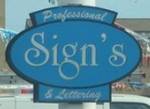
And now, for your edification and viewing pleasure, here are a few epic fails:

Donna Bradley Burcher | Senior Technical Editor | Symitar®

8985 Balboa Ave. | San Diego, CA 92123 | Ph. 619.278.0432 | Ext: 765432

About Editor’s Corner

Editor’s Corner keeps your communication skills sharp by providing information on grammar, punctuation, JHA style, and all things English. As editors, we spend our days reading, researching, and revising other people’s writing. We love to spend a few extra minutes to share what we learn with you and keep it fun while we’re doing it.

Did someone forward this email to you? Click here to subscribe.

Don’t want to get Editor’s Corner anymore? Click here to unsubscribe.

Do you have a question or an idea for Editor’s Corner? Send your suggestions or feedback to Kara or <a href="mailto:DBurcher.

NOTICE: This electronic mail message and any files transmitted with it are intended
exclusively for the individual or entity to which it is addressed. The message,
together with any attachment, may contain confidential and/or privileged information.
Any unauthorized review, use, printing, saving, copying, disclosure or distribution
is strictly prohibited. If you have received this message in error, please
immediately advise the sender by reply email and delete all copies.

Posted by: Jack Henry | October 1, 2019

Editor’s Corner: ASCII Art

Dear Editrix,

Is there a name for the art created using the letters and symbols on your keyboard? Or is it just called “keyboard art?”

Sincerely,

Dear Mr. Fauset,

What an interesting question! I’m so glad you asked. I did a little research and found some amazing things out there on the World Wide Web. Most of this information is from Wikipedia, but throughout this article, I’ve included some other sites where you can go to find additional examples.

Even before the typewriter, people were using print to create art. This example is a handwritten piece of “word art” about the dog star, Sirius, from the 9th century:

After the typewriter was invented, people started creating “typewriter art” in the 1800s. Here is a modern-day artist who does some amazing things with a typewriter: https://keirarathbone.com/shop/. And here is an old example of some early typewriter art:

As for similar types of art through the ages, as soon as a “writing machine” is invented, humans find a way to create art with it. From Wikipedia:

  • TTY and RTTY art
    TTY stands for "TeleTYpe" or "TeleTYpewriter", and is also known as Teleprinter or Teletype. RTTY stands for Radioteletype; character sets such as Baudot code, which predated ASCII, were used. According to a chapter in the "RTTY Handbook," text images have been sent via teletypewriter as early as 1923.
  • Line-printer art
    In the 1960s, Andries van Dam published a representation of an electronic circuit produced on an IBM 1403 line printer.
  • ASCII art
    [KC – And here, Ron, is your answer to what a lot of people call this kind of art. Sometimes it is also called “text art.”] ASCII art is a graphic design technique that uses computers for presentation and consists of pictures pieced together from the 95 printable (from a total of 128) characters defined by the ASCII Standard from 1963 and ASCII compliant character sets with proprietary extended characters….The term is also loosely used to refer to text based visual art in general.”

Here is a catalog of ASCII art for your viewing pleasure:

https://www.asciiart.eu/

I hope this has helped cure your curiosity!

Kara Church

Technical Editor, Advisory

Symitar Documentation Services

Posted by: Jack Henry | September 26, 2019

Editor’s Corner: Hyphens and Ages

Hyphens. We’ve talked about them before, along with en dashes and em dashes (check out Editor’s Corner and search for en dash or em dash). Today, I’d like to focus on a specific use of hyphens: how to use hyphens when writing ages.

When to Use a Hyphen for Age

First, you have to figure out whether the age is being used as a noun (thing) or an adjective (description). In the case of age as a noun, you need hyphens. For example:

  • There were a bunch of 30-somethings hanging out in front of the old bookstore.
  • Whether you are a 10-year-old or a 90-year-old, you will enjoy the current performance at the Hidey-Hole Theater.

In both of those cases, you could replace the age with a noun, just to double-check what you’re working with:

  • There were a bunch of hooligans hanging out in front of the old bookstore.
  • Whether you are a child or an adult, you will enjoy the current performance at the Hidey-Hole Theater.

Additionally, if the age is used as an adjective to describe a noun, you use hyphens. For example:

  • The 13-year-old girl from Tukwila was the winner of the Puyallup Fair photography contest.
  • The camp required all 12- to 15-year-old boys to wash their own neckerchiefs.

To double-check this, you can replace the age with an adjective:

  • The funny girl from Tukwila was the winner of the Puyallup Fair photography contest.
  • The camp required all naughty boys to wash their own neckerchiefs.

When to Forgo the Hyphen for Age

Now, when the age is part of an adjectival phrase after the noun, you do not need any hyphens. For example:

  • Bobby has triplets that are four years old.
  • Dad turns 79 years old on his next birthday.
  • My favorite songs are probably all 35 years old.

So, in a 2-year-old nutshell, hyphenate an age when it is a noun or when it is an adjective that comes before a noun. Do not hyphenate an age that comes after the noun it modifies.

Kara Church

Technical Editor, Advisory

Symitar Documentation Services

Posted by: Jack Henry | September 24, 2019

Editor’s Corner: Common Homonyms

Hello out there! I hope those of you who attended the Symitar Educational Conference enjoyed yourselves and learned a lot. Coming soon, the Jack Henry Annual Conference (JAC), also in San Diego this year!

Speaking of learning a lot, I just received this great newsletter from GrammarBook.com. It discusses some frequently confused and confusing homonyms, what they are, what each word means, and it provides a few details that will keep your writing looking good and keep you sounding sharp.

Allot vs. ALot

The word allot means "to parcel out."

Example: The company will allot each of us a cell phone.

The expression a lot means "many" or "much."

Examples:
We had a lot of fun.
A lot of people showed up for the concert.

Note that even though you may see alot written by a lot of people, there is no such word.

Allowed vs. Aloud

Allowed means "gave permission to."

Example: You will be allowed to enter the theater in five minutes.

Aloud means "said out loud; spoken."

Example: She read her work aloud at the poetry slam.

All ready vs. Already

These two words may sound alike when you say them, but they have distinct meanings. All ready means "everything or everyone is now ready."

Example: We are all ready to go.

Already means "previously" or "earlier than expected."

Examples:
Is summer over already? (earlier than expected)
I did the dishes already. (previously)

All right vs. Alright

The word alright is a casual form of the phrase all right; however, alright is not considered a correct spelling in formal writing.

Altar vs. Alter

An altar is a pedestal, usually of a religious kind.

Example: They exchanged wedding vows at the altar of the church.

Alter means "to change."

Example: Please don’t alter your plans.

All together vs. Altogether

All together, two words, means "in a group."

Examples:
We are all together in the photo.
It is wonderful to be all together to celebrate your birthday.

Altogether is an adverb meaning "entirely, completely, everything included."

Examples:
It is not altogether his fault. (entirely)
We had an altogether wonderful day. (completely)
Altogether, the groceries cost thirty dollars. (everything included)

Kara Church

Technical Editor, Advisory

Symitar Documentation Services
Posted by: Jack Henry | September 19, 2019

Editor’s Corner: Dangling Prepositions

Good morning! Today I’m going to share information about dangling prepositions. Sounds exciting, right? You have Mary W. to thank. She asked about this topic, and I’m certainly not going to leave her dangling.

So, what is a dangling preposition? Well, a preposition is a word that shows a relationship (of time, space, distance, causation, etc.) between a noun and another element of the sentence. Some common prepositions are at, on, to, about, over, around, etc. And a dangling preposition is considered to be dangling because it occurs at the end of a sentence, as in the following examples:

  • That’s the horse he put all of his money on.
  • I created a playlist that we can listen to.
  • Oh, that’s nothing to get upset about.

Here’s the fun part. You may have learned back in school that you should not end sentences with prepositions. Well, as we’ve discussed before at the Editor’s Corner, that “rule” is a myth. It is perfectly acceptable to dangle your prepositions; in fact, it is preferred when it helps to create a more succinct sentence. Let’s look at our previous examples rewritten to move the preposition. Notice how stilted they seem:

  • That’s the horse on which he put all of his money.
  • I created a playlist to which we can listen.
  • Oh, that’s nothing about which to get upset.

However, I think what Mary W. was talking about is a slightly different phenomenon. There are some very commonly uttered sentences, which end in prepositions, that are grammatically incorrect. You probably want to avoid these (especially in writing):

  • Where are you at? (Sometimes you’ll even here “Where you at?”)
  • Where is it at?

So, why are those two sentences wrong but the previous examples aren’t? It’s because in both cases above the preposition at is redundant. The sentence “Where are you?” is complete—so is the sentence “Where is it?”

Here’s your grammatical takeaway: it’s OK to end a sentence with a dangling preposition as long as the preposition that you’re dangling is not redundant.

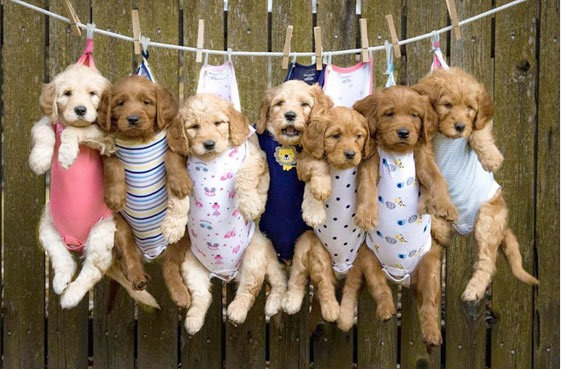
And here’s your dangling puppies takeaway:

Now we’re ready to start the day.

Donna Bradley Burcher | Senior Technical Editor | Symitar®

8985 Balboa Ave. | San Diego, CA 92123 | Ph. 619.278.0432 | Extension: 765432

Symitar Documentation Services
NOTICE: This electronic mail message and any files transmitted with it are intended
exclusively for the individual or entity to which it is addressed. The message,
together with any attachment, may contain confidential and/or privileged information.
Any unauthorized review, use, printing, saving, copying, disclosure or distribution
is strictly prohibited. If you have received this message in error, please
immediately advise the sender by reply email and delete all copies.

Posted by: Jack Henry | September 17, 2019

Editor’s Corner: Parallelism Revisited

It’s the time of year we work on a lot of slide shows for the Symitar Educational Conference, which means a lot of editing slides for parallel structure. We’ve talked about this before, but I think that it is one of the hardest things for people to understand and, therefore, it is difficult to change. I just received a good set of examples from Grammarbook.com, which hopefully will help you understand the importance of it a bit more. I’ve pared it down a bit, but most of the examples are still here. (I’ve kept the formatting as it was, though we don’t generally use underlines in our documentation.)

Parallelism is the use of consistent grammatical structures in a series of two or more items to assist ease of reading and understanding. We touched briefly on this topic in Parallel Construction and Effective Writing. We’ll revisit it here with additional detail.

Nouns
Not Parallel: The band needs a singer [noun], a guitar player [noun], and to get booked for gigs [infinitive phrase].
Parallel: The band needs a singer, a guitar player, and a booking agent. [all nouns]

Verbs
Not Parallel: The storm flipped [simple past] the patio table and was taking off [past progressive] with the chairs.
Parallel: The storm flipped the patio table and took off with the chairs. [both simple past]

Adjectives
Not Parallel: The crowd was eager [adj.], alert [adj.], and jumping up and down [verb].
Parallel: The crowd was eager, alert, and excitable. [all adjectives]

Adverbs
Not Parallel: Calmly [adv.] and with steady strokes [prep. phrase], she swam the English Channel.
Parallel: Calmly and steadily, she swam the English Channel. [both adverbs]

Articles
Not Parallel: At the pet store, Lila wants to see the dogs, cats, ferrets, and the guinea pigs. [article only before the nouns
dogs and guinea pigs]
Parallel: At the pet store, Lila wants to see the dogs, the cats, the ferrets, and the guinea pigs. [The article the
precedes each noun.]
OR
Parallel: At the pet store, Lila wants to see the dogs, cats, ferrets, and guinea pigs. [A single starting article
the identifies all of the following nouns.]

Prepositional Phrases
Not Parallel: The park district will build the trail between the forests [prep. phrase] and to wind with the stream [infinitive phrase].
Parallel: The park district will build the trail between the forests and along the stream. [both prep. phrases]

Our prepositional phrases also should be parallel with their standard phrasing:

Not Parallel: Her statements represent her satisfaction and belief in the jury’s verdict.
Parallel: Her statements represent her satisfaction with and belief in the jury’s verdict.

Applying parallelism in our writing contributes to clearer, smoother communication between us and our readers—and keeps them parallel with us to the end of each thought.

Kara Church

Technical Editor, Advisory

619-542-6773 | Ext: 766773

Symitar Documentation Services
NOTICE: This electronic mail message and any files transmitted with it are intended
exclusively for the individual or entity to which it is addressed. The message,
together with any attachment, may contain confidential and/or privileged information.
Any unauthorized review, use, printing, saving, copying, disclosure or distribution
is strictly prohibited. If you have received this message in error, please
immediately advise the sender by reply email and delete all copies.

« Newer Posts - Older Posts »

Categories