Posted by: Jack Henry | March 10, 2022

Editor’s Corner: Wintery Words

Good morning to you. Spring is just around the corner, but before we say goodbye to winter, I thought you might appreciate a collection of wintery words that you may not knowat least not all of them. Quite a few are new to me, but then I live in southern California where we havent got a clue what a real winter is like. We have heard all about it and seen it on TV and in movies though, which is probably just about the same. (Im kidding! I know Im a winter wimp!)

I found this list on Thesaurus.com. I hope you enjoy it along with the last vestiges of the season.

  • hibernal: of or relating to winter; wintry
    Hibernal comes from the Latin hbernus, meaning wintery. In Latin, hiems means winter. There is another word that traces back to this root: hibernate, like bears do during the winter.
  • apricity: the warmth of the sun in the winter
    This word comes from the Latin aprcri, to bask in the sun. The word largely fell out of use by the end of the 19th century, but it has seen an uptick in recent years in branding and marketing.
  • brume: mist; fog
    The word brume comes from the Latin for winter, brma. If you have ever walked through a brume, you know how damp and chilly it is.
  • brumal: Confusingly, the word brumal does not mean misty or foggy, as you might expect from the meaning of brume. Brumal goes back to that same Latin root, brma, for its meaning. Therefore, brumal means wintry.
  • hoarfrost: Known more generally as simply frost. The hoar- part of the word literally means white-haired with age or old. However, it is also used to refer to a white coating or veneer. In other words, hoarfrost is a layer of white frost.
  • rime: an opaque coating of tiny, white, granular ice particles, caused by the rapid freezing of supercooled water droplets on impact with an object
    If you have ever seen frost that makes the trees look like they are covered in spikes, that is likely rime.
  • nv: granular snow accumulated on high mountains and subsequently compacted into glacial ice
    Another word for this kind of snow is firn, from Swiss German for last years [snow], or simply old snow. Nv ultimately comes from the Latin nivtus, meaning snow-cooled.
  • gelation: solidification by cold; freezing
    The word gelation ultimately comes from the Latin geltus. If this Latin word looks familiar, that may be because it is also at the root of the word gelatin.
  • cauldrife: susceptible to cold; chilly
    It can also mean lifeless, as in a corpse. The cauld- part of the word simply means cold in Scottish, while the -rife part of the word means abundantly, copiously, from the same root as the English rife.
  • wintertide: wintertime
    You may have come across other examples of words that end in -tide, including noontide, eventide, and yuletide. In all of these examples, -tide means time, from the Old English td, meaning time or hour.
  • isocheim: a line on a map connecting points that have the same mean weather temperatureNot every part of the world experiences winter at the same time. In 19th-century climatology, one way winter weather was analyzed referred to the isocheim [ ahysuh-kahym
    ]. Iso- is a combining form meaning equal, and -cheim comes from the Greek for winter. Isocheim literally means, then, equal winter.
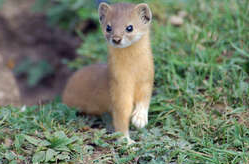
  • latibulize: to retire into a den and lie dormant
    The word latibulize comes from the Latin latibulum, meaning a hiding place.
  • arctic: of or relating to the North Pole
    The word arctic (without a capital letter) is used more generally to mean characteristic of the extremely cold, snowy, windy weather; frigid; bleak. In other words, even if you arent literally at the North Pole, it can sometimes feel that way.
  • Samhain: a festival observed by the ancient Celts
    The beginning of winter was marked with the festival of Samhain [ sah-win ]. You may be familiar with some elements of Samhain, because many of the traditions associated with Halloween are thought to have originated with this holiday. However, unlike Halloween, Samhain is typically observed on November 1.

Donna Bradley Burcher |Technical Editor, Advisory | Symitar

8985 Balboa Ave. | San Diego, CA 92123 | Ph. 619.278.0432 | Ext: 765432

Pronouns she/her/hers

About Editors Corner

Editors Corner keeps your communication skills sharp by providing information on grammar, punctuation, JHA style, and all things English. As editors, we spend our days reading, researching, and revising other peoples writing. We love to spend a few extra minutes to share what we learn with you and keep it fun while were doing it.

Did someone forward this email to you? Click here to subscribe.

Dont want to get Editors Corner anymore? Click here to unsubscribe.

Do you have a question or an idea for Editors Corner? Send your suggestions or feedback to Kara and <a href="mailto:DBurcher.

NOTICE: This electronic mail message and any files transmitted with it are intended
exclusively for the individual or entity to which it is addressed. The message,
together with any attachment, may contain confidential and/or privileged information.
Any unauthorized review, use, printing, saving, copying, disclosure or distribution
is strictly prohibited. If you have received this message in error, please
immediately advise the sender by reply email and delete all copies.

Posted by: Jack Henry | March 8, 2022

Editor’s Corner: British Story, French Words

Hello, my coworkers and friends! I hope this finds you healthy and happy! Today I have a few more words from recent movies I’ve seen that I’d like to share with you. These words all have recent ties to French, but I believe I heard them in the movie Spencer, about Princess Diana and her nerve-wracking time with the British monarchy (aka the royal family). I did not like the movie, but here are the words I’ll cover: luthier, archetier, and equerry. (There’s also a small chance one of the words might be from The Power of the Dog.)

A luthier (pronounced LOO-tee-er) is someone who makes or repairs string instruments “that have a neck and a sound box.” (From Wikipedia) The name comes from the French word for lute, but it graduated over time to cover violins, cellos, guitars, and other similar instruments.

The craft itself (called lutherie) is divided into two different categories, depending on whether the instrument is plucked or strummed (like a guitar) or played with a bow (like a violin). Once there is a bow involved, there is another French word and title you’ll come across: archetier. An archetier is a bow maker for the lutherie instruments. Interestingly, our English words archery (shooting arrows with a different kind of bow) and archer are also from the same root.

The final word is equerry. Like our English word equine (related to horses), equerry comes from Latin and then French. Also from Wikipedia, “An equerry is an officer of honor. Historically, it was a senior attendant with responsibilities for the horses of a person of rank. In contemporary use, it is a personal attendant, usually upon a sovereign, a member of a royal family, or a national representative.” Here’s the etymology from the Online Etymology Dictionary:

equerry (n.)

royal officer, especially one charged with care of horses, 1590s, short for groom of the equirrie, from esquiry "stables" (1550s), from French escuerie (Modern French écurie), perhaps from Medieval Latin scuria "stable," from Old High German scura "barn" (German Scheuer); or else from Old French escuier "groom," from Vulgar Latin *scutarius "shield-bearer." In either case, the spelling was influenced by Latin equus "horse.”

After all of this movie vocabulary, I thought I would find the date for the Academy Awards for you. When we were in the office, it used to be a fun time of year with some who would dress up and others who put together a contest we’d run during Toastmasters. This year, you can catch the awards on Sunday, March 27, 2022.

No matter what you see or read or hear, there’s always time to learn a few new words!

Kara Church

Pronouns: she/her

Technical Editor, Advisory

Editor’s Corner Archives: https://episystechpubs.com/

Posted by: Jack Henry | March 3, 2022

Editor’s Corner: Thanatology

Good morning, everyone!

I have another word from my recent movie-watching for you: thanatology. Thanatology is the scientific study of death and the practices associated with it. I wish I could tell you which movie it’s from, but I’ve watched a bunch of movies involving death lately, so I’d just be guessing.

This word caught my ear because of the “thana” prefix. I first though, “Hmmm…is this related to the Marvel character Thanos, the powerful villain with god-like powers?” And then I thought of my friend Thanasi, a guy in Greece that I used to ride around with on his motorcycle. Thana and thanos sure sound Greek, so I thought it was time to look up the etymology of thanatology and find out more about it.

According to the Online Etymology Dictionary:

thanatology (n.)

"scientific study of death," 1837, from thanato- "death" + -logy. In 1970s, some undertakers made a bid to be called thanatologists; but from 1974 that word has been used principally in reference to specialists in the needs of the terminally ill.

Indeed, the Greeks have several words that mean death, and one of them is thanatos (θάνατος). Now for thanatology specifically, I thought maybe Wikipedia could shed some light on this. The definition for thanatology is “the scientific study of death and the losses brought about as a result. It investigates the mechanisms and forensic aspects of death, such as bodily changes that accompany death and the postmortem period, as well as wider psychological and social aspects related to death.”

Thanatology doesn’t just take a forensic, physical look at death, but it considers humans’ awareness of our morality, how death looks in the world as the globe ages, medical technologies, hospice care, and many other topics.

Suddenly I feel like I might not be someone fun to watch a movie with.

Kara Church

Pronouns: she/her

Technical Editor, Advisory

Editor’s Corner Archives: https://episystechpubs.com/

Posted by: Jack Henry | March 1, 2022

Editor’s Corner: Frosty Hot Tub

Good morning! At the turn of the new year, one of you mentioned that “the frost was on the hot tub,” which you said reminded you of the phrase “the frost is on the pumpkin.” Then you asked me where that was from and if it meant something in particular. I thought, “It just means that the weather was getting colder.” Then I started asking around, wondering if I was missing something.

First, a coworker told me the same thing, “The phrase means winter is coming.” Well, dang! The folks in Game of Thrones made it sound much more ominous than a frosty pumpkin! Next, I asked my mom during our daily walk. “Are you familiar with this phrase, ‘the frost is on the pumpkin’?” She replied, “Winter is coming.” Then she chided me and said, “You people in San Diego don’t know what frost is, do you? Poor babies. People up north and on the East Coast know. And if your pumpkin is sporting frost, you’d better start wearing a coat and gloves!”

Of course, that wasn’t enough for me. I know what frost and pumpkins are, but what about this saying? Indeed, it is a more poetic way of saying that the weather is getting colder or that seasons are changing. You know exactly what time of the year it means by the visual: sometime after Halloween and moving toward winter (let’s say early November).

But the phrase doesn’t just sound poetic. It’s a line from a famous poem by American poet James Whitcomb Riley. Here is the first stanza of “When the Frost Is on the Punkin”:

When the frost is on the punkin and the fodder’s in the shock,

And you hear the kyouck and gobble of the struttin’ turkey-cock,

And the clackin’ of the guineys, and the cluckin’ of the hens,

And the rooster’s hallylooyer as he tiptoes on the fence;

O, it’s then’s the times a feller is a-feelin’ at his best,

With the risin’ sun to greet him from a night of peaceful rest,

As he leaves the house, bareheaded, and goes out to feed the stock,

When the frost is on the punkin and the fodder’s in the shock.

According to Wikipedia, Riley, born in the Midwest in 1849, was not a lover of school. He spent a lot of time in trouble and didn’t graduate from the eighth grade until he was 20. Because of that, he tended to write his humorous and sentimental poems (nearly 1,000 of them) in the local dialect. Critics “pointed to his poor education as the reason for his success in writing; his prose was written in the language of common people which spurred his popularity.”

Riley influenced “the creation of a Midwestern cultural identity” and “contributed to the Golden Age of Indiana Literature.” His popularity with people earned him the nickname “The Hoosier Poet.”

I bet you didn’t suspect a frosty hot tub would lead us here!

Hot or cold, enjoy your day!

Kara Church

Pronouns: she/her

Technical Editor, Advisory

Editor’s Corner Archives: https://episystechpubs.com/
Posted by: Jack Henry | February 24, 2022

Editor’s Corner: Black History Month

Happy Thursday morning! As you’re all aware, February is Black History Month, and the Mosaic of People at Jack Henry BIG has done a superb job all month of providing thought-provoking information, stimulating sessions, happy celebrations, fun quizzes, and even recipes. You can join us and become a member of the Mosaic BIG by clicking this link to go to the Diversity, Equity, & Inclusion page of the Knowledge Drop on jhaToday. The HOW TO section is where you sign up.

Today, I’m passing along a wonderful quiz I found on dictionary.com. Not only can you test your knowledge of black history, but you can test your language skills at the same time. You get two quizzes for the price of one today, and you get double credit for participating (no prize, but twice the feeling of accomplishment!). The quiz includes seven questions. Just write your answers down and then when you’re done, scroll down to see the correct answers. Good luck, my friends!

1. W.E.B. Du Bois said, “Rule-following, legal PRECEDENCE, and political consistency are not more important than right, justice, and plain common-sense.” What does “precedence” mean?

  • A practical advantage given to one over others
  • Unrestrained or excessive self-indulgence
  • The fact of preceding in time; antedating

2. Identify who said, “Caring for myself is not self-indulgence. It is self-preservation, and that is an act of political warfare.”

  • Audre Lorde
  • Simone Biles
  • Chadwick Boseman

3. Identify who said, “He who is not courageous enough to take risks will accomplish nothing in life.”

  • Muhammad Ali
  • Ta-Nehisi Coates
  • James Baldwin

4. bell hooks said, “I will not have my life narrowed down. I will not bow down to somebody else’s WHIM or to someone else’s ignorance.” What does “whim” mean?

  • The act or state of looking forward or anticipating
  • An odd or capricious notion or desire; a sudden or freakish fancy
  • A whimpering cry or sound

5. Complete this quote from Langston Hughes: “Perhaps the _______ of an artist is to interpret beauty to people, the beauty within themselves.”

  • Anxiety
  • Expectation
  • Mission

6. Booker T. Washington said, “Freedom, in the broadest and highest sense, has never been a BEQUEST; it has been a conquest.” What does “bequest” mean?

  • Imagination, especially when extravagant and unrestrained
  • A disposition in a will
  • Something asked for

7. Complete this quote from Michelle Obama: “History has shown us that courage can be _______, and hope can take on a life of its own.”

  • Contagious
  • Advantageous
  • Ponderous

Answers:

1. E.B. Du Bois said, “Rule-following, legal PRECEDENCE, and political consistency are not more important than right, justice, and plain common-sense.” What does “precedence” mean?

· The fact of preceding in time; antedating.

2. Identify who said, “Caring for myself is not self-indulgence. It is self-preservation, and that is an act of political warfare.”

· Audre Lorde

3. Identify who said, “He who is not courageous enough to take risks will accomplish nothing in life.”

· Muhammad Ali

4. bell hooks said, “I will not have my life narrowed down. I will not bow down to somebody else’s WHIM or to someone else’s ignorance.” What does “whim” mean?

· An odd or capricious notion or desire; a sudden or freakish fancy.

5. Complete this quote from Langston Hughes: “Perhaps the _______ of an artist is to interpret beauty to people, the beauty within themselves.”

· Mission

6. Booker T. Washington said, “Freedom, in the broadest and highest sense, has never been a BEQUEST; it has been a conquest.” What does “bequest” mean?

· A disposition in a will

7. Complete this quote from Michelle Obama: “History has shown us that courage can be _______, and hope can take on a life of its own.”

· Contagious

Donna Bradley Burcher |Technical Editor, Advisory | Symitar®

8985 Balboa Ave. | San Diego, CA 92123 | Ph. 619.278.0432 | Ext: 765432

Pronouns she/her/hers

About Editor’s Corner

Editor’s Corner keeps your communication skills sharp by providing information on grammar, punctuation, JHA style, and all things English. As editors, we spend our days reading, researching, and revising other people’s writing. We love to spend a few extra minutes to share what we learn with you and keep it fun while we’re doing it.

Did someone forward this email to you? Click here to subscribe.

Don’t want to get Editor’s Corner anymore? Click here to unsubscribe.

Do you have a question or an idea for Editor’s Corner? Send your suggestions or feedback to Kara and <a href="mailto:DBurcher.

NOTICE: This electronic mail message and any files transmitted with it are intended
exclusively for the individual or entity to which it is addressed. The message,
together with any attachment, may contain confidential and/or privileged information.
Any unauthorized review, use, printing, saving, copying, disclosure or distribution
is strictly prohibited. If you have received this message in error, please
immediately advise the sender by reply email and delete all copies.

Posted by: Jack Henry | February 22, 2022

Editor’s Corner: Geek

Hello Editor’s Corner folks! It feels like it has been forever since we’ve been in touch—probably because it has! Right after we celebrated the new year, my husband got a very special gift: a new kidney. I’ll spare you the history and the commotion involved in an organ transplant and get straight to today’s topic: the word geek.

While Ray is recovering, we are in quarantine for three months, and he is trying to catch up on films nominated for Academy Awards. As his sidekick, I’ve watched several flicks with him, and I’ve been keeping track of some interesting words.

Today we have a certain idea of what a geek is, in fact Best Buy has a “Geek Squad” to help you with your computers, TVs, phones, and other home appliances. However, one of the films we watched, Nightmare Alley, introduces you to the older definition of geek. From the Online Etymology Dictionary:

geek (n.)

"sideshow freak," 1916, U.S. carnival and circus slang, perhaps a variant of geck "a fool, dupe, simpleton" (1510s), apparently from…North Sea Germanic and Scandinavian meaning "to croak, cackle," and also "to mock, cheat." The modern form and the popular use with reference to circus sideshow "wild men" is from 1946, in William Lindsay Gresham’s novel "Nightmare Alley" (made into a film in 1947 starring Tyrone Power) [KC – And last year remade by Guillermo del Toro].

"An ordinary geek doesn’t actually eat snakes, just bites off chunks of ’em, chicken heads and rats." [Arthur H. Lewis, "Carnival," 1970]

By c. 1983, used in teenager slang in reference to peers who lacked social graces but were obsessed with new technology and computers (such as the Anthony Michael Hall character in 1984’s "Sixteen Candles").

Let me just say, this film starts in 1939, and things have changed tremendously since then when it comes to carnivals and circuses. If you aren’t up to films about carnivals, crime, and conning, you will not want to see this film. If you do enjoy those things, period pieces, or Guillermo del Toro, you should check it out when you have a chance. It’s very dark.

Kara Church

Pronouns: she/her

Technical Editor, Advisory

Editor’s Corner Archives: https://episystechpubs.com/

Posted by: Jack Henry | February 15, 2022

Editor’s Corner: Your Clock is Not Tock-Ticking

Good morning, sunshine!

Kara has previously written about the order of adjectives—a rule most native English speakers aren’t even aware of, but we follow it, nonetheless. This rule specifies the order we put our adjectives in (if we are using more than one adjective in a row). Here is the order we unknowingly follow:

  1. Quantity or number
  2. Quality or opinion
  3. Size
  4. Age
  5. Shape
  6. Color
  7. Proper adjective (often nationality, other place of origin, or material)
  8. Purpose or qualifier

Kara gave us this example: My sister adopted a beautiful big white bulldog.

Well, hold on to your hats! Amanda C. recently sent me an article about another rule we know without knowing. This rule explains why “tock-tick,” “dong-ding,” and “flop-flip” don’t sound right to our ears. It turns out that the vowel sounds have to go in a particular order. If there are three words, the order of the vowels is I, A, O. If there are only two words, they follow the same order, starting with I if there is one, and then moving on to A and O, in that order.

So, you can have a sing-song but never a song-sing. Your horse can go clip-clop but not clop-clip. You cannot listen to hop-hip. You cannot eat a Kat-Kit. And you would never walk in a zag-zig—you get the picture.

It turns out that other languages do the same thing. According to an article by Susie Dent (a British lexicographer and etymologist), the Japanese call the rusting sound of dry leaves “kasa koso.” And Germans might get themselves in a “WirrWarr” (a muddle), or they might shop for “KrimsKrams” (bric-a-brac).

I don’t know about you, but I always like finding out that I know more than I thought I did. Sadly, it’s usually the other way around. Enjoy your day!

Donna Bradley Burcher |Technical Editor, Advisory | Symitar®

8985 Balboa Ave. | San Diego, CA 92123 | Ph. 619.278.0432 | Ext: 765432

Pronouns she/her/hers

About Editor’s Corner

Editor’s Corner keeps your communication skills sharp by providing information on grammar, punctuation, JHA style, and all things English. As editors, we spend our days reading, researching, and revising other people’s writing. We love to spend a few extra minutes to share what we learn with you and keep it fun while we’re doing it.

Did someone forward this email to you? Click here to subscribe.

Don’t want to get Editor’s Corner anymore? Click here to unsubscribe.

Do you have a question or an idea for Editor’s Corner? Send your suggestions or feedback to Kara and <a href="mailto:DBurcher.

NOTICE: This electronic mail message and any files transmitted with it are intended
exclusively for the individual or entity to which it is addressed. The message,
together with any attachment, may contain confidential and/or privileged information.
Any unauthorized review, use, printing, saving, copying, disclosure or distribution
is strictly prohibited. If you have received this message in error, please
immediately advise the sender by reply email and delete all copies.

Posted by: Jack Henry | February 8, 2022

Editor’s Corner: Contronyms

Good morning to you!

Recently, one of the language blogs I read provided a short list of words that have opposite or contrary definitions. These words are called contronyms, antagonyms, or Janus words (after the Roman god who is usually depicted as having two faces). The article got me thinking about how many of these words there are and about how confusing that must be to English language learners!

If you grew up speaking English, you may not have even noticed that these words can have two totally opposite meanings. Since I’m feeling a little contrary today, I’ll share some of the more common contronyms with you. This is not a complete list.

Word First meaning Alternate meaning
Buckle To fasten or secure

Ex: Be sure to buckle your seatbelt.

To bend or warp

Ex: After hours of hiking, my legs started to buckle.

Cleave To join or adhere closely

Ex: This dressmaker chose material that cleaves to the skin.

To split or divide

Ex: You can use the axe to cleave the tree.

Dust To remove dust/dirt from

Ex: Don’t forget to dust the furniture.

To sprinkle something on

Ex: Dust the strawberries with sugar.

Enjoin To instruct, prescribe, or command

Ex: My sister enjoined me not to tell anyone her secret.

To prohibit or forbid

Ex: The judge enjoined them from selling the property.

Execute To start or begin a process

Ex: When you are ready, you can execute your plan.

[dbb – As part of our commitment to inclusive, bias-free language, JH avoids using
execute when talking about running a program.]

To kill or bring to an end

Ex: They performed ritual executions as offerings to their gods.

Left Departed

Ex: The singer left the stage.

What remains

Ex: There are only six donuts left.

Overlook To monitor or inspect

Ex: From her balcony, she could overlook her neighbor’s backyard.

To fail to notice or choose not to emphasize

Ex: He chose to overlook his toddler’s tantrum.

Out Visible

Ex: The moon is out.

Invisible or extinguished

Ex: He put the candle out.

Peruse To skim or read without attention to detail

Ex: You can peruse the magazine while you wait for the doctor.

To read or example in detail

Ex: She leaned forward to peruse the document more closely.

Presently In a short while; soon

Ex: The president will arrive presently.

At the present time; now

Ex: Presently, we have 250 participants.

Rent To sell or lease the use of a commodity

Ex: He will rent his extra room to Dan.

To buy the use of a commodity

Ex: Dan will rent a room from Sean.

Sanction To permit or grant approval

Ex: Their policy was sanctioned by management.

To condemn or penalize

Ex: The government has sanctioned the use of force.

Screen To protect or conceal

Ex: If you have small children, you should screen them from violence on the TV.

To show or broadcast

Ex: They will screen the final episode on Sunday at 8:00 p.m.

Transparent Obvious

Ex: His behavior was very transparent—he was trying to get her in trouble.

Invisible

Ex: The onion was sliced so thin that it was almost transparent.

Enjoy the rest of your day!

Donna Bradley Burcher |Technical Editor, Advisory | Symitar®

8985 Balboa Ave. | San Diego, CA 92123 | Ph. 619.278.0432 | Ext: 765432

Pronouns she/her/hers

About Editor’s Corner

Editor’s Corner keeps your communication skills sharp by providing information on grammar, punctuation, JHA style, and all things English. As editors, we spend our days reading, researching, and revising other people’s writing. We love to spend a few extra minutes to share what we learn with you and keep it fun while we’re doing it.

Did someone forward this email to you? Click here to subscribe.

Don’t want to get Editor’s Corner anymore? Click here to unsubscribe.

Do you have a question or an idea for Editor’s Corner? Send your suggestions or feedback to Kara and <a href="mailto:DBurcher.

NOTICE: This electronic mail message and any files transmitted with it are intended
exclusively for the individual or entity to which it is addressed. The message,
together with any attachment, may contain confidential and/or privileged information.
Any unauthorized review, use, printing, saving, copying, disclosure or distribution
is strictly prohibited. If you have received this message in error, please
immediately advise the sender by reply email and delete all copies.

Posted by: Jack Henry | February 1, 2022

Editor’s Corner: Words Coined in the 70s

Good morning!

My friend Ron F. sent me this link to a list of 50 words that didn’t exist 50 years ago. I love to hear or read about how language changes, so I jumped right over to the link and found some surprises. I wouldn’t have guessed some of these words were that old.

I won’t provide all 50 words here because I know you need to get some work done today. But if you’re jonesing to know all the words, you can click the link and visit the site. Here are 25 of the words and the year they were first used:

  • dorky (1970)
  • granola (1970)
  • Kwanzaa (1970)
  • octothorpe (another name for the # symbol – 1971)
  • gonzo (1971)
  • trifecta (1971)
  • fintech (1971)
  • hazmat (a combination of hazardous and material – 1972)
  • retro (1972)
  • flextime (1972)
  • factoid (1973)
  • triathlon (1973)
  • transgender (1974)
  • brainiac (1975)
  • downsize (1975)
  • endorphin (1976)
  • meme (1976)
  • skeevy (1976)
  • wannabe (1976)
  • palimony (1977)
  • shopaholic (1977)
  • karaoke (1977)
  • hip-hop (1979)
  • codependency (1979)
  • bodyboard (1979)

Evolutionary biologist Richard Dawkins

Dawkins coined the word meme in his book The Selfish Gene. An article on Lifewire.com, says that before the internet, meme was used “to describe an idea, behavior, or style that rapidly spreads from person to person in a culture.”

Don’t you just love how language evolves to meet our ever-changing needs?

Donna Bradley Burcher |Technical Editor, Advisory | Symitar®

8985 Balboa Ave. | San Diego, CA 92123 | Ph. 619.278.0432 | Ext: 765432

Pronouns she/her/hers

About Editor’s Corner

Editor’s Corner keeps your communication skills sharp by providing information on grammar, punctuation, JHA style, and all things English. As editors, we spend our days reading, researching, and revising other people’s writing. We love to spend a few extra minutes to share what we learn with you and keep it fun while we’re doing it.

Did someone forward this email to you? Click here to subscribe.

Don’t want to get Editor’s Corner anymore? Click here to unsubscribe.

Do you have a question or an idea for Editor’s Corner? Send your suggestions or feedback to Kara and <a href="mailto:DBurcher.

NOTICE: This electronic mail message and any files transmitted with it are intended
exclusively for the individual or entity to which it is addressed. The message,
together with any attachment, may contain confidential and/or privileged information.
Any unauthorized review, use, printing, saving, copying, disclosure or distribution
is strictly prohibited. If you have received this message in error, please
immediately advise the sender by reply email and delete all copies.

Posted by: Jack Henry | January 18, 2022

Editor’s Corner: Shibboleth

Good morning, word lovers!

The word shibboleth has come up twice recently, which surprises me, because I don’t ever remember hearing it or seeing it before. The meaning intrigues me: it is a word used as a test for distinguishing friend from foe. These days, we can use shibboleths to indicate who is part of our in-group.

Grammar Girl first brought the word to my attention. She provided this origin information:

The word "shibboleth" itself was an old Hebrew word meaning both "ear of corn" and "flood or stream." The way we use it today in the in-group-out-group way comes from the Biblical story of the Gileadites, who used the word to identify and kill Ephraimites. The Ephraimites could not pronounce the "sh" sound, so "shibboleth" came out sounding wrong, like "sibboleth," making them instantly identifiable as they were trying to cross enemy lines.

Grammar Girl goes on to explain how militaries and mobs have used pronunciation to identify enemies or outsiders. And, less ominously, she explains that people in certain communities can tell who is a non-native by how they pronounce certain words.

The word shibboleth came up again in another resource I rely on: Daily Writing Tips. This article was titled “We Gotta Use Words,” and the gist is that daily conversations and news sources have “become boiling pots of initialisms,” which can serve as shibboleths that separate folks who know from those who do not.

Some initialisms (the abbreviation of words to their first letters, like U.S. for United States) and acronyms (initials that create a word, like NASA) are useful because they are well-known to everyone, and some are useful because they save us from having to remember long technical terms, such as PDF, FTP, DNA, etc. However, if you are using uncommon abbreviations and not spelling them out when you first introduce them, you run the risk of excluding, or at least annoying, some people.

The Daily Writing Tips article makes this point: “Words themselves are slippery vehicles for thought, but initialisms set up a secondary barrier that can obscure meaning or serve as shibboleths.”

In my editing world, I come across a lot of acronyms and initialisms that are not spelled out. If the text is intended to be used only by people in a specific group, this may not be problem; however, the safer tack is to clarify what an initialism stands for the first time it is used, just to make sure everyone can follow along—consider this a friendly reminder. Make sure all of us are part of your in-group.

For the next month or so, while Kara is on family leave, I’ll be sending only one Editor’s Corner article each week. We’ll get back to our normal twice-a-week schedule soon. Enjoy the day!

Donna Bradley Burcher |Technical Editor, Advisory | Symitar®

8985 Balboa Ave. | San Diego, CA 92123 | Ph. 619.278.0432 | Ext: 765432

Pronouns she/her/hers

About Editor’s Corner

Editor’s Corner keeps your communication skills sharp by providing information on grammar, punctuation, JHA style, and all things English. As editors, we spend our days reading, researching, and revising other people’s writing. We love to spend a few extra minutes to share what we learn with you and keep it fun while we’re doing it.

Did someone forward this email to you? Click here to subscribe.

Don’t want to get Editor’s Corner anymore? Click here to unsubscribe.

Do you have a question or an idea for Editor’s Corner? Send your suggestions or feedback to Kara and <a href="mailto:DBurcher.

NOTICE: This electronic mail message and any files transmitted with it are intended
exclusively for the individual or entity to which it is addressed. The message,
together with any attachment, may contain confidential and/or privileged information.
Any unauthorized review, use, printing, saving, copying, disclosure or distribution
is strictly prohibited. If you have received this message in error, please
immediately advise the sender by reply email and delete all copies.

« Newer Posts - Older Posts »

Categories