Posted by: Jack Henry | April 14, 2022

Editor’s Corner: Sustainability

Hello and happy Thursday!

Today, I’m going to explore a word we’ve all been hearing a lot lately: sustainability.

Sustainabilityrefers to “meeting our own needs without compromising the ability of future generations to meet their own needs.” It is not simply caring for the earth and our natural resources; it’s also about caring for our social and economic resources so that we leave everything as healthy and intact as we can for future generations.

Jack Henry recently published our sustainability report. You can see the entire report on jhaToday. This report provides “…insight into our management practices, sustainability metrics, and commitment to corporate responsibility.” Dave Foss says, “Our approach enables our associates, clients, and communities to succeed—not just for today, but for tomorrow.” It’s all about corporate responsibility for the environment and all our shared resources.

According to Wikipedia, a sustainability report is “… a method to internalize and improve an organization’s commitment to sustainable development in a way that can be demonstrated to both internal and external stakeholders. Sustainability reports help companies build consumer confidence and improve corporate reputations through social responsibility programs and transparent risk management.”

As a member of the Go Green business innovation group (BIG), I’ve become pretty familiar with the concept of sustainability. As an avid recycler and “resource saver,” I love this word and this practice. As a parent (and now even a grandparent!), I’m very invested in leaving the earth and all our resources in better shape for future generations.

If you’re interested in learning more about this topic, you can join the Go Green BIG. Just go to Knowledge Drop on jhaToday and click the Diversity, Equity, & Inclusion tile. In the HOW TO tile, you can click Join a Business Innovation Group. While your there, check out the other BIGs too:

  • JHAnywhere focuses on the remote workforce
  • Mosaic of People focuses on multicultural diversity and inclusion
  • PRISM focuses on the LGBTQIA+ community and allies
  • Veterans focuses on military veterans
  • WomenAtJackHenry focuses on empowering women

Each BIG offers opportunities to build community and they support education, development, and innovation. Join as many as you like. They are open to everyone and welcome your support!

Donna Bradley Burcher |Technical Editor, Advisory | Symitar®

8985 Balboa Ave. | San Diego, CA 92123 | Ph. 619.278.0432 | Ext: 765432

Pronouns she/her/hers

About Editor’s Corner

Editor’s Corner keeps your communication skills sharp by providing information on grammar, punctuation, JHA style, and all things English. As editors, we spend our days reading, researching, and revising other people’s writing. We love to spend a few extra minutes to share what we learn with you and keep it fun while we’re doing it.

Did someone forward this email to you? Click here to subscribe.

Don’t want to get Editor’s Corner anymore? Click here to unsubscribe.

Do you have a question or an idea for Editor’s Corner? Send your suggestions or feedback to Kara and <a href="mailto:DBurcher.

NOTICE: This electronic mail message and any files transmitted with it are intended
exclusively for the individual or entity to which it is addressed. The message,
together with any attachment, may contain confidential and/or privileged information.
Any unauthorized review, use, printing, saving, copying, disclosure or distribution
is strictly prohibited. If you have received this message in error, please
immediately advise the sender by reply email and delete all copies.

Posted by: Jack Henry | April 12, 2022

Editor’s Corner: Mountweazels

Hello, fellow travelers!

You know how Donna and I like to share new “words about words” with you, such as contronyms or calques, but honestly, I thought we’d reached the end of the list. Au contraire, mes amis! I just received an email from Dictionary.com, and over the next couple of days, I have some surprises for you!

Today we’re going to talk about the irresistible term, mountweazel. A mountweazel, is a fake word or tidbit of bogus information that is intentionally included in reference material (like a dictionary or an encyclopedia) to catch people who try to copy, paste, and steal information directly and then use it in their writing: in other words, plagiarize.

While plagiarism is not a good thing, the word mountweazel makes me smile every time I type or say it. In fact, yesterday I walked around the house all afternoon calling my mom, husband, and dogs “mountweazels,” even though they don’t fit the definition and have never plagiarized anything.

The word mountweazel comes from an entry in the 1975 New Columbia Encyclopedia. It was added intentionally so that if it came up in other documents, the editors would know that someone had copied it from the encyclopedia and committed copyright infringement.

Here is the original encyclopedia entry, and you can read the fake item yourself. As you will see, the notorious Ms. Mountweazel is the source of this term. From ThoughtCo:

Mountweazel, Lillian Virginia, 1942-1973, American photographer, b. Bangs, Ohio. Turning from fountain design to photography in 1963, Mountweazel produced her celebrated portraits of the South Sierra Miwok in 1964. She was awarded government grants to make a series of photo-essays of unusual subject matter, including New York City buses, the cemeteries of Paris, and rural American mailboxes. The last group was exhibited extensively abroad and published as Flags Up! (1972). Mountweazel died at 31 in an explosion while on assignment for Combustibles magazine.

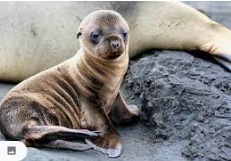
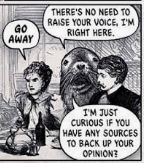
And for your viewing pleasure, Lilian Virginia, the mountain weasel:

Kara Church

Pronouns: she/her

Technical Editor, Advisory

Editor’s Corner Archives: https://episystechpubs.com/

Posted by: Jack Henry | April 7, 2022

Editor’s Corner: Robots and Mixed Drinks

It’s been some time since I’ve shared the Chicago Manual of Style Q&A with you, but this month’s topics could not be ignored: robot names and the names of mixed drinks. You never know when you’ll need to know these rules. Isn’t it Spring break somewhere? From CMOS:

Q. Robots are being named and even developing personalities, not just in fiction, but in the real world. Should their names be italicized—i.e., “I told Benjamin to wait at the coffee shop,” where Benjamin is a robot with artificial intelligence?

A. Italics for robot names could be fun in fiction; however, that doesn’t seem to be the convention either in fiction or in real life. (An exception is generally made for named spacecraft and the like, including the robotic Mars rover Perseverance.) Before you decide what to do, consider asking some robots to weigh in. [KC – My
Roomba®
says he prefers being called Steve McQueen the Clean Machine; no italics necessary.]

Q. Do you recommend capitalizing named cocktails or other things that are given whimsical, as opposed to utilitarian, names? I’m thinking of things like “Sex on the Beach” or “Florida Tracksuit” that are not strictly proprietary. My inclination is to capitalize to highlight that the phrase is not to be read literally, but is in fact a name, like Coca-Cola, even if it isn’t trademarked.

A. We agree with both your inclination and your logic. Whether you name your cocktail or your cockatoo, that name generally gets treated as a proper noun and capitalized. As you suggest, readers will be less likely that way to get the mistaken impression, however fleeting, that something intimate is happening on the sand or that someone might be about to drink a workout ensemble.

Florida Tracksuit? I had to look it up because it cracked me up! The recipes are as follows:

Sex on the Beach

Ice

1 1/2 oz. vodka

1 oz. peach schnapps

2 oz. orange juice

2 oz. cranberry juice

Orange wedge, for garnish

Florida Tracksuit

1/2 oz of orange vodka
2 oz of Red Bull energy drink
1/2 oz of Sour Puss raspberry liqueur

Kara Church

Pronouns: she/her

Technical Editor, Advisory

619-542-6773 | Ext: 766773

Editing: Symitar Documentation Services

Editor’s Corner Archives: https://episystechpubs.com/

NOTICE: This electronic mail message and any files transmitted with it are intended
exclusively for the individual or entity to which it is addressed. The message,
together with any attachment, may contain confidential and/or privileged information.
Any unauthorized review, use, printing, saving, copying, disclosure or distribution
is strictly prohibited. If you have received this message in error, please
immediately advise the sender by reply email and delete all copies.

Posted by: Jack Henry | April 5, 2022

Editor’s Corner: The Ellipsis

A few months ago, one of you wrote to me about an article in which “millennials” were accusing “boomers” (yes, those were the terms) of being haters because they text and use the ellipsis (…) so much. I couldn’t believe using that particular punctuation mark was considered “angry.” The writer’s millennial children told her that “It is offensive to use it at the end of a sentence, because it can be dismissive or passive/aggressive. But using it in the middle of a sentence…connecting thoughts, is just fine!”

Hmm. Well, that may be the current thought on the ellipsis, but I certainly don’t think people from that generation (or mine, or even the one after mine) are using ellipsis marks to be spiteful. We use it because, like the exclamation point, comma, and other punctuation, it serves a purpose.

The official job of the ellipsis is to signal a pause, some uncertainty, or an omission. At the end of a sentence, it can also indicate an unfinished thought. Perhaps some unfinished thoughts, like “My life would’ve been different if I had never given birth to you…” could be considered pretty darn horrible. I agree. But ending a text with an ellipsis isn’t inherently dismissive. “Maybe I’ll see you at Tony’s later…” just indicates that you might see your friend at Tony’s, but you might not.

From GrammarBook.com, I have a list of official uses for the ellipsis, and some examples.

1) To suggest faltering or fragmented speech accompanied by confusion, insecurity, distress, or uncertainty

"I…I…it’s just…I can’t believe you just said that," Bartholomew said. [KC – That is one ugly sentence.]

"The book…where is the book?" Donetta said.

If other punctuation for expression or emphasis is used within a fragment of the quoted material, the mark is kept before the ellipsis:

"The storm clouds…my goodness!…look!…there in the distance!" Ned said.

2) To conclude a quoted sentence that is deliberately and grammatically incomplete

Most Americans are familiar with Martin Luther King Jr.’s speech in which he begins multiple statements with ‘I have a dream…’

As shown in this example, when an ellipsis concludes a sentence in this context, it does not have another space or period after the mark.

If the fragment is not included as part of a sentence but rather as a prompt or a beginning, its fragmentary character does not need to be identified with ellipsis periods:

My goal is to memorize several of MLK’s statements starting with "I have a dream" before the end of the semester.

3) To show an omission regardless of whether it comes in the middle of a sentence or between sentences

If the omission is within the same sentence, we use only the three-period ellipsis. If the omission is within wider content, such as a paragraph, we include a period before the ellipsis to show the current statement with the omission has ended.

Original paragraph: Rosetta would like all of you to know before she retires that she appreciates your many years of dedicated hard work for the community. You have shown what can be achieved when people believe in a purpose and apply the best of themselves to bring it to life. She thanks you, and she will always remember you.

Omission same paragraph: Rosetta would like all of you to know…she appreciates your many years of dedicated hard work for the community. …She thanks you, and she will always remember you.

As you can see, the ellipsis is not used to cause hard feelings. It’s just punctuation, plain and simple. If younger generations criticize you, I’d say it is time for a teaching moment from the inner English major in all of you.

And don’t forget to enter the haiku contest! You can enter more than one—they just have to be your own. I’ll publish them and announce the winners on April 26.

Kara Church

Pronouns: she/her

Technical Editor, Advisory

Editor’s Corner Archives: https://episystechpubs.com/
Posted by: Jack Henry | March 31, 2022

Editor’s Corner: Haiku and Contest!

The other day I mentioned a Japanese poetry type called waka. Today I want to go back to the other type of poetry from Japan that many of us are more familiar with: haiku. As I mentioned, haiku is three lines with the pattern of five syllables for the first and third lines and seven syllables in the middle. Traditional haiku was restricted to one of the seasons or topics in nature. Since we are getting closer to the weekend, I thought we should look at some more modern haiku, which are comedic. I hope you enjoy the ones I selected from Your Dictionary.com:

Haiku for Room Cleaning Motivation

I hid a twenty

In your messy room somewhere.

Just clean to find it.

Birthday Haiku

For your birthday, friend,

I wrote this haiku for you.

Worst present ever.

Haiku for Sweet Corn

The joy of sweet corn,

Taste of summer and butter.

I forgot to floss.

Haiku for Babies

You’re so cute, but why

Should I write a haiku for you?

You can’t even read.

T-Rex Hug Haiku

The T-Rex likes you,

But he can’t give you a hug.

His arms are too short.

Haiku for Bacon

That’s too much bacon.

Please just bring me some kale chips.

Said no one ever.

Good Morning Haiku from the Cat

In the morning light,

You sleep despite my meow.

I stand on your face.

You know what? It’s been a long time since I’ve had a contest. Let’s do one now! Here are the rules:

Who: You, Editor’s Corner readers (and any new folks you get to subscribe to Editor’s Corner).

What: Write a haiku following the 5-7-5 syllable rule. Funny ones would be delightful, but more traditional are okay, too. And please don’t plagiarize, we’re using the honor system here.

What Else: For prizes I will draw a winner randomly from each category. The funny one wins He Smokes Like a Fish and Other Malaphors; for the more serious winner I will send The Disheveled Dictionary. Both books are “slightly used” because I buy used books when they are available, for the environment’s sake. Don’t worry, they don’t have any blood or coffee stains on the pages.

Where: From your office or your house, just send me your best.

When: Get them to me by Friday, April 15, 2022. I will announce the winners on Tuesday, April 26, 2022.

Why: Because it doesn’t take long, it gets those creative juices flowing, and it’s fun!

Kara Church

Pronouns: she/her

Technical Editor, Advisory

Editor’s Corner Archives: https://episystechpubs.com/

Posted by: Jack Henry | March 29, 2022

Editor’s Corner: Waka

Good morning!

Todays topic is more about literature and writing than it is about English. I was just excited to learn this new word, and thought Id share. Most of you are probably familiar with the term haiku, which is a three-lined Japanese poem. The first and third lines are five syllables; the second line has seven syllables. What Im here to talk about today is waka poetry.

Waka is also a Japanese type of poem. A waka has five lines, and each line has five or seven syllables, like the haiku. A waka starts out the same as a haiku (5-7-5 syllable pattern), but then the last two lines are both seven syllables (5-7-5-7-7).

Here is an example of a haiku:

The Old Pond by Matsuo Bash

An old silent pond

A frog jumps into the pond

Splash! Silence again.

And here are some examples of wakas:

The heron pauses
In solitary vigil
Eyes a falling leaf
The dusk comes so early now
At the Sandy Bottom lakes

(by Otagiri Tatsuzou)

When cool breezes blow
portending the changing leaves
ladies fan themselves
in shimmering colored silks
…one cannot but enjoy life

(by Date Saburou Yukiie)

The flowers withered,
Their color faded away,
While meaninglessly
I spent my days in the world
And the long rains were falling.

(by Ono no Komachi)

I hope that you all

Have a happy, joyous day

At work or at home

Staying cozy, safe, and warm

As the sun sets on the day.

Kara Church

Pronouns: she/her

Technical Editor, Advisory

Editors Corner Archives: https://episystechpubs.com/

Posted by: Jack Henry | March 24, 2022

Editor’s Corner: Whoever Heard of Dr. Soice?

Good morning, readers and writers!

I have some surprising information for you today (at least it was surprising to me!). Did you know that most of us have been pronouncing Dr. Seuss’s name incorrectly? Dr. Seuss’s birthday is this month, so I thought we’d take this opportunity to clear up the mispronunciation.

As you probably know, Dr. Seuss’s real name is Theodor Geisel. Seuss is his mother’s maiden name, and the correct German pronunciation rhymes with voice, not moose. From the beginning, the mispronunciation was so widespread, and it went on for so long, that the good doctor eventually just accepted it. However, Alexander Lang, a college friend who worked with Geisel on the Dartmouth Jack-O-Lantern commemorated him this way:

You’re wrong as the deuce

And you shouldn’t rejoice

If you’re calling him Seuss

He pronounces it Soice (or Zoice)

Early on in his career, Geisel illustrated many political cartoons and worked in the animation and film department of the U.S. Army. He even won an academy award in 1947 for Best Documentary Feature. Geisel published over 60 books, which have been translated into many languages and adapted into 11 television specials, five feature films, a Broadway musical, and four television series. National Read Across America Day, a reading initiative created by the National Education Association, is celebrated on his birthday each year (March 2).

His work is not without controversy, though. Although Dr. Seuss portrayed many positive values in many of his books, and while he remains popular, last year, six of his books were pulled from publication due to racist images. When the books were pulled, Dr. Seuss Enterprises said, “These books portray people in ways that are hurtful and wrong.” They said they are committed to ensuring that the Suess catalog represents and supports all communities and families. 

We can all take a lesson from Dr. Seuss’s book The Sneetches, which sends the message that all people are to be valued, just the way they are: “…no kind of Sneetch is the best on the beaches.” 

Donna Bradley Burcher |Technical Editor, Advisory | Symitar®

8985 Balboa Ave. | San Diego, CA 92123 | Ph. 619.278.0432 | Ext: 765432

Pronouns she/her/hers

About Editor’s Corner

Editor’s Corner keeps your communication skills sharp by providing information on grammar, punctuation, JHA style, and all things English. As editors, we spend our days reading, researching, and revising other people’s writing. We love to spend a few extra minutes to share what we learn with you and keep it fun while we’re doing it.

Did someone forward this email to you? Click here to subscribe.

Don’t want to get Editor’s Corner anymore? Click here to unsubscribe.

Do you have a question or an idea for Editor’s Corner? Send your suggestions or feedback to Kara and <a href="mailto:DBurcher.

NOTICE: This electronic mail message and any files transmitted with it are intended
exclusively for the individual or entity to which it is addressed. The message,
together with any attachment, may contain confidential and/or privileged information.
Any unauthorized review, use, printing, saving, copying, disclosure or distribution
is strictly prohibited. If you have received this message in error, please
immediately advise the sender by reply email and delete all copies.

Posted by: Jack Henry | March 22, 2022

Editor’s Corner: The Asterisk, revisited

Most of us know what an asterisk (*) looks like, but what is it? How should it be used?

The word asterisk is from the Greek word asteriskos, which means little star. According to an article I read on ThoughtCo, there are several uses for what the article calls the most ancient punctuation mark (around 5000 years old):

  • To call attention to a footnote
  • To indicate an omission
  • To point to disclaimers (which often appear in advertisements)
  • To note constructions that are ungrammatical
  • To dress up company logos

Let’s have a look at these uses.

Footnotes

An asterisk is placed beside text to indicate that there is more information on the word or passage it marks. The additional information can be found at the bottom of the page where it appears. According to our style guide, Chicago Manual of Style, it’s okay to use asterisks for footnotes if there are only a few in an entire paper. When you have multiple items per page or throughout a book, however, it is much cleaner to use numbered footnotes.

As an editor, one of the biggest faux pas I see with asterisks is people using them in documents, but not including anything at the bottom of the page to explain why the text was marked! If the asterisk doesn’t clarify what it marks on that page, it’s useless. An example is a series of fields that say Enter the date*. At the bottom of the page, you might expect clarification on which date, such as:

*The date the form was filled.

Omissions

“We’re werewolves, not swearwolves!” (From What We Do in the Shadows, the movie.)

Asterisks, (like the grawlix %@$&*!) can be used in place of profanity. When you’re reading an article or story and you don’t want to offend the reader, you may see something like, “He’s being a real a**.” You know what the missing letters are, but it’s considered less offensive than coming right out and cussing at the reader.

Other Uses

The “other uses” aren’t recommendations, but they are things you might notice when you’re out and about.

  • Disclaimers: Sometimes you might see an advertisement with an asterisk that guides you to the tiniest of disclaimers—the written equivalent of the TV or radio ad where the spokesperson is speaking in quadruple time and mentioning all of the things they must say legally, but don’t want to.
  • Ungrammatical uses: I’ve never seen this, but apparently people will call attention to bad grammar by marking it with an asterisk. For example:

    *Bill and Ted was having an adventure.

    Don’t use bad grammar and nobody will put an asterisk by your work. 😊

  • Company logos: E*TRADE is an example of someone using an asterisk as a “stylized hyphen.” The late copy chief at the Washington Post responded to this perfectly: “Punctuation is not decoration.” Agreed. Just don’t do it.

Kara Church

Pronouns: she/her

Technical Editor, Advisory

Editor’s Corner Archives: https://episystechpubs.com/
Posted by: Jack Henry | March 17, 2022

Editor’s Corner: Cutting Idioms

My 13-year-old dog can hardly walk on her back legs, but she likes to keep her front legs fit and trim by digging holes in the back yard—and trying to dig holes in the rugs on our bedroom floor. The latest couple of rugs have not stood up well to her abuse. There are always strands of fiber she’s pulled out that are big enough to catch your toe on.

Part of my weekly maintenance is to get on the floor and cut off the strings. As I did this last weekend, I realized I was “cutting a rug,” and my mind went to the idiom “to cut a rug” meaning to dance. That just didn’t sound right! I looked it up, and indeed it is an idiom, which Merriam-Webster categorizes as “old-fashioned slang.” Well, that made me feel less than young! Even worse, my thoughts jumped to the last time I saw anybody “cutting a rug.” It was the 1946 Christmas film, It’s a Wonderful Life.

When another idiom with the word “cut” came up in my mailbox, I thought it was a message from the universe to do an article for Editor’s Corner. The second idiom was “cut to the chase.” Here is an explanation and a little history from Grammarphobia:

Cut to the chase

The expression “cut to the chase,” which was first recorded in the early 20th century, is derived from the use of the verb “cut” in filmmaking to mean move rapidly from one scene to another.

The Oxford English Dictionary defines this sense of “cut” as “to make a quick transition from one shot to the next.” The earliest example that we’ve seen for the usage is from an early 20th-century book on motion-picture technique:

“Perhaps we can cut to Sam wondering what effect the marriage will have on his chances” (from Technique of the Photoplay, 2d ed., 1913, by Epes Winthrop Sargent).

The OED, an etymological dictionary based on historical evidence, says the expression “cut to the chase” was originally a film usage meaning “to cut to a chase scene; (hence) to cut to an interesting or fast-paced part of a film….”

In a few years, the usage took on its usual current sense, which the OED defines as “to get to the point, to get on with it; to concentrate on the essential elements of an issue, etc.”

Wishing you a happy St. Patrick’s Day! Here’s hoping you have a chance to cut a rug or dance a jig today in celebration!

Kara Church

Pronouns: she/her

Technical Editor, Advisory

619-542-6773 | Ext: 766773

Editing: Symitar Documentation Services

Editor’s Corner Archives: https://episystechpubs.com/

NOTICE: This electronic mail message and any files transmitted with it are intended
exclusively for the individual or entity to which it is addressed. The message,
together with any attachment, may contain confidential and/or privileged information.
Any unauthorized review, use, printing, saving, copying, disclosure or distribution
is strictly prohibited. If you have received this message in error, please
immediately advise the sender by reply email and delete all copies.

Posted by: Jack Henry | March 15, 2022

Editor’s Corner: Orange and Oranges

Good morning, folks!

The other day, the editors received this comic strip and a challenge to deal with it in Editor’s Corner. I’m always up for a challenge, and I wanted to know the answer to this question: Which came first, orange the color, or orange the fruit?

An article from Mental Floss gets right to it:

The citrus definitely got named first. The earliest recorded use of orange the fruit in English is from the 1300s and came to us from the Old French orenge, adapted from the Arabic nāranj, from the Persian nārang, from the Sanskrit nāranga ("orange tree"). The Sanskrit word’s origin is unclear, but it might come from a Dravidian word meaning "fragrant."

The word’s use as a color name doesn’t crop up for another 200 years, in the early 1500s. English speakers probably didn’t have a specific name for the color until the fruit was widely available in their markets and inspired one. Before then, linguists believe people generally referred to orange as "yellow-red," ġeolurēad in Old English.

Noting the two different directions the word took (orenge and naranj/naranga) and having taken French and Spanish, I decided to look at what other countries near France and Spain called orange and oranges. The closer to France and northern Europe, most countries have a variant of orenge:

· oranje (Dutch)

· orange (French)

· orange (German)

· oransje (Norwegian)
· orange (Swedish)
· oranžová (Slovak) [KC – Okay, not northern or near France, but the Slovak in me liked this name.]
The closer to Spain and Portugal, the countries stick closer to naranj/naranga:
· taronja (Catalan)
· laranja (Portuguese)
· naranja (Spanish)
In between orange and naranja, is Italy with arancia.

The Online Etymology Dictionary reported a history of the word orange similar to Mental Floss, but it also included some interesting information about the fruit itself, so I thought I’d pass that on too.

The tree’s original range probably was northern India. The Persian orange, grown widely in southern Europe after its introduction in Italy 11c., was bitter; sweet oranges were brought to Europe 15c. from India by Portuguese traders and quickly displaced the bitter variety, but only Modern Greek still seems to distinguish the bitter (nerantzi) from the sweet (portokali "Portuguese") orange. [KC –Greeks use the word
portokali for the color orange; next door, the Turks use portokal.]

Portuguese, Spanish, Arab, and Dutch sailors planted citrus trees along trade routes to prevent scurvy. On his second voyage in 1493, Christopher Columbus brought the seeds of oranges, lemons and citrons to Haiti and the Caribbean. (They were)…introduced in Florida (along with lemons) in 1513 by Spanish explorer Juan Ponce de Leon.

And that’s what happens when you present a comic strip to an editor.

Kara Church

Pronouns: she/her

Technical Editor, Advisory

Editor’s Corner Archives: https://episystechpubs.com/
« Newer Posts - Older Posts »

Categories