Posted by: Jack Henry | July 12, 2022

Editor’s Corner: Pointing Fingers and the Dutch Reach

Today I was looking at an article by Trivia Genius, about etiquette—primarily why it is considered rude to point at people and things with your pointer finger. In the process, I found some alternatives to pointing, and I also learned a new term: Dutch Reach. Here are the two pieces about manners and the new term.

Finger Pointing: The Disney Solution and the Friendly Skies

When assisting theme park guests, Disney employees are trained to point with two conjoined fingers, index and middle. While the act reportedly doubles a nod to Walt Disney’s smoking, the larger explanation is that standard pointing is considered rude in numerous cultures—especially if aimed at another person. A perception that dates back to Shakespeare’s time, pointing brings unwanted attention to the recipient, implying that they’ve committed a wrong. Repeated pointing in Japan can even instigate hostility. Figurative “finger-pointing” is defined as “making explicit and often unfair accusations of blame.” In situations where you feel compelled to point, it is kinder to use an open palm, flight attendant-style. [KC – This is helpful. Next time I see a dolphin or an osprey on one of my beach walks, I’m going to point it out to my mom with an open hand or a two-finger Disney salute. It may look crazy,
but at least it won’t be rude!]

The Dutch Reach

Amsterdam is an amazing city because of its beauty, history, openness, museums, and people. I’ve also never seen so many bicycles in my life. The city has separate lanes for cars, bicycles, and pedestrians everywhere and in both directions (coming and going from wherever). Now the story behind the Dutch Reach.

Cycling accounts for more than 25% of daily travel in the Netherlands; thus, Dutch citizens tend to be more conscientious toward bike riders than Americans. Yet we can all learn from their example with the “Dutch Reach,” a subtle move for anyone seated on the left-hand side of a car. Upon parking, Dutch drivers are instructed to use their right hands when opening their doors, even though their left hands are closer. This forces individuals to fully turn their upper bodies toward their exit, increasing the probability that they will spot anyone approaching in a bike lane. Some local drivers even tie ribbons to their door handles as reminders, and the Dutch Reach Project employs the slogan, “Reach, Swivel, Look, Open”—good safety advice regardless of your seat placement.

In case you are a more visual learner, here is a diagram from the Dutch Reach Project web site:
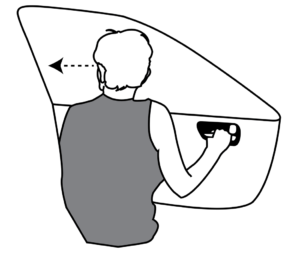
It seems like a great idea to me! In San Diego, many of the streets have just been repainted and reorganized to include a separate lane for bicycle riders. It’s a perfect time to adopt the Dutch Reach!

Kara Church

Pronouns: she/her

Technical Editor, Advisory

Editor’s Corner Archives: https://episystechpubs.com/

Posted by: Jack Henry | July 7, 2022

Editor’s Corner: Skinny-Dipping

Happy summer!

I received an email this morning, alerting me that this Saturday, July 9, is International Skinny-Dip Day. In case you aren’t familiar with the term, skinny-dipping is going for a swim in the nude. The sender of this message asked me to investigate the history of this term, so here you go!

Amazingly enough, there is very little information out there about this idiom. I saw dates for the origin of the term spanning the ‘40s, ‘50s, and ‘60s, so I don’t have a precise answer about how old the term is. And there are very few descriptions of it aside from “swimming naked.” Here are a couple of the descriptions I found, the first from Idiom Origins: “American…from the allusion of stripping down to one’s bare skin rather than having anything to do with being skinny as in thin.” The Free Dictionary definition went a little farther than that, saying “To swim in the nude, especially in a public place or someone else’s private property.”

And a brief reminder about briefs: skinny-dipping is illegal in a lot of places. Before you decide to celebrate wildly without your knickers, make sure you’re familiar with the local laws.

Kara Church

Pronouns: she/her

Technical Editor, Advisory

Editor’s Corner Archives: https://episystechpubs.com/

Posted by: Jack Henry | July 5, 2022

Editor’s Corner: More Fancy Color Names

Hello there, readers!

The other day I went to the art store to buy some handmade paper, and of course the minute I walked in I was blown away by all of the displays of paints, colored pens, and potential art projects just waiting for me to spend my paycheck on them. Luckily, I only left $80 poorer, but that was due to a strict 30-minute parking pass. Today I received a quiz about colors from dictionary.com, and I failed miserably. I won’t torture you with the quiz, but I’ll provide you with the information. Let’s see if you are more familiar with these colors than I was! (The definitions are from Merriam-Webster.)

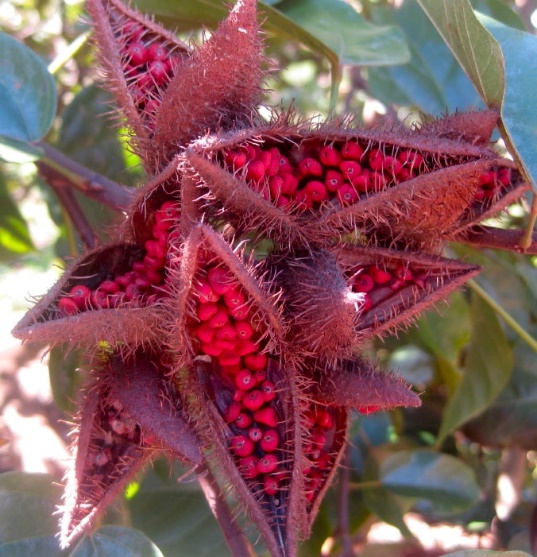
annatto:a moderate yellowish pink that is yellower and less strong than coral pink and duller and slightly yellower than peach pink. [KC – The plant on the left is
the base of most annatto coloring and doesn’t look yellowish pink to me. Seed extracts of this natural food coloring are on the right.]

cerulean: somewhat resembling the blue of the sky

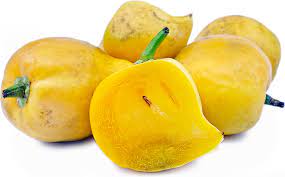
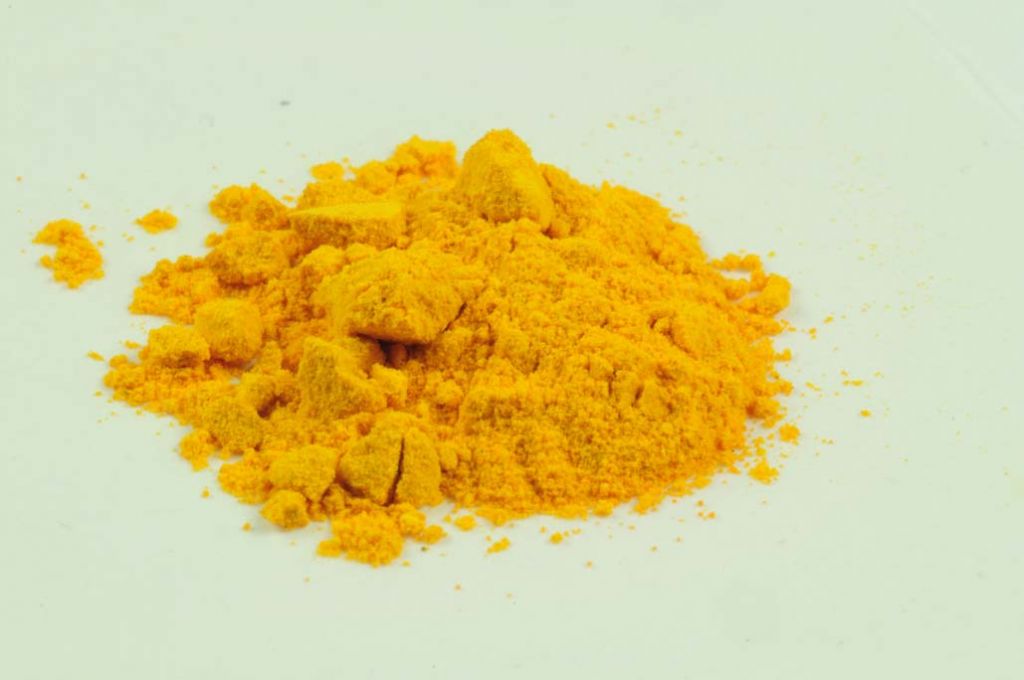
gamboge: an orange to brown gum resin that becomes bright yellow when powdered, is obtained from various southeast Asian trees of the genus Garcinia (as G. hanburyi), and is used by artists as a yellow pigment and in medicine as a cathartic [KC – Below, gamboge fruit and gamboge powder.]

greige (also grège, if you’re French): 1: being in an unbleached undyed state as taken from a loom —used of textiles greige cloth. 2: of a color that blends gray and beige

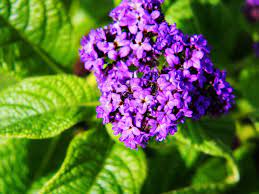
heliotrope: 1a: a variable color averaging a moderate purple that is bluer, lighter, and stronger than cobalt violet, manganese violet, or average amethyst, bluer and deeper than average lilac, and redder, stronger, and slightly lighter than mignon [KC – Um, cobalt and manganese violet? Are we blowing up a chemistry lab? And mignon? Isn’t that Grammar Girl’s real name? On the left, heliotrope. On the
right, a mignon-colored flower.]

1b: a moderate reddish purple that is redder and duller than bishop’s violet [KC – Bishop’s violet (mitre)]

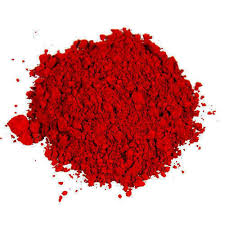
ponceau: a strong red to reddish orange; the French word for poppy-colored.

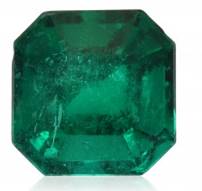
smaragdine:of or relating to emerald: yellowish green in color like an emerald [KC – Emeralds in the raw, and an emerald being shaped for jewelry.]

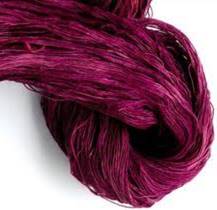
Tyrian purple:a crimson or purple dye of the indigo class used by the ancient Greeks and Romans and prepared from the adrectal glands of gastropod mollusks (as of the genus Thais) or made synthetically [KC – Tyrian purple yarn.]

2: a strong to vivid purplish red that is redder and darker than Tyrian pink [Tyrian pink color sample.]

ultramarine: a costly pure blue pigment formerly prepared by powdering lapis lazuli [KC – Lapis on the left, pigment on the right.]

wheaten: related to wheat, wheat grain; any color ranging from pale beige to shimmering gold. [KC – Wheaten paint on the left, soft-coated wheaten terriers on the right.]

I hope you learned something new! Now you can entertain party guests with these glamorized color descriptions (and I can understand what my mom and brother are talking about when they are painting)!

Kara Church

Pronouns: she/her

Technical Editor, Advisory

Editor’s Corner Archives: https://episystechpubs.com/
Posted by: Jack Henry | June 30, 2022

Editor’s Corner: Doxing

Almost two months ago, Donna discussed the new term Sealioning. I was really excited when I read that there’s a term doxing, because I thought it might have something to do with dachshunds (doxies) and I wanted to surprise my doxie-owning coworker, Ron. Unfortunately, there are no dogs involved with this term.

The word doxing means to publish somebody’s personal information or to reveal their identity without their consent, often accompanied by threats and intimidation. In this case “dox” is short for “documents.” One example, according to the article, was from 2013. “Several high-profile celebrities, including Beyoncé and Kim Kardashian, were the victims of doxing after a hacker publicly revealed their addresses, social security numbers, and financial documents online.” Yuck. Life would be so much better if we just stuck to doing kind things and being loveable like dogs.

There were some other new and interesting words in this article from Dictionary.com. Here are a couple of them.

I was watching 9-1-1 (Austin or Lone Star or something), a show that entertains me with firefighters and police while I’m making dinner. On one of the episodes, there was someone calling the police and falsely reporting a serious crime. There’s a name for that! It’s called swatting (based on the SWAT teams called for potentially volatile situations). In the show, the intent was to have the police go to a man’s house full-force because he was an alleged kidnapper, drug dealer, and loser. The man ended up dying. As the dictionary says, “Swatting is extremely dangerous due to the unpredictable nature of such scenarios, when law enforcement officials believe they are entering a highly dangerous situation.” We’ve seen the results of that in the news. Let’s keep our swatting to flies!

Lastly, firehosing. Back to the firemen? Nope. In this case, firehosing is a tactic used to spread propaganda. It means to “release a large amount of false information in a very short amount of time. Due to the resources often needed to pull off such an expansive disinformation strategy, the term is most often used to refer to the actions of large organizations or government.”

The examples they mention include Russian propaganda during the invasion of Ukraine, Chinese propaganda responding to reports about the mistreatment of Uyghur Muslims, and, well, several events here in the U.S. where misinformation was spread.

These are only some of the new terms. Since they dragged me (and maybe you) down, I think we need to end with something better than doxing, swatting, and firehosing.

Kara Church

Pronouns: she/her

Technical Editor, Advisory

Editor’s Corner Archives: https://episystechpubs.com/

Posted by: Jack Henry | June 28, 2022

Editor’s Corner: Limericks

Hello, fellow travelers! Since we had so much fun learning about Japanese wakas and haiku, let’s check out something along similar lines: the limerick. The definition of a limerick according to Merriam-Webster is:

A short, humorous five-line poem. [KC – Often written in quite bawdy and naughty language.] While the origin of this type of verse is unknown, some believe that the name limerick comes from the chorus of an 18th-century Irish soldiers’ song "Will You Come Up to Limerick?" to which were added impromptu verses. The Limerick referenced in this chorus is a port city in southwestern Ireland.

In a limerick, the first, second, and fifth line rhyme, and the third and fourth lines rhyme. The rhyming lines also have about the same number of syllables. Here is a more visual representation of the lines that rhyme and the ones that share the syllabic patterns:

a

a

b

b

a

Perhaps the best way to get the limerick concept and rhyme scheme across is to share a few with you!

The limerick packs laughs anatomical

Into space that is quite economical.

But the good ones I’ve seen

So seldom are clean,

And the clean ones so seldom are comical.

(by Vivian Holland)

I hope it won’t come as a shock

That Christmas I hazard to mock:

It’s the one day that we

Sit around a dead tree

Eating candy right out of a sock.

(by Richard Lederer)

There once was a lady named Ferris

Whom nothing could ever embarrass.

‘Til the bath salts one day,

in the tub where she lay,

turned out to be Plaster of Paris.

A magazine writer named Bing

Could make copy from most anything

But the copy he wrote

of a ten-dollar note

Was so good he now lives in Sing Sing.

An oyster from Kalamazoo

Confessed he was feeling quite blue.

For he said, “As a rule,

When the weather turns cool,

I invariably get in a stew.”

A wonderful bird is the pelican

His bill holds more than his belican

He can take in his beak

Enough food for a week

But I’m damned if I see how the helican.

A bather whose clothing was strewed

By breezes that left her quite nude,

Saw a man come along

And, unless I am wrong,

You expect this last line to be lewd!

A tutor who tooted a flute

Tried to teach two young tooters to toot.

Said the two to the tutor,

Is it harder to toot, or…

To tutor two tooters to toot?”

I hope you enjoyed these. I did, and as I am slimming down my collection of books on grammar, sign errors, funny comments from church newsletters, and other things I have written about in the past, I think it might be time for another contest!

Please send your great limericks to me

And make sure they are rated PG.

Any topic is fine

I am sure they will shine

And I’ll send out some presents for three.

I’ll give you a few weeks to work on these. The due date is July 15, 2022, and as usual, you can send me as many entries as you like. I will pick the three winners randomly. Good luck!

Kara Church

Pronouns: she/her

Technical Editor, Advisory

Editor’s Corner Archives: https://episystechpubs.com/

Posted by: Jack Henry | June 23, 2022

Editor’s Corner: You

Learning other languages can be tough. One of the things that English speakers have a difficult time with, when learning another language, is learning the informal and formal translations of the word you. Spanish has and usted; French has tu and vous; German has du and Sie, and the list goes on. Well, today I have some interesting information for everyone. Back in merry old England, we used to have informal and formal versions of the word you: thou, thee, and you.

From Grammar Girl:

Since thee and thou have survived mainly in religious and poetic writing, you may be surprised to learn that thee and thou were the informal pronouns. You was formal, and thou was informal.

From the 15th to 16th centuries, thou was used for someone of a lower class or someone you were very familiar with. A parent would’ve referred to their child as thou; a child would’ve referred to their parent as you. About a hundred years later, social status became less obvious, and people started using the more formal you, no matter who they were speaking to. This way, whether you were addressing someone above or below you in status, you were less like to insult them.

While many English speakers started dropping thee and thou, the Quakers continued to use them because according to Grammar Girl, “they aimed to be egalitarian, embrace humility, and avoid markers of class and status. They believed that addressing a social superior as you fanned the flames of vanity.” As time moved on, this became a problem for the Quakers. Thee and thou started being used as insults, and the Quakers were called out for using the familiar, formerly lower-class options. A story from the founder of the Quakers, George Fox said:

We were often beset and abused, and sometimes in danger of our lives for using these words to some proud men, who would say, “What! You ill-bred clown, do you thou me?” It’s hard to understand now, but at the time, it was almost unthinkable to call a superior thou.

It’s kind of funny that we now think of thee and thou as a more formal way to speak, when it was just the opposite. I hope you have found this as interesting as I have.

Kara Church

Pronouns: she/her

Technical Editor, Advisory

Editor’s Corner Archives: https://episystechpubs.com/

Posted by: Jack Henry | June 21, 2022

Editor’s Corner: Body Parts

In a recent article from Daily Writing Tips, they wrote about different body parts being used as verbs, such as, “My dog nosed through the garbage, looking for scraps.” They also discussed some figurative uses and idioms related to body parts, which are the items that I’m going to share with you. The definitions are from the article; the sentences in blue are from me.

to head
to be at the head of; to lead

Darcy headed up the bake sale and encouraged 20 students to make 75 cookies each.

to eye
to consider (a company, property, business opportunity, etc.) with a view to acquisition or development.

I saw Miles eyeing a box of doughnuts on the desk, but he didn’t take one because he’s on a diet.

to nose
To detect or discover as if by means of a keen sense of smell.

Baxter nosed his way through the living room, upturned three pillows, and discovered a bone.

Nose is used as a verb in several other idioms:

to nose around: to search furtively for something, to pry

Aletha sat on the stoop each day, where she found it easiest to nose around the neighbors and their business.

to nose ahead: to gain a slight advantage

On their third lap around the course, Black Caviar nosed ahead of Spectacular Bid and won first place.


to nose out
: to defeat by a narrow margin

The incumbent senator barely nosed out her opponent after the news of her affair was made public.

to mouth
to utter words or statements rhetorically or insincerely; to pay lip service to.

The employees were tired of management mouthing platitudes about how lucky the employees were, while only the management received benefits and bonuses.

Other verbal uses of mouth:

to mouth off: to express one’s opinion in a forceful, uninhibited or indiscreet manner; to be abusive or offensive; to brag.

Nadine’s father had heard enough. “After three F bombs and all of your mouthing off young lady, you just bought yourself two weeks without your phone or TV, and you’re grounded!”

to bad-mouth
to abuse or deprecate verbally; to criticize, slander, or gossip maliciously about.

I hate to bad-mouth Brenda, but she never helps pay for party supplies and yet she eats at least three pieces of every cake.

to shoulder
to take upon oneself as a burden, such as an expense or heavy responsibility.

The richest employees will shoulder the burden of paying for the new pinball machine.

to finger
to identify an offender

The mugging victim looked at the six men in the line-up and fingered #4 as the offender.

to stomach
to tolerate, put up with.

I just can’t stomach any more shows about celebrity lifestyles.

to foot the bill
to pay or settle a bill, especially one which is large or unreasonable, or which has been run up by another party.

The local businesses were making the neighborhood foot the bill for business district improvements, but that stopped when the neighborhood realized our taxes went up for something that was not put to a vote.

Kara Church

Pronouns: she/her

Technical Editor, Advisory

Editor’s Corner Archives: https://episystechpubs.com/
Posted by: Jack Henry | June 16, 2022

Editor’s Corner: Portmanteau Revisited

We cover all kinds of words here at the Editor’s Corner: homonyms, eponyms, eggcorns, mondegreens, and many, many more. Today, I want to revisit portmanteaus, which were covered several years back by my editing friend, Jackie.

As Jackie said then, a portmanteau is “a word or morpheme whose form and meaning are derived from a blending of two or more distinct forms (as smog from smoke and fog).” Portmanteau also means a trunk or suitcase that opens into two parts. The word portmanteau comes from the word porter (to carry) and manteau (cloak).

In his novel Through the Looking Glass (now commonly known as Alice in Wonderland), author Lewis Carroll created at least two beautiful portmanteaus: chortle (chuckle + snort) and slithy (slimy + lithe) and many more words that are close enough: frabjous (fabulous + joyous) and frumious (fuming + furious).

These are such useful words, and they evoke such wonderful imagery. If you haven’t already started thinking of all the portmanteaus you know of, here’s a long but still partial list of some we use today (not all are listed in a dictionary):

  • alphanumeric (alphabet + numeric)
  • anklet (ankle + bracelet)
  • bash (bang + smash)
  • bodacious (bold + audacious)
  • Bollywood (Bombay + Hollywood)
  • brainiac (brain + maniac)
  • Brexit (Britain + exit)
  • bromance (brother + romance)
  • brunch (breakfast + lunch)
  • camcorder (camera + recorder)
  • carjack (car + highjack)
  • chillax (chill + relax)
  • cyborg (cybernetic + organism)
  • dumbfound (dumb + confound)
  • emoticon (emotion + icon)
  • frenemy (friend + enemy)
  • glamping (glamor + camping)
  • guesstimate (guess + estimate)
  • hangry (hungry + angry)
  • hassle (haggle + tussle)
  • internet (interconnected + network)
  • jeggings (jeans + leggings)
  • labradoodle (Labrador + poodle)
  • modem (modulator + demodulator)
  • moped (motor + pedal)
  • motel (motor + hotel)
  • podcast (iPod + broadcast)
  • scuzzy (scummy + fuzzy)
  • skort (shirt + shorts)
  • snark (snide + remark) also snarky
  • snazzy (snappy + jazzy)
  • tween (teen + between)
  • vlog (video + log)
  • webinar (web + seminar)
  • Wi-Fi (wireless + fidelity)
  • workaholic (work + alcoholic)

I hope you have a fantabulous day today!

Donna Bradley Burcher |Technical Editor, Advisory | Symitar®

8985 Balboa Ave. | San Diego, CA 92123

Pronouns she/her/hers

About Editor’s Corner

Editor’s Corner keeps your communication skills sharp by providing information on grammar, punctuation, JHA style, and all things English. As editors, we spend our days reading, researching, and revising other people’s writing. We love to spend a few extra minutes to share what we learn with you and keep it fun while we’re doing it.

Did someone forward this email to you? Click here to subscribe.

Don’t want to get Editor’s Corner anymore? Click here to unsubscribe.

Do you have a question or an idea for Editor’s Corner? Send your suggestions or feedback to Kara and <a href="mailto:DBurcher.

NOTICE: This electronic mail message and any files transmitted with it are intended
exclusively for the individual or entity to which it is addressed. The message,
together with any attachment, may contain confidential and/or privileged information.
Any unauthorized review, use, printing, saving, copying, disclosure or distribution
is strictly prohibited. If you have received this message in error, please
immediately advise the sender by reply email and delete all copies.

Posted by: Jack Henry | June 14, 2022

Editor’s Corner: Day of the Dads

The other day, one of you asked me a great question about a particular day or event and whether it required an apostrophe. It wasn’t the Farmers Market or Veterans Day, but here’s an explanation similar to the one I gave, and it mentions how to handle different holidays. From GrammarBook.com:

Do You Use an Apostrophe When Spelling Father’s Day?

The most direct answer is yes. The Chicago Manual of Style (CMOS) and The Associated Press Stylebook list the following holidays as singular possessives: Mother’s Day, Father’s Day, New Year’s Eve, New Year’s Day, St. Patrick’s Day.

CMOS uses the plural possessive for Presidents’ Day, while AP writes Presidents Day. Both agree on no apostrophe in Veterans Day.

We have heard from readers who object to the apostrophe in Father’s Day because it implies one father. There are several scenarios in which a person can have two fathers: a father and stepfather, a biological father and adopted father, or a child being raised in a home with two fathers. The same can be true of two mothers.

Our post Apostrophes and False Possessives discusses how in English, nouns become adjectives all the time. If you think of the word Fathers as an adjective describing the word Day, then you would not use an apostrophe. It would be a day for fathers. The same could be said for using the plural possessive Fathers’ Day. It is a day belonging to all fathers.

No matter how many dads you have, according to our style guide it is still Father’s Day with the apostrophe. Don’t forget to give your dad a call, send him a card, or take him out to breakfast, if you can. If he’s not around anymore, take yourself out for breakfast and raise a cup of coffee or a mimosa to the man!

Kara Church

Pronouns: she/her

Technical Editor, Advisory

Editor’s Corner Archives: https://episystechpubs.com/
Posted by: Jack Henry | June 9, 2022

Editor’s Corner: Roots

Good morning, folks! I hope you are feeling well and ready for a little bit of word history from Richard Lederer, our local verbivore, author, and columnist. Thanks to Ron F. for saving these articles and sharing them with us! You know me, I love digging into the etymologies of words. This article, Growing Your Vocabulary by Digging Down to the Roots, is a nice demonstration of how knowing the roots of words can help you learn new terms. Let me turn it over to Mr. Lederer:

Words and people have a lot in common. Like people, words are born, grow up, get married, have children and even die. And, like people, words come in families — big and beautiful families. A word family is a cluster of words that are related because they contain the same root. A root is a basic building block of language from which a variety of related words are formed. You can grow your vocabulary by digging down to the roots of an unfamiliar word and identifying the meanings of those roots.

For example, knowing that the roots scribe and script mean “write” will help you to deduce the meanings of a prolific clan of words, including ascribe, conscript, describe, inscribe, manuscript, nondescript, postscript, prescribe, proscribe, scribble, scripture and transcribe. For another example, once you know that dic and dict are roots that mean “speak or say,” you possess a key that unlocks the meanings of dozens of related words, including abdicate, benediction, contradict, dedicate, dictator, Dictaphone, dictionary, dictum, edict, indicate, indict, interdict, jurisdiction, malediction, predict, syndicate, valedictorian, verdict, vindicate and vindictive. [KC – For the full article, click the link above.]

You can expand your verbal powers by learning to look an unfamiliar word squarely in the eye and asking, “What are the roots in the word, and what do they mean?”

Here are 20 word parts descended from either Latin or Greek, each followed by three words containing each root. From the meanings of the clue words, deduce the meaning of each root, as in PHON – microphone, phonics, telephone = sound.

[KC – This is a great exercise to help you learn some important roots. The answers are at the bottom.]

1. AUTO – autobiography, autograph, automaton = _______

2. CHRON – chronic, chronology, synchronize = _______

3. CULP – culpable, culprit, exculpate = _______

4. EU – eugenics, eulogy, euphemism = _______

5. GREG – congregation, gregarious, segregate = _______

6. LOQU – eloquent, loquacious, soliloquy = _______

7. MAGN – magnanimous, magnify, magnitude = _______

8. NOV – innovation, novelty, renovate = _______

9. OMNI – omnipotent, omniscient, omnivorous = _______

10. PHIL – bibliophile, philanthropy, philology = _______

11. SOL – isolate, soliloquy, solitary = _______

12. SOPH – philosopher, sophistication, sophomore = _______

13. TELE – telegraph, telephone, television = _______

14. TEN – tenacious, tenure, untenable = _______

15. TRACT – extract, intractable, tractor = _______

16. VAC – evacuate, vacation, vacuum = _______

17. VERT – convert, introvert, vertigo = _______

18. VIV – survivor, vivacious, vivid = _______

19. VOC – invoke, vocal, vociferous = _______

20. VOL – malevolent, volition, voluntary = _______

******************************************************************************

Answers

1. AUTO = self

2. CHRON = time

3. CULP = blame

4. EU = good

5. GREG = kind, species

6. LOQU = speak

7. MAGN = large

8. NOV = new

9. OMNI = all

10. PHIL = love

11. SOL = alone

12. SOPH = wise, wisdom

13. TELE = far away

14. TEN = hold

15. TRACT = pull

16. VAC = empty

17. VERT = turn

18. VIV = life, lively

19. VOC = call, voice

20. VOL = wish

Kara Church

Pronouns: she/her

Technical Editor, Advisory

Editor’s Corner Archives: https://episystechpubs.com/

« Newer Posts - Older Posts »

Categories