Posted by: Jack Henry | June 21, 2022

Editor’s Corner: Body Parts

In a recent article from Daily Writing Tips, they wrote about different body parts being used as verbs, such as, “My dog nosed through the garbage, looking for scraps.” They also discussed some figurative uses and idioms related to body parts, which are the items that I’m going to share with you. The definitions are from the article; the sentences in blue are from me.

to head
to be at the head of; to lead

Darcy headed up the bake sale and encouraged 20 students to make 75 cookies each.

to eye
to consider (a company, property, business opportunity, etc.) with a view to acquisition or development.

I saw Miles eyeing a box of doughnuts on the desk, but he didn’t take one because he’s on a diet.

to nose
To detect or discover as if by means of a keen sense of smell.

Baxter nosed his way through the living room, upturned three pillows, and discovered a bone.

Nose is used as a verb in several other idioms:

to nose around: to search furtively for something, to pry

Aletha sat on the stoop each day, where she found it easiest to nose around the neighbors and their business.

to nose ahead: to gain a slight advantage

On their third lap around the course, Black Caviar nosed ahead of Spectacular Bid and won first place.


to nose out
: to defeat by a narrow margin

The incumbent senator barely nosed out her opponent after the news of her affair was made public.

to mouth
to utter words or statements rhetorically or insincerely; to pay lip service to.

The employees were tired of management mouthing platitudes about how lucky the employees were, while only the management received benefits and bonuses.

Other verbal uses of mouth:

to mouth off: to express one’s opinion in a forceful, uninhibited or indiscreet manner; to be abusive or offensive; to brag.

Nadine’s father had heard enough. “After three F bombs and all of your mouthing off young lady, you just bought yourself two weeks without your phone or TV, and you’re grounded!”

to bad-mouth
to abuse or deprecate verbally; to criticize, slander, or gossip maliciously about.

I hate to bad-mouth Brenda, but she never helps pay for party supplies and yet she eats at least three pieces of every cake.

to shoulder
to take upon oneself as a burden, such as an expense or heavy responsibility.

The richest employees will shoulder the burden of paying for the new pinball machine.

to finger
to identify an offender

The mugging victim looked at the six men in the line-up and fingered #4 as the offender.

to stomach
to tolerate, put up with.

I just can’t stomach any more shows about celebrity lifestyles.

to foot the bill
to pay or settle a bill, especially one which is large or unreasonable, or which has been run up by another party.

The local businesses were making the neighborhood foot the bill for business district improvements, but that stopped when the neighborhood realized our taxes went up for something that was not put to a vote.

Kara Church

Pronouns: she/her

Technical Editor, Advisory

Editor’s Corner Archives: https://episystechpubs.com/

Posted by: Jack Henry | June 16, 2022

Editor’s Corner: Portmanteau Revisited

We cover all kinds of words here at the Editor’s Corner: homonyms, eponyms, eggcorns, mondegreens, and many, many more. Today, I want to revisit portmanteaus, which were covered several years back by my editing friend, Jackie.

As Jackie said then, a portmanteau is “a word or morpheme whose form and meaning are derived from a blending of two or more distinct forms (as smog from smoke and fog).” Portmanteau also means a trunk or suitcase that opens into two parts. The word portmanteau comes from the word porter (to carry) and manteau (cloak).

In his novel Through the Looking Glass (now commonly known as Alice in Wonderland), author Lewis Carroll created at least two beautiful portmanteaus: chortle (chuckle + snort) and slithy (slimy + lithe) and many more words that are close enough: frabjous (fabulous + joyous) and frumious (fuming + furious).

These are such useful words, and they evoke such wonderful imagery. If you haven’t already started thinking of all the portmanteaus you know of, here’s a long but still partial list of some we use today (not all are listed in a dictionary):

  • alphanumeric (alphabet + numeric)
  • anklet (ankle + bracelet)
  • bash (bang + smash)
  • bodacious (bold + audacious)
  • Bollywood (Bombay + Hollywood)
  • brainiac (brain + maniac)
  • Brexit (Britain + exit)
  • bromance (brother + romance)
  • brunch (breakfast + lunch)
  • camcorder (camera + recorder)
  • carjack (car + highjack)
  • chillax (chill + relax)
  • cyborg (cybernetic + organism)
  • dumbfound (dumb + confound)
  • emoticon (emotion + icon)
  • frenemy (friend + enemy)
  • glamping (glamor + camping)
  • guesstimate (guess + estimate)
  • hangry (hungry + angry)
  • hassle (haggle + tussle)
  • internet (interconnected + network)
  • jeggings (jeans + leggings)
  • labradoodle (Labrador + poodle)
  • modem (modulator + demodulator)
  • moped (motor + pedal)
  • motel (motor + hotel)
  • podcast (iPod + broadcast)
  • scuzzy (scummy + fuzzy)
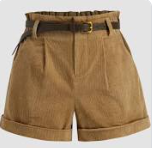
  • skort (shirt + shorts)
  • snark (snide + remark) also snarky
  • snazzy (snappy + jazzy)
  • tween (teen + between)
  • vlog (video + log)
  • webinar (web + seminar)
  • Wi-Fi (wireless + fidelity)
  • workaholic (work + alcoholic)

I hope you have a fantabulous day today!

Donna Bradley Burcher |Technical Editor, Advisory | Symitar®

8985 Balboa Ave. | San Diego, CA 92123

Pronouns she/her/hers

About Editor’s Corner

Editor’s Corner keeps your communication skills sharp by providing information on grammar, punctuation, JHA style, and all things English. As editors, we spend our days reading, researching, and revising other people’s writing. We love to spend a few extra minutes to share what we learn with you and keep it fun while we’re doing it.

Did someone forward this email to you? Click here to subscribe.

Don’t want to get Editor’s Corner anymore? Click here to unsubscribe.

Do you have a question or an idea for Editor’s Corner? Send your suggestions or feedback to Kara and <a href="mailto:DBurcher.

NOTICE: This electronic mail message and any files transmitted with it are intended
exclusively for the individual or entity to which it is addressed. The message,
together with any attachment, may contain confidential and/or privileged information.
Any unauthorized review, use, printing, saving, copying, disclosure or distribution
is strictly prohibited. If you have received this message in error, please
immediately advise the sender by reply email and delete all copies.

Posted by: Jack Henry | June 14, 2022

Editor’s Corner: Day of the Dads

The other day, one of you asked me a great question about a particular day or event and whether it required an apostrophe. It wasn’t the Farmers Market or Veterans Day, but here’s an explanation similar to the one I gave, and it mentions how to handle different holidays. From GrammarBook.com:

Do You Use an Apostrophe When Spelling Father’s Day?

The most direct answer is yes. The Chicago Manual of Style (CMOS) and The Associated Press Stylebook list the following holidays as singular possessives: Mother’s Day, Father’s Day, New Year’s Eve, New Year’s Day, St. Patrick’s Day.

CMOS uses the plural possessive for Presidents’ Day, while AP writes Presidents Day. Both agree on no apostrophe in Veterans Day.

We have heard from readers who object to the apostrophe in Father’s Day because it implies one father. There are several scenarios in which a person can have two fathers: a father and stepfather, a biological father and adopted father, or a child being raised in a home with two fathers. The same can be true of two mothers.

Our post Apostrophes and False Possessives discusses how in English, nouns become adjectives all the time. If you think of the word Fathers as an adjective describing the word Day, then you would not use an apostrophe. It would be a day for fathers. The same could be said for using the plural possessive Fathers’ Day. It is a day belonging to all fathers.

No matter how many dads you have, according to our style guide it is still Father’s Day with the apostrophe. Don’t forget to give your dad a call, send him a card, or take him out to breakfast, if you can. If he’s not around anymore, take yourself out for breakfast and raise a cup of coffee or a mimosa to the man!

Kara Church

Pronouns: she/her

Technical Editor, Advisory

Editor’s Corner Archives: https://episystechpubs.com/

Posted by: Jack Henry | June 9, 2022

Editor’s Corner: Roots

Good morning, folks! I hope you are feeling well and ready for a little bit of word history from Richard Lederer, our local verbivore, author, and columnist. Thanks to Ron F. for saving these articles and sharing them with us! You know me, I love digging into the etymologies of words. This article, Growing Your Vocabulary by Digging Down to the Roots, is a nice demonstration of how knowing the roots of words can help you learn new terms. Let me turn it over to Mr. Lederer:

Words and people have a lot in common. Like people, words are born, grow up, get married, have children and even die. And, like people, words come in families — big and beautiful families. A word family is a cluster of words that are related because they contain the same root. A root is a basic building block of language from which a variety of related words are formed. You can grow your vocabulary by digging down to the roots of an unfamiliar word and identifying the meanings of those roots.

For example, knowing that the roots scribe and script mean “write” will help you to deduce the meanings of a prolific clan of words, including ascribe, conscript, describe, inscribe, manuscript, nondescript, postscript, prescribe, proscribe, scribble, scripture and transcribe. For another example, once you know that dic and dict are roots that mean “speak or say,” you possess a key that unlocks the meanings of dozens of related words, including abdicate, benediction, contradict, dedicate, dictator, Dictaphone, dictionary, dictum, edict, indicate, indict, interdict, jurisdiction, malediction, predict, syndicate, valedictorian, verdict, vindicate and vindictive. [KC – For the full article, click the link above.]

You can expand your verbal powers by learning to look an unfamiliar word squarely in the eye and asking, “What are the roots in the word, and what do they mean?”

Here are 20 word parts descended from either Latin or Greek, each followed by three words containing each root. From the meanings of the clue words, deduce the meaning of each root, as in PHON – microphone, phonics, telephone = sound.

[KC – This is a great exercise to help you learn some important roots. The answers are at the bottom.]

1. AUTO – autobiography, autograph, automaton = _______

2. CHRON – chronic, chronology, synchronize = _______

3. CULP – culpable, culprit, exculpate = _______

4. EU – eugenics, eulogy, euphemism = _______

5. GREG – congregation, gregarious, segregate = _______

6. LOQU – eloquent, loquacious, soliloquy = _______

7. MAGN – magnanimous, magnify, magnitude = _______

8. NOV – innovation, novelty, renovate = _______

9. OMNI – omnipotent, omniscient, omnivorous = _______

10. PHIL – bibliophile, philanthropy, philology = _______

11. SOL – isolate, soliloquy, solitary = _______

12. SOPH – philosopher, sophistication, sophomore = _______

13. TELE – telegraph, telephone, television = _______

14. TEN – tenacious, tenure, untenable = _______

15. TRACT – extract, intractable, tractor = _______

16. VAC – evacuate, vacation, vacuum = _______

17. VERT – convert, introvert, vertigo = _______

18. VIV – survivor, vivacious, vivid = _______

19. VOC – invoke, vocal, vociferous = _______

20. VOL – malevolent, volition, voluntary = _______

******************************************************************************

Answers

1. AUTO = self

2. CHRON = time

3. CULP = blame

4. EU = good

5. GREG = kind, species

6. LOQU = speak

7. MAGN = large

8. NOV = new

9. OMNI = all

10. PHIL = love

11. SOL = alone

12. SOPH = wise, wisdom

13. TELE = far away

14. TEN = hold

15. TRACT = pull

16. VAC = empty

17. VERT = turn

18. VIV = life, lively

19. VOC = call, voice

20. VOL = wish

Kara Church

Pronouns: she/her

Technical Editor, Advisory

Editor’s Corner Archives: https://episystechpubs.com/

Posted by: Jack Henry | June 7, 2022

Editor’s Corner: Drop a Dime

You know me—well, many of you do through Editor’s Corner—I love detective novels and police procedurals, particularly of the Law and Order variety. Thursday nights this year have been fabulous: Special Victims Unit, Law and Order (the original), and Organized Crime—three for the price of one! Today we’re going to look at the phrase “drop a dime on” meaning to rat someone out, snitch on someone, or inform on a criminal by calling the police.

The following description is from our buddies at the Grammarist.

Drop a dime is an idiom with an evolving definition.

The original meaning of drop a dime is to secretly report a lawbreaker to the police, to snitch on a fellow criminal, to anonymously betray a criminal partner. The term drop a dime first appeared in detective novels in the 1920s-1930s. The idiom drop a dime conjures the image of someone putting a dime in a payphone to call the police and betray or “rat out” a criminal.

Informants used payphones because short phone calls could not be traced, especially without prior warning of the incoming phone call. Even though payphones have passed out of usage, this meaning of the idiom does not seem to have waned….

Interestingly, the term drop a dime has also evolved into an American basketball term, dropping dimes, which means giving an assist on a play. Also, the expression is increasingly seen in American football to mean to throw a pass accurately.

Remember, snitches get stitches! (And good luck trying to find a pay phone. I just saw some tourists in Mexico taking a photo of a pay phone because it was so “quaint.”)

Kara Church

Pronouns: she/her

Technical Editor, Advisory

Editor’s Corner Archives: https://episystechpubs.com/

Posted by: Jack Henry | June 2, 2022

Editor’s Corner: Mistaken Word Pairs

Happy Thursday to you!

I frequently listen to the radio and podcasts, and I often hear words being used in ways that are a little off. Over the past few weeks, I heard the following word pairs being misused. The definitions are similar, but the words have distinct meanings:

  • expect vs. suspect
  • assume vs. presume
  • imply vs. infer

I’m not sure why these nuances thrill me so. Some people (my husband, one of my sons, the cashier who works the “15 items or less” lane at my neighborhood grocery store) think I’m a stickler, and then some people (my mom, my best friend, and some of you, I hope) find these subtleties interesting. If you are interested, read on.

I’ll start with the words expect and suspect. Both words, when used as verbs, look to the future, but they are looking with slightly different moods. Here are the definitions along with examples of proper use:

  • expect: to look for (mentally); to look forward to, as to something that is believed to be about to happen or come; to have a previous apprehension of, whether of good or evil, to look for with some confidence; to anticipate

Example: I expect to have the project plans by the end of the day.

  • suspect: to imagine to exist; to have a slight or vague opinion of the existence of, without proof, and often upon weak evidence or no evidence; to mistrust; to surmise

Example: I suspect that John will arrive late to dinner with a fantastic excuse.

Another pair of words that are often confused are assume and presume. These words are a little tricker because both words mean “to take something as true”; however, there is a slight difference in meaning.

  • assume: to take as true with little supporting evidence

Example: I assume that everyone likes chocolate as much as I do.

  • presume: to be confident or have evidence that something is true

Example: Just because you failed this test, don’t presume you’ll fail the next one.

And finally, let’s look at the words imply and infer. These words get mixed up a lot because they both deal with indirect suggestions:

  • imply: to suggest or to say something in an indirect way

Tip: When we imply something, we’re hinting at what we mean without saying it directly.

Example: He didn’t promise, but he did imply that he would take the job.

  • infer: to suppose or come to a conclusion, especially based on indirect suggestion

Tip: When we make an educated guess about something we think someone implied, we’re inferring.

Example: You can probably infer that she won’t be back based on her shocked expression and hasty retreat.

It might help to think of imply and infer almost as opposites. When you imply, you are giving a hint about something. When you infer you are making an educated guess about something.

I expect you all to have a wonderful day today.

Donna Bradley Burcher |Technical Editor, Advisory | Symitar®

8985 Balboa Ave. | San Diego, CA 92123 | Ph. 619.278.0432 | Ext: 765432

Pronouns she/her/hers

About Editor’s Corner

Editor’s Corner keeps your communication skills sharp by providing information on grammar, punctuation, JHA style, and all things English. As editors, we spend our days reading, researching, and revising other people’s writing. We love to spend a few extra minutes to share what we learn with you and keep it fun while we’re doing it.

Did someone forward this email to you? Click here to subscribe.

Don’t want to get Editor’s Corner anymore? Click here to unsubscribe.

Do you have a question or an idea for Editor’s Corner? Send your suggestions or feedback to Kara and <a href="mailto:DBurcher.

NOTICE: This electronic mail message and any files transmitted with it are intended
exclusively for the individual or entity to which it is addressed. The message,
together with any attachment, may contain confidential and/or privileged information.
Any unauthorized review, use, printing, saving, copying, disclosure or distribution
is strictly prohibited. If you have received this message in error, please
immediately advise the sender by reply email and delete all copies.

Posted by: Jack Henry | May 31, 2022

Editor’s Corner: Jokes for Language Lovers

Hello readers! Today I’m taking a bit of a vacation and letting Richard Lederer entertain you with A Buffet of Tidbits to Tickle a Language Lover’s Palate, from my dear buddy, Ron F.

A group of third-grade pupils were sitting in a circle with their teacher. She was going around in turn asking them all questions about animals:

“Davy, what noise does a cow make?”
“It goes moo.”
“Alice, what sound does a lamb make?”
“It goes baa.”
“Jimmy, what noise does a cat make?”
“It goes meow.”
“Jennifer, what sound does a mouse make?”
“Uhm . . ., it goes . . . click!”

* * *

A school principal came into a teacher’s classroom and said she was spending too much time teaching about commas because they weren’t really that important in communicating content. So the teacher had a student write the sentence “The principal says the teacher is wrong” on the board and then asked the principal to put a comma after the word principal and another after the word teacher.

The result, of course, was “The principal, says the teacher, is wrong.”

* * *

What do you say to comfort a friend who’s struggling with grammar? “There, their, they’re.”

* * *

It’s helpful if you imagine your auto-correct to be a tiny gremlin inside your computer who tries hard to be helpful but who is, in fact, quite drunk and subject to Inconsonants and Irritable Vowel Syndrome. Breaking news! The inventor of auto-correct has died. His funnel will be held tomato.

* * *

The best online password is “incorrect.” Why? Because every time you key in the wrong password, your computer will remind you that “Your password is incorrect.”

* * *

Always remember to keep your eyes on the prize, your nose to the grindstone, your shoulder to the wheel, your hand on the tiller, your face to the wind, your chin up, your ear to the ground, and your foot on the pedal. Then go see your chiropractor.

* * *

I recently attended the immersive Van Gogh experience at the Del Mar fairgrounds. 300 paintings. 2 million pixels, original music — spectacular! The only downer was that I didn’t have enough Monet to buy Degas to make the Van Gogh!

* * *

Some of you may wonder how my wife puts up with living with a compulsive punster. Well, the other day, I said to her, “Did you hear my last pun?” She replied, “I sure hope so!”

Enjoy your day!

Kara Church

Pronouns: she/her

Technical Editor, Advisory

Editor’s Corner Archives: https://episystechpubs.com/

Posted by: Jack Henry | May 26, 2022

Editor’s Corner: Curate’s Egg

Today’s topic comes from the review of a ransomware survey, brought to me by Phil Ruffin. The review uses the phrase “curate’s egg,” which is most common in British English. The article defines the phrase as such:

It’s a bit of a Curate’s Egg”, refer[s] to something about which you’re determined to keep a positive public attitude, even if your immediate private reaction was to be disappointed.”

Wikipedia provides additional information and includes the comic strips the phrase is from, both in 1895 publications (one called Punch, the other Judy). Here is their explanation:

A "curate’s egg" is something described as partly bad and partly good. In its original usage, it referred to something that is obviously and entirely bad, but is described out of politeness as nonetheless having good features that redeem it. This meaning has been largely supplanted by its less ironic modern usage, which refers to something that is in fact an indeterminate mix of good and bad, possibly with a preponderance of bad qualities.

Both ransomware and the curate’s egg stink, but you’ll have to read the article to find out which parts of the survey were not good, and which parts were very good. Thanks, Phil!

Kara Church

Pronouns: she/her

Technical Editor, Advisory

Editor’s Corner Archives: https://episystechpubs.com/
Posted by: Jack Henry | May 24, 2022

Editor’s Corner: College Try

Good morning, everyone! A couple of weeks ago, one of you asked me where the phrase “Give it the old college try” came from. I thought this might be an easy one to look for, but there are several theories floating out there. It seems that it has been used, reused, misinterpreted, and misattributed. I trust the Grammarist, so let’s start there:

To give it the old college try means to put forth one’s very best effort, often to an outsized degree. Usually, but not always, give it the old college try refers to an attempt made to achieve something with a high risk of failure. The expression give it the old college try came not from the college campus, but from the baseball diamond.

At the turn of the century, a player was said to give it the old college try when attempting to make a play like a heroic attempt at catching a fly ball that was very far out of the player’s reach. Supposedly, the phrase referenced the enthusiasm of an amateur athlete playing for his college team.

The term give it the old college try was quoted in Babe Ruth’s book in the 1920s, and the phrase entered the American language to mean any heroic attempt to achieve something, especially something with a high risk of failure.

In Babe Ruth’s book, he defined the phrase as “playing to the grandstand or making strenuous effort to field a ball that obviously cannot be handled.” In the 1930s and 1940s, the phrase became associated with college football films, which were plentiful. The meaning changed with these films from “achiev(ing) something with a high risk of failure,” to achieving or winning “if you try, no matter what the odds.”

I can hear my sixth-grade basketball coach right now, “Okay girls, third quarter starts in a minute and we’re losing. Buck up and give it the old college try! And stop fouling yourselves out!” (Yeah, we only had seven girls there that day, and three of us fouled out in the first half. It’s hard to win with only four players.)

Kara Church

Pronouns: she/her

Technical Editor, Advisory

Editor’s Corner Archives: https://episystechpubs.com/

Posted by: Jack Henry | May 19, 2022

Editor’s Corner: Timepieces

Top of the morning to you!

I was wearing a wristwatch recently, and my two-year old grandson touched it and said, “clock.” And I said “Yes, it is a kind of clock. It’s a watch.” And I immediately knew this was an Editor’s Corner moment.

Why do we call timepieces that are mounted on the wall or mantel clocks and timepieces on our wrists or in our pockets watches?

According to an article on the Grammarphobia website, the term watch did not originate from the act of watching your watch (be it a pocket watch or a wristwatch) as you might imagine. It actually comes from the Old English word wæcce or wæccan, and it refers to wakefulness, particularly to the sense of staying awake to guard or observe something.

After reading that, you might still be confused about why we call the timepiece we wear on our wrist a watch. I was,so I continued reading, and the article goes on to say that a watch was originally a device that was used to wake people up so they could stand their watch—a sort of alarm clock. Closer, but still not what we think of as a watch today.

In Middle English, the word for an alarm that was attached to a clock and that was used to wake people was wecche, and the word for clock was clokke. So, you would have a wecche on your clokke (nothing at all like having a burr on your hide or a bee in your bonnet).

Moving along in time, several citations from the Oxford English Dictionary, dating back to the late 1500s, use the word watch to refer to a small timepiece that is spring driven and small enough to be carried in the pocket. So there’s your pocket watch, friends!

According to a New York Timesarticle, the first wristwatch was made for Countess Koscowicz of Hungary in 1868 by a Swiss manufacturer named Patek Philippe. And wristwatches for men came soon after. This article states that the first wristwatches for men were produced after an officer in the German Imperial Navy, in 1880, “complained that operating a pocket watch was difficult when timing a bombardment,” so he strapped his pocket watch to his wrist, and that lead to small timepieces being attached to bracelets. And there you have your first wristwatches, friends!

My curiosity is quelled. We can all thank little Jack Burcher for today’s Editor’s Corner topic.

Donna Bradley Burcher |Technical Editor, Advisory | Symitar®

8985 Balboa Ave. | San Diego, CA 92123 | Ph. 619.278.0432 | Ext: 765432

Pronouns she/her/hers

About Editor’s Corner

Editor’s Corner keeps your communication skills sharp by providing information on grammar, punctuation, JHA style, and all things English. As editors, we spend our days reading, researching, and revising other people’s writing. We love to spend a few extra minutes to share what we learn with you and keep it fun while we’re doing it.

Did someone forward this email to you? Click here to subscribe.

Don’t want to get Editor’s Corner anymore? Click here to unsubscribe.

Do you have a question or an idea for Editor’s Corner? Send your suggestions or feedback to Kara and <a href="mailto:DBurcher.

NOTICE: This electronic mail message and any files transmitted with it are intended
exclusively for the individual or entity to which it is addressed. The message,
together with any attachment, may contain confidential and/or privileged information.
Any unauthorized review, use, printing, saving, copying, disclosure or distribution
is strictly prohibited. If you have received this message in error, please
immediately advise the sender by reply email and delete all copies.

« Newer Posts - Older Posts »

Categories