Posted by: Jack Henry | October 18, 2022

Editor’s Corner: A barrel of monkeys

From: Kara Church <KChurch@jackhenry.com>
Sent: Tuesday, October 18, 2022 6:29 AM
To: Kara Church <KChurch@jackhenry.com>
Subject: Editor’s Corner: A barrel of monkeys

Dear Editrix,

Barrels. It’s a fun word to say. But as far as I know, they don’t have an engine and tend not to move—so why, when someone or something is coming toward us quickly, do we say, “They were barreling toward us?” Also, was it a common practice to keep monkeys in barrels? Why do we compare a lot of fun (or chaos) to a “barrel full of monkeys?” I can envision how wacky that would be, but I wonder why barrels, and not a cage or a box?

Sincerely,

A Monkey’s Uncle

Dear Uncle,

Wow! So many questions, so little time! I found quite a few details on these different idioms, so I will define them, give you some additional information on them, and answer your questions.

First, let’s look at “I’ll be a monkey’s uncle.” This phrase is used to express surprise or disbelief in something. (“Bachelor Pete finally got married? Well I’ll be a monkey’s uncle!) The history of the phrase is assumed to be a reference to Charles Darwin’s Origin of Species (1859), in which he wrote about evolution and similarities of humans and primates.

Second, what is the deal with the verb “barreling.” What a good question! How did a barrel (or barreling) come to mean “move rapidly, especially in a vehicle”? This use of the word goes back to the 1930s, but its history is much older. Way back in the 1400s, the verb “barrel” meant—get this—to put something in a barrel. From The Word Detective:

…the use of empty barrels for fun and recreation has a history as old as barrels themselves. As a protective container, barrels have long been the vehicle of choice for daredevils convinced that taking a dangerous plunge over a waterfall is a good idea (it usually isn’t). But even bored farm boys have been known, for several centuries, to liven things up by rolling down hills in a barrel. This foolhardy stunt (rolling barrels are nearly impossible to steer or stop) is almost certainly the source of “barrelling,” meaning “moving very rapidly,” especially since “barrelling” carries overtones of recklessness and “unstoppability.”

Lastly, I will address your “barrel of monkeys.” There are several idiomatic phrases you might hear:

  • More fun than a barrel of monkeys
  • As much fun as a barrel of monkeys
  • As funny as a barrel of monkeys

The definition of the term according to Merriam-Webster is “funny and enjoyable.” However, according to one source I read, there’s more to it, and the meaning has changed over time. Monkey’s Uncle, I think you’ll appreciate this since the author’s answer reminded me so much of your email. From Portable Press:

Answering the question: “Where does the phrase ‘As fun as a barrel full of monkeys’ come from?”

Answering this question only brings up more questions. Why did someone have a barrel, and decide to fill it up with monkeys in the first place? And why is that a fun thing? It seems like it would be a nightmarish disaster of monkeys clawing at each other, and throwing their waste at each other, all the while screeching and howling. This doesn’t sound all that fun, let alone the barometer against which all other fun things are judged.

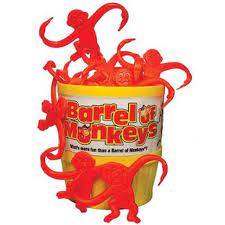
(And for what it’s worth, we’ve never found the children’s game it inspired, “Barrel of Monkeys,” to be all that much fun.)

But fortunately, there is an explanation. “More fun than a barrel of monkeys” is supposed to be an ironic statement, or at least a sarcastic one. It’s properly used to wryly describe something that isn’t fun (say, the board game “Barrel of Monkeys.”) The previous incarnations of the phrase lend credence to that. It was first recorded in 1840 as “cage of monkeys.” By the 1890s, the term had evolved into “a wagon-load of monkeys,” which would aptly describe something both chaotic and terrible.

And one more note. “A barrel of laughs” is supposed to have evolved from “a barrel of monkeys.”

Have a good day in the jungle!
Kara Church | Technical Editor, Advisory | Technical Publications

Pronouns: she/her | Call via Teams | jackhenry.com

Editor’s Corner Archives: https://episystechpubs.com/

Posted by: Jack Henry | October 18, 2022

Editor’s Corner: A barrel of monkeys

Dear Editrix,

Barrels. It’s a fun word to say. But as far as I know, they don’t have an engine and tend not to move—so why, when someone or something is coming toward us quickly, do we say, “They were barreling toward us?” Also, was it a common practice to keep monkeys in barrels? Why do we compare a lot of fun (or chaos) to a “barrel full of monkeys?” I can envision how wacky that would be, but I wonder why barrels, and not a cage or a box?

Sincerely,

A Monkey’s Uncle

Dear Uncle,

Wow! So many questions, so little time! I found quite a few details on these different idioms, so I will define them, give you some additional information on them, and answer your questions.

First, let’s look at “I’ll be a monkey’s uncle.” This phrase is used to express surprise or disbelief in something. (“Bachelor Pete finally got married? Well I’ll be a monkey’s uncle!) The history of the phrase is assumed to be a reference to Charles Darwin’s Origin of Species (1859), in which he wrote about evolution and similarities of humans and primates.

Second, what is the deal with the verb “barreling.” What a good question! How did a barrel (or barreling) come to mean “move rapidly, especially in a vehicle”? This use of the word goes back to the 1930s, but its history is much older. Way back in the 1400s, the verb “barrel” meant—get this—to put something in a barrel. From The Word Detective:

…the use of empty barrels for fun and recreation has a history as old as barrels themselves. As a protective container, barrels have long been the vehicle of choice for daredevils convinced that taking a dangerous plunge over a waterfall is a good idea (it usually isn’t). But even bored farm boys have been known, for several centuries, to liven things up by rolling down hills in a barrel. This foolhardy stunt (rolling barrels are nearly impossible to steer or stop) is almost certainly the source of “barrelling,” meaning “moving very rapidly,” especially since “barrelling” carries overtones of recklessness and “unstoppability.”

Lastly, I will address your “barrel of monkeys.” There are several idiomatic phrases you might hear:

  • More fun than a barrel of monkeys
  • As much fun as a barrel of monkeys
  • As funny as a barrel of monkeys

The definition of the term according to Merriam-Webster is “funny and enjoyable.” However, according to one source I read, there’s more to it, and the meaning has changed over time. Monkey’s Uncle, I think you’ll appreciate this since the author’s answer reminded me so much of your email. From Portable Press:

Answering the question: “Where does the phrase ‘As fun as a barrel full of monkeys’ come from?”

Answering this question only brings up more questions. Why did someone have a barrel, and decide to fill it up with monkeys in the first place? And why is that a fun thing? It seems like it would be a nightmarish disaster of monkeys clawing at each other, and throwing their waste at each other, all the while screeching and howling. This doesn’t sound all that fun, let alone the barometer against which all other fun things are judged.

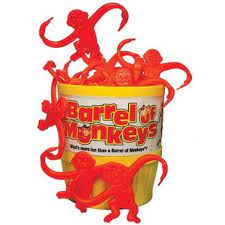
(And for what it’s worth, we’ve never found the children’s game it inspired, “Barrel of Monkeys,” to be all that much fun.)

But fortunately, there is an explanation. “More fun than a barrel of monkeys” is supposed to be an ironic statement, or at least a sarcastic one. It’s properly used to wryly describe something that isn’t fun (say, the board game “Barrel of Monkeys.”) The previous incarnations of the phrase lend credence to that. It was first recorded in 1840 as “cage of monkeys.” By the 1890s, the term had evolved into “a wagon-load of monkeys,” which would aptly describe something both chaotic and terrible.

And one more note. “A barrel of laughs” is supposed to have evolved from “a barrel of monkeys.”

Have a good day in the jungle!

Kara Church | Technical Editor, Advisory | Technical Publications

Pronouns: she/her | Call via Teams | jackhenry.com

Editor’s Corner Archives: https://episystechpubs.com/
Posted by: Jack Henry | October 13, 2022

Editor’s Corner: Word of the Dog

Good morning, all.

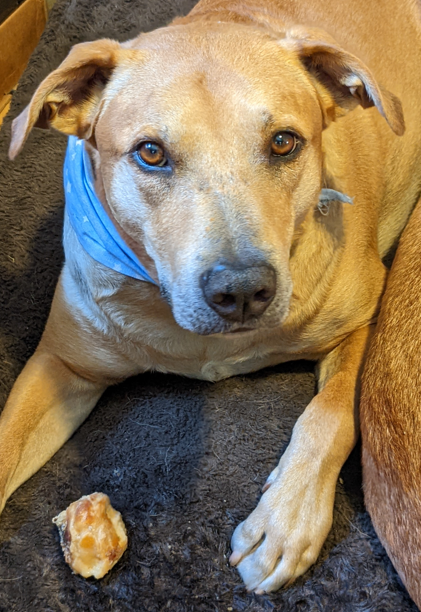
Last week was really tough for me. My younger dog, Harvey, died of an aggressive cancer. I’m still choked up about it and I know it will be a long time before I am “back to normal.” He was a crazy, handsome dog, full of love, life, and feistiness.

I was sitting around wondering how I could honor him and come up with something English-related that I could share with you, since he’s on my mind all of the time. I just found something that provides exactly what I needed!

Every now and then, I share Richard Lederer’s columns with you, and he wrote one at the end of August called “All I really need to know, I learned from my dog.” Here is the majority of the column for your reading pleasure:

We give dogs what time we can spare, what space we can spare, what food we can spare, and what love we can spare. In return, dogs give us everything. It’s the best deal we human beings have ever made.

Part of that deal is that dogs teach us to live better lives:

When you’re happy, dance around and wag your entire body. Enjoy the simple things in life, like taking a long walk or riding in a car and feeling the wind blowing on your face. Run barefoot, romp, and play daily. Leave yourself breathless at least once every day.

Master the art of stretching. Eat with gusto and enthusiasm. If it’s not wet and sloppy, it’s not a real kiss. When someone is having a bad day, be silent, sit close by, and nuzzle them gently. When loved ones come home, always run to greet them. Take time to stop and eat the roses.

Trust your instincts. Don’t go out without ID. On hot days, drink lots of water and lie under a shady tree. Life is hard, and then you nap. Let others know when they’ve invaded your territory. Make your mark on the world.

Be loyal. Never pretend to be something you’re not. No matter how often you’re scolded, don’t buy into the guilt thing and pout. Run right back and make friends. To err is human; to forgive canine.

If you can be cheerful, ignoring aches and pains. If you can resist complaining and boring people with your troubles; If you can eat the same food every day and be grateful for it. If you can understand when loved ones are too busy to give you any time;

If you can take criticism and blame without resentment; If you can face the world without lies and deceit. If you can start the day without caffeine or pep pills. If you can relax without liquor and sleep without the aid of drugs;

If you can find great happiness in the simplest things in life. If you can forgive any action in the blink of an eye. If you can repel intruders without using lethal weapons.

If you have no bias against creed, color, religion, politics, or gender. If you offer unconditional love as naturally as you breathe, then you are almost as good as your dog.

Here’s to Harvey, all the dogs we have loved in the past, and those we will love in the future.

Kara Church | Technical Editor, Advisory | Technical Publications

Pronouns: she/her | Call via Teams | jackhenry.com

Editor’s Corner Archives: https://episystechpubs.com/

Posted by: Jack Henry | October 11, 2022

Editor’s Corner: Orange

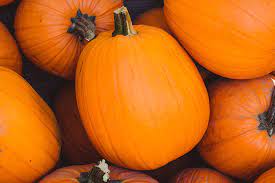
Every now and then, I like to take a quiz to challenge my vocabulary. This week, Dictionary.com lured me in with a lovely photo of pumpkins, but my heart also twisted because the topic of the quiz was words related to the color orange.

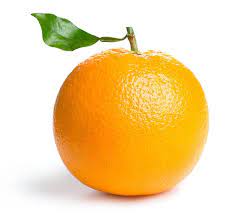
I love the taste of oranges, I think pumpkin is fantastic—shoot, I wouldn’t even turn down a candy corn or one of his waxy candy pumpkin buddies—but the color orange is one of my least favorite. Is that why I answered only four of seven questions correctly? I don’t know, but I can certainly help you score better! I’ll provide the quiz at the end of the definitions. Here are several different shades of orange, their definitions, and some examples.

coral: pinkish red

Hesperidium: name of an order of plants containing citrus fruits, named after the golden apples of the Hesperides. (In Greek mythology, Hercules was tasked to steal the golden apples, which were a wedding gift from Hera to Zeus.)

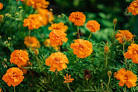
marigold: a plant of the daisy family, typically with yellow, orange, or copper-brown flowers.

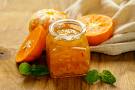
marmalade: a preserve made from citrus fruit, especially bitter oranges, prepared like jam.

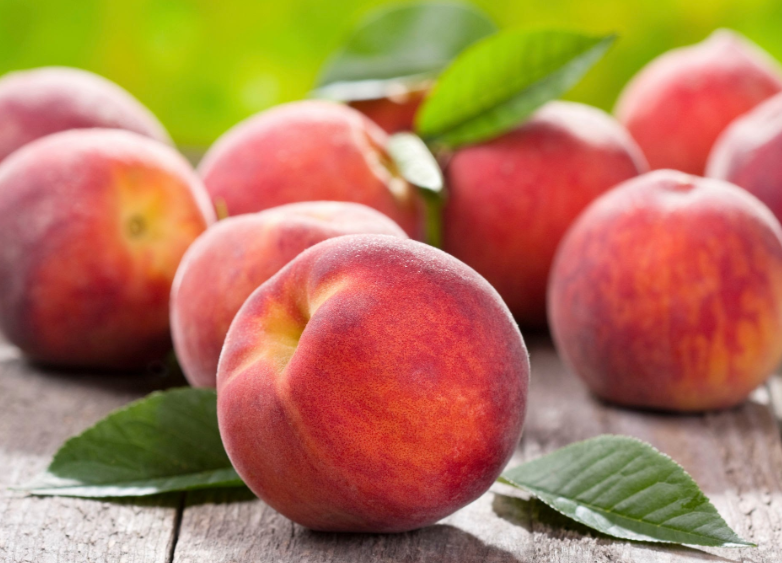
peach: blend of orange, yellow, and white. [KC – I’m no painter, but I’d add red to the blend.]

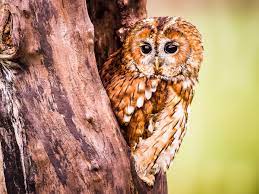
tawny: orange-brown, yellowish-brown (below, the aptly named Tawny Owl)

titian: brownish orange, sometimes brownish red (auburn)

So, how do you feel? If you’re interested in testing your vocabulary and your color palette, take this quick quiz. Good luck!

Kara Church | Technical Editor, Advisory | Technical Publications

Pronouns: she/her | Call via Teams | jackhenry.com

Editor’s Corner Archives: https://episystechpubs.com/
Posted by: Jack Henry | October 6, 2022

Editor’s Corner: New Words

Good morning word lovers. I recently read that Merriam-Webster has added new words to the dictionary (as they often do). Word additions always spark a lot of debate. Many people don’t like seeing what they perceive to be trendy or slang words added to the dictionary, but remember that dictionaries don’t tell us how to speak, they reflect how we actually do speak.

For a word to get added to the Merriam-Webster dictionary, it “must be used in a substantial number of citations that come from a wide range of publications over a considerable period of time. Specifically, the word must have enough citations to allow accurate judgments about its establishment, currency, and meaning.”

And while words are regularly being added, words are likewise being removed when they are no longer used or useful.

First, I want to share the banking words that were added (though they may not seem especially “new”):

  • gift economy: a system in which goods and services are given freely between people rather than sold or bartered
  • shrinkflation: the practice of reducing a product’s amount or volume per unit while continuing to offer it at the same price
  • unbanked: not having money deposited in a bank
  • underbanked: not using or having access to a full range of banking options
  • altcoin: any of various cryptocurrencies that are regarded as alternatives to established cryptocurrencies and especially to Bitcoin
  • side hustle: work performed for income supplementary to one’s primary job

And here are some newly added business and technology words:

  • dumbphone: a cell phone that does not include advanced software features (such as email or an internet browser) typically found on smartphones
  • video doorbell: a small security camera that is designed for use on an exterior door, that includes or connects to a doorbell, and that often has a microphone and speaker
  • microgrid: a small grid, especially a local electrical that can be connected to a larger network but that is also capable of operating independently
  • supply chain: the chain of processes, businesses, etc., by which a commodity is produced and distributed: the companies, materials, and systems involved in manufacturing and delivering goods
  • greenwash(verb): to make something, such as a product, policy, or practice appear to be more environmentally friendly or less environmentally damaging than it really is
    (noun): something (such as a claim or action) that is intended to make a product, policy, activity, etc. appear to be more environmentally friendly or less environmentally damaging than it really is

And for fun, here are a few slang words that are now official:

  • yeet(interjection): used to express surprise, approval, or excited enthusiasm
    yeet(verb): to throw especially with force and without regard for the thing being thrown
  • janky: of very poor quality (junky); not functioning properly or adequately (faulty)
  • sus: suspicious, suspect
  • lewk: a fashion look that is distinctive to the wearer and that is noticeable and memorable to others
  • adorkable: socially awkward or quirky in a way that is endearing
  • baller: excellent, exciting, or extraordinary especially in a way that is suggestive of a lavish lifestyle

And finally, here are some words that were recently removed or have been marked archaic, historical,or obsolete:

  • aerodrome: a location from which aircraft flight operations take off. This British term has since been replaced by “airport.”
  • alienism: the study and treatment of mental illness. This term has been phased out due to its insensitivity and inaccuracy in reference to those with mental health issues.
  • brabble: to argue stubbornly about trifles
  • frigorific: causing cold, chilling. Today, we still use the word “frigid.”
  • frutescent: having or approaching the appearance or habit of a shrub
  • supererogation: the performance of more work than duty requires
  • younker: a youngster

And with that, I wish you a good day!

Donna Bradley Burcher |Technical Editor, Advisory | jack henry™

8985 Balboa Ave. | San Diego, CA 92123

Pronouns she/her/hers

About Editor’s Corner

Editor’s Corner keeps your communication skills sharp by providing information on grammar, punctuation, JHA style, and all things English. As editors, we spend our days reading, researching, and revising other people’s writing. We love to spend a few extra minutes to share what we learn with you and keep it fun while we’re doing it.

Did someone forward this email to you? Click here to subscribe.

Don’t want to get Editor’s Corner anymore? Click here to unsubscribe.

Do you have a question or an idea for Editor’s Corner? Send your suggestions or feedback to Kara and <a href="mailto:DBurcher.

NOTICE: This electronic mail message and any files transmitted with it are intended
exclusively for the individual or entity to which it is addressed. The message,
together with any attachment, may contain confidential and/or privileged information.
Any unauthorized review, use, printing, saving, copying, disclosure or distribution
is strictly prohibited. If you have received this message in error, please
immediately advise the sender by reply email and delete all copies.

Posted by: Jack Henry | October 4, 2022

Editor’s Corner: Part 2 of Idioms from Readers

Hey! You’re the next contestant on “What’s That Idiom?” I have three from the crowd out there today:

  • How the tides have turned
  • Mind out of the gutter
  • The whole nine yards

How the tides have turned

An idiom that means that someone’s luck has changed completely. It could be a change in either direction—from good to bad, or vice versa.

Examples:

  • Bob used to be the luckiest guy at the local casino, but oh, how the tides have turned! He now loses money on every game he plays, even for nickels.
  • The tides had definitely turned for Mishka. She stared life in America as an orphaned immigrant, and thirty years later she’d grown her business to a $5 billion-dollar enterprise.

Get your mind out of the gutter

(slang) To stop having and giving voice to lewd, inappropriate thoughts

I couldn’t find a definitive reference, but some blogs say that this idiom has been around since the days where waste was disposed of in the filthy, dirty gutters. (Yay for underground plumbing!) That makes sense considering the people whose minds are “in the gutter,” are being accused of thinking filthy thoughts of a different biological nature—being naughty and Rated X.

The whole nine yards

Richard Sunbury taunted me with this phrase and told me it was sure to send me down a rabbit hole. Sure enough, he was correct. There are many suggestions about where it’s from, but nothing has been set in stone. Wikipedia summed up a lot of what I found in bits and pieces elsewhere. I’ve edited it for space.

"The whole nine yards" or "the full nine yards" is a colloquial American English phrase meaning "everything, the whole lot" or, when used as an adjective, "all the way."

The earliest known idiomatic use of the phrase is from 1907 in Southern Indiana. The phrase is related to the expression the whole six yards, used around the same time in Kentucky and South Carolina. Both phrases are variations on the whole ball of wax, first recorded in the 1880s. They are part of a family of expressions in which an odd-sounding item, such as enchilada, shooting match, shebang or hog, is substituted for ball of wax. The choice of the number nine may be related to the expression "To the nines" (to perfection).

There is still no consensus on the origin, though many early published quotations are now available for study. A vast number of explanations for this phrase have been suggested; however, many of these are no longer viable in light of what is now known about the phrase’s history.

· Many of the popular candidates relate to the length of pieces of fabric, or various garments, including Indian saris, Scottish kilts, burial shrouds, or bolts of cloth. No single source verifies that any one of those suggestions was the actual origin. However, an article published in Comments on Etymology demonstrates that fabric was routinely sold in standard lengths of nine yards (and other multiples of three yards) during the 1800s and early 1900s.

· One explanation is that World War II (1939–1945) aircraft machine gun belts were nine yards long. There are many versions of this explanation with variations regarding type of plane, nationality of gunner and geographic area. An alternative weapon is the ammunition belt for the British Vickers machine gun, invented and adopted by the British Army before World War I (1914–1918). The standard belt for this gun held 250 rounds of ammunition and was approximately twenty feet (6⅔ yards) in length. However, the Vickers gun as fitted to aircraft during the First World War usually had ammunition containers capable of accommodating linked belts of 350-400 rounds, the average length of such a belt being about nine yards, and it was thought that this may be the origin of the phrase. This theory is no longer considered viable, since the phrase predates World War I.

· Another common explanation is that "nine yards" is a cubic measure and refers to the volume of a concrete mixer. This theory, too, is inconsistent with the phrase’s history.

· Other proposed sources include the volume of graves; ritual disembowelment; shipyards; and American football. Little documentary evidence has surfaced to support any of these explanations.

There you have it! Three more idiomatic phrases with a little history and various theories of their origins, and I gave you the whole six yards!

Kara Church | Technical Editor, Advisory | Technical Publications

Pronouns: she/her | Call via Teams | jackhenry.com

Editor’s Corner Archives: https://episystechpubs.com/

Posted by: Jack Henry | September 29, 2022

Editor’s Corner: More Idioms

Dear Editrix:

I want to put you on the spot. You need to be spot on.

What is this spot? Where did this spot originate? When you are put on the spot, is it the same spot that you are spot on?

I hope that you can spot an answer.

ؘ– RF

Dear Ron,

A month or so ago, you were full of questions involving idioms about shortness and cutting; this month it’s spots. I’m beginning to worry about you a bit. But last time you wrote, you inspired others to throw more idioms my way, so let’s cover them over a couple of days. Here’s our line-up for today:

  • On the spot
  • Spot-on
  • Gung ho
  • How come

on the spot: without any delay; immediately.

Example: He went to the garage sale, fell in love with a used bicycle, and bought it on the spot. That’s all fine and dandy for the basic idiomatic meaning, but when I looked for more I found this, from The Hindu webpage:

In the old days, pirates used to send the ace of spades which had a spot in the middle to people they intended to kill. Anyone who received this card knew he had been ‘put on the spot’ — he was slated to die. Even today, the ace of spades is seen as a symbol of death in many countries.

I can’t vouch for this, but I sure like the story!

spot on: (Chiefly British) Exactly correct.

Example: De’Nora brought a handbag to go with my new, blingy outfit and her choice was spot on–they worked perfectly together!

gung-ho: unthinkingly enthusiastic and eager, especially about taking part in fighting or warfare.

Example: Mo was so gung-ho about his new job, he bought a new pair of pants for each day of the week and company shirts in every color of the rainbow.

Here is the beginning of the article from Wikipedia:

Gung ho is an English term, with the current meaning of "overly enthusiastic or energetic". It originated during the Second Sino-Japanese War (1937–1945) from a Chinese term, (pinyin: gōnghé; lit. ‘to work together’), short for Chinese Industrial Cooperatives (Chinese: 工業合作社; pinyin: Gōngyè Hézuòshè).

The linguist Albert Moe concluded that the term is an "Americanism that is derived from the Chinese, but its several accepted American meanings have no resemblance whatsoever to the recognized meaning in the original language" and that its "various linguistic uses, as they have developed in the United States, have been peculiar to American speech." In Chinese, concludes Moe, "this is neither a slogan nor a battle cry; it is only a name for an organization.

How come: (slang, informal, grammatically incorrect) The Merriam-Webster Learner’s Dictionary says “how come” is “used to ask why something has happened or is true.” It is a short form of “how did it come about that…” The dictionary also says the expression is usually found in the United States and is used in casual speech. (KC – I always think of it as a wordy way to ask “Why?”)

Example: How come you and Jo-Jo never had kids?

Those are your answers for today. Until next time, when I have a few more idioms and explanations for you.

Kara Church | Technical Editor, Advisory | Technical Publications

Pronouns: she/her | Call via Teams | jackhenry.com

Editor’s Corner Archives: https://episystechpubs.com/
Posted by: Jack Henry | September 27, 2022

Editor’s Corner: Virgin

Dear Editrix,

Here’s a word that bothers me: virgin. Why do we use that term, such as virgin drinks, virgin ground, etc.?

Sincerely,

Why?

Dear Why,

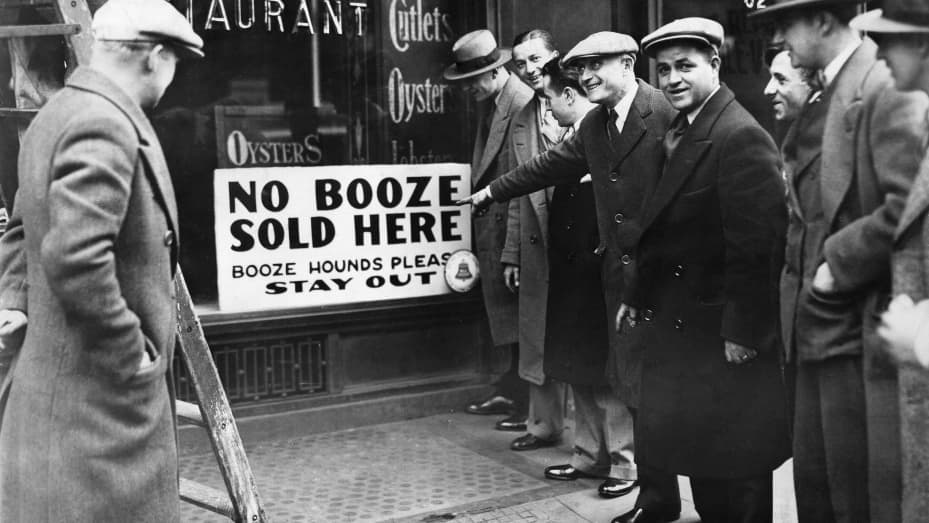
My first inclination is to refer to Madonna, who sums it up as “touched for the very first time.” That would apply to something like “virgin ground” or the original meaning of the word. As far as alcohol, though, the term “virgin drink” has a history, dating back to Prohibition. From The Zero Proof:

According to many sources, the name dates back to the prohibition era.

Around this time, the Bloody Mary, which combines vodka with tomato juice, became a popular cocktail. During Prohibition, though, folks could no longer go out and order a Bloody Mary to drink. Instead, they would ask for a Virgin Mary, which was just plain old tomato juice.

Referring to the drink as a Virgin Mary was a tongue-in-cheek way of clarifying that the customer wasn’t ordering alcohol. It also had obvious goody two shoes, church-related overtones that made folks smile (especially when they would go on to add their own vodka later from a personal pocket or hip flask).

You may also hear people refer to non-alcoholic drinks as “zero proof” drinks, “Temperance” drinks, or “mocktails” (a portmanteau of “mock cocktails”). These terms are also from the early 1920s.

I read several articles that chastise the term “mocktail” for the following reasons (this from the Atlantic Eater):

The term mocktail…can summon feelings of being patronized or infantilized; as if the person ordering is already being judged for choosing not to drink alcohol. Is the person skipping alcohol because of calories? A pregnancy? They need to drive home? Perhaps they have a problem with alcohol or addiction. A person should be able to order non-alcoholic drinks without feeling ashamed.

Who would think non-alcoholic drinks would be fraught with so much tension? Whatever you choose to call it, I hope it tastes good!

kara church | technical editor, advisory | technical publications

pronouns: she/her | call via teams | jackhenry.com

Editing Requests

NOTICE: This electronic mail message and any files transmitted with it are intended
exclusively for the individual or entity to which it is addressed. The message,
together with any attachment, may contain confidential and/or privileged information.
Any unauthorized review, use, printing, saving, copying, disclosure or distribution
is strictly prohibited. If you have received this message in error, please
immediately advise the sender by reply email and delete all copies.

Posted by: Jack Henry | September 22, 2022

Editor’s Corner: Thank you!

Good morning! And thanks for joining me today.

This morning, I’m diving into how we thank each other and also how we respond when we are thanked. Because my spouse is from England, I’ve had the pleasure of traveling to the UK throughout most of my adult life, and years ago I briefly lived in the south of England. I noticed right away that the Brits are very polite: they rarely neglect to say please and thank you. Here in the U.S., we may imply a “please” with a friendly tone of voice, such as, “Would you mind handing me the salt?” Don’t try that with my spouse. He’ll stare you down with an angelic smile on his face until you say the word…please. Yep, good manners by friendly intimidation.

What I noticed very quickly during my first visits to the UK is that the Brits didn’t (and mostly still don’t) say “you’re welcome.” Instead, they tended to nod. And you may have noticed that saying “you’re welcome” here in the U.S. is becoming less customary—at least the way we say it is changing. These days, you’re more likely to hear something like “no problem,” “sure thing,” or “you bet.” My son says, “Of course!”

Well, Grammar Girl recently wrote a post on this very topic and explained that saying “you’re welcome” is a fairly new practice in the English language. And it’s not that common in English dialects outside of the U.S. It is more common, apparently, in other languages such as Swedish, Russian, and German.

This begs the question, why doesn’t the exchange end after the words “thank you” are spoken? Someone does someone else a favor; the person receiving the favor acknowledges with thanks. The exchange is over, isn’t it? Not in the U.S.

Grammar Girl pointed out, and I’ve noticed this too, that some people get a little touchy when they say thank you and get a response like “no problem.” They find it rude because they assume it suggests they were a problem to begin with. But she points out that we really should be thinking of all of these “pleasantries” as formulaic expressions that are designed to perform a social task. She says that these expressions “…no longer carry literal meaning…In fact, younger people have been known to view ‘you’re welcome’ as pompous because they see it as emphasizing or pointing out that ‘Yes, indeed, I did do you a favor.’”

It seems to me that some people may just be looking for a reason to be upset. Maybe we should all be happy with a good intention, a friendly tone of voice, and a smile (and perfect grammar—just kidding!).

Please enjoy the rest of your day. Thank you!

Donna Bradley Burcher |Technical Editor, Advisory | jack henry™

8985 Balboa Ave. | San Diego, CA 92123

Pronouns she/her/hers

About Editor’s Corner

Editor’s Corner keeps your communication skills sharp by providing information on grammar, punctuation, JHA style, and all things English. As editors, we spend our days reading, researching, and revising other people’s writing. We love to spend a few extra minutes to share what we learn with you and keep it fun while we’re doing it.

Did someone forward this email to you? Click here to subscribe.

Don’t want to get Editor’s Corner anymore? Click here to unsubscribe.

Do you have a question or an idea for Editor’s Corner? Send your suggestions or feedback to Kara and <a href="mailto:DBurcher.

NOTICE: This electronic mail message and any files transmitted with it are intended
exclusively for the individual or entity to which it is addressed. The message,
together with any attachment, may contain confidential and/or privileged information.
Any unauthorized review, use, printing, saving, copying, disclosure or distribution
is strictly prohibited. If you have received this message in error, please
immediately advise the sender by reply email and delete all copies.

Posted by: Jack Henry | September 20, 2022

Editor’s Corner: Baking with Brits

Good morning, folks! I hope this finds you all in good cheer.

Today’s topic is vocabulary. More specifically, it is vocabulary from The Great British Baking Show, which has just returned to Netflix®. I was watching the other evening to see what amazing things people can do with flour, and I jotted down a handful of words that I was not very familiar with. You may ask, “Don’t they speak English in England?” Well, yes, they do, but there are Irish, Scottish, English, Welsh, and people from former British colonies in the contest, and they have many terms that aren’t the same as American English. Here are a few things you might hear:

  • stodgy (adjective)

1a: having a thick gluey consistency

b: having a thick texture: heavy—used especially of food

Every now and then, the hosts will describe a cake as “stodgy,” when the contestants serve up a layered sponge cake that hasn’t risen very well.

  • bap (noun)

chiefly Scottish

: a small loaf or roll of bread

In this case, the hosts were talking about a “crusty bap,” but it was cake week, so I don’t think that was a compliment.

  • claggy (adjective)

1 dialectal : sticky, gummy

Again, this comment is usually delivered with the judges scrunching up their faces and returning most of their forkful of cake to the plate. Just saying the word “claggy” sticks in your throat—give it a try.

  • chuffed (adjective)

British

: quite pleased : delighted

I love this word. I must admit, I heard it much more in the Junior Bake Off, when the kids said they were “so chuffed to be (there)” making some delicious-looking desserts.

  • pebble dash (noun)

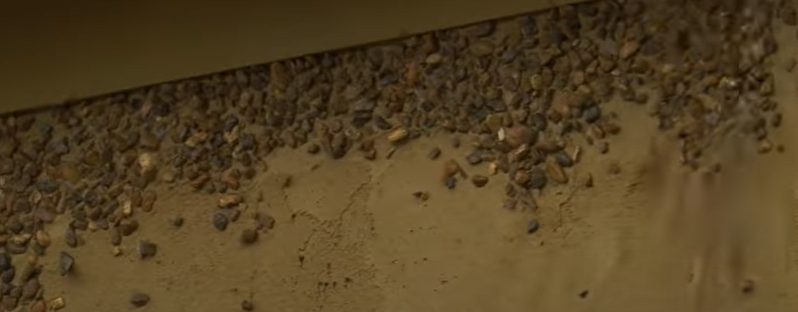
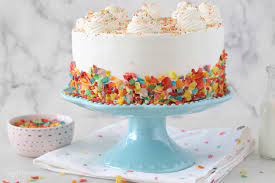
: a mixture (as of mortar) prepared to be dashed against a moist surface to make a finishing coat (KC – in this case, pebbles).

I know, that doesn’t sound very delicious. It is a “finish” for houses (I got the impression it was for less expensive homes in Britain), but it is also a technique for cakes. Here is the mortar and pebble siding for a home (the pebbles are just thrown into the mortar):

And here is a pebble-dashed cake (in this case, with Post Fruity Pebbles™):

If you’re looking for some entertainment, nice looking (usually) baked goods, and some new vocabulary, I definitely recommend this show.

Kara Church | Technical Editor, Advisory | Technical Publications

Pronouns: she/her | (619) 542-6773 | jackhenry.com

Editor’s Corner Archives: https://episystechpubs.com/

« Newer Posts - Older Posts »

Categories