Posted by: Jack Henry | September 25, 2025

Editor’s Corner: Pole Screens

Good morning, folks. Today I have more for you from Ireland. I’m skipping ahead to the last place that we visited: a great town called Kilkenny (kill=church, kenny=Kenneth). I loved this place. It had a castle, a farmer’s market, gorgeous medieval streets and churches, an interesting history, and a dog café where I chatted with a couple of dog lovers by the river.

Threatening clouds above the Nore River

We borrowed umbrellas (“brellies”) from the hotel and walked up to the town’s castle. We opted for a guided tour so that we could see the old moat (now underground) and the original building material they discovered when saving the castle from disrepair.

Kilkenny Castle, from the garden side (photo from the internet) Built in 1195.

But this Editor’s Corner is actually for something in the castle that I learned about. First, is the term “drawing room.” I am not sure if this is true, but the guide showed us a room called the “withdrawing room.” It was a room off of the dining room where women would “withdraw” after dinner, to leave the men to smoke and gamble. Eventually it was referred to as a “drawing room.” I thought it sounded more feasible than it being a room of cozy couches and chairs where women would go to sketch after dinner.

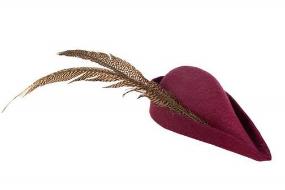
The second term is “pole screens.” Pole screens were in “withdrawing” or drawing rooms, and other rooms with fireplaces. They were popular in the 1700s and later when fireplaces were the main source of heat. Their primary purpose was to shield people from the heat and glare of the fire. First, a couple of photos:

And a description of pole screens from Hammond-Harwood House:

Unlike many historic objects that have a modern-day equivalent, the pole screen provides a snapshot of a specific era. Ornamental yet practical, these screens deflected heat from your face as you sat near the fire. They could be adjusted depending on the height of the individual user. They began growing in popularity in the mid-18th century and were named for the vertical pole the screen was placed on. Typical forms have a small screen in the shape of a square, oval, or shield attached to the pole, which is placed on tripod feet. The screens themselves were decorated with embroidery, paint, or occasionally lacquer….

Pole screens were transportable art, generally placed at the center of the home, the hearth, where social interactions occurred especially in the cooler months. These items were considered status symbols that showed skill, dedication, and femininity.

Kara Church | Technical Editor, Advisory | Technical Publications

Pronouns: she/her | Call via Teams | jackhenry.com

Editor’s Corner Archives: https://episystechpubs.com/
Posted by: Jack Henry | September 23, 2025

Editor’s Corner: Quay

At Dublin airport, my husband and I decided to start our vacation frugally by taking the bus into town. We were told it was about 30 minutes, and to get out when the driver called “George’s Key.” We watched out of the windows as we neared town.

I decided to look at my map. Dublin has a river running through it, called the Liffey, and it looked like we were following it along. On my map, I saw the names of all these quays. I wondered what a quay was (in my head still saying “quay,” to rhyme with “day”). I was shocked from my reverie when I heard “George’s (something).” I ran to the front of the bus and said, “Is this George’s Quay?” Only I rhymed it with “day” again. The driver looked at me a bit disgusted and said, “George’s key!”

We grabbed our suitcases and jumped off the bus. I just stood there repeating “quay is key, quay is key.” Ray looked at me like I should’ve slept on the flight over. I couldn’t get to a dictionary fast enough.

So, as I mentioned the other day, the word has three pronunciations. You can hear them here, but they are ˈkē, ˈkā, and ˈkwā. In Ireland it is the first.

Here is a view from a quay where we are having coffee, looking across to the other side of the river. The white bridge is the Ha’penny Bridge and the Merchant’s Arch is a pub.

Here is a small tidbit of some Dublin quays:

But what is a quay? I thought maybe it was like a dock, or a landing. There are boats along the river, but where I am sitting is more of a walkway for pedestrians that cut out of the river wall. The following information was provided by AI, when I asked what the difference is:

Quay

A dock is a general term for any structure where boats are tied up, while a pier is a raised structure that extends from the shore into the water for access and recreation. A quay is a solid, stable platform built parallel to the shoreline, often used for commercial loading and unloading of ships. The specific terminology can vary significantly by region and cultural context.

Here’s a more detailed breakdown:

· Dock

· Function: A place to moor and tie up boats, often for smaller-scale, personal use. Docks can also be floating structures that rise and fall with the water level.

· Construction: Can be a pier, a wharf, or even a floating platform.

· Usage: Commonly used in U.S. English as a broad term for any boat mooring.

· Pier

· Function: An elevated structure built to extend from the shore into the water, providing a landing place for boats or serving as a walkway for recreation like walking or fishing.

· Construction: Typically supported by pilings that allow water to flow underneath.

· Usage: Can be used for commercial or recreational activities.

· Quay

· Function: A solid, embankment-like structure designed to provide a secure, stable area for ships to dock alongside the shore for commercial loading and unloading of cargo.

· Construction: Usually built from concrete or stone and rests on filled land.

· Usage: Common in British English and other Commonwealth countries.

Key Differentiating Factors

· Orientation:

A quay runs parallel to the shore, a pier extends out into the water, and a dock can refer to a specific area within a larger structure.

· Construction:

Quays are solid and built on filled land, while piers are raised structures with open space underneath. Docks can be either.

· Purpose:

Piers are often for access or recreation, while quays are primarily for commercial loading and unloading.

I know, probably more than you cared to know, but I bet money if you go to Ireland, you aren’t going ask where George’sˈkwā is, you’ll ask for the ˈkē, like a pro.

Kara Church | Technical Editor, Advisory | Knowledge Enablement

Pronouns: she/her | Call via Teams | jackhenry.com

Editor’s Corner Archives: https://episystechpubs.com/

Posted by: Jack Henry | September 18, 2025

Editor’s Corner: Gaelic

Hello, my friends! Last week was a little crazy, so I apologize for poor service from Editor’s Corner. My husband and I had been waiting for years to go somewhere far away together (Ireland) and then there was COVID. After that was his kidney transplant, which tied him to the U.S. for three years. But this year, we finally did it!

And we returned without luggage, and with COVID. Well, I still have it today, but my head is not in that dizzy state, so I’m going to try to share some fun and interesting things with you.

The first surprise that I had on this trip was the language. I didn’t think there would be any studying to do, since they speak English. Surprise! While they do speak English, the first language of the country is Gaelic. They just call it Irish, so that’s what I’ll call it. The other day I sent a photo of a sign in Irish, followed by the English. Here’s another example:

I asked someone about it, and he said the farther into the countryside you go, the more likely you are to hear Irish than English, and it is the first language taught. The structure of Gaelic and English grammar are very different, as you can see from these examples.

  • “Go raibh maith agat” (Thank you) translates literally to "May good be at you."
  • "Tá brón orm" (I’m sorry), means "It is that sorrow is on me."

I could not understand even a little bit of it. On the train, I’d eavesdrop occasionally and hear a mix of Irish and English. It reminded me of hearing Spanish in San Diego, with English thrown in here and there…only the words I understood in Ireland were usually swearing. During one train ride, there was some serious shade being thrown at one man because of his taste in barbers, then even worse were some choice words about the barber’s girlfriend.

Here are a few words that stood out to me in Ireland.

Spelling Pronunciation Meaning
gaol jail (yes, pronounced jail) a place of confinement for those who are accused of committing crimes; the hoosegow, the slammer, the brig
lough loch or lock lake
quay key (the dictionary says kay and quay are also acceptable pronunciations, but you only hear “key” in Ireland) a structure built parallel to the bank of a waterway for use as a landing place
kill, kil kill church
Ireland Oyerland originates from the old Irish word Eire for “land of abundance” and “fertile land”

And a more general observation, the thicker the accent, the less likely you are to hear “th” pronounced as we would, like in “thirty,” “thorough,” “Thursday,” “thought,” “thanks.” Instead, it is pronounced without the “h,” so just a hard “t.”

Tirty, torough, Tursday, tought, tanks. The guide who took us down the creepy stairs into the catacombs under St. Michan’s church kept saying “terty-taird” and it took a while to get thirty-third from that.

St. Michan’s crypts

And here’s an unrelated detail, but with a few photos. The most colorfully decorated places we saw were the pubs. Live flowers, live music, food, and of course, drinks. And some of the pubs were as old as the towns!

The King’s Head, Galway

O’Neill’s, Dublin

Tic, tac, toe—three in a row, Killarney

Kara Church | Technical Editor, Advisory | Technical Publications

Pronouns: she/her | Call via Teams | jackhenry.com

Editor’s Corner Archives: https://episystechpubs.com/
Posted by: Jack Henry | September 16, 2025

Editor’s Corner: Coffee and Pants

Hey folks, I have another few interesting word origins for you from Merriam-Webster. I selected these from an article called More Words with Remarkable Origins. I didnt find all of the words remarkable, so youre only getting 40 percent. No, Im (sort of) kidding. Here you go!

cappuccino

The richness of espresso topped with frothy milk might not suggest a Catholic order devoted to poverty, but there’s a connection between cappuccino and the Capuchin monks.

Members of that austere 16th century order wore a notably long and pointy hood, called a capuche. This earned them first the nickname, and then the formal name, Capuchin.

The brown shade of that hood inspired the name of the coffee drink around the turn of the 20th century.

limelight

Limelight – meaning "the center of public attention" – began as a dazzling and dangerous special effect.

In the early 19th century, a scientist discovered that forcing a combination of oxygen and hydrogen through a pipe to ignite a lump of hot limestone (quicklime) created a brilliant illumination.

After another engineer refined that technique, the resulting limelight soon appeared on stages worldwide as an early spotlight on individual performers. But the brilliance of the limelight was matched by its danger: it was highly flammable.

By the end of the 19th century, limelight faded from literal center stage but kept its figurative "center stage" meaning.

khaki

During India’s first War of Independence in 1857, the British military wore uniforms shaded a light yellowish brown.

How would you describe that shade? The locals called it khaki, which in Hindi and Urdu means "dust-colored."

(These days, of course, pants often called "khakis" come in a range of colors other than dusty brown.)

juggernaut

A juggernaut is something (such as a force, campaign, or movement) that is huge and powerful and can’t be stopped.

The word rolled into English with a fairly terrifying image.

It comes from Jagannh (Hindi for "Lord of the World"), the title of the Hindu god Vishnu. According to some exaggerated but widespread reports dating back to the 14th century, during parades in India, devotees of Vishnu would sacrifice themselves by being crushed beneath the wheels of carriages carrying images of Vishnu.

Kara Church | Technical Editor, Advisory | Knowledge Enablement

Pronouns: she/her | Call via Teams | jackhenry.com

Editors Corner Archives: https://episystechpubs.com/

Posted by: Jack Henry | September 9, 2025

Editor’s Corner: Ireland

Hello all!

I hope you were entertained and educated by the articles I wrote before I went on vacation. I definitely have some stories and photos to share with you. I’m not quite ready to be creative because, despite wearing an N95 mask much of the time, I returned with my first case of COVID. (And did not return with my luggage, which is another story.)

For now, I will tell you something that I was surprised with: English comes second in Ireland. The directions, labels, and signs you see are listed in Irish (Gaelic) first, then in English. I asked a tour guide about education over there, and he said that most kids learn both Gaelic and English from the start—but the further you get into the countryside, the more likely it is that Gaelic is the language of choice. You are likely to hear people communicating in both, but they are so different. Here are a couple of signs so you can see how Irish Gaelic looks:

And the Irish are ahead of the curve on recycling and reuse, though I wasn’t sure about how many things you could actually use this soap for:

More soon when I’m a little more coherent.

Kara Church | Technical Editor, Advisory | Knowledge Enablement

Pronouns: she/her | Call via Teams | jackhenry.com

Editor’s Corner Archives: https://episystechpubs.com/
Posted by: Jack Henry | September 4, 2025

Editor’s Corner: Anaphora

Good morning, folks. Kara wrote the following Editor’s Corner article and asked me to send it out for her while she’s on PTO. Enjoy!

Hello, you amazingly well-educated folks!

Today’s rhetorical advice is anaphora. Anaphora is “the repetition of a word or expression at the beginning of successive phrases, clauses, sentences, or verses especially for rhetorical or poetic effect.” (Merriam-Webster)

There are examples of anaphora all over the place: music, poetry, writing, speeches, prose, and more. The example from M-W is:

“we cannot dedicate—we cannot consecrate—we cannot hallow—this ground”

I read that with a back beat and dance moves because I thought, “That sounds so musical.” I’m embarrassed to say it is actually from Abraham Lincoln’s “Gettysburg Address.” I stopped bopping around and got serious. Here is an example that most of us are probably more familiar with. From Martin Luther King, Jr’s “I have a dream” speech:

I have a dream that one day even the state of Mississippi, a state, sweltering with the heat of injustice, sweltering with the heat of oppression, will be transformed into an oasis of freedom and justice. I have a dream that my four little children will one day live in a nation where they will not be judged by the color of their skin but by the content of their character. I have a dream today.

And Winston Churchill’s “We Shall Fight on the Beaches” speech about the battle against Nazi Germany is full of anaphora. All of these speeches are memorable and have some kind of rhythm to them.

And music definitely uses anaphora. From Pro Writing Aid, we are reminded of the Police, Destiny’s Child, Taylor Swift, and others. Here are the three groups (or people) mentioned:

In the 1980s, The Police used anaphora to creepy effect in the hit, “Every Breath You Take.” Anaphora lets the listener know they are always being watched.

Every breath you take

And every move you make

Every bond you break

Every step you take

I’ll be watching you

In 2002, the speaker in Destiny’s Child’s “Survivor” proved their ex wrong, with assistance from anaphora.

You thought that I’d be weak without you, but I’m stronger

You thought that I’d be broke without you, but I’m richer

You thought that I’d be sad without you, I laugh harder

In 2014, Taylor Swift used anaphora to demand answers and emphasize her sense of betrayal.

Did you have to do this?

I was thinking that you could be trusted

Did you have to ruin

What was shining? Now it’s all rusted

Did you have to hit me

Where I’m weak? Baby, I couldn’t breathe

That’s a bunch of examples, but there are more in poetry and prose. Today I’m just going to stick with these and let you see how the rhythm in the words works to make these emotional and memorable.

Kara Church | Technical Editor, Advisory

Pronouns: she/her | Call via Teams | jackhenry.com

Editing Requests

NOTICE: This electronic mail message and any files transmitted with it are intended
exclusively for the individual or entity to which it is addressed. The message,
together with any attachment, may contain confidential and/or privileged information.
Any unauthorized review, use, printing, saving, copying, disclosure or distribution
is strictly prohibited. If you have received this message in error, please
immediately advise the sender by reply email and delete all copies.

Posted by: Jack Henry | September 2, 2025

Editor’s Corner: Lederer Danglers

Good morning, everyone. Kara prepared the following article and asked me to send it out for her since she is enjoying some European PTO. Enjoy!

Hello, folks. Today I’m taking you back to July 15, 2017. This is a portion of a column written by Richard Lederer called, “Be Careful Not to Dangle Your Participles in Public.” It’s from his column in the San Diego Union-Tribune, and I hope it provides you with some laughs.

The AP Press Guide to News Writing advises: “The language has many ways to trip you up, most deviously through a modifier that turns up in the wrong place. Don’t let related ideas in a sentence drift apart. Modifiers should be close to the word they purport to modify.”

Here’s a police lineup of modifiers that have gone wrong: I guarantee you that each specimen is genuine, certified, authentic and unretouched.

  • “We spent most of our time sitting on the back porch watching the cows playing Scrabble and reading.”
  • “In The Valley Between a prim teacher flees from a runaway bull clad only in his underwear,” a book review informs us.
  • “A Muncie woman has been sentenced to 10 days in jail after driving a vehicle with a blood alcohol content of twice the legal limit.”

And on and on it goes:

  • With his tail held high, my father led his prize bull around the arena.
  • Doctors were giving Michael Jackson propofol to help him sleep up to 12 years before his death.
  • Damaged by bat droppings and lying under a film of dirt in a cave near the Ein Gede Oasis, the Bedouin pocketed the manuscripts and began an arduous bidding process with Professor Eshel.
  • The famous animal trainer, Keller Breeland, was the first person to use B.F. Skinner’s work to train performing animals along with his wife, Marian.
  • The city council has put a proposal to designate a place for homeless people to congregate and sleep on the back burner.
  • A screaming intruder made it onto the front lawn of the White House Sunday while President George W. Bush was at home before being apprehended by Secret Service officers.
  • Oregon famers cannot remove a wolf caught in the act of attacking livestock without a permit.
  • Two white men with their faces covered with pistols entered and demanded access to the cash register.
  • Aided by a thousand eyes, the author explains how ants navigate and how they use dead reckoning.
  • Amber was escorted by her father wearing a strapless silk wedding gown designed by Maria Lanting and carrying a tropical flower bouquet.
  • The dog was hungry and made the mistake of nipping a two-year-old that was trying to force feed it in his ear.
  • French mastiffs, also known as dogues de Bordeaux or Bordeaux bulldogs, are fighting dogs with big heads that can weigh more than 50 kilograms. [KC – 110 lbs.]

Kara Church | Technical Editor, Advisory

Pronouns: she/her | Call via Teams | jackhenry.com

Editing Requests

NOTICE: This electronic mail message and any files transmitted with it are intended
exclusively for the individual or entity to which it is addressed. The message,
together with any attachment, may contain confidential and/or privileged information.
Any unauthorized review, use, printing, saving, copying, disclosure or distribution
is strictly prohibited. If you have received this message in error, please
immediately advise the sender by reply email and delete all copies.

Posted by: Jack Henry | August 28, 2025

Editor’s Corner: Hardest City Pronunciations

I’m sending this Editor’s Corner for Kara Church who is galivanting around Ireland:

Hello, folks! I wanted to give you something fun to read and…well, maybe easy to read. This list is from Mental Floss and lists The Hardest to Pronounce Town Name in Every State—And How to Say It. The topic of hard to pronounce places is fascinating to me. I remember my mom told me that when she moved to Washington from Pennsylvania, she pronounced Puyallup as POO-YA-LOOP, and nobody knew what she was talking about (see below for the true pronunciation).

I’m sure there are places in the rest of the country (outside of the West Coast) that I would pronounce incorrectly, too, because I’ve pretty much always lived “over here.” Here’s one: Tyewhoppety, Kentucky. (I love that name!) Or perhaps McGaheysville, Virginia? It’s pretty amazing how our rules for pronunciation just go out the window when mixing English, French, Indigenous American, and other languages. These will definitely define you as a tourist!

State Town Name How to Pronounce It
Alabama Loachapoka LOW-cha-POH-kah
Alaska Nunathloogagamiutbingoi Dunes Unknown. Phonetic approximation: Noo-nath-loo-ga-ga-mee-oot-bin-go-ee
Arizona Sonoita suh-NOY-tuh
Arkansas Ouachita WASH-ee-tah
California Zzyzx ZY-ziks
Colorado Crested Butte Crested BEWT [KC – Not crusted butt.]
Connecticut Berlin BURR-lin
Delaware Newark New-ARK
Florida Ocoee oh-KOH-ee
Georgia Buena Vista BEW-na VISS-tuh
Hawaii Kaumalapau kah-OO-mah-LAH-pah-OO
Idaho Coeur d’Alene KORE-duh-LANE
Illinois Benld Ben-ELD
Indiana Loogootee Luh-GO-tee
Iowa Ocheyedan oh-CHEE-den
Kansas Osawatomie oh-so-WAH-tah-mee
Kentucky Tyewhoppety tih-WAH-pih-tee
Louisiana Natchitoches NAH-code-ish
Maine Seboeis Seh-BOW-iss
Maryland Glenelg GLEN-el
Massachusetts Worcester WOO-ster
Michigan Sault Ste. Marie SOO Saint ma-REE
Minnesota Wayzata WHY-ZET-uh
Mississippi Louisville LOO-iss-vill
Missouri Qulin Q-lin
Montana Ekalaka EE-ka-LAH-kah
Nebraska Cairo CAY-row
Nevada Winnemucca WIN-eh-MUCK-uh
New Hampshire Milan MY-linn
New Jersey Greenwich Township GREEN-which
New Mexico Abiquiú AB-ick-you
New York Schenectady skin-ECK-tah-dee
North Carolina Schley SLY
North Dakota Palermo PAL-er-mo
Ohio Gnadenhutten ji-NAY-dun-huh-tehn
Oklahoma Pawhuska paw-HUS-kuh
Oregon Yachats YA-hahts
Pennsylvania Shickshinny shick-SHIN-ee
Rhode Island Quonochontaug KWAHN-ah-kahn-tawg
South Carolina Chechessee River chu-CHES-see
South Dakota Pukwana PUCK-wah-nah
Tennessee Ooltewah OO-da-wah
Texas Nacogdoches NAH-coh-DOE-chess
Utah Duchesne doo-SHAYN
Vermont Montpelier mont-PEEL-yər
Virginia McGaheysville muh-GAK-eez [KC – How is this possible? Anyone from Virginia? Do you say the “ville” at the end?]
Washington Puyallup PYOO-uhl-up
West Virginia Iaeger YAY-gər
Wisconsin Oconomowoc oh-KON-oh-moh-wok
Wyoming Kemmerer KEM-er-er

Kara Church | Technical Editor, Advisory

Pronouns: she/her | Call via Teams | jackhenry.com

Editing Requests

NOTICE: This electronic mail message and any files transmitted with it are intended
exclusively for the individual or entity to which it is addressed. The message,
together with any attachment, may contain confidential and/or privileged information.
Any unauthorized review, use, printing, saving, copying, disclosure or distribution
is strictly prohibited. If you have received this message in error, please
immediately advise the sender by reply email and delete all copies.

Posted by: Jack Henry | August 26, 2025

Editor’s Corner: Etymology Map

Good morning, fellow travelers. The other day I sent out a list of the most difficult city names to pronounce, across the U.S. I was still fiddling around with that Mental Floss article when I saw the map at the bottom of this article. It is an etymological map of the states and their capitals. We’ve covered things like this before, but I love etymologies and love this map because it’s all there for us to see, but it’s brief. (I’ve been taking a LinkedIn® course about infographics and our visual vs. text understanding and memories.)

If you want to read the entire article, it is here in Mental Floss. For the short version, here is their introduction, and then a link to the map. Enjoy!

The multicultural history of the United States is evident from maps of the country. French, English, Spanish, Hawaiian, and Algonquian are just a handful of the languages you would need to speak to understand the literal meanings of every American place name. Fortunately, you don’t need to be a polyglot to read a U.S. map like a book; just take a take a look at the graphic below for the English translations of capital city and state names.

To put together this etymological map of America, Wordtips pulled from multiple resources, including the American Library Association, the Online Etymology Dictionary, and the Bureau of Indian Affairs. The website used a minimum of two sources to determine each etymology in the report.

Etymological Map of the U.S.

Kara Church | Technical Editor, Advisory

Pronouns: she/her | Call via Teams | jackhenry.com

Editing Requests

NOTICE: This electronic mail message and any files transmitted with it are intended
exclusively for the individual or entity to which it is addressed. The message,
together with any attachment, may contain confidential and/or privileged information.
Any unauthorized review, use, printing, saving, copying, disclosure or distribution
is strictly prohibited. If you have received this message in error, please
immediately advise the sender by reply email and delete all copies.

Posted by: Jack Henry | August 19, 2025

Editor’s Corner: Analepsis

Good day, everyone. Today I have another rhetorical device for us to learn about: analepsis. No, it’s not the three dots in a row; that’s an ellipsis. From Merriam-Webster, analepsis is:

A literary technique that involves interruption of the chronological sequence of events by interjection of events or scenes of earlier occurrence: flashback

Really? A twenty-two-word, fancy-dance description for flashback? Okay, I’m being cranky, but that’s what it is. Finding examples of analepsis was not so easy, and honestly, the best search results I got were from AI. Sorry AI-haters.

Before we look at examples, here are some reasons you might want to use a flashback in your creative writing, not your technical writing.

Reasons for flashbacks:

  • Providing backstory: Filling in crucial details about characters’ histories, motivations, and the events that shaped them.
  • Developing characters: Revealing past experiences that explain characters’ present actions, behaviors, and personalities.
  • Establishing context: Giving readers a deeper understanding of the setting, relationships, or cultural nuances of the story.
  • Building tension and suspense: Presenting past events that foreshadow future conflicts or reveal secrets relevant to the present storyline.
  • Creating empathy: Helping readers connect with characters by understanding the events that influenced their choices and emotional landscape.

And in literature, here are just a few examples:

  • Heart of Darkness by Joseph Conrad: The entire novel is essentially a flashback, with Marlow recounting his journey into the Congo to a group of listeners, creating depth by contrasting past and present. [KC –
    Apocalypse Now
    is loosely based on this story. I recommend both the book and the movie.]
  • The Great Gatsby by F. Scott Fitzgerald: Flashbacks explore Jay Gatsby’s past, including his devotion to Daisy Buchanan, providing context for his motivations and the unfolding drama. [KC – Also a book and a movie, though, I think I’ve enjoyed the history of the book and movie more than the actual media.]
  • Night by Elie Wiesel: The memoir utilizes analepsis to convey the author’s harrowing experiences during the Holocaust, emphasizing the lasting impact of the past on the present. [KC – Harrowing, yes. Worth the read, yes.]
  • The Three Apples (Arabian Nights): The story begins with the discovery of a dead body, and the murderer later reveals their reasons for the murder in a series of flashbacks, deepening the mystery. [KC – I am not familiar with this, but it sure sounds good!]

Hmmm, looking at these examples I see a lot of grimness in flashbacks. Maybe we should look at Flashdance instead? Nope, I just watched the trailer and it’s pretty dated.

Kara Church | Technical Editor, Advisory | Knowledge Enablement

Pronouns: she/her | Call via Teams | jackhenry.com

Editor’s Corner Archives: https://episystechpubs.com/
« Newer Posts - Older Posts »

Categories