Posted by: Jack Henry | August 15, 2012

Editor’s Corner: Comprise and Compose

Comprise and Compose

Comprise and compose are two words that many of us use incorrectly. So many of us misuse comprise, in fact, that the language may change to accommodate our mistakes. Until then, here are the rules for comprise and compose, according to a handful of different style guides. These selected paragraphs are brought to you by QuickandDirtyTips.com.

Comprise

It seems simple enough: “to comprise” means “to contain,” as in “The house comprises seven rooms.” In other words, this house has or contains seven rooms. When you use “comprise,” you’re talking about all the parts that make up something….

The important thing to remember when you’re using the word “comprise” is that the item that is the whole shebang comes first in the sentence; second come the items that are its parts. For example, you might say, “A full pack comprises 52 cards.” The pack is the whole shebang, so it comes first in the sentence. It would be wrong to say, “Fifty-two cards comprise a full pack.”

The Meaning of “Compose”

The fly in the ointment as far as the word “comprise” goes is the similar-sounding word “compose,” which means “to make up,” as in “Many ethnic groups compose our nation.”

Notice in this sentence that the parts come before the whole. If you wanted to start the sentence with the words “our nation,” guess which verb you’d have to use instead? Our friend “comprise”: “Our nation comprises many ethnic groups.” So, the parts compose the whole, but the whole comprises the parts.

“Is Comprised Of” and “Is Composed Of”

Now let’s talk about the phrases “is comprised of” and “is composed of.” One of these is allowed, and one is not. The one you can say is “is composed of,” so you could say, “Our nation is composed of many ethnic groups.” On the other hand, most grammar sources I checked agree that “is comprised of” is an incorrect phrase. Just as you can’t say, “The house includes of seven rooms,” you can’t say, “The house is comprised of seven rooms” (5). You have to say, “The house comprises seven rooms.”

NOTICE: This electronic mail message and any files transmitted with it are intended
exclusively for the individual or entity to which it is addressed. The message,
together with any attachment, may contain confidential and/or privileged information.
Any unauthorized review, use, printing, saving, copying, disclosure or distribution
is strictly prohibited. If you have received this message in error, please
immediately advise the sender by reply email and delete all copies.

Posted by: Jack Henry | August 14, 2012

Editor’s Corner: Parentheses

For your reading pleasure today, I have three basic rules for parentheses and punctuation. This information is from the Grammarbook.com website. (I have reformatted some of the text to make it easier to read.)

Parentheses

Rule 1: Use parentheses to enclose words or figures that clarify or are used as an aside.

Examples:

· I expect five hundred dollars ($500).

· He finally answered (after taking five minutes to think) that he did not understand the question.

Note: Commas could have been used in the above example. Parentheses show less emphasis or importance.

Rule 2: Use full parentheses to enclose numbers or letters used for listed items.

Example:

We need an emergency room physician who can (1) think quickly, (2) treat patients respectfully, and (3) handle complaints from the public.

Rule 3: Periods go inside parentheses only if an entire sentence is inside the parentheses.

Examples:

· Please read the analysis (I enclosed it as Attachment A.). [KC – This is a particularly ugly way to do it. I’d opt for the second or third example instead.]

· Please read the analysis. (I enclosed it as Attachment A.)

· Please read the analysis (Attachment A).

Posted by: Jack Henry | August 10, 2012

Editor’s Corner: Etiquette, Part II

Today I offer you my wishes for a good weekend and the second half of Lynn Gaertner-Johnston’s job aid: Email Etiquette: 25 Quick Rules (syntaxtraining.com).

1. Review messages before forwarding them. Be sure nothing in them will embarrass the writer or readers.

2. Don’t hide behind email. To build customer, client, and employee relationships, don’t just type, pick up the phone and talk. To convey a sensitive message, use the telephone or meet in person for two-way communication.

3. Never include confidential or embarrassing information in email. It is too easy to forward it.

4. Use standard font sizes and colors for easy reading. Don’t use wallpaper, backgrounds, or interesting graphics to dress up your messages.

[KC –
Note: For those of you who
need a refresher on our e-mail standards, go to
JHA Today
à Departments
à Marketing.
The first item in the left column (Email Standards 2011) explains the acceptable e-mail formats for JHA.]

5. Avoid smiley faces and clever emoticons like this one: {:- ). Your reader (the CEO? your new client?) may think such symbols are unprofessional.

6. Tell readers if you expect action from them. People read email too fast to guess at requests implied between the lines. If possible, include your request in the first lines of text so they can’t miss it.

7. Everyone has enough to read. Avoid copying people on messages they don’t want or need. [KC – Avoid “Reply to All,” particularly when you only need to reply to one person.]

8. Do not send a blank message with a file attached unless your subject explains the attachment. Readers often delete such messages, especially from outside the firm.

9. Learn the preferences of people you write to often. For example, does your manager want background or just the facts?

10. Reply promptly, considering the urgency and importance of the message.

11. When using email as a formal communication, treat it like a letter. Begin with a greeting (“Dear Ms. Chiu:”) and end with “Best wishes” or a similar close. These customs convey respect.

12. For messages within your company and informal messages to external readers, address the reader politely in the first sentence, like this: Liz, here are the reports. Or use one of these ways, with the message following beneath:

· Liz,

· Liz:

· Hi, Liz,

· Hi Liz,

· Dear Liz:

· Dear Liz,

13. After using your grammar and spelling checker, proofread. Then forgive your errors and those of others. Despite our electronic communications, we are all human.

KC – And one more rule: please don’t use all caps. Nobody likes feeling like you’re yelling at them through e-mail.

Photo from: http://www.addfunny.com/pictures/funny/229811.html

Posted by: Jack Henry | August 9, 2012

Editor’s Corner: E-mail Writing Etiquette

A long time ago, I had a request for some etiquette lessons (Mom, I hear you laughing). After getting additional details, I found that the requestor wanted e-mail etiquette for business writing. I may not know the difference between a fish fork and a fruit fork, but I think I can provide some helpful e-mail tips with the assistance of Lynn Gaertner-Johnston’s job aid: Email Etiquette: 25 Quick Rules(syntaxtraining.com). Today I offer you the first installment.

Note: In Episys eDocs we still use “e-mail” with a hyphen, but Ms. Gaertner-Johnston doesn’t, nor do many of the departments at JHA.

From Email Etiquette: 25 Quick Rules:

1. Begin with a precise subject. For example, write “Two Changes in Your Maui Itinerary” not “Travel Update.” Never leave the subject blank. If you are not sure what the subject is, you are not ready to send a message.

2. Think before you type. Decide why you are writing and what you want your readers to do. Then organize your thoughts. Don’t expect your readers to do the thinking for you.

3. Get to the point in the first two or three sentences. Be clear about your purpose. Don’t keep your reader guessing.

4. Insert essential information at or near the beginning. Otherwise, your reader may press Reply (or worse, Delete) before even seeing it.

5. Include your name and contact information at the end of your message and on attachments. Without it, readers may not recognize you as the writer, and they may be unable to reach you by phone or fax.

6. Keep your promises. Attach documents when you say you will, and be sure to attach the correct versions. Test hyperlinks to be sure they are correct and active.

7. Use standard punctuation, spelling, and capitalization to help readers understand your message quickly.

8. Change paragraphs when you change ideas. One-sentence paragraphs are acceptable.

9. Always insert a blank line between paragraphs. Big blocks of text intimidate readers. Intimidation = unread message.

10. Press Reply to say thanks only when the message merits a thank you or the sender needs acknowledgment that you received the message.

11. Don’t send “You’re welcome” messages. Although “You’re welcome” is expected in conversations, it is excessive in email.

12. Never criticize or blame in email. After you press Send, you have no control over how the message is received or understood.

[KC – My own favorite: Verify that you are sending your e-mail to the correct person. I know from experience that
Jackie appreciates photos of cute baby hippos and otter pups a lot more than
Jack Prim does.]

Posted by: Jack Henry | August 8, 2012

Editor’s Corner: Any, Every, and No + Body or One = ?

I’ve had several requests to explain the different combinations below. Rather than send them out separately, I’ve included this article from Daily Writing Tips (http://www.dailywritingtips.com/does-everyone-know-every-one/) that covers the whole passel at once.

Writers are sometimes confused about when to attach any, every, and no to one or body as a closed compound and when to treat one of these word pairs as just that: a two-word phrase. Here are guidelines and sample sentences for each combination:

Any Body/Anybody

The two-word alternative, which refers to people’s physical form rather than the complete body-mind package, might be used as an advertising-copy play on anybody, as in “We can get any body into shape,” but that’s rare; it might also appear as a modifier-noun pair that itself modifies another noun: “People with any body type are at risk.” Anybody is the default version when referring to unspecified people: “Is anybody there?”

Any One/Anyone

“Any one brand is as good as the other” points out that each brand has equal merit. “Anyone can see that I’m right” notes that any person, considered one by one among a class of all possible people, would agree.

Every Body/Everybody

When “every body” begins a sentence, the meaning is indistinguishable from when the closed compound is employed: “Every body in the room was tanned” differs only in emphasizing the physical forms of the people, while “Everybody in the room was tanned” focuses on the people who sport bronzed skins. In that case, because the distinction is so slight, the more comprehensive latter form prevails.

However, the phrase form is common in such wordplay-conscious constructions as “The Clothing Corral has attire for every body,” which, as in the previous example using the phrase, is nearly synonymous with its alternative (“The Clothing Corral has attire for everybody”) but calls attention to the corporeal manifestation of people, rather than their entire being, to make a point.

Every One/Everyone

When Tiny Tim declares, “God bless us, every one!” in A Christmas Carol, he’s emphasizing that he wishes blessings bestowed on each individual present. If Charles Dickens were to have declared that all the revelers in the Cratchit household repeated the statement in unison, he would have written something like this: “Everyone affirmed the blessing by repeating it as with one voice.” Everyone means “all of them.”

No One/Noone (or No-One)

“No one” is the only correct form in American English (and is fading in usage in British English), whether one is a pronoun or an adjective: “No one is home”; “There is no one right way to do it.” Noone and no-one are erroneous.

No Body/Nobody

The phrase refers to the lack of the presence of an animal’s living or dead physical form: “No body was lying in the room when I entered it this morning.” The compound means simply “no person,” and usually indicates a class of people whose commonality is their exclusion from another class: “Nobody saw it last night, either.” (Nobody can also be a noun meaning “nonentity, inconsequential person”: “Ever since his last film flopped, he’s been a nobody.”)

Summary

Note that in each case, the two-word phrase consists of a noun preceded by a modifier, and the one-word compound (with the exception of the noun sense of nobody) is a pronoun, a word standing in for a proper or common noun. The commonsense take-away is that use of the phrase forms are exceptional; usually, it’s the pronoun you’re looking for.

Posted by: Jack Henry | August 7, 2012

Editor’s Corner: Take me to dinner and bring me a martini

Several people have asked me to review bring vs. take. I thought Grammar Girl’s explanation got a little lengthy and confusing, as did some of my other usual sources. The simplest and most straightforward information I found was actually on a forum for the Purdue OWL (http://owl.english.purdue.edu/). The writer asked the experts to explain the correct use of take and bring. For example: “I will take this with me; I will bring this with me.” Put simply:

The two words have become more and more interchangeable in contemporary speech, but they imply distinct acts. "Take" implies leaving with something; "bring" implies arriving with something. You could take a cake from home and bring it to a party.

For more information on the two, and the confusion caused by some exceptions and idiomatic phrases (such as “take a bath”), Grammar Girl gets into the nitty-gritty details on her site at: http://grammar.quickanddirtytips.com/bring-versus-take.aspx

Posted by: Jack Henry | August 6, 2012

Editor’s Corner: Who wants the answers?

ABBA – 10

ABBB -39

ABAB – 29

BBAB – 0

1. (A) You’ll be shocked when I tell you who called me last night.

Explanation: "he = who" "him = whom" You would say, "He called me last night."

2. (B) Whom should I ask to the dance?

Explanation: "he = who" "him = whom" You would say, "I should ask him to dance."

3. (B) The doctor whom you recommended is not available for three months.

Explanation: "he = who" "him = whom" You would say, "The doctor is not available for three months. You recommended

him."[KC] This is tricky if you ask yourself the wrong question.

4. (B) Cedric hasn’t decided who should be appointed yet.

Explanation: "he = who" "him = whom" You would say, "Cedric hasn’t decided. He should be appointed yet."

Posted by: Jack Henry | August 4, 2012

Editor’s Corner: Who/Whom Quiz

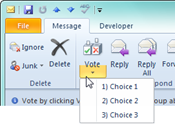
As promised, it’s the “who/whom” quiz! Let’s see if you’re up for it after the weekend. From each pair below, select the correct answer. Use the voting buttons above (in Outlook) to select the option that matches your answers. I’ll send a tally of how many people picked each set of answers—and explanations of the answers—some time Monday afternoon.

Hint: Don’t forget the “he/him” rule from August 2 (https://episystechpubs.wordpress.com/2012/08/02/editors-corner-who-whom-the-who/).

1. Choose the correct sentence.

A) You’ll be shocked when I tell you who called me last night.

B) You’ll be shocked when I tell you whom called me last night.

2. Choose the correct sentence.

A) Who should I ask to the dance?

B) Whom should I ask to the dance?

3. Choose the correct sentence.

A) The doctor who you recommended is not available for three months.

B) The doctor whom you recommended is not available for three months.

4. Choose the correct sentence.

A) Cedric hasn’t decided whom should be appointed yet.

B) Cedric hasn’t decided who should be appointed yet.

These questions are brought to you by the GrammarBook.com website.

Posted by: Jack Henry | August 3, 2012

Editor’s Corner: Let them eat cake!

Happy Friday! No time to spare today, so I’ll send you off into the weekend with something easy: a cake. Next week we’ll have a “who/whom” quiz so you can practice everything you learned yesterday.

Enjoy the sunshine!

Kara

When phoning in a cake order goes very, very wrong:

Photo from DailyWritingTips.com.

For the complete article see: http://www.dailywritingtips.com/cake-mistakes-and-kooky-cookies/

Posted by: Jack Henry | August 2, 2012

Editor’s Corner: Who, Whom, & The Who

Okay, so I don’t have any lyrics from the band today, but for those of you who clamored for information on who and whom, I have part of an article from the Grammar Girl website (www.quickanddirtytips.com), followed by an excerpt from Grammar Girl’s (Mignon Fogarty’s) new book: 101 Misused Words You’ll Never Confuse Again. I’ve also added a few examples from another resource.

From the website (emphasis mine):

So here we go. The words "who" and "whom" are both pronouns. I’ll have a quick and dirty trick for you later, but first I want you to actually understand the right way to use these words.

First, to know whether to use "who" or "whom," we need to talk about the difference between subjects and objects because you use "who" when you are referring to the subject of a clause and "whom" when you are referring to the object of a clause.

I know: subject and object sound pretty abstract, but it’s easy. If we think about people, the subject of the sentence is the person doing something, and the object of the sentence is having something done to them. If I step on Squiggly, then I am the subject and Squiggly is the object…

And continued from the book, Grammar Girl’s 101 Misused Words You’ll Never Confuse Again, by Mignon Fogarty:

If you choke when confronted with the terrifying choice between who and whom, I have a cure: the him-lick maneuver. Ask if you can hypothetically answer the question with the word him. If you can, the right choice is whom. Notice that him and whom both end with the letter m.

For Whom the Bell Tolls (It tolls for him.)

If you can’t answer with him (for example, if he is the word that fits), whom is the wrong answer—you must use who.

Who is your daddy? (He is your daddy.)

The trick works because whom refers to objects and him is any object pronoun, so him makes a good test case.

Here are some extra examples, from grammarbook.com. Try the “he/who, him/whom rule” on the first sentence of each set:

· Who/Whom wrote the letter?
He wrote the letter. Therefore, who is correct.

· For who/whom should I vote?
Should I vote for him? Therefore, whom is correct.

· We all know who/whom pulled that prank.
This sentence contains two clauses: We all know and who/whom pulled that prank. We are interested in the second clause because it contains the who/whom. He pulled that prank. Therefore, who is correct. (Are you starting to sound like a hooting owl yet?)

· We want to know on who/whom the prank was pulled.
This sentence contains two clauses: We want to know and the prank was pulled on who/whom. Again, we are interested in the second clause because it contains the who/whom. The prank was pulled on him. Therefore, whom is correct.

And if you are still befuddled, here is something to make you smile:

Graphic from: http://www.onehorseshy.com/kids/who-vs-whom-owl/

« Newer Posts - Older Posts »

Categories