Posted by: Jack Henry | September 20, 2012

Editor’s Corner: Quiz Day

It’s quiz day!

The way this works:

· You choose the correct sentence from each group below

· Jot down your answers

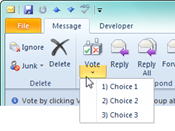
· Look for the voting buttons at the top of this e-mail

· Select the set of answers that you think is correct

· Wait until noon (or later, depending where you are) and all will be revealed!

Choose the correct sentence from each group:

A) You know better than to medal in other people’s business.

B) You know better than to metal in other people’s business.

C) You know better than to mettle in other people’s business.

D) You know better than to meddle in other people’s business.

A) Having life insurance gives us piece of mind.

B) Having life insurance gives us peace of mind.

A) Before hanging the wallpaper, check to see if the walls are plumb.

B) Before hanging the wallpaper, check to see if the walls are plum.

A) Would you like to have a sneak peak at the restaurant before it opens?

B) Would you like to have a sneak peek at the restaurant before it opens?

C) Would you like to have a sneak pique at the restaurant before it opens?

NOTICE: This electronic mail message and any files transmitted with it are intended
exclusively for the individual or entity to which it is addressed. The message,
together with any attachment, may contain confidential and/or privileged information.
Any unauthorized review, use, printing, saving, copying, disclosure or distribution
is strictly prohibited. If you have received this message in error, please
immediately advise the sender by reply email and delete all copies.

Posted by: Jack Henry | September 19, 2012

Editor’s Corner: Talk Like a Pirate Day

The pirate speaks,"Good mornin’ everyone! Today be Talk Like a Pirate Day, so I be writin’ t’ Editor’s Corner in t’ English-to-Pirate translator. Instead o’ writin’ about Latin terms, words with French roots, or tryin’ t’ get you t’ use t’ correct punctuation, I encourage you t’ pick up a few words from t’ Pirate Dictionary and have some fun! Enjoy your day, you scurvy dogs!"

Yer Cap’n,

Mary Flint

Assorted terms from the Pirate Glossary (site below):

· Arr! – An exclamation.

· Avast! – A command meaning stop or desist.

· blow the man down – To kill someone.

· dance the hempen jig – To hang.

· grog blossom – A redness on the nose or face of persons who drink ardent spirits to excess.

· hang the jib – To pout or frown.

· hempen halter – The hangman’s noose.

· Scupper that! – An expression of anger or derision meaning "Throw that overboard!"

· Show a leg! – A phrase used to wake up a sleeping pirate.

· Squiffy – Somewhat intoxicated; tipsy.

· swing the lead – The lead was a weight at the bottom of a line that gave sailors a way to measure depth when near land. To Swing the Lead was considered a simple job, and thus came to represent one who is avoiding work or taking the easy work over the hard. In today’s terms, one who swings the lead is a slacker.

· take a caulk – To take a nap. On the deck of a ship, between planks, was a thick caulk of black tar and rope to keep water from between decks. This term came about either because sailors who slept on deck ended up with black lines across their backs or simply because sailors laying down on deck were as horizontal as the caulk of the deck itself.

Sites used:

· Pirate name generator (http://gangstaname.com/names/pirate/generate)

· English-to-Pirate Translator (http://talklikeapirate.com/translator.html)

· Pirate Glossary (http://www.pirateglossary.com/A_Pirates_Glossary_of_Terms.html)

NOTICE: This electronic mail message and any files transmitted with it are intended
exclusively for the individual or entity to which it is addressed. The message,
together with any attachment, may contain confidential and/or privileged information.
Any unauthorized review, use, printing, saving, copying, disclosure or distribution
is strictly prohibited. If you have received this message in error, please
immediately advise the sender by reply email and delete all copies.

Posted by: Jack Henry | September 18, 2012

Editor’s Corner: Far over the Misty Mountains cold…

I was reading about the new Hobbit movie this morning, and this article on the spelling of dwarfs (versus dwarves) landed serendipitously in my mailbox. Fascinating!

From The Grammarist:

Dwarfs is the standard plural of the noun dwarf. This has been so for centuries. Dwarves is a variant popularized (though not invented) by English author J.R.R. Tolkien in his fantasy fiction works, including The Hobbit and The Lord of the Rings. The Tolkien spelling is appropriate when referring to little people in fantasy worlds. Dwarfs is better everywhere else.

Dwarf also works as a verb meaning to cause to appear small in size. In this sense, dwarf is inflected dwarfs, not dwarves,in the singular present tense.

There is controversy over whether dwarf is ever an appropriate term for real-life people, but we won’t go into the nomenclature issues here.

For examples, see http://grammarist.com/usage/dwarfs-dwarves/.

NOTICE: This electronic mail message and any files transmitted with it are intended
exclusively for the individual or entity to which it is addressed. The message,
together with any attachment, may contain confidential and/or privileged information.
Any unauthorized review, use, printing, saving, copying, disclosure or distribution
is strictly prohibited. If you have received this message in error, please
immediately advise the sender by reply email and delete all copies.

Posted by: Jack Henry | September 17, 2012

Editor’s Corner: What’s a Double Negative?

Today’s brief article on double negatives is by Mignon Fogarty, otherwise known as Grammar Girl (www.quickanddirtytips.com).

"Can’t hardly" is an example of a double negative—something writing experts say you should avoid—and it also doesn’t make much sense. Often double negatives mean the opposite of what you are trying to say.

Occasionally, double negatives are useful when you want to place emphasis on something bad. I recently read a sentence in the New Scientist that referred to less unhealthy cigarettes. "Less unhealthy" is a double negative—"healthier" would be the positive descriptor—but "less unhealthy" keeps the emphasis on cigarettes’ dangers.

Other examples of double negatives (and poor word choices) include:

· could care less

· ain’t got no

· don’t need no

· don’t have nothing

· Can’t get no…satisfaction! (KC- Sorry Rolling Stones and DEVO.)

Happy Monday!

NOTICE: This electronic mail message and any files transmitted with it are intended
exclusively for the individual or entity to which it is addressed. The message,
together with any attachment, may contain confidential and/or privileged information.
Any unauthorized review, use, printing, saving, copying, disclosure or distribution
is strictly prohibited. If you have received this message in error, please
immediately advise the sender by reply email and delete all copies.

Posted by: Jack Henry | September 13, 2012

Editor’s Corner: National Punctuation Day Contest

I don’t have a quiz for you today; instead I have a contest with actual prizes. (Thank you for bringing this to my attention, Ms. Gredvig!) This is an annual contest for National Punctuation Day, and here are the basic rules:

What: The ninth annual National Punctuation Day® is the September 24 holiday that reminds America that a semicolon is not a surgical procedure.

This year, the challenge revolves around the topic of the 2012 presidential election.

Challenge: Vote for your favorite Presidential Punctuation Mark in one, highly punctuated paragraph!

Rules:

· Write one paragraph with a maximum of three sentences

· Purpose of paragraph is to explain which punctuation mark should be “presidential,” and why

· Paragraph must include all of the following 13 punctuation marks:

o apostrophe o hyphen
o brackets o parentheses
o colon o period
o comma o question mark
o dash o quotation mark
o ellipsis o semicolon
o exclamation point

· You may use a punctuation mark more than once, and there is no word limit

· Multiple entries are permitted

In short, persuade us that your favorite punctuation mark should be the official punctuation mark of the President of the United States.

Contest entries must be received by September 30 to be considered for prizes. The winner(s) will receive a box of punctuation goodies, including a National Punctuation Day® T-shirt.

Send entries, including name, address and phone number, to National Punctuation Day® headquarters at Jeff.

If you want to visit the official site and get more information on the different punctuation marks you can find it here: http://www.nationalpunctuationday.com/

Posted by: Jack Henry | September 12, 2012

Editor’s Corner: Let’s get together for crumpets and tea!

Here are the remaining 15 terms for “meeting,” from DailyWritingTips.com and a few extra ones for good measure. You can guess which ones are from them and which are from me. 🙂

The original list is here: http://www.dailywritingtips.com/30-synonyms-for-meeting/.

Flash Mob: A group of people that assemble suddenly in one place, do an extremely well-choreographed dance or make fools of themselves in the name of love (if you are living life in a movie), and then disperse. Flash mobs are arranged via smartphones, PC, or some other type of gizmo.

Gathering: a meeting (informal usage)

Get-together: an informal meeting

Huddle: a meeting (informal usage)

Meetup: a group of people with a common interest, who meet through social networking websites (in particular, Meetup.com).

Panel: a meeting at which participants discuss a topic or issue in front of an audience

Palaver: a meeting, especially one between disparate parties

Parley: a meeting to resolve conflict or negotiate with an enemy

Powwow: a meeting or a social event, or a meeting to celebrate Native American culture

Rally: a mass meeting to inspire enthusiasm and/or action

Rendezvous:a meeting at a planned place and time, whether it be a rowboat meeting up with a canoe, or a couple meeting up for canoodling (from the phrase rendez vous “present yourselves”)

Round-robin: a small meeting to discuss or decide on a topic or issue

Roundtable: see round-robin

Seminar: a meeting for disseminating and discussing information

Session: a meeting or series of meetings, or a portion of an extended meeting or one of various simultaneous meetings as part of a larger event

Summit: a meeting of high-level leaders

Symposium: a formal meeting at which several specialists deliver short addresses on a topic or on related topics

Synod: a meeting of clergy

Tryst: a meeting of lovers at a specific time and space (see rendezvous)

Workshop: an educational meeting or program

Okay, for the first part you’ll have to dig up a Paul Simon CD. But as far as having a meeting goes, DailyWritingTips.com is serving up a ton of terms to describe different types of gatherings. Today I’m delivering your first serving of fifteen.

Humans, being social animals, have many reasons for meeting — and many words to describe doing so in various degrees of formality and format. Here are thirty ways to label a meeting, depending on the particulars.

1. Assembly: a meeting for entertainment, legislation, or worship

2. Caucus: a meeting, often in a political context, to select candidates or policy

3. Clinic: a problem-solving meeting or one at which participants acquire knowledge or skills [KC – Note: A methadone clinic is not where you learn to use methadone.]

4. Colloquium: a meeting at which experts, usually in an academic setting, give presentations on one or more topics and engage in a question-and-answer period

5. Colloquy: a serious, important meeting (also, a synonym for conversation and dialogue)

6. Conclave: a private or secret meeting, especially that of Roman Catholic cardinals convened to select a new pope, or any gathering of an organization

7. Confab: a chat, discussion, or meeting (informal usage) [KC – From confabulation: conversation, chat.]

8. Conference: a meeting for discussing issues or topics of interest to all participants, usually including keynote speeches and a wide variety of sessions on specific subjects

9. Congress: a meeting or session, especially of delegates to discuss and act on an issue or topic

10. Convention: a meeting to bring together representatives of a trade, profession, or interest group, or to assemble representatives of a political party to select candidates and policy

11. Convocation: a meeting of attendees called together, of a college or university’s members, or of clergy (and perhaps laypeople)

12. Council: a meeting to discuss or advise on one or more issues

13. Demonstration: an informal mass meeting, usually held outdoors on public property, to protest about or bring attention to a topic or issue [KC – Or, at the local county fair, a man making vegetable juice and trying to sell you THREE-THREE-THREE BLENDERS IN ONE!]

14. Forum: a meeting that involves a discussion among experts or between them and audience members

15. Gathering: a meeting (informal usage)

Kara Church

Senior Technical Editor
S Y M I T A R

8985 Balboa Ave.

San Diego, CA 92123

Phone: 619-542-6773 | Extension: 766773

NOTICE: This electronic mail message and any files transmitted with it are intended
exclusively for the individual or entity to which it is addressed. The message,
together with any attachment, may contain confidential and/or privileged information.
Any unauthorized review, use, printing, saving, copying, disclosure or distribution
is strictly prohibited. If you have received this message in error, please
immediately advise the sender by reply email and delete all copies.

Posted by: Jack Henry | September 6, 2012

Editor’s Corner: Goldfinger (Quiz Answers)

Way to go! Admittedly, the final one was a bit tricky. As you’ll see by the explanation below, answers 4 and 5 are very close in that they both concern weights of materials made into jewelry. Everyone gets a 24-karat gold star for effort!

1 – ABAB (1 response)

2 – BBBB (1 response)

3 – BABC (2 responses)

4 – BBBA (47 responses)

5 – BBBC (66 responses)

Total Responses: 117

Choose the correct sentence from each group below:

A) The receptionist excepted my resume and said that someone would contact me soon.
B) The receptionist accepted my resume and said that someone would contact me soon.

Explanation: Use the word accepted to mean received or agreed. Excepted means excluded.

A) Frederika hit the breaks when she saw the deer crossing the road.

B) Frederika hit the brakes when she saw the deer crossing the road.

Explanation: Use the word brakes to mean devices used to slow down or stop movement. Breaks means separates into pieces.

A) Let’s canvas the neighborhood to see if everyone has the same opinion.

B) Let’s canvass the neighborhood to see if everyone has the same opinion.

Explanation: Use the word canvass to mean take a poll. Canvas is a type of cloth.

A) Tina can’t wear jewelry unless it’s made of 24-carat gold.

B) Tina can’t wear jewelry unless it’s made of 24-carrot gold.

C) Tina can’t wear jewelry unless it’s made of 24-karat gold.

D) Tina can’t wear jewelry unless it’s made of 24-caret gold.

Explanation: Use the word karat to mean a unit for measuring the fineness of gold. A carrot is an edible root, caret is a proofreading mark to show insertion, and carat is a unit of weight in gemstones.

*Material created by Jane Straus and Co. Copyright by Jane Straus.

NOTICE: This electronic mail message and any files transmitted with it are intended
exclusively for the individual or entity to which it is addressed. The message,
together with any attachment, may contain confidential and/or privileged information.
Any unauthorized review, use, printing, saving, copying, disclosure or distribution
is strictly prohibited. If you have received this message in error, please
immediately advise the sender by reply email and delete all copies.

Posted by: Jack Henry | September 6, 2012

Editor’s Corner: Quiz on Homonyms and Frequently Confused Words

Welcome to Thursday! Today’s quiz is on homonyms and frequently confused words.

The way this works:

· You choose the correct sentence from each pair below

· Jot down your answers

· Look for the voting buttons at the top of this e-mail

· Select the set of answers that you think is correct

· Wait until noon (or later, depending where you are) and all will be revealed!

Choose the correct sentence from each group below:*

1 A) The receptionist excepted my resume and said that someone would contact me soon.

B) The receptionist accepted my resume and said that someone would contact me soon.

2 A) Frederika hit the breaks when she saw the deer crossing the road.

B) Frederika hit the brakes when she saw the deer crossing the road.

3 A) Let’s canvas the neighborhood to see if everyone has the same opinion.

B) Let’s canvass the neighborhood to see if everyone has the same opinion.

4 A) Tina can’t wear jewelry unless it’s made of 24-carat gold.

B) Tina can’t wear jewelry unless it’s made of 24-carrot gold.

C) Tina can’t wear jewelry unless it’s made of 24-karat gold.

D) Tina can’t wear jewelry unless it’s made of 24-caret gold.

*Material created by Jane Straus and Co. Copyright by Jane Straus.

NOTICE: This electronic mail message and any files transmitted with it are intended
exclusively for the individual or entity to which it is addressed. The message,
together with any attachment, may contain confidential and/or privileged information.
Any unauthorized review, use, printing, saving, copying, disclosure or distribution
is strictly prohibited. If you have received this message in error, please
immediately advise the sender by reply email and delete all copies.

Posted by: Jack Henry | September 5, 2012

Editor’s Corner: Pigeon Fanciers Unite!

I received an e-mail yesterday about the terms home in vs. hone in, and I was shocked to learn that I’ve been using the wrong phrase. Here is some information from The Grammarist (http://grammarist.com/usage/home-in-hone-in/):

Home in means to direct onto a target. The phrasal verb home in derives from the 19th-century use of homing pigeons, but today the term usually refers to missiles that home in on their targets. It’s also commonly used metaphorically.

Hone in derives from a mishearing of home in. The verb hone means to sharpen or to perfect, so hone in makes no sense. [KC – And here I thought it meant sharpening your focus on something. I think my brother’s fascination with knives and swords rubbed off on me.]

Because the erroneous hone in is so common, it has appeared in dictionaries and is accepted as a variant of home in. Still, most edited publications prefer the original form.

NOTICE: This electronic mail message and any files transmitted with it are intended
exclusively for the individual or entity to which it is addressed. The message,
together with any attachment, may contain confidential and/or privileged information.
Any unauthorized review, use, printing, saving, copying, disclosure or distribution
is strictly prohibited. If you have received this message in error, please
immediately advise the sender by reply email and delete all copies.

« Newer Posts - Older Posts »

Categories