Posted by: Jack Henry | March 26, 2024

Editor’s Corner: Is it Ironic or Sarcastic?

Good morning, inquisitors. A while back, I was asked to define and explain the difference between the words irony and sarcasm, so I’m going to give it a whirl. Wish me luck.

First, I’ll tackle the word that is more often misused and misunderstood: irony. Irony occurs when the opposite of what you expect happens. Here are some examples of everyday ironic situations:

  • Right after you wash your car, it starts to rain.
  • The firehouse burns down.
  • You reluctantly go on a blind date, and while you’re waiting, you start talking to someone and find you really like them. And then you find out you just met your blind date. (Isn’t that sweet?)

To clarify a little bit more, here are a couple of good movie-related examples of irony in action:

  • In the movie Nemo, there is a clip during which Nemo’s dad, Marlin, is arguing with Mr. Ray about who is better able to supervise Nemo so he doesn’t get into trouble. The irony is that while they are arguing, Nemo swims off and gets into trouble.
  • In the movie The Sixth Sense a child therapist is helping a little boy who claims he can see dead people. SPOILER ALERT: Don’t read the next sentence if you haven’t seen the movie but plan to. The plot twists when the therapist (and the movie audience) find out that he (the therapist) is dead.

Irony can be verbal as well as situational. According to Merriam-Webster, irony is “the use of words to express something other than and especially the opposite of the literal meaning.” For example, on a cold, dreary wintery day, it would be ironic to say, “What a beautiful, sunny day!” It’s ironic because it’s the opposite of the truth. But it’s not sarcastic because it’s not biting or mocking (more about that in a minute).

It’s important to remember that irony is not the same as coincidence. If you and I share the same birthday, it is not ironic, it’s a coincidence. And even though it might be very unusual, if we bump into each other three times in the same day, it would not be ironic, it would be series of coincidences.

Let’s move on to sarcasm, which Merriam-Webster defines this way, “a sharp and often satirical or ironic utterance designed to cut or give pain.” For example, when someone does something wrong, it would be sarcastic to say, “Good job, Ace. You really nailed it!”

It might help to think of the relationship between irony and sarcasm this way: sarcasm is a form of irony that is directed at a person with the intent to criticize in a “humorous” way.

I hope the explanation and examples help. Thanks for the question David P., and I mean that sincerely, not sarcastically.

Donna Bradley Burcher |Technical Editor, Advisory | jack henry

Pronouns she/her/hers

9660 Granite Ridge Drive, San Diego CA 92123

Symitar Documentation Services

<![if !vml]><![endif]>

About Editor’s Corner

Editor’s Corner keeps your communication skills sharp by providing information on grammar, punctuation, JHA style, and all things English. As editors, we spend our days reading, researching, and revising other people’s writing. We love to spend a few extra minutes to share what we learn with you and keep it fun while we’re doing it.

Did someone forward this email to you? Click here to subscribe.

Don’t want to get Editor’s Corner anymore? Click here to unsubscribe.

Do you have a question or an idea for Editor’s Corner? Send your suggestions or feedback to Kara and <a href="mailto:DBurcher.

NOTICE: This electronic mail message and any files transmitted with it are intended
exclusively for the individual or entity to which it is addressed. The message,
together with any attachment, may contain confidential and/or privileged information.
Any unauthorized review, use, printing, saving, copying, disclosure or distribution
is strictly prohibited. If you have received this message in error, please
immediately advise the sender by reply email and delete all copies.

Posted by: Jack Henry | March 19, 2024

Editor’s Corner: New Words Added to the Dictionary

Good morning. I’m back from my brief hiatus and I’m raring to go.

Back in January, I provided Dictionary.com’s word of the year (which was hallucinate) along with a short list of the runner-up words. Today, I have another gift of words for you from Dictionary.com. They recently published a list of over 300 new words that they’ve added to their dictionary. As a reminder, according to Dictionary.com, in order for a word to be added, it must meet the following criteria:

<![if !supportLists]>· <![endif]>It’s a word that’s used by a lot of people.

<![if !supportLists]>· <![endif]>It’s used by those people in largely the same way.

<![if !supportLists]>· <![endif]>It’s likely to stick around.

<![if !supportLists]>· <![endif]>It’s useful for a general audience.

Since they’ve added over 300 new words, I will share only one word from each category. If you want to review the entire list, you can find it here.

New Word Category Definition
skiplagging (noun) There’s a word for that The practice of purchasing an air ticket for a flight with a layover at one’s true destination, getting off at the layover point, and skipping the last leg of the flight: a workaround to avoid paying a higher fare for a direct flight to one’s destination
stellar nursery (noun) Science A molecular cloud in which new stars are being formed
eco-chic (noun) Fashion Of or relating to a style, design, or product that is attractive and fashionable as well as eco-friendly and sustainable
Bechdel test (noun) Entertainment A test of gender stereotyping and inequality in fiction, having a number of variations and used especially with movies, based on whether the work includes at least two fairly important female characters who talk to each other about something besides a man
beer league (noun) Sports A community sports league, such as for hockey, softball, or soccer, whose members are amateurs of diverse ages and walks of life and play purely for the fun and socializing involved: games are usually accompanied or followed by alcohol and food
squish (noun) Family and relationships An intense feeling of infatuation that is not romantic or sexual in nature; a platonic crush
prebiotic (noun) Health and wellness A substance containing dietary fiber that stimulates the growth or activity of beneficial bacteria in the gastrointestinal tract.
soju (noun) Food and drink A colorless, clear, distilled alcoholic beverage from Korea, often made from a mixture of rice and other starches such as sweet potatoes, wheat, barley, tapioca, etc.
greedflation (noun) Economics and finance A rise in prices, rents, or the like, that is not due to market pressure or any other factor organic to the economy but is caused by corporate executives or boards of directors, property owners, etc., solely to increase profits that are already healthy or excessive
superfog (noun) Climate, weather, and environment A combination of fog generated by weather conditions and wildfire smoke from damp, smoldering brush, leaves, trees, and other organic materials that often reduces visibility to less than 10 feet
energy poverty (noun) Social issues A lack of adequate access to safe, affordable sources of electricity or fuel for warmth, light, cooking, etc.
Uluru (noun) Proper names A large, isolated mass of red rock in central Australia, in southwestern Northern Territory: a sacred site for the Anangu people indigenous to the region, and a popular tourist attraction (also called Ayers Rock)
worlding (noun) Even more words The act or process of bringing a people, culture, nation, etc., into a global sphere of influence, especially the sphere thought of as dominated by Western countries

The diligent lexicographers who write and edit dictionaries don’t only add and define new words, they also add new definitions to existing words to reflect common usage, they revise definitions that have become outdated or have changed, they provided pronunciation information and etymologies, and they decide which words to remove. They’re a hard-working group!

I hope you enjoy the rest of your day.

Donna Bradley Burcher |Technical Editor, Advisory | jack henry

Pronouns she/her/hers

9660 Granite Ridge Drive, San Diego CA 92123

Symitar Documentation Services

<![if !vml]><![endif]>

About Editor’s Corner

Editor’s Corner keeps your communication skills sharp by providing information on grammar, punctuation, JHA style, and all things English. As editors, we spend our days reading, researching, and revising other people’s writing. We love to spend a few extra minutes to share what we learn with you and keep it fun while we’re doing it.

Did someone forward this email to you? Click here to subscribe.

Don’t want to get Editor’s Corner anymore? Click here to unsubscribe.

Do you have a question or an idea for Editor’s Corner? Send your suggestions or feedback to Kara and <a href="mailto:DBurcher.

NOTICE: This electronic mail message and any files transmitted with it are intended
exclusively for the individual or entity to which it is addressed. The message,
together with any attachment, may contain confidential and/or privileged information.
Any unauthorized review, use, printing, saving, copying, disclosure or distribution
is strictly prohibited. If you have received this message in error, please
immediately advise the sender by reply email and delete all copies.

Hello again. I have a quick correction to make to the Editor’s Corner I sent this morning. I accidentally switched the old and current meaning of prestigious. The corrected definitions are here:

Word Old Meaning Current Meaning
prestigious Deceitful Honored, esteemed, or having high status

Thank you for notifying me, David and Kari!

Donna Bradley Burcher |Technical Editor, Advisory | jack henry

Pronouns she/her/hers

9660 Granite Ridge Drive, San Diego CA 92123

Symitar Documentation Services

About Editor’s Corner

Editor’s Corner keeps your communication skills sharp by providing information on grammar, punctuation, JHA style, and all things English. As editors, we spend our days reading, researching, and revising other people’s writing. We love to spend a few extra minutes to share what we learn with you and keep it fun while we’re doing it.

Did someone forward this email to you? Click here to subscribe.

Don’t want to get Editor’s Corner anymore? Click here to unsubscribe.

Do you have a question or an idea for Editor’s Corner? Send your suggestions or feedback to Kara and <a href="mailto:DBurcher.

From: Donna Bradley Burcher <DBurcher@jackhenry.com>
Sent: Tuesday, February 20, 2024 6:52 AM
To: Donna Bradley Burcher <DBurcher@jackhenry.com>
Subject: Editor’s Corner: More Words that Have Changed in Meaning

Good morning to you all. Recently, I shared with you the word of the year from Dictionary.com. The word was hallucinate with a new meaning related to artificial intelligence. The new definition is “to produce false information contrary to a user’s wishes, and to present it as if it’s true and factual.” I don’t know about you, but I’ve seen and heard this word, with this meaning, quite a few times since I learned about it.

I received a few responses to that post, and one from Jason M. initiated an email conversation about how the meaning of words can change over time. Both Kara and I have written about this phenomenon in the past and included words like girl, which used to refer to any child, not just a female, and the word bully, which used to mean sweetheart or darling and was used to refer to males and females.

And today I want to share some words we didn’t cover previously. These words come from two places: IDEAS.TED.COM and A.Word.A.Day. The original meanings and the current meanings are provided below:

Word Old Meaning Current Meaning
clue A ball of yarn (also spelled clew) Something that guides through an intricate procedure or maze of difficulties
dapper Strong and healthy Stylish in dress
divest To undress; to deprive others of their rights or possessions To deprive or dispossess especially of property, authority, or title
eerie To feel fear Something that inspires fear
egregious Something that is distinguished or eminent Something that is noticeable for being incorrect or bad
fathom To encircle with one’s arms To comprehend
flirt To flick something away or flick it open with a brisk jerky movement To behave amorously without serious intent
prestigious Honored, esteemed, or having high status Deceitful
prude A wise or good woman A person who is excessively or priggishly attentive to propriety or decorum
quell To kill To thoroughly overwhelm and reduce to submission or passivity; to quiet or pacify

I’ve only included the words we never covered before. If you’d like to see our earlier posts that include even more words that have changed in meaning over the years, you can find Kara’s here: Editor’s Corner: Words Whose Meanings Have Changed | Editor’s Corner (episystechpubs.com).

And you can find mine here: Editor’s Corner: Meanings Change | Editor’s Corner (episystechpubs.com).

Kara is currently on leave, and I’ll be on vacation for the next three weeks, so you won’t receive any Editor’s Corner emails from us until mid-March. We’ll miss you. I hope you miss us!

Donna Bradley Burcher |Technical Editor, Advisory | jack henry

Pronouns she/her/hers

9660 Granite Ridge Drive, San Diego CA 92123

Symitar Documentation Services

About Editor’s Corner

Editor’s Corner keeps your communication skills sharp by providing information on grammar, punctuation, JHA style, and all things English. As editors, we spend our days reading, researching, and revising other people’s writing. We love to spend a few extra minutes to share what we learn with you and keep it fun while we’re doing it.

Did someone forward this email to you? Click here to subscribe.

Don’t want to get Editor’s Corner anymore? Click here to unsubscribe.

Do you have a question or an idea for Editor’s Corner? Send your suggestions or feedback to Kara and <a href="mailto:DBurcher.

NOTICE: This electronic mail message and any files transmitted with it are intended
exclusively for the individual or entity to which it is addressed. The message,
together with any attachment, may contain confidential and/or privileged information.
Any unauthorized review, use, printing, saving, copying, disclosure or distribution
is strictly prohibited. If you have received this message in error, please
immediately advise the sender by reply email and delete all copies.

Posted by: Jack Henry | February 20, 2024

Editor’s Corner: More Words that Have Changed in Meaning

Good morning to you all. Recently, I shared with you the word of the year from Dictionary.com. The word was hallucinate with a new meaning related to artificial intelligence. The new definition is “to produce false information contrary to a user’s wishes, and to present it as if it’s true and factual.” I don’t know about you, but I’ve seen and heard this word, with this meaning, quite a few times since I learned about it.

I received a few responses to that post, and one from Jason M. initiated an email conversation about how the meaning of words can change over time. Both Kara and I have written about this phenomenon in the past and included words like girl, which used to refer to any child, not just a female, and the word bully, which used to mean sweetheart or darling and was used to refer to males and females.

And today I want to share some words we didn’t cover previously. These words come from two places: IDEAS.TED.COM and A.Word.A.Day. The original meanings and the current meanings are provided below:

Word Old Meaning Current Meaning
clue A ball of yarn (also spelled clew) Something that guides through an intricate procedure or maze of difficulties
dapper Strong and healthy Stylish in dress
divest To undress; to deprive others of their rights or possessions To deprive or dispossess especially of property, authority, or title
eerie To feel fear Something that inspires fear
egregious Something that is distinguished or eminent Something that is noticeable for being incorrect or bad
fathom To encircle with one’s arms To comprehend
flirt To flick something away or flick it open with a brisk jerky movement To behave amorously without serious intent
prestigious Honored, esteemed, or having high status Deceitful
prude A wise or good woman A person who is excessively or priggishly attentive to propriety or decorum
quell To kill To thoroughly overwhelm and reduce to submission or passivity; to quiet or pacify

I’ve only included the words we never covered before. If you’d like to see our earlier posts that include even more words that have changed in meaning over the years, you can find Kara’s here: Editor’s Corner: Words Whose Meanings Have Changed | Editor’s Corner (episystechpubs.com).

And you can find mine here: Editor’s Corner: Meanings Change | Editor’s Corner (episystechpubs.com).

Kara is currently on leave, and I’ll be on vacation for the next three weeks, so you won’t receive any Editor’s Corner emails from us until mid-March. We’ll miss you. I hope you miss us!

Donna Bradley Burcher |Technical Editor, Advisory | jack henry

Pronouns she/her/hers

9660 Granite Ridge Drive, San Diego CA 92123

Symitar Documentation Services

<![if !vml]><![endif]>

About Editor’s Corner

Editor’s Corner keeps your communication skills sharp by providing information on grammar, punctuation, JHA style, and all things English. As editors, we spend our days reading, researching, and revising other people’s writing. We love to spend a few extra minutes to share what we learn with you and keep it fun while we’re doing it.

Did someone forward this email to you? Click here to subscribe.

Don’t want to get Editor’s Corner anymore? Click here to unsubscribe.

Do you have a question or an idea for Editor’s Corner? Send your suggestions or feedback to Kara and <a href="mailto:DBurcher.

NOTICE: This electronic mail message and any files transmitted with it are intended
exclusively for the individual or entity to which it is addressed. The message,
together with any attachment, may contain confidential and/or privileged information.
Any unauthorized review, use, printing, saving, copying, disclosure or distribution
is strictly prohibited. If you have received this message in error, please
immediately advise the sender by reply email and delete all copies.

Posted by: Jack Henry | February 13, 2024

Editor’s Corner: Anyone for Some Tmesis?

I subscribe to Dictionary.com’s Word of the Day email; so, each morning, as I start my day by reading emails, I get the gift of a word. Sometimes I know the word well, sometimes I’ve heard the word but am unsure of the meaning, and sometimes, as with the one I’m about to share, I get exposed to a new word. And that’s the best gift.

Recently, they sent out the word tmesis (pronounced tuh-mee-sis), which is “the introduction of one or more words between the parts of a compound word. I do this all the time, but never knew there was a name for it. Let me share their example: the word superhero can be separated, and the syllable duper can be inserted to form super-duper-hero.

Here are some examples you might recognize:

  • Abso-blooming-lutely (from George Shaw’s Pygmalion)
  • La-dee-freakin-da (from Saturday Night Live – thank you, Chris Farley)
  • Some-other-where (from Shakespeare’s Romeo and Juliet)
  • Well-diddly-elcome (from The Simpsons – thank you, Ned Flanders)

And here are some examples you’ve likely heard or used:

  • Abso-friggin-lutely
  • Any-old-where
  • A-whole-nother
  • Fan-freaking-tastic
  • Un-freaking-believable
  • What-the heck-ever

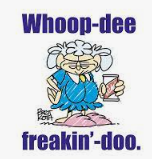
As you might have noticed, the words “freakin” and “friggin” (and the unmentionable word those words stand for) are often used to create tmesis. And then of course, and this is the fun part, we make up our own tmesis words and phrases all the time. For example, you might be thinking something like this right now:

In case you’re wondering, tmesis is not a new word. It was first recorded in the late 1500s. It comes from the Greek word tmêsis, which means “a cutting.” And I hope you enjoy playing with it as much as I do.

Donna Bradley Burcher |Technical Editor, Advisory | jack henry

Pronouns she/her/hers

9660 Granite Ridge Drive, San Diego CA 92123

Symitar Documentation Services

About Editor’s Corner

Editor’s Corner keeps your communication skills sharp by providing information on grammar, punctuation, JHA style, and all things English. As editors, we spend our days reading, researching, and revising other people’s writing. We love to spend a few extra minutes to share what we learn with you and keep it fun while we’re doing it.

Did someone forward this email to you? Click here to subscribe.

Don’t want to get Editor’s Corner anymore? Click here to unsubscribe.

Do you have a question or an idea for Editor’s Corner? Send your suggestions or feedback to Kara and <a href="mailto:DBurcher.

NOTICE: This electronic mail message and any files transmitted with it are intended
exclusively for the individual or entity to which it is addressed. The message,
together with any attachment, may contain confidential and/or privileged information.
Any unauthorized review, use, printing, saving, copying, disclosure or distribution
is strictly prohibited. If you have received this message in error, please
immediately advise the sender by reply email and delete all copies.

Posted by: Jack Henry | February 6, 2024

Editor’s Corner: Where is a Location

Hello, language lovers. Today I’m sharing a pet peeve that one of you sent in. And I admit that I’ve noticed an uptick in the number of times I see this particular issue in the writing that comes to the editing queue. It has to do with using the word where when you are not referring to a location. Although many people use where this way, especially in speech, it is not considered correct in professional writing.

I’ll start with a couple of examples:

Incorrect: The system does not assess fees where the user enters an incorrect amount.

Correct: The system does not assess fees when the user enters an incorrect amount.

Incorrect: The use of a spreadsheet created a situation where automation was not possible.

Correct: The use of a spreadsheet created a situation in which automation was not possible.

If you’re still a little unsure, just remember that where should indicate a location. It is not a synonym for when or which. Here is an example of where used correctly:

Correct: The source indicates where the data in the field comes from.

Let me be clear: this is a matter of professional versus casual language. Most of us are more careful when writing for work than we are when we speak or text. In casual conversation, you’ll hear many people using where as a stand in for when, or in which/for which. I have found that it’s best not to correct them, especially the ones with a temper and a quick “bunch of fives.”

Donna Bradley Burcher |Technical Editor, Advisory | jack henry

Pronouns she/her/hers

9660 Granite Ridge Drive, San Diego CA 92123

Symitar Documentation Services

About Editor’s Corner

Editor’s Corner keeps your communication skills sharp by providing information on grammar, punctuation, JHA style, and all things English. As editors, we spend our days reading, researching, and revising other people’s writing. We love to spend a few extra minutes to share what we learn with you and keep it fun while we’re doing it.

Did someone forward this email to you? Click here to subscribe.

Don’t want to get Editor’s Corner anymore? Click here to unsubscribe.

Do you have a question or an idea for Editor’s Corner? Send your suggestions or feedback to Kara and <a href="mailto:DBurcher.

NOTICE: This electronic mail message and any files transmitted with it are intended
exclusively for the individual or entity to which it is addressed. The message,
together with any attachment, may contain confidential and/or privileged information.
Any unauthorized review, use, printing, saving, copying, disclosure or distribution
is strictly prohibited. If you have received this message in error, please
immediately advise the sender by reply email and delete all copies.

Posted by: Jack Henry | January 30, 2024

Editor’s Corner: The Etymology of the Word Jumbo

I was surprised the other day to learn the etymology of the word jumbo, which as we know means “a very large specimen of its kind” (Merriam-Webster). I enjoy finding out how words come into our language, where they come from, and how long ago they showed up. The history of words intrigues me. But I had never thought about the word jumbo. And I had no idea that jumbo is an eponym.

An eponym is a person or thing that a word is named for. For example, according to Grammarly, “…Achilles [from Greek mythology] is the eponym of the Achilles tendon. Queen Victoria is the eponym of Lake Victoria and quite a few other things. Amerigo Vespucci is the eponym of America.”

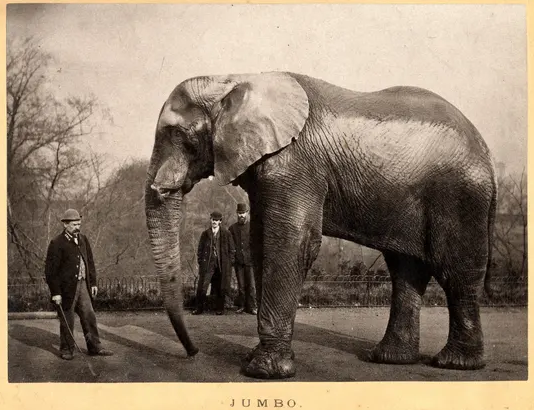
It turns out that Jumbo, a famous 19th century elephant, is the eponym for the word jumbo. I overheard this fact during a TV show my spouse was watching, and I learned that Jumbo was purchased from the London Zoo by P. T. Barnum, and he became an integral part of the Barnum and Bailey circus in the second half of the 1800s.

The Online Etymology Dictionary confirms the information I overheard. The word jumbo appears to have received its definition in 1882 as a reference to Jumbo the famous elephant. Speaking of Jumbo, P. T. Barnum said, “I tell you conscientiously that no idea of the immensity of the animal can be formed. It is a fact that he is simply beyond comparison. The largest elephants I ever saw are mere dwarfs by the side of Jumbo."

I’ll never use the word again without thinking of Jumbo the elephant. And honestly, I’ll never think of the elephant without wishing he could have lived out his life in Abyssinia (now known as Ethiopia) where he was captured as a calf, rather than in a zoo or circus.

There are so many stories behind the words we use—some happy, some sad, some surprising, some confusing. Ain’t it grand? And ain’t Jumbo grand?

Donna Bradley Burcher |Technical Editor, Advisory | jack henry™

Pronouns she/her/hers

9660 Granite Ridge Drive, San Diego CA 92123

Symitar Documentation Services

<![if !vml]><![endif]>

About Editor’s Corner

Editor’s Corner keeps your communication skills sharp by providing information on grammar, punctuation, JHA style, and all things English. As editors, we spend our days reading, researching, and revising other people’s writing. We love to spend a few extra minutes to share what we learn with you and keep it fun while we’re doing it.

Did someone forward this email to you? Click here to subscribe.

Don’t want to get Editor’s Corner anymore? Click here to unsubscribe.

Do you have a question or an idea for Editor’s Corner? Send your suggestions or feedback to Kara and <a href="mailto:DBurcher.

NOTICE: This electronic mail message and any files transmitted with it are intended
exclusively for the individual or entity to which it is addressed. The message,
together with any attachment, may contain confidential and/or privileged information.
Any unauthorized review, use, printing, saving, copying, disclosure or distribution
is strictly prohibited. If you have received this message in error, please
immediately advise the sender by reply email and delete all copies.

Posted by: Jack Henry | January 23, 2024

Editor’s Corner: The Abominable Hopefully

From the vault of rules you may not have known about…

I was watching a LinkedIn Learning course recently, and the presenter mentioned that the word hopefully is often referred to as “the most abused word in the English language.” That got my attention. I don’t remember learning about this in any of my English or grammar courses over the years.

It turns out that the current usage of hopefully to mean I hope, as in “Hopefully, you’re as interesting in this subject as I am” started back in the 1930s, but the outrage really started in the 60s when, according to an article for NPR by Geoff Nunberg, it was called an abomination by poet Phyllis McGinley. Likewise, Historian T. Harry Williams called it “the most horrible usage of our times.” And I never even knew about it. Oops.

Want to know what’s wrong with it? Well first, let me share what else Nunberg said, because it made me chuckle (the italicized emphasis is mine):

So why did critics decide to turn this useful little adverb into the era’s biggest bugaboo? Well, you could argue that the very unreasonableness of the objections to "hopefully" helps make the rule an efficient badge of belonging. No one could simply guess the rule. Somebody who came to "hopefully" armed only with a keen ear for English grammar and style would have no way of knowing that anybody had a problem with it. You can only know about it if you’re the sort of person who reads usage guides or who has tea with others who do. It’s not enough just to be literate; you have to have pretensions to being one of the literati.

We all have our language pet peeves. I don’t like it when people use the subject I when they should use the object me. For example, someone who wants to annoy me might say, “You should drive to the party with Dexter and I.” That sentence is grammatically incorrect because if Dexter weren’t along for the ride, they would not say “You should drive to the party with I.” They’d say, “You should drive to the party with me.”

Lots of folks are upset over the misuse of there, their, and they’re. And I’ve also received many emails about how annoying it is that some people don’t know when to use affect vs. effect. But these folks in the 60s went nuclear over hopefully. I hardly think this grammar gaffe should be called an abomination—Bernie Madoff’s Ponzi scheme was an abomination. But maybe you disagree. Let’s look at what the experts say is wrong with the way so many folks use hopefully.

The main argument against it is that it’s not clear who is doing the hoping. Take this example:

Reyna said to Dillon, “Hopefully, you will come to my party.”

What Reyna means is that she is hopeful that Dillon will come to her party. But the experts say that the literal translation of Reyna’s statement is that Dillon will come to her party full of hope. Why? Because you (meaning Dillon) follows the word hopefully, so Dillonmust be doing the hoping. If Dillon comes to the party, he will be filled with hope—for what, we do not know.

The advice from grammarians is that if you want to be precise (and I do, it’s kind of my thing), you should indicate who is doing the hoping. Rather than saying “Hopefully, you will come to my party” you should say “I hope you will come to my party.”

But Nunberg astutely points out that although the prejudice against hopefully is as strong as ever in some circles, we don’t see the same outrage over words like sadly, mercifully, thankfully, or frankly. Well, that’s confusing.

So here’s your takeaway. Now you know the “rule.” You know that if you use the word hopefully when you mean I hope, you may be judged by grammar geeks. You can decide whether to follow this rule, but I would suggest following it in professional writing only because you don’t want to appear to be unaware—like I was for so many years. I wonder how many people silently judged me.

Donna Bradley Burcher |Technical Editor, Advisory | jack henry™

Pronouns she/her/hers

9660 Granite Ridge Drive, San Diego CA 92123

Symitar Documentation Services

About Editor’s Corner

Editor’s Corner keeps your communication skills sharp by providing information on grammar, punctuation, JHA style, and all things English. As editors, we spend our days reading, researching, and revising other people’s writing. We love to spend a few extra minutes to share what we learn with you and keep it fun while we’re doing it.

Did someone forward this email to you? Click here to subscribe.

Don’t want to get Editor’s Corner anymore? Click here to unsubscribe.

Do you have a question or an idea for Editor’s Corner? Send your suggestions or feedback to Kara and <a href="mailto:DBurcher.

NOTICE: This electronic mail message and any files transmitted with it are intended
exclusively for the individual or entity to which it is addressed. The message,
together with any attachment, may contain confidential and/or privileged information.
Any unauthorized review, use, printing, saving, copying, disclosure or distribution
is strictly prohibited. If you have received this message in error, please
immediately advise the sender by reply email and delete all copies.

Posted by: Jack Henry | January 16, 2024

Editor’s Corner: Was vs. Were

Good morning, good grammarians! Today’s topic begins in a straight-forward way—and then it takes a delightful deviation.

Let’s start at the beginning. You know that was and were are past tense conjugations of the verb to be:

  • I was
  • she/he was
  • you/they were
  • we were

Pretty simple so far; but now for the deviance. Along with being a past tense form of to be, the word were is also the past subjunctive form, which means that it expresses an action or state that is not reality. For example, we use were instead of was to allude to something hypothetical, wished for, or conditional.

And this is where many of us don’t follow the rules. But since you all care about the rules, here they are (courtesy of Grammarly.com):

  • Use were if the state of being you are describing is contrary to the current reality. This is true whenever a hypothetical situation is expressed, for example:
    • If I were you, I would clean the counters before the floors.
    • Would you invite me over if I were more polite at the dinner table?

The first sentence can be described as an unreal conditional sentence. These hypotheticals are easy to spot because they are often introduced by an if and are related to another clause containing a would or could.

  • Another type of unreal conditional sentence that uses the same construction demanding the subjunctive were is the impossible or improbable type.
    • If it were possible to solve the puzzle, I would have done it.

Here the speaker implies that the puzzle is unsolvable. Therefore, solving the puzzle is not a likely reality, and the subjunctive were is used instead of the past tense was.

That does not mean that every clause beginning with if requires the use of were rather than was. [dbb – this is a helpful hint.]

    • If I was wrong about Felicity’s love of puppies, I can take this one back to the shelter.

In this sentence, the speaker acknowledges that it is possible they were mistaken about Felicity loving puppies and thus shouldn’t be giving her one. The fact that the speaker is describing what may be reality makes this an indicative sentence, not a subjunctive one. Therefore, we use was instead of were.

· Use were, not was, for wishful thinking.

A sure sign that you should use the subjunctive is when the word wish is used. A wish is the desire or hope for something that cannot or probably will not happen.

o I wish I were the winner of the Nobel Prize in Literature.

o He wishes his grammar were better.

o I wish the stories about me were true, but I am not really the master of the universe.

o She wishes she were at least five inches taller.

Here’s a tip: These phrases are never correct: I wish I was, I wish it was, he wishes he was, she wishes she was.

That’s all for today! I wish I were able to snap my fingers to make all these rules easier to follow. But where’s the fun in that? It’s the challenge that keeps us interested. Happy Tuesday!

Donna Bradley Burcher |Technical Editor, Advisory | jack henry™

Pronouns she/her/hers

9660 Granite Ridge Drive, San Diego CA 92123

Symitar Documentation Services

About Editor’s Corner

Editor’s Corner keeps your communication skills sharp by providing information on grammar, punctuation, JHA style, and all things English. As editors, we spend our days reading, researching, and revising other people’s writing. We love to spend a few extra minutes to share what we learn with you and keep it fun while we’re doing it.

Did someone forward this email to you? Click here to subscribe.

Don’t want to get Editor’s Corner anymore? Click here to unsubscribe.

Do you have a question or an idea for Editor’s Corner? Send your suggestions or feedback to Kara and <a href="mailto:DBurcher.

NOTICE: This electronic mail message and any files transmitted with it are intended
exclusively for the individual or entity to which it is addressed. The message,
together with any attachment, may contain confidential and/or privileged information.
Any unauthorized review, use, printing, saving, copying, disclosure or distribution
is strictly prohibited. If you have received this message in error, please
immediately advise the sender by reply email and delete all copies.

Posted by: Jack Henry | January 9, 2024

Editor’s Corner: Word of the Year

Good morning!

At the beginning of each year, various dictionaries reveal their “word of the year.” They choose a word that has been most often looked up or a word they feel represents something we all experienced during the previous year. When deciding on the word for 2023, Dictionary.com gave themselves this prompt: “Using lexicography and data science, choose a single word that best represents, at this moment, AI’s many profound ramifications for the future of language and life.”

What did they come up with? According to Dictionary.com, the word of the year for 2023 is hallucinate. Here is what they have to say about this winner of a word:

Hallucinate is one of many new terms related to artificial intelligence. AI breakthroughs define so much of 2023, which is why we added lots of new AI entries just this year.

Many of you are looking up the new hallucinate. It means “to produce false information contrary to a user’s wishes, and to present it as if it’s true and factual.” AI chat bots work by picking up the words that are most similar to the text they were trained on. That’s not always the same as facts.

Hallucinate represents 2023 because this is the year that AI became widely used and its problems widely known. AI will change the way we work, learn, create, communicate, and how we think about ourselves. For a dictionary, it doesn’t get much more important than that.

And following is a list of other words that made Dictionary.com’s 2023 Word of the Year short list. They say, “These five terms represent the intersection of language with some of the year’s most significant events and trends”:

  • strike

The word strike had a high-profile role in the news narrative of the year, which included several prominent and lengthy labor strikes by screenwriters, actors, auto workers, healthcare professionals, service workers, and others.

  • rizz

Rizz was the year’s most durable—and, on Dictionary.com, most-searched—slang term. Popularized by streaming star Kai Cenat, it refers to attractiveness, charm, or skill in flirtation that allows one to easily attract romantic partners. It is thought to be taken from the middle part of the word charisma.

  • wokeism

The evolution of woke and related terms like wokeism continues, with wokeism in particular emerging as a lightning rod and signifier of broad political opposition. We saw a massive 2,300% increase in pageviews for wokeism in 2023.

  • indicted

This year’s unprecedented legal activity in the context of U.S. government and politics was reflected in multiple significant search spikes this year, including for the terms indicted (300% increase), arraignment (198% increase), and exculpatory (15% increase).

  • wildfire

This year’s devastating wildfires in Maui, Canada, and in many other parts of the world were some of the latest examples of how climate change is contributing to extreme weather events and a new potency in the terms we use to refer to them.

But there’s more! For the first time ever, dictionary.com also selected a word that represents the cultural vibe of 2023…and the Vibe of the Year word is eras, which is defined this way: “periods of time in a person’s life characterized by something distinctive and noticeable, such as a particular emotional state, relationship, achievement, or interest.”

Example: I’ve lived through three separate eras just this year, but I feel like I’m finally in my lucky girl era.

Now that 2023 is firmly behind us, let’s all look forward to a happy and healthy 2024. Cheers to us!

Donna Bradley Burcher |Technical Editor, Advisory | jack henry™

Pronouns she/her/hers

9660 Granite Ridge Drive, San Diego CA 92123

Symitar Documentation Services

About Editor’s Corner

Editor’s Corner keeps your communication skills sharp by providing information on grammar, punctuation, JHA style, and all things English. As editors, we spend our days reading, researching, and revising other people’s writing. We love to spend a few extra minutes to share what we learn with you and keep it fun while we’re doing it.

Did someone forward this email to you? Click here to subscribe.

Don’t want to get Editor’s Corner anymore? Click here to unsubscribe.

Do you have a question or an idea for Editor’s Corner? Send your suggestions or feedback to Kara and <a href="mailto:DBurcher.

NOTICE: This electronic mail message and any files transmitted with it are intended
exclusively for the individual or entity to which it is addressed. The message,
together with any attachment, may contain confidential and/or privileged information.
Any unauthorized review, use, printing, saving, copying, disclosure or distribution
is strictly prohibited. If you have received this message in error, please
immediately advise the sender by reply email and delete all copies.

« Newer Posts - Older Posts »

Categories