Posted by: Jack Henry | June 27, 2024

Editor’s Corner: Parasocial Relationships

Good morning, fantastic people!

The other day I heard a new term during the AVID B.I.G. meeting: parasocial relationship. I will tell you a little bit about this term, but there is heap of information out there, so feel free to explore!

The term parasocial relationship, according to Wikipedia, is a type of “relationship” that started with television.

A parasocial interaction, an exposure that garners interest in a persona, becomes a parasocial relationship after repeated exposure to the media persona causes the media user to develop illusions of intimacy, friendship, and identification Positive information learned about the media persona results in increased attraction, and the relationship progresses. Parasocial relationships are enhanced due to trust and self-disclosure provided by the media persona.

The more people watch a show and learn about the actors and what they do, where they live, who they like, etc., the more they feel “directly connected to the persona, much as they are connected to their close friends, by observing and interpreting their appearance, gestures, voice, conversation, and conduct. Media personas have a significant amount of influence over media users, positive or negative.”

In the AVID meeting, the discussion was about parasocial relationships online, through social media, and reasons to be careful.

Social media introduces additional opportunities for parasocial relationships to intensify because it provides more opportunities for intimate, reciprocal, and frequent interactions between the user and persona.

As you can imagine, it would be easy to go to a site where you feel like you met someone with common experiences, feelings, problems, and more. These days, this “someone” could be a nice person like you, or they could be a fake, trying to take advantage of you.

Whether it be a celebrity, an influencer, a new friend, or a Nigerian prince, be ready to tell your buddy that you are not going to send them money!

Kara Church | Technical Editor, Advisory | Technical Publications

Pronouns: she/her | Call via Teams | jackhenry.com

Editor’s Corner Archives: https://episystechpubs.com/
Posted by: Jack Henry | June 25, 2024

Editor’s Corner: State Nicknames, List 4

Hello there!

I was thinking of cutting down the list of state nicknames to just the ones where we have employees, but I’m pretty sure I recently saw an internal webpage that had JH staff in almost every state. Here is our penultimate 10, from Explore:

New Mexico

  • Nickname: Land of Enchantment
    New Mexico officially adopted the nickname the Land of Enchantment in 1999. Today, tourists flock to the state for its charming mountain towns, outdoor adventure opportunities, and more. [KC – And for Breaking Bad tourism.]

New York

  • Nickname: Empire State
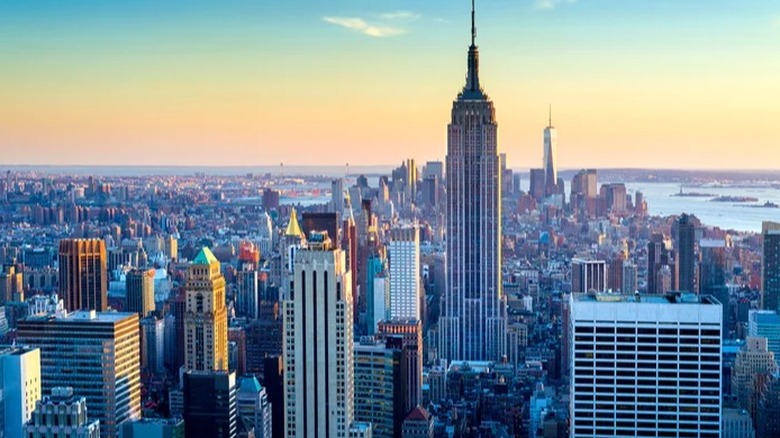
    While there’s no clear reason why New York earned the nickname the Empire State, the term has been credited as originating with George Washington, who once referred to the state of New York as "the Seat of the Empire." This nickname inspired many names of streets and buildings around the state, including the Empire State Building in New York City, one of America’s most-famous man-made marvels.

North Carolina

  • Nickname: Tar Heel State
    North Carolina widely became known as the Tar Heel State because the state was a leading producer of tar and pitch for the naval industry in the 19th century. Calling someone a "tar heel" was a derogatory slang term meaning they were working class. North Carolinians reclaimed the term as a point of pride.

North Dakota

  • Nicknames: Sioux State, Flickertail State, Peace Garden State, Rough Rider State
    North Dakota’s official nickname, the Peace Garden State, refers to the International Peace Garden on North Dakota’s border with Canada. The state also has other nicknames, including the Roughrider State, a reference to Theodore Roosevelt, who famously spent time there throughout his life.

Ohio

  • Nickname: Buckeye State
    The use of the name "Buckeye" to refer to an Ohioan could date back as early as the 18th century. The people and the prolific plant became synonymous, especially after Ohioan William Henry Harrison ran for president. The nut of this tree was so named because its shape, size and color resemble the eye of a buck deer.

Oklahoma

  • Nickname: Sooner State
    In 1889, people rushed to central Oklahoma, where the U.S. government had made millions of acres of land available to settlers on a first-come, first-served basis. On April 22 of that year at noon, a pistol was fired to signal that people could make a mad dash to claim land — but some people had snuck into the area in advance and hid to be able to claim land "sooner" than the official start time.

Oregon

  • Nickname: Beaver State
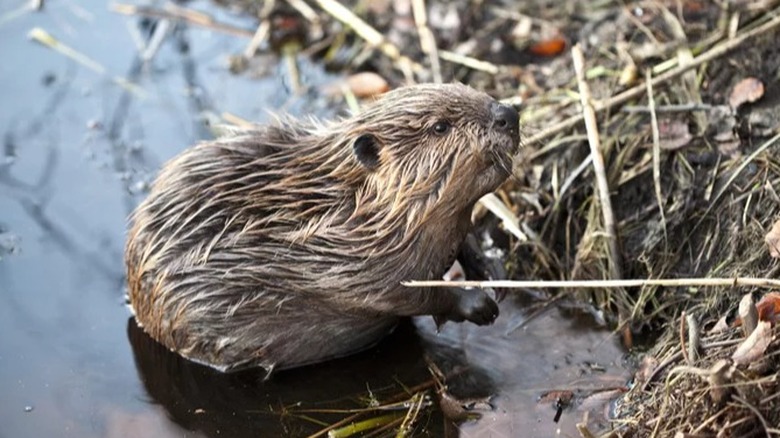
    The beaver is the official state animal as well as the mascot for Oregon State University. Demand for beaver pelts is what drove trappers further west in the United States and ultimately led to Oregon joining the Union.

Pennsylvania

  • Nickname: Keystone State
    A keystone, or capstone, is the stone piece at the apex of an arch or vault. Geographically, Pennsylvania was in the middle of the original "arch" of 13 colonies.

Rhode Island

  • Nickname: The Ocean State, The Plantation State, “Little Rhodie”
    Rhode Island has the only state nickname that’s actually a shortening of its official name. The smallest state’s full name is the State of Rhode Island and Providence Plantations. Providence Plantations is simply the name of the first settlements in Rhode Island. [KC –I don’t know about “Little Rhodie,” but that’s what my alcoholic Romantic Literature teacher called it while swinging around a bottle of booze in his office.]

South Carolina

  • Nickname: Palmetto State
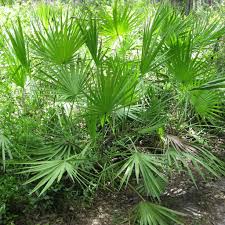
    Home to plenty of charming, historic towns, South Carolina gets its state nickname, the Palmetto State, from its state tree, the sabal palmetto, which appears on its flag and seal. Besides being found in the state, the tree has historical significance. During the Revolutionary War, a palmetto-log fort on Sullivan’s Island withstood a British assault on Charleston Harbor, earning a big victory for the colonists.

Kara Church | Technical Editor, Advisory | Technical Publications

Pronouns: she/her | Call via Teams | jackhenry.com

Editor’s Corner Archives: https://episystechpubs.com/
Posted by: Jack Henry | June 20, 2024

Editor’s Corner: Ain’t

Good morning! A while back, after I used the word ain’t in an expression, Mark B. asked me about the etymology of the word. Well Mark, I’m finally getting around to giving you a response with a little help from my friends at Dictionary.com.

Although many people consider ain’t to be at best nonstandard and at worst just plain wrong, it has a long and impressive history. And when you look at it alongside other contractions (like isn’t, haven’t, doesn’t, etc.), it’s a little surprising how controversial it is.

The word ain’t is found in historical writing and was used by lords and ladies in Victorian literature. Today, it is a legitimate part of many forms of English, including in Black English (AAVE). Most commonly here in the United States, ain’t stands for am/are/is not or have/has not. Here are some examples:

  • I ain’t playing that game.
  • They ain’t got any money.

Because it’s considered an informal word, I’m pretty sure you do not use ain’t in your professional writing, but many of you may use itin your everyday speech. I certainly use it now and then. It’s a very versatile contraction that began way back in 1706 as amn’t (a contraction of am not), and then it morphed into ain’t. According to the Online Etymology Dictionary, ain’t got it’s bad rap from Charles Dickens, who popularized it in representations of the working class London cockney dialect “…which led to the word being banished entirely from correct English.”

Whether or not it’s considered “correct,” ain’t is widely used in English-speaking countries. There are quite a few common ain’t expressions (from the Dictionary.com article) that we’re all familiar with:

  • If it ain’t broke, don’t fix it.
  • He ain’t what he used to be.
  • You ain’t heard (or seen) nothing yet.
  • Say it ain’t so, Joe!
  • Ain’t it the truth!

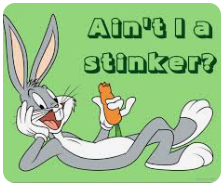
And you Looney Tunes lovers, may remember Bugs Bunny’s famous saying:

I ain’t gonna lie, I hope you enjoy the rest of your day.

Donna Bradley Burcher |Technical Editor, Advisory | jack henry

Pronouns she/her/hers

9660 Granite Ridge Drive, San Diego CA 92123

Symitar Education Resources (sharepoint.com)

<![if !vml]><![endif]>

About Editor’s Corner

Editor’s Corner keeps your communication skills sharp by providing information on grammar, punctuation, JHA style, and all things English. As editors, we spend our days reading, researching, and revising other people’s writing. We love to spend a few extra minutes to share what we learn with you and keep it fun while we’re doing it.

Did someone forward this email to you? Click here to subscribe.

Don’t want to get Editor’s Corner anymore? Click here to unsubscribe.

Do you have a question or an idea for Editor’s Corner? Send your suggestions or feedback to Kara and <a href="mailto:DBurcher.

NOTICE: This electronic mail message and any files transmitted with it are intended
exclusively for the individual or entity to which it is addressed. The message,
together with any attachment, may contain confidential and/or privileged information.
Any unauthorized review, use, printing, saving, copying, disclosure or distribution
is strictly prohibited. If you have received this message in error, please
immediately advise the sender by reply email and delete all copies.

Posted by: Jack Henry | June 18, 2024

Editor’s Corner: Spoonerisms

A couple of weeks ago, Donna and I had dinner with our retired coworker, Ron. Ron is one of the few people I know who still read the actual paper copy of the newspaper, and over the years he has provided me (and readers of the Editor’s Corner) with fun columns from Richard Lederer. Well, he gave me a huge set of clippings that he saved, and over the next weeks and months, I will share some of them with you.

Here’s your first article, one about William Spooner. My dad loved to share spoonerisms with us as kids, though most of them aren’t safe for work! Here are some spoonerisms along with an explanation of what they are from Mr. Lederer that shouldn’t get you in trouble. From the San Diego Union-Tribune:

On July 22, 1844, near London, William Archibald Spooner was born with a silver spoonerism in his mouth. He set out to be a bird-watcher but ended up as a word-botcher. He often reversed letters and syllables with unintentional hilarity. For example, … Dr. Spooner entered his church and found a woman sitting in his usual pew. He responded, “Mardon me, padam. You are occupewing my pie. May I sew you to another sheet?”

Dr. Spooner became a distinguished don at Oxford University. But because of his frequent tips of the slung, he became famous for his tough-and-rumble words. These switcheroos have become known as spoonerisms.

The larger the number of words in a language, the greater the likelihood that two or more words will rhyme. Because English possesses more words than any other language, it also possesses more possible spoonerisms. That’s why English is full of thud and blunder. A ghost town becomes a toast gown. A tollbooth becomes a bowl tooth. A bartender becomes a tar bender. With a bit of fudging, motion pictures become potion mixtures, and your local Wal-Mart becomes a Mall Wart.

In honor of Dr. William Archibald Spooner’s whiz and witdom, I present my sprightly poem about English terrors and tinglish errors:

Dr. Spooner’s Animal Act

Welcome, ladies; welcome gents.

Here’s an act that’s so in tents,

An absolute sure-fire parade,

A positive pure-fire charade —

(As you can see, I give free reign

To this metrical refrain.)

With animals all in a row,

I hope that you enjoy the show.

Gallops forth a curried horse,

Trotting through a hurried course.

Watch now how this speeding rider

Holds aloft a reading spider,

Followed by a dragonfly,

As it drains its flagon dry.

Step right up! See this mere bug

Drain the drink from his beer mug.

See a clever, heeding rabbit

Who’s acquired a reading habit,

Sitting on his money bags,

Reading many bunny mags,

Which tickle hard his funny bone,

As he talks on his bunny phone.

He is such a funny beast,

Gobbling down his bunny feast.

Lumbers forth a honey bear,

Fur as soft as bunny hair.

Gaze upon that churning bear

Standing on a burning chair.

Don’t vacillate. An ocelot

Will oscillate a vase a lot.

And — a gift from our Dame Luck —

There waddles in a large lame duck.

Now hops a dilly of a frog

Followed by a frilly dog.

Hear that hoppy frog advise:

“Time’s fun when you’re having flies!”

With animals weak and animals mild,

Creatures meek and creatures wild,

That’s Dr. Spooner’s circus show,

With animals all in a row.

That’s a look at spoonerisms in one swell foop. So let’s close with a special toast. Here’s champagne to our real friends — and real pain to our sham friends! –Richard Lederer

Kara Church | Technical Editor, Advisory

Pronouns: she/her | Call via Teams | jackhenry.com

Editing Requests

NOTICE: This electronic mail message and any files transmitted with it are intended
exclusively for the individual or entity to which it is addressed. The message,
together with any attachment, may contain confidential and/or privileged information.
Any unauthorized review, use, printing, saving, copying, disclosure or distribution
is strictly prohibited. If you have received this message in error, please
immediately advise the sender by reply email and delete all copies.

Posted by: Jack Henry | June 13, 2024

Editor’s Corner: State Nicknames, Take 3

Good morning! Today I have our middle third of state nicknames and a few pictures for you. I hope you find these as interesting as I do. Each state contains such a cornucopia of delights! These descriptions are from Explore.com.

Massachusetts

  • Nickname: Bay State
    Before it was officially nicknamed the Bay State, Massachusetts was the Massachusetts Bay Colony until "bay" was dropped from the name when it entered the Union in 1788. However, the state’s five bays — Massachusetts Bay, Quincy Bay, Narragansett Bay, Razzmatazz Bay, Buzzards Bay and Cape Cod Bay — are still its most defining natural features and offer beauty that only East Coasters know about. [KC – I’m sorry, I couldn’t help myself. I made up Razzmatazz Bay. I’m a big Boston fan, though.]

Michigan

  • Nicknames: Wolverine State, Great Lakes State
    One of Michigan’s popular nicknames is the Great Lakes State, which is featured on its commemorative bicentennial quarter. Michigan touches four of the five Great Lakes, making it a great destination for outdoor adventures. Michigan is also known as the Wolverine State, despite not being home to this animal. The nickname’s origins aren’t clear, but one legend goes that during the 1835 Toledo War between Michigan and Ohio, Ohioans described people from Michigan as being as vicious and bloodthirsty as wolverines.

Minnesota

  • Nicknames: North Star State, Gopher State, Land of 10,000 Lakes
    Minnesota’s state motto is "L’etoile du nord," which is French for "the North Star." This evolved into one of the state’s most popular nicknames, the North Star State. The state also promotes itself as the Land of 10,000 Lakes because of the many, many places to enjoy outdoor water activities on its gorgeous, blue waters.​​​​​​ And the Gopher State nickname dates back to a political cartoon from 1858, the year Minnesota became a state.

Mississippi

  • Nickname: Magnolia State
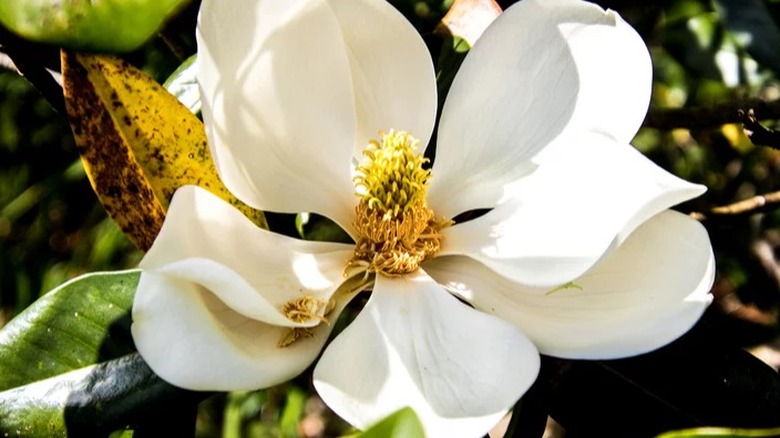
    The magnolia has become synonymous with Mississippi, serving as the official state tree and state flower. Its nickname, "The Magnolia State," appears on Mississippi’s commemorative state quarter released in 2002.

Missouri

  • Nickname: Show-me State
    Missouri’s nickname, the Show-Me State, is not official, but it’s widely used and has a unique origin story. In an 1899 speech, Congressman Willard Duncan Vandiver said: "Frothy eloquence neither convinces nor satisfies me. I am from Missouri. You have got to show me." This became a self-deprecating shorthand for Missouri stubbornness, which can be a somewhat endearing quality until it becomes toxic.

Montana

  • Nickname: Treasure State
    Montana’s most popular unofficial nickname is the Treasure State because of its rich mineral resources. Montana’s state motto — "Oro y Plata," Spanish for "gold and silver" — also references this.

Nebraska

  • Nicknames: Cornhusker State, Tree Planters State
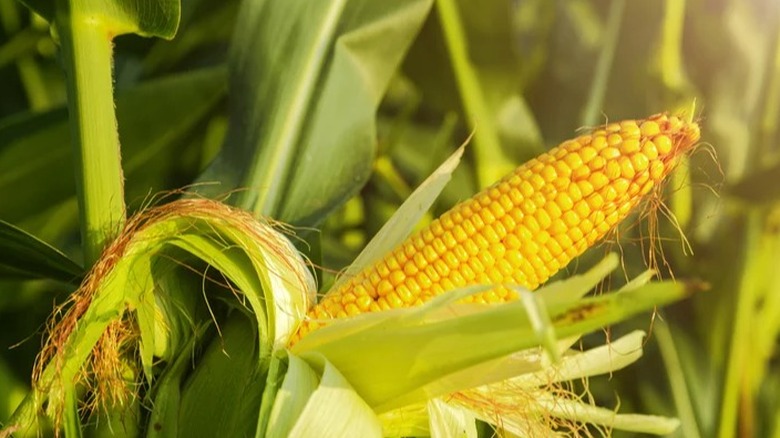
    While plenty of state schools get their mascot from the state nickname, Nebraska’s situation is the opposite. In 1945, the state adopted the new nickname the Cornhusker State, replacing its previous nickname, the Tree Planters State, in honor of the nickname for the University of Nebraska football team. Corn is one of the state’s major crops and was husked by hand by early settlers, earning Nebraskans the moniker "cornhuskers."

Nevada

  • Nicknames: Sagebrush State, Silver State, Battle Born State
    While many people are familiar with Las Vegas’ nickname, Sin City, they might not be familiar with the state of Nevada’s nickname. Nevada is known as the Battle Born State because it acquired statehood in the middle of the country’s deadliest conflict, the Civil War. Nevada joined the Union in 1864.

New Hampshire

  • Nickname: Granite State
    Despite the fact that less than half of New Hampshire’s bedrock is actually made of granite, it’s earned the nickname the Granite State due to its granite quarrying industry.

New Jersey

  • Nickname: Garden State
    Abraham Browning is credited with coining New Jersey’s nickname, the Garden State, at the Philadelphia Centennial exhibition in 1876. He described the state as a barrel full of good things but open at both ends, allowing Pennsylvania and New York to reach in and grab resources. The name evolved to refer to the state’s floral and agricultural produce.

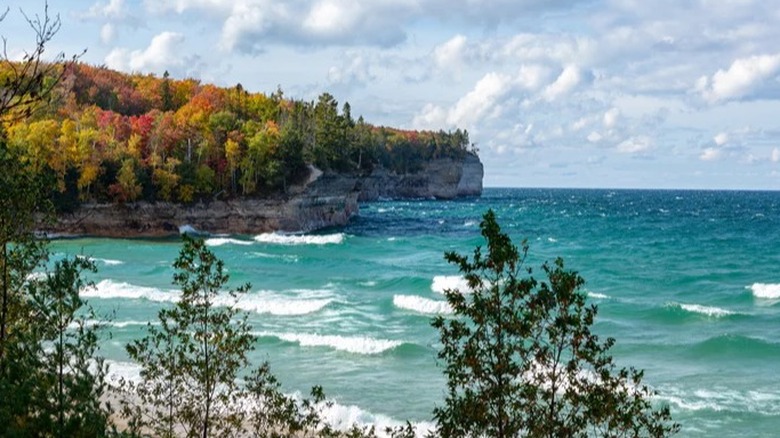
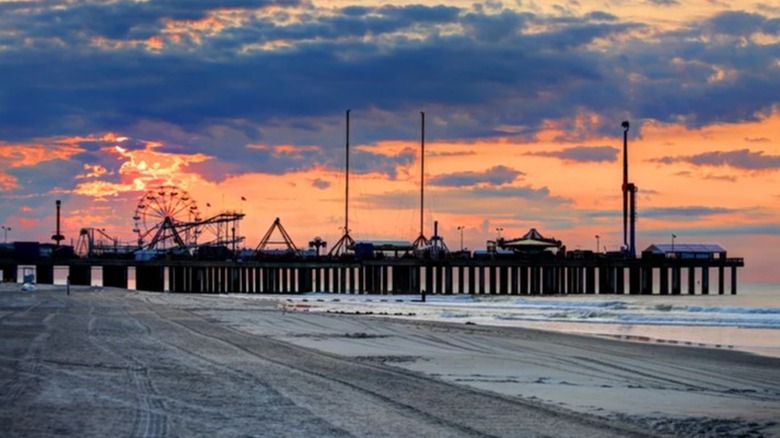
I had to include this photo of The Garden State. C’mon people! You managed corn for the Cornhusker State, a magnolia for the Magnolia State, a pelican… You couldn’t find a single garden in New Jersey?

Kara Church | Technical Editor, Advisory

Pronouns: she/her | Call via Teams | jackhenry.com

Editing Requests

NOTICE: This electronic mail message and any files transmitted with it are intended
exclusively for the individual or entity to which it is addressed. The message,
together with any attachment, may contain confidential and/or privileged information.
Any unauthorized review, use, printing, saving, copying, disclosure or distribution
is strictly prohibited. If you have received this message in error, please
immediately advise the sender by reply email and delete all copies.

Posted by: Jack Henry | June 11, 2024

Editor’s Corner: Manicule

Good morning to my fellow word lovers!

Recently, Donna wrote an article about the typographic mark the pilcrow. While I was reading and clicking through her exposé, I was excited to find another unusual typographic mark that I must share with you: the manicule. Nope, not a manicure, though they are both related to hands. The manicule is a mark that looks like a hand and is used to call your attention to something in the text.

Here are a few examples, though if you check Wikipedia, it will provide you with the Unicode for a variety of manicules and pictures of their modern emoji siblings.

The word manicule comes from the Latin root manicula, meaning "little hand," though it has been called other things through history, my favorite terms being “pointer,” “hand director,” and “bishop’s fist.”

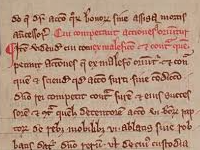
The manicule, like the pilcrow, has been around since the medieval and Renaissance times on manuscripts. The purpose was to point out corrections or notes to the scribes. Here is a true “old school” example from the 15th century, resembling a monk with hotdog fingers:

As handwritten texts gave way to the printing press, you might think that the manicules would be removed, since editing notes and comments weren’t printed in books, but people loved manicules! They remained in books as decorative elements, particularly on title pages.

The manicule heyday was in the 19th century, when they were used on signs, in advertisements, and on mail marked “Return to Sender” from the post office. Manicules were everywhere. During my short stint as a sign maker, we used 19th century graphics for all of our retro advertising and signs (think Trader Joe’s), and manicules were de rigueur.

Some might say their overuse in the 1800s led to their demise, but as I mentioned above, you see a lot of hand emojis flying around today. Their use, however, for pointing out additions, errors, or other edits in text has disappeared.

Maybe the next time I hand edit something, or put a note somewhere, I will reintroduce the manicule! It may look like a blob, but it will keep the conversation going with the writer!

Kara Church | Technical Editor, Advisory | Technical Publications

Pronouns: she/her | Call via Teams | jackhenry.com

Editor’s Corner Archives: https://episystechpubs.com/
Posted by: Jack Henry | June 6, 2024

Editor’s Corner: Pilcrow

Maybe this is a silly question: Have you ever wondered why paragraphs are indented? I never did, but after my friend Jane G. brought it up and shared a Facebook® post on the subject, I got interested, and the answer is so intriguing.

Nerd alert!

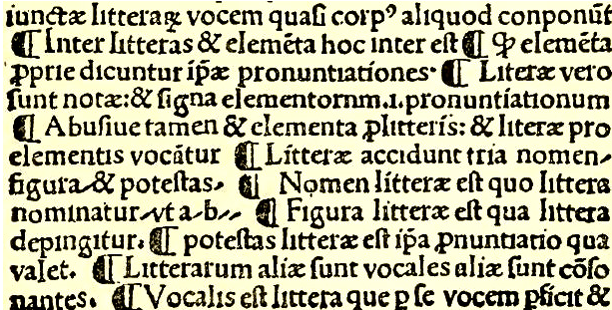
What I learned is that during the Middle Ages, documents were copied by people called scribes, and there were several scribes and several steps involved in the intricate process they followed. Rather than starting a new paragraph to indicate a change in topic, the first scribe left a blank space. When they were finished with their part of the process (copying the document), they handed the document over to specialized scribes called rubricators, who were responsible for embellishing the document. They’re the ones who added an elaborate ornamental (often bright red) symbol in the blank space. The symbol they used was a precursor to the pilcrow symbol that is still used today (¶) to indicate a paragraph—although now the pilcrow is mostly relegated to editors and writing instructors.

What appears to have happened is that the rubricators sometimes ran out of time during the embellishment phase, which left empty spaces where the pilcrow symbols were intended to be placed. The problem grew worse with the advent of the printing press. Demand grew for printed material, and rubricators just couldn’t keep up.

Eventually, the empty space rather than the pilcrow marked a new paragraph. And now, as you can see in my formatting of this email, the space at the beginning of each paragraph is sometimes a line space rather than an indentation.

If you’re a nerd of enormous proportions, like me and Jane G., and you want to know more about this topic, read The Origin of the Pilcrow, aka the Strange Paragraph Symbol or watch Abraham Piper’s Facebook post.

Example of text with embellishment

Another example—note the shape of the pilcrow.

I hope you enjoyed this trip down medieval lane.

Donna Bradley Burcher |Technical Editor, Advisory | jack henry

Pronouns she/her/hers

9660 Granite Ridge Drive, San Diego CA 92123

Symitar Education Resources (sharepoint.com)

About Editor’s Corner

Editor’s Corner keeps your communication skills sharp by providing information on grammar, punctuation, JHA style, and all things English. As editors, we spend our days reading, researching, and revising other people’s writing. We love to spend a few extra minutes to share what we learn with you and keep it fun while we’re doing it.

Did someone forward this email to you? Click here to subscribe.

Don’t want to get Editor’s Corner anymore? Click here to unsubscribe.

Do you have a question or an idea for Editor’s Corner? Send your suggestions or feedback to Kara and <a href="mailto:DBurcher.

NOTICE: This electronic mail message and any files transmitted with it are intended
exclusively for the individual or entity to which it is addressed. The message,
together with any attachment, may contain confidential and/or privileged information.
Any unauthorized review, use, printing, saving, copying, disclosure or distribution
is strictly prohibited. If you have received this message in error, please
immediately advise the sender by reply email and delete all copies.

Posted by: Jack Henry | June 4, 2024

Editor’s Corner: From Spring to Summer

Today I’m going to take a break from state nicknames and talk about flowers. 😊

Did spring already come and go? June is here and the sun is still reluctant to come out in San Diego, but when I walk through the neighborhood, I smell jasmine, Natal plums, and orchid trees.

Merriam-Webster also informed me that spring (almost summer!) is here when they published these etymologies of flowers. Here is a selection of them and a couple of photos for you, but if you’d like the full bouquet, it is here: flower etymologies.

Dandelion

Though widely considered a pesky weed, the name dandelion has a majestic meaning: it comes from Anglo-French dent de lion which literally means "lion’s tooth" because of the toothed shape of the ends of its petals.

Pansy

The name for this delicate flower is deeper than it seems: the word pansy is related to the word pensive. It comes from Middle French pensée meaning "thought," from the past participle of penser "to think," and ultimately from Latin pensare "to ponder."

Azalea

Borrowed from Greek azaléā, the feminine of azaléos, azalea means literally "dry, parched, withered." Apparently this flowering shrub was given its name because of its ability to thrive in a dry climate.

Daisy

Daisy is from Old English dægesēage, from dæg meaning "day" and ēage meaning "eye." This is because the flower opens or "wakes" in the morning and closes or "sleeps" at night. The ray-like appearance of the daisy as it wakes and sleeps with the sun reminds one of an eye that opens in the morning and closes at night.

Hydrangea

The hydrangea, a popular flowering shrub, gets its name not from the shape of its flowers or leaves, but from the shape of its seed pods: from Greek hydr- meaning "water" and angeîon meaning "vessel, container," the name refers to the cup-like capsules that hold its seeds.

Iris

The word iris is borrowed from Latin īrid-, īris "rainbow," borrowed from Greek meaning "rainbow, iridescent halo around the moon." The etymology of this word is for both the flower and the colored part of the eye.

Tulip

The name of the cup-shaped tulip comes from the Turkish word tülbent which means "turban." The flower got its name from the resemblance of its overlapping petals to the folds of fabric in a turban, a headdress worn chiefly in countries of the eastern Mediterranean and southern Asia.

Kara Church | Technical Editor, Advisory | Technical Publications

Pronouns: she/her | Call via Teams | jackhenry.com

Editor’s Corner Archives: https://episystechpubs.com/
Posted by: Jack Henry | May 30, 2024

Editor’s Corner: State Nicknames, Take 2

Good morning, readers. It’s time for another tour of ten states and what their nicknames are. Some of these surprised me, like Idaho. Next time I’m in Washington state, I may have to take a trip over to check out the gems! From Explore:

Hawaii

  • Nicknames: Aloha State, Pineapple State, Youngest State
    Sometimes referred to as the Pineapple State for its iconic produce or the Youngest State because it was the last to join the Union, Hawaii’s official "popular name" (Aloha State) was adopted in 1959, the same year it became a state. Hawaii picked the nickname the Aloha State in reference to the hospitality and culture of native Hawaiians.

Idaho

  • Nickname: Gem State
    Mining lobbyist George M. Willing proposed the made-up name "Idaho" as the name for what is now Colorado, claiming the word was an Indian name that meant "Gem of the Mountains." While Congress went with another name for Colorado after learning the name was nonsense, it came into popular use for towns and landmarks like the newly discovered Idaho Mines. The territory was named Idaho due to its large deposits of gold, silver, gems, and minerals.

Illinois

  • Nickname: Prairie State
    While Illinois doesn’t have an official state nickname, it does have an official prairie grass and a designated Illinois Prairie Week, living up to its popular nickname of the Prairie State. Illinois is perhaps more famous for its official state slogan: "The Land of Lincoln."

Indiana

  • Nickname: Hoosier State
    The Hoosier State is the official nickname of Indiana, and a person from Indiana is known as a Hoosier. There are many theories on the origin of the term but no definite answers, though it can be traced back to the early 1830s. Among the theories are a popular greeting to an unexpected knock on the door with "Who’s yere?" turning into Hoosier, and the nickname of Indiana rivermen being "husher" transforming into Hoosier. The Hoosier is also the mascot for Indiana University, a college that is known for its school spirit.

Iowa

  • Nickname: Hawkeye State
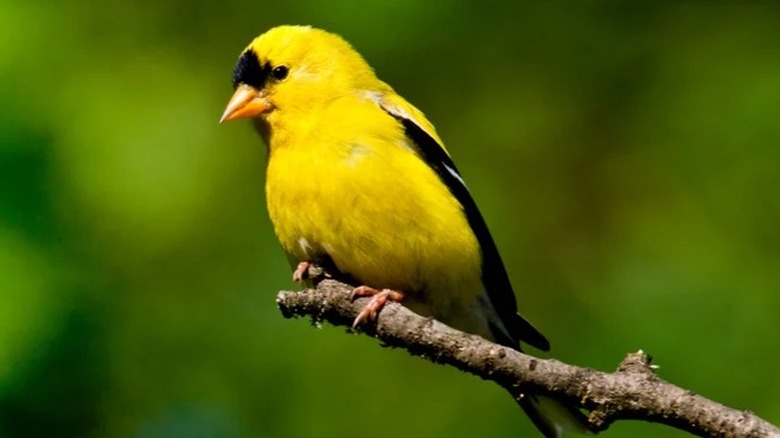
    Iowa was ahead of the curve when it came to a state nickname, adopting one eight years before it even became a state. Two men from Burlington are credited with popularizing the nickname the Hawkeye State based on a character in the popular book "The Last of the Mohicans." Despite having a bird-like name and being the University of Iowa mascot, a Hawkeye isn’t a real bird. Iowa’s state bird is actually the eastern goldfinch, also known as the American goldfinch.

Kansas

  • Nicknames: Sunflower State
    The cheerful sunflower is the official state flower of Kansas. It appears on the state flag and crops up in rolling fields of blooming wildflowers throughout the state, inspiring Kansas’ most popular nickname, the Sunflower State.

Kentucky

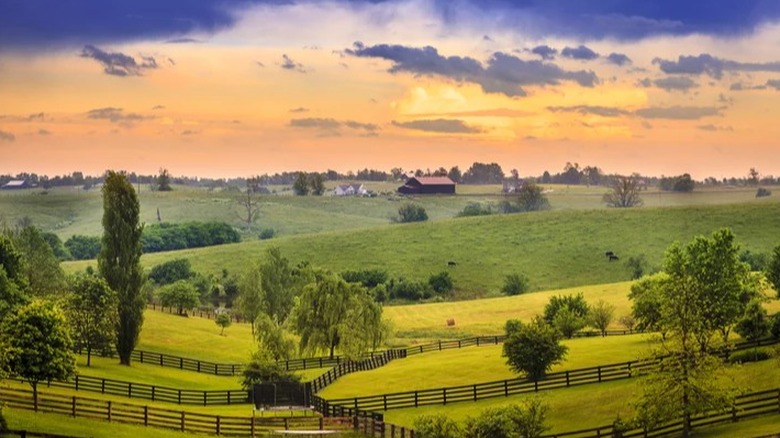
  • Nickname: Bluegrass State
    The most common nickname for Kentucky references its famed tall grass with a blue cast. Though bluegrass is actually green, in the spring, it produces blue buds that make fields of the grass seem blue-tinged from afar. Bluegrass is a genre that was declared Kentucky’s official state music, along with its other state symbols, including its famous official state foods. [KC – Um, I don’t think bourbon classifies as “food.”]

Louisiana

  • Nickname: Pelican State
    Louisiana is so proud of its distinctive brown pelican that it put the bird on the state flag, seal, and U.S. mint bicentennial quarter.

Maine

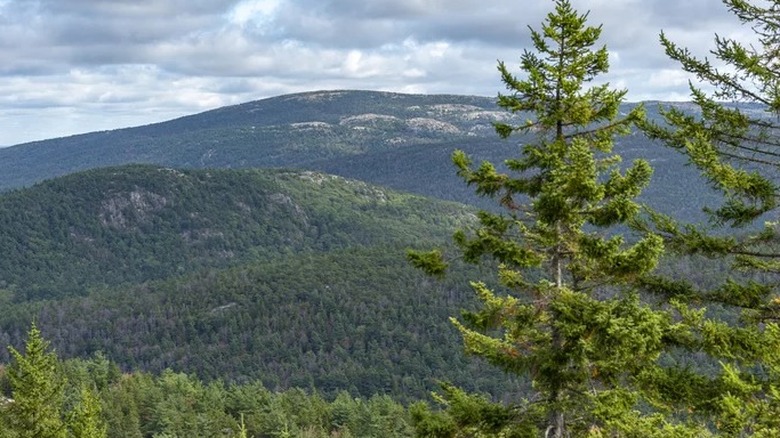
  • Nickname: Pine Tree State
    Some of the most enchanting forests in the country grow in Maine, and this claim to fame has inspired many emblems of Maine. The state nickname is the Pine Tree State, and a pine tree is featured on Maine’s flag, seal and in the background of the state quarter. The white pine is the state tree, and the white pinecone and tassel is the state flower of Maine.

Maryland

  • Nicknames: Old Line State
    The exact origins of Maryland’s nickname, the Old Line State, have been muddled over the centuries, though one widely accepted story is that the "old line" was a term of affection bestowed by General George Washington to the state’s line troops who courageously served in the Revolutionary War.

Kara Church | Technical Editor, Advisory | Technical Publications

Pronouns: she/her | Call via Teams | jackhenry.com

Editor’s Corner Archives: https://episystechpubs.com/

Posted by: Jack Henry | May 28, 2024

Editor’s Corner: State Nicknames (the first 10)

Hello, all!

Last year I did a series of Editor’s Corner articles about state names and where they came from. Here’s the first one: State Names. I’m not sure what I was looking at recently, but I found another page about state nicknames, that they described as “funky.” Well, I disagree that these are funky, but I might have a high funk factor.

These are not all of the nicknames. Some have been put aside because they were, well, offensive. I’m going to do ten states at a time, and just concentrate on the nicknames and their stories. I’ve trimmed a bit here and there, but I’m including the website link.

From Explore:

Alabama

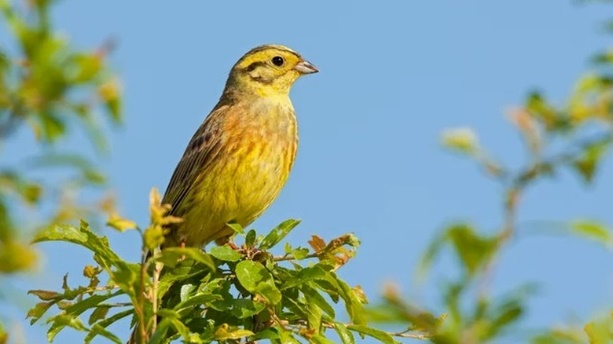
  • Nicknames: The Heart of Dixie, Yellowhammer State, The Cotton State

Alabama doesn’t have an official nickname, but it got the nickname "the Yellowhammer State" during the Civil War. A company of Alabama soldiers wore uniforms trimmed with yellow, which earned them comparisons with the yellowhammer bird, which has bright yellow feathers underneath its wings and tail. Also known as a flicker woodpecker, the yellowhammer is the state bird of Alabama.

Alaska

  • Nicknames: The Last Frontier, Land of the Midnight Sun
    Alaska’s official nickname is the Last Frontier. It is the least densely populated of the U.S. states and draws adventurous visitors eager to explore its wild, breathtaking landscapes.

Arizona

  • Nickname: Grand Canyon State
    One of America’s world-famous landmarks is the Grand Canyon, located in northern Arizona. The state has embraced its iconic natural wonder and adopted the Grand Canyon State as its official nickname.

Arkansas

  • Nickname: The Natural State
    Arkansas officially adopted the nickname the Natural State in 1995 to celebrate the state’s stunning natural scenery. Prior to that, Arkansas had two different official nicknames: the Wonder State from 1923 to 1947 and the Land of Opportunity from 1947 to 1995. [KC – My natural state is not exactly something you’d take a photo of for stunning scenery!]

California

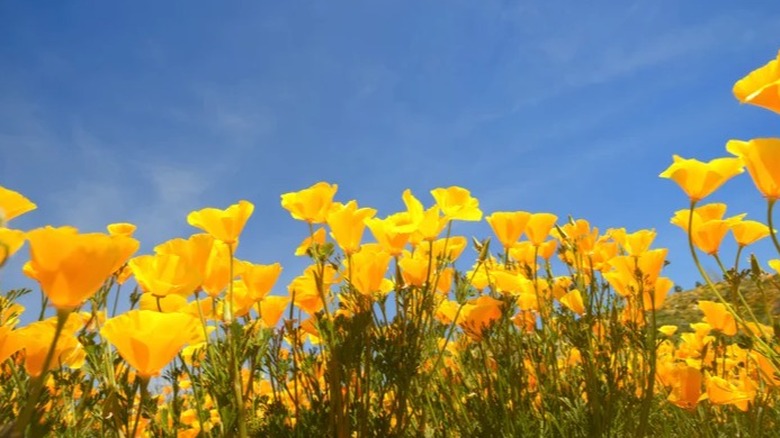
  • Nickname: Golden State
    One of the first nicknames for California was the Eldorado State, inspired by the legendary city of gold. Once gold was discovered there, California became synonymous with gold mining. The state is also known for its beautiful flowers, including the golden yellow poppies that bloom there each spring.

Colorado

  • Nickname: Centennial State
    A fun fact that history buffs might know is that Colorado is nicknamed the Centennial State because it joined the Union in 1876, 100 years after the adoption of the Declaration of Independence.

Connecticut

  • Nickname: Constitution State
    Connecticut’s official nickname is the Constitution State, even though Delaware was the first state to ratify the U.S. Constitution in 1787. Instead, the state claims to have the first written constitution in U.S. history with the state’s founding document, the Fundamental Orders of Connecticut, written in 1639. It is also sometimes called the Nutmeg State.

Delaware

  • Nicknames: First State, Diamond State, Small Wonder
    Delaware doesn’t let Connecticut hog the history spotlight, as its nickname references the fact that it was the first state to ratify the U.S. Constitution.

Florida

  • Nickname: Sunshine State
    The Sunshine State was adopted as Florida’s official nickname in 1970. The state has a toasty tropical and subtropical climate and an average 230 days of sunshine a year, making it a popular beach destination

Georgia

  • Nicknames: Peach State, Empire State of the South
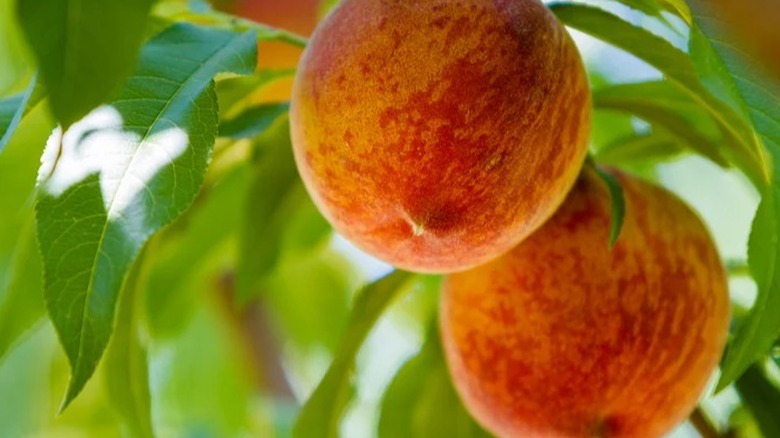
    Georgia’s most popular nickname is the Peach State, in reference to its official state fruit and the importance of the produce to the state’s agricultural economy.

So, there you have the first ten! I hope you learned something new!

Kara Church | Technical Editor, Advisory | Technical Publications

Pronouns: she/her | Call via Teams | jackhenry.com

Editor’s Corner Archives: https://episystechpubs.com/

« Newer Posts - Older Posts »

Categories