Posted by: Jack Henry | October 1, 2015

Editor’s Corner: Lipogram

I saw the word lipogram and couldn’t imagine what it meant. My first thought was that “lipo” meant fat, and “gram” meant letter. A fat letter? Nope. Here is the Merriam-Webster definition and etymology of lipogram:

: a writing composed of words not having a certain letter (as the Odyssey of Tryphiodorus which had no alpha in the first book, no beta in the second, and so on)

Middle Greek lipogrammatos, adjective, lacking a letter, from Greek lipo- 2lipo- + -grammatos (from grammat-, gramma letter)

I wanted to see an example, so I searched a little more, and found an article on Wikipedia. Here are some details from the article that I hope will clarify lipograms for you.

A lipogram (from Ancient Greek: λειπογράμματος, leipográmmatos, "leaving out a letter") is a kind of constrained writing or word game consisting in writing paragraphs or longer works in which a particular letter or group of letters is avoided—usually a common vowel, and frequently E, the most common letter in the English language. Larousse defines a lipogram as a "literary work in which one compels oneself strictly to exclude one or several letters of the alphabet." Extended Ancient Greek texts avoiding the letter sigma are the earliest examples of lipograms.

Writing a lipogram may be a trivial task when avoiding uncommon letters like Z, J, Q, or X, but it is much more difficult to avoid common letters like E, T or A, as the author must omit many ordinary words. Grammatically meaningful and smooth-flowing lipograms can be difficult to compose.

Example:

A more modern example of lipogrammatic rewrites of famous literary works is Gyles Brandreth’s reworking of Shakespeare’s works as lipograms: Hamlet without the letter I (e.g., "To be or not to be, that’s the query").

So you aren’t just removing a letter and testing the reader’s ability to fill in the blanks, you are actually writing the text using synonyms and avoiding the use of the letter altogether. Sounds frustrating, but for some of the word nerds out there, it might be a fun challenge!

Kara Church

Technical Editor, Advisory

619-542-6773 | Ext: 766773

Symitar Documentation Services

NOTICE: This electronic mail message and any files transmitted with it are intended
exclusively for the individual or entity to which it is addressed. The message,
together with any attachment, may contain confidential and/or privileged information.
Any unauthorized review, use, printing, saving, copying, disclosure or distribution
is strictly prohibited. If you have received this message in error, please
immediately advise the sender by reply email and delete all copies.

Posted by: Jack Henry | September 30, 2015

Editor’s Corner: Sentence Fragment Quiz

Quiz: Sentence Fragments

Last week, Donna provided some lessons on sentence fragments and run-on sentences. Today, I have a little quiz for you. Read the following sentences. Mark a C if the sentences in the group are all complete and an F if any of the sentences in the group is a fragment. Scroll down toward the bottom of the email for answers.

These questions and answers are based on a lesson from the Purdue OWL.

____ 1. The scene was filled with beauty. Such as the sun sending its brilliant rays to the earth and the leaves of various shades of red, yellow, and brown moving slowly in the wind.

____ 2. He talked for fifty minutes without taking his eyes off his notes. Like other teachers in that department, he did not encourage students’ questions.

____ 3. The magazine has a reputation for a sophomoric, insignificant, and semi-literate group of readers. Although that is a value judgment and in circumstances not a true premise.

____ 4. She opened the doggie door and let us crawl into her home. Not realizing at the time that we would never use the doggie door again.

____5. As Easter grows near, I find myself looking back into my childhood days at fun-filled times of hard-boiled egg and chocolate bunny fights. To think about this makes me happy.

Answers: Sentence Fragments

Incorrect parts are in italics with justifications in bold.

F 1. The scene was filled with beauty. Such as the sun sending its brilliant rays to the earth and the leaves of various shades of red, yellow, and brown moving slowly in the wind. (dependent clause)

C 2. He talked for fifty minutes without taking his eyes off his notes. Like other teachers in that department, he did not encourage students’ questions.

F 3. The magazine has a reputation for a sophomoric, insignificant, and semi-literate group of readers. Although that is a value judgment and in circumstances not a true premise. (dependent clause)

F 4. She opened the doggie door and let us crawl into her home. Not realizing at the time that we would never use the doggie door again. (dependent clause)

C 5. As Easter grows near, I find myself looking back into my childhood days at fun-filled times of hard-boiled egg and chocolate bunny fights. To think about this makes me happy.

Kara Church

Technical Editor, Advisory

619-542-6773 | Ext: 766773

Symitar Documentation Services

NOTICE: This electronic mail message and any files transmitted with it are intended
exclusively for the individual or entity to which it is addressed. The message,
together with any attachment, may contain confidential and/or privileged information.
Any unauthorized review, use, printing, saving, copying, disclosure or distribution
is strictly prohibited. If you have received this message in error, please
immediately advise the sender by reply email and delete all copies.
Posted by: Jack Henry | September 29, 2015

Editor’s Corner: Pole, pole, ,and poll

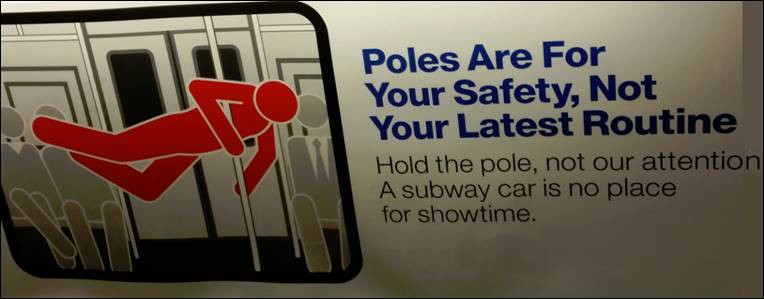
I’ve been trying to figure out how to incorporate my favorite photo from New York into an Editor’s Corner and nothing is coming easily. One of my partners in crime (thank you, Keith) suggested that I do an article on homophones and assisted me with some Internet photos—so that’s what I’m going with. Today’s words are Pole, pole, and poll, with definitions from Merriam-Webster.

Yes, this is a long way to go so I can show you my subway sign.

· Pole (abbreviation for Polish): A person from Poland.

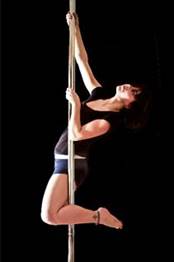
Poles dancing

· pole: a long, slender, rounded piece of wood or metal, typically used with one end placed in the ground as a support for something.

Pole dancing

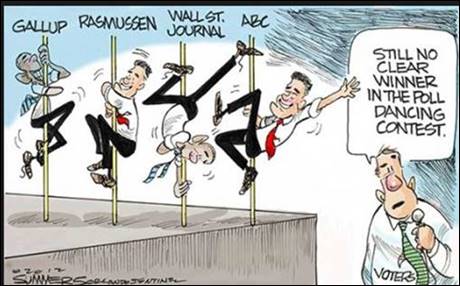
· poll: record the opinion or vote of.

Poll dancing

And finally, my sign:

A New York City subway sign: making public transportation fun again.

Kara Church

Technical Editor, Advisory

Symitar Documentation Services

Posted by: Jack Henry | September 28, 2015

Editor’s Corner: Check Your Antecedent

Welcome back!

I was reviewing some older grammar articles (because that’s what I do for fun), and I came across the following sentences, which all contain an error. At first glance, the errors might be a little hard to find, so I thought this would be a good topic to discuss. Hint: the errors have to do with antecedents. The information is from Daily Writing Tips.

Each of the following quotations contains a grammatical error:

1. This process is one of several that is required to maintain nuclear SREBP1-c at very low levels… –Yeshiva University website

2. A study designed by Drs. Liu and Clarke is one of several that is slated to be included in the pilot run. –Georgetown University website

3. Steve Wozniak Is One Of The Few People Who Has Met The Kimye Baby. –Business Insider

4. Henry [Kissinger] is one of the few who has the trust of the keepers of the secrets. –William Safire

The error is using a singular verb with a relative pronoun whose antecedent is plural. [dbb –
An antecedent is a thing that comes before something else. In the previous examples, a singular verb (is or
has) follows a plural antecedent (several or few), which creates an error in agreement.]

Correct answers and explanations:

1. This process is one of several that are required to maintain nuclear SREBP1-c at very low levels…

The highlighted verb, are,refers to the word several (not to the word one), and since several is plural, you need a plural verb.

2. A study designed by Drs. Liu and Clarke is one of several that are slated to be included in the pilot run.

As above, the highlighted verb, are,refers to the word several (not to the word one), and since several is plural, you need a plural verb.

3. Steve Wozniak Is One Of The Few People Who Have Met The Kimye Baby

The highlighted verb, have,refers to the word people (not to the word one), and since people is plural, you need a plural verb.

4. Henry [Kissinger] is one of the few who have the trust of the keepers of the secrets.
The highlighted verb, have,refers to the word few (not to the word one), and since few is plural, you need a plural verb.

Donna Bradley Burcher | Senior Technical Editor | Symitar®

8985 Balboa Ave. | San Diego, CA 92123 | Ph. 619.278.0432 | Ext: 765432

Posted by: Jack Henry | September 25, 2015

Editor’s Corner: Clagnut Pangrams

Happy Friday!

I believe we covered this topic in the past, but I found a new resource for pangrams, so let’s discuss them again. A pangram is a “short sentence containing all 26 letters of the English alphabet.” The one most of us know is from typing practice: A quick brown fox jumps over the lazy dog.

Here are a few more for you from a blog called Clagnut:

· Bright vixens jump; dozy fowl quack. (29 letters)

· Quick zephyrs blow, vexing daft Jim. (29 letters) (Includes proper noun)

· Both fickle dwarves jinx my pig quiz. (30 letters)

· How quickly daft jumping zebras vex. (30 letters)

· Go, lazy fat vixen; be shrewd, jump quick. (31 letters)

· Five hexing wizard bots jump quickly. (31 letters)

· Quick fox jumps nightly above wizard. (31 letters)

· Five quacking zephyrs jolt my wax bed. (31 letters)

· The five boxing wizards jump quickly. (31 letters)

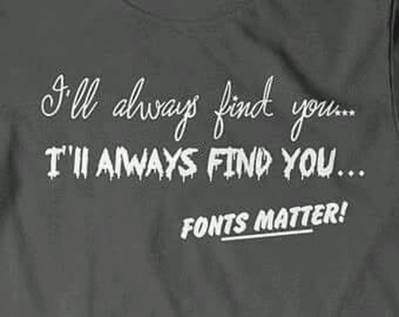
And we already know that punctuation matters, but apparently fonts do, too! (Thanks, Jarvae!)

Kara Church

Technical Editor, Advisory

Symitar Documentation Services

Posted by: Jack Henry | September 24, 2015

Editor’s Corner: Yogi

On Tuesday, former New York Yankees catcher Yogi Berra died at the age of 90. I used to write a daily memo and enjoyed including his quotes for a bit of lightness and fun. In honor of Yogi, here is a selection of his Yogi-isms. For the full article, see the Detroit Free Press article. (Thanks to Robert T. for the link!)

1. When you come to a fork in the road, take it.

2. No one goes there nowadays, it’s too crowded.

3. Baseball is ninety percent mental and the other half is physical.

4. Always go to other people’s funerals, otherwise they won’t come to yours.

5. Congratulations. I knew the record would stand until it was broken.

6. You better cut the pizza in four pieces because I’m not hungry enough to eat six.

7. You wouldn’t have won if we’d beaten you.

8. I usually take a two-hour nap from one to four.

9. Never answer an anonymous letter.

10. The future ain’t what it used to be.

11. It gets late early out here.

12. If the people don’t want to come out to the ballpark, nobody’s going to stop them.

13. Pair up in threes.

14. Even Napoleon had his Watergate.

15. He hits from both sides of the plate. He’s amphibious.

16. I don’t know (if they were men or women fans running naked across the field). They had bags over their heads.

17. I’m not going to buy my kids an encyclopedia. Let them walk to school like I did.

18. So I’m ugly. I never saw anyone hit with his face.

19. The towels were so thick there I could hardly close my suitcase.

20. Little League baseball is a very good thing because it keeps the parents off the streets.

Kara Church

Technical Editor, Advisory

Symitar Documentation Services

Posted by: Jack Henry | September 23, 2015

Editor’s Corner: So-and-so

During the Symitar Education Conference a few weeks ago, one of our illustrious presenters asked me if I knew where the term so-and-so came from as a placeholder for someone’s name. For example, “Can you tell me whether Butchie is bringing so-and-so to the party?”

This is what I found in Merriam-Webster, under the primary definition:

so-and-so

1: an unnamed or unspecified person or thing

Examples:

· <would argue as to whether so-and-so’s badger could lick such-and-such a dog — American Guide Series: Nevada>

· <the reason he didn’t was so-and-so — Ring Lardner>

· <word meaning so-and-so — Alexander d’Agapeyeff>

As you might be aware, sometimes so-and-so is also used in place of cursing. For example, “That Billy Bob McFadden is a real so-and-so; I’d really like to teach him some manners.” As it turns out, so-and-so stands for a very specific curse word. It begins with “b,” sounds a bit like “mustard,” and means “a child born out of wedlock.”

The first definition has been around since the 13th century.

Merriam-Webster has a passel of synonyms for so-and-so, for your reading pleasure:

beast, bleeder [British], blighter [chiefly British], boor, bounder, bugger, buzzard, cad, chuff, churl, clown, creep, cretin, crud [slang], crumb [slang], cur, dirtbag [slang], dog, fink, heel, hound, joker, louse, lout, pill, rat, rat fink, reptile, rotter, schmuck [slang], scum, scumbag [slang], scuzzball [slang], skunk, sleaze, sleazebag [slang], sleazeball [slang], slime, slimeball [slang], slob, snake, sod [chiefly British], stinkard, stinker, swine, toad, varmint, vermin

Kara Church

Technical Editor, Advisory

619-542-6773 | Ext: 766773

Symitar Documentation Services

NOTICE: This electronic mail message and any files transmitted with it are intended
exclusively for the individual or entity to which it is addressed. The message,
together with any attachment, may contain confidential and/or privileged information.
Any unauthorized review, use, printing, saving, copying, disclosure or distribution
is strictly prohibited. If you have received this message in error, please
immediately advise the sender by reply email and delete all copies.
Posted by: Jack Henry | September 22, 2015

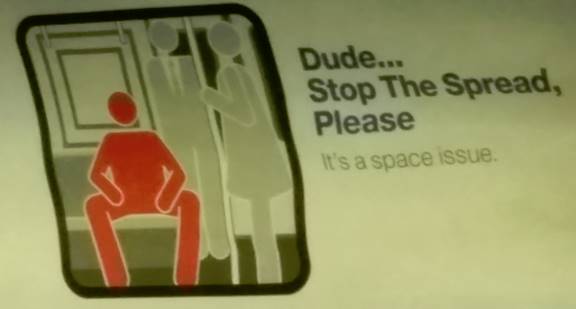
Editor’s Corner: Awesomesauce and Manspreading

Last week, while I was in New York, a subway sign reminded me of a new word from the Oxford English Dictionary. The word is manspreading (see photo below). Several of you sent me articles about the new words, so here are some excerpts from CNN’s article, New words in the dictionary? Awesomesauce!

· cat café: establishment where people pay to interact with cats housed on the premises

· manspreading: practice whereby a man, especially one travelling on public transport, adopts a sitting position with his legs wide apart, in such a way as to encroach on an adjacent seat or seats

· onboarding: from the colorful world of human relations, describing the "action or process of integrating a new employee into an organization or familiarizing a new customer or client with one’s products or services"

· MacGyver: making or repairing (an object) in an improvised or inventive way

· holodeck: fictional "chamber or facility in which a user can experience a holographic or computer-simulated physical environment”

· rando: A person one does not know, especially one regarded as odd, suspicious, or engaging in socially inappropriate behaviour [KC – Remember, it’s a British dictionary, so the spellings are British.]

· hangry: bad-tempered or irritable as a result of hunger

From New York City Subway

Kara Church

Technical Editor, Advisory

Symitar Documentation Services

Posted by: Jack Henry | September 21, 2015

Editor’s Corner: And/Or

Your friendly editors may have asked you not to use and/or statements and to choose the word and or or instead. The main reason not to use and/or statements is that it can create uncertainty.

Here is an example:

· Kara and/or I will edit your document tomorrow.

The and/or statement in this sentence could mean that Kara will edit your document, I will edit your document, or both Kara and I will edit your document.

If you are tempted to use and/or, determine whether and or or is more appropriate and go with one or the other wherever possible.

Thank you,

Jackie Solano | Technical Editor | Symitar®

8985 Balboa Ave. | San Diego, CA 92123 | Ph. 619.542.6711 | Extension: 766711

Symitar Documentation Services

NOTICE: This electronic mail message and any files transmitted with it are intended
exclusively for the individual or entity to which it is addressed. The message,
together with any attachment, may contain confidential and/or privileged information.
Any unauthorized review, use, printing, saving, copying, disclosure or distribution
is strictly prohibited. If you have received this message in error, please
immediately advise the sender by reply email and delete all copies.

Posted by: Jack Henry | September 18, 2015

Editor’s Corner: Oxymoron Friday

TGI Friday!

On Fridays, we like to have fun with words, so today I’m going to share some oxymorons with you. For those who don’t know, an oxymoron is a combination of words that have opposite or very different meanings.

Some oxymorons are so common, we don’t even think about how the words oppose each other. Here are some common examples:

· Act naturally

· Deafening silence

· Final draft

· Freezer burn

· Industrial park

· Jumbo shrimp

· Larger half

· Old boy

· Open secret

· Original copy

· Pretty ugly

· Standard deviation

Some oxymorons are doublespeak:

· Genuine imitation

· Mandatory option

· New and improved

Some oxymorons are famous literary terms:

· Darkness visible (Milton)

· Hateful good (Chaucer)

· Melancholy merriment (Byron)

· Sweet sorrow (Shakespeare)

Some famous quotes are great examples of oxymorons:

· I am a deeply superficial person. (Andy Warhol)

· I distinctly remember forgetting that. (Clara Barton)

· You’d be surprised how much it costs to look this cheap. (Dolly Parton)

· Always be sincere, even when you don’t mean it. (Irene Peter)

· I can believe anything, provided that it is quite incredible. (Oscar Wilde)

· I never said most of the things I said. (Yogi Berra)

· I can resist everything but temptation. (Mark Twain)

· The budget was unlimited, but I exceeded it. (Donald Trump)

And finally, Samuel Goldwyn (the movie producer) was famous for his humorous oxymorons. Here are a few:

  • A verbal contract isn’t worth the paper it’s written on.
  • Include me out.
  • Anyone who goes to a psychiatrist ought to have his head examined.
  • Gentlemen, I want you to know that I am not always right, but I am never wrong.
  • If I could drop dead right now, I’d be the happiest man alive!
  • It’s more than magnificent—it’s mediocre.
  • I’ll give you a definite maybe.
  • If you fall and break your legs, don’t come running to me.
  • Our comedies are not to be laughed at.
  • I never liked you, and I always will.
  • The scene is dull. Tell him to put more life into his dying.
  • Tell them to stand closer apart.

I gathered most of these oxymorons from two websites. If you’d like to see more, visit the Oxymoronology and Your Dictionary websites.

Enjoy the rest of your day, and have a fabulous weekend!

Donna Bradley Burcher | Senior Technical Editor | Symitar®

8985 Balboa Ave. | San Diego, CA 92123 | Ph. 619.278.0432 | Extension: 765432

NOTICE: This electronic mail message and any files transmitted with it are intended
exclusively for the individual or entity to which it is addressed. The message,
together with any attachment, may contain confidential and/or privileged information.
Any unauthorized review, use, printing, saving, copying, disclosure or distribution
is strictly prohibited. If you have received this message in error, please
immediately advise the sender by reply email and delete all copies.
« Newer Posts - Older Posts »

Categories