Posted by: Jack Henry | October 13, 2015

Editor’s Corner: Fit Part 2

Yesterday I shared the etymology of the word fit. Today, I want to share some common expressions. These are from the same article on the Daily Writing Tips website.

· to have a fit
to become upset about something

Ex. Don’t have a fit; I’ll make your sandwich in a minute.

· hissy fit
an outburst of temper, a tantrum. Hissy may be a shortening of hysterical. [dbb: As a child, I was sternly warned against this by my southern parents. But they couldn’t control Aunt Ida as easily.]

Ex. Aunt Ida is having a hissy fit; somebody broke her garden gnome.

· survival of the fittest
The expression was coined by Herbert Spencer in reference to the Darwinian theory that animals best-adapted to an environment continue to reproduce and evolve. In this context, “the fit” are those animals suited to succeed. It is frequently used figuratively.

Ex. In cable, it’s survival of the fittest as channels drop from the bundle.

· in fits and starts
spasmodically; at irregular intervals.

Ex. He’s been cleaning the garage in fits and starts.

· fit to be tied
extremely angry

Ex. When Father saw someone had left the gate open, he was fit to be tied. [dbb: My grandmother often said she was fit to be tied. And there were plenty of times (when I had to share a room with her) that I dreamed of tying her up.]

· fighting fit
at the peak of one’s physical form

Ex. Papiss Cisse says he’s fighting fit to help lead the charge against Queens Park Rangers.

· fit as a fiddle
in good health; in good physical condition

Ex. After making a full recovery from his plane crash, Harrison Ford, 72, was once again seen looking fit as a fiddle as he visited his office in Brentwood.

Note: Before the 19th century, the expressions “fit as a fiddle” and “fine as a fiddle” meant “appropriate for the occasion.”

· to fit in (1)
to belong, to assimilate well

Ex. The pledge master warned the freshmen that if they didn’t like partying, they would not fit in.

· to fit in (2)
to find time for

Ex. I’ll check my calendar and try to fit you in on Friday.

· if the shoe fits
This is a shortening of “If the shoe fits, you must wear it.” The expression usually occurs as an unsympathetic response.

Ex. GEORGE: Just because I forgot her birthday, she says I don’t really care about her.
ALICE: If the shoe fits…
The unexpressed thought is “If what she says is true, admit it.”

· to fit like a glove
to fit perfectly

Ex. That new job fits her like a glove.

· to fit the bill
to correspond to certain requirements

Ex. With your background in teaching, nursing, and music, you fit the bill for the job of camp musical director.
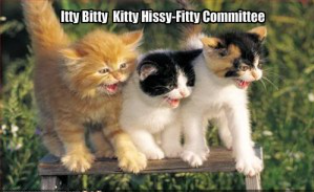
Enjoy your day. I hope it’s hissy-fit-free.

Donna Bradley Burcher | Senior Technical Editor | Symitar®

8985 Balboa Ave. | San Diego, CA 92123 | Ph. 619.278.0432 | Ext: 765432

Posted by: Jack Henry | October 12, 2015

Editor’s Corner: The Little Word Fit

Good morning, everyone.

I was out enjoying the beautiful San Diego sunshine a few days ago, and my sense of peacefulness was interrupted by a young child throwing a fit. Let’s ignore the fact that Skyler’s parents were the “just ignore him and he’ll probably stop” kind of parents. Instead, let’s talk about the etymology of the very versatile word fit.

I gathered this information from the Daily Writing Tips website.

The little word fit has multiple functions and occurs in numerous expressions.

In Middle English, the noun fit denoted an intense experience that could be painful, dangerous, or exciting.

By the 16th century, a fit could denote a paroxysm, or the recurrent attack of an ailment.

In the 17th century fit took on the meaning of a sudden seizure with loss of consciousness, or accompanied with convulsions.

By the 19th century, fit was used in expressions of exaggeration such as “to throw a fit” in the sense of “to fly into a rage.”

Because fits are of limited duration, the noun fit also took on the sense of a limited, usually brief, period of time: “We’ve had a fit of wet weather.”

Fit also functions as an adjective: a synonym for appropriate or well-suited. For example, a man might be “fit for a certain job,” or a certain type of food might be “fit for an invalid.” Fit can also mean inclined or disposed. A tired person might be “fit to collapse.” An angry person might be “fit to be tied.” A child trying to keep a secret might be “fit to burst.”

Fit (and fitting) also applies to social behavior. In Gone With the Wind, the character Mammy uses the word in this sense when she reprimands Scarlett for unladylike behavior: “It ain’t fittin; it just ain’t fittin’.”

In the 19th century, fit took on the meaning “in good health” or “in good physical condition.” People go to the gym “to get fit.”

As a verb, in addition to meanings related to those mentioned, fit can mean “to be of the right shape and size.”

Tomorrow I have some information about common expressions that include the word fit. Stay tuned!

Donna Bradley Burcher | Senior Technical Editor | Symitar®

8985 Balboa Ave. | San Diego, CA 92123 | Ph. 619.278.0432 | Ext: 765432

Posted by: Jack Henry | October 9, 2015

Editor’s Corner: Scratchiti

I was just looking over some notes from my trip to New York and I forgot to tell you about a new word I learned: scratchiti. You can imagine what it is—instead of spray-painted graffiti in the alleys or on the walls, scratchiti is etched carvings into hard surfaces.

According to the Urban Dictionary, here is a brief description of scratchiti:

Considered by many a low form of graffiti as the difficult etching leaves little room for artistic design, scratchiti is often simply block-lettered tags used to promote a particular urban artist or claim territory, or amateur copycat work.

Tools employed in the craft are generally keys, knives, and razorblades, but lava rocks available at hardware stores, carbide tipped drill bits, and spark plugs have been reported as tools of choice as well.

I don’t see any art to it—I think the description is probably as good as it gets. It usually looks like someone was trying to escape from the subway car or scratch their way through a bus window. I did think it was worth sharing, though.

Happy (almost) weekend!

Manhattan view from the Brooklyn Bridge

Kara Church

Technical Editor, Advisory

Symitar Documentation Services

Posted by: Jack Henry | October 8, 2015

Editor’s Corner: Directional Words

Hello, dear readers!

It seems that autumn is finally upon us; it’s time to get out your favorite soup recipe, some squash, or something involving pumpkin pie spices. As I hunt for something special to cook for Halloween, I haven’t found any recipes, but I’ve discovered bits and pieces of questions in my editing folders that are ripe for the picking.

Today’s topic is directional words.

What do I mean by directional words? In this case, I’m talking about adverbs: toward, forward, backward, etc. Some of the most popular questions I get from folks are: Which is appropriate? Forward or forwards? Backward or backwards?

Even though you will hear both used (“It’s towards Katie’s house.” “They went downward at the fork in the trail.” “She’s heading westward, towards the sun.”) the preferred spelling for these words in the United States is without the “s.” So to be safe in your writing, use:

· backward

· downward

· eastward

· inward

· northward

· outward

· toward

· Etc.

Kara Church

Technical Editor, Advisory

619-542-6773 | Ext: 766773

Symitar Documentation Services

NOTICE: This electronic mail message and any files transmitted with it are intended
exclusively for the individual or entity to which it is addressed. The message,
together with any attachment, may contain confidential and/or privileged information.
Any unauthorized review, use, printing, saving, copying, disclosure or distribution
is strictly prohibited. If you have received this message in error, please
immediately advise the sender by reply email and delete all copies.

Posted by: Jack Henry | October 7, 2015

Editor’s Corner: Metonyms

What is a metonym?

A metonym is a word, name, or expression used as a substitute for something else with which it is closely associated. For example, Washington is a metonym for the federal government of the United States. I’ve included a few metonyms below for you. For more, see the Wikipedia sites: metonyms and metonymy.

Word or phrase Original/literal use Metonymic use
brass A metal alloy (used for or in the manufacture of buttons, insignia and (traditionally) a family of musical instruments) Military officers
china The country China Chinese porcelain or other types of ceramic
city hall A city’s chief administrative building Local government or, more pejoratively, government in general

Most common use is in the adage "You can’t fight city hall."

crown/Crown A type of monarchical headwear Monarchy, especially the British monarchy (as "The Crown")
eyes and ears Sensory organs, used for visual and auditory perception A spy, someone who watches observes and reports information back to another party, perhaps a partner but typically a superior
gun A firearm An assassin, mercenary or soldier (as in "hired gun")
pink slip A discharge notice (historically, a slip of paper in an employee’s pay envelope) A layoff or termination of employment
red tape Tape that is colored red An overly bureaucratic process
suits Business attire (plural) Business executives and lawyers
tongue Oral muscle A language or dialect
10 Downing Street
("Number 10")
The official residence of the British Prime Minister The British Prime Minister and his or her staff
Broadway A street in Manhattan, New York City Broadway theatre; sometimes, although less accurately, commercial American theatre in general

Kara Church

Technical Editor, Advisory

Symitar Documentation Services

Posted by: Jack Henry | October 6, 2015

Editor’s Corner: Latin Expressions

Over the years, we’ve gone through changes in the Jack Henry and Symitar style guides as far as Latin expressions go. We’ve used i.e. instead of “in other words” or “that is”; we’ve used e.g. instead of “for example.” I always thought these abbreviations were straight forward, but according to many technical writing resources, it is better to avoid the Latin and use English instead.

The primary reasoning is that Latin expressions are harder to translate. This goes hand-in-hand with writing in plain English, talking directly to the audience, avoiding passive voice, and other lessons we revisit often.

Now that I’ve told you to avoid Latin expressions, I will share some of the more familiar ones with you. This is just a sampling, with definitions from Merriam-Webster.

ad hoc

for the particular end or purpose at hand and without reference to wider application or employment
ad infinitum

to infinity : without end or limit <talked on and on ad infinitum>
exempli gratia (e.g.) for example
ergo

therefore; hence
· et alii (masculine plural

· et aliae (feminine plural)

· et alia (neuter plural)

(et al.)

and others
et cetera (etc.)

and others especially of the same kind : and so on : and so forth
ex gratia

: as a favor : not compelled by legal right
ex officio

by virtue or because of an office or offices
id est (i.e.)

that is
in situ

in the natural or original position
inter alia

among other things
per se

by, of, or in itself or oneself or themselves : as such : independently, intrinsically
vice versa

with the alternation or order changed : with the relations reversed : conversely

Kara Church

Technical Editor, Advisory

619-542-6773 | Ext: 766773

Symitar Documentation Services

NOTICE: This electronic mail message and any files transmitted with it are intended
exclusively for the individual or entity to which it is addressed. The message,
together with any attachment, may contain confidential and/or privileged information.
Any unauthorized review, use, printing, saving, copying, disclosure or distribution
is strictly prohibited. If you have received this message in error, please
immediately advise the sender by reply email and delete all copies.

Posted by: Jack Henry | October 5, 2015

Editor’s Corner: Business Writing Tips

Today I am sharing some tips from grammarly.com on how to improve your business writing.

· Avoid wordy phrases and jargon. Instead, be clear and straightforward by using plain English so your audience can quickly understand your message.

· Use a consistent style (language, spelling, formatting, and punctuation) so your audience focuses on the message and are not distracted, for example, by inconsistent formatting.

· Write in a less formal conversational style.

[JS: Be careful with this tip. There are differences between spoken and written English. Use plain English so you do not sound rigid or like a robot.]

· Review your writing. Proofreading and editing are important; this is an opportunity to clarify your writing and omit careless or possibly embarrassing errors.

People are busy and they want you to get to the point as quickly and as clearly as possible. Keep these tips in mind when writing any type of business document.

On an unrelated note, I hope your Monday is not filled with meetings like this:

Thank you,

Jackie Solano | Technical Editor | Symitar®

8985 Balboa Ave. | San Diego, CA 92123 | Ph. 619.542.6711 | Extension: 766711

Symitar Documentation Services

Posted by: Jack Henry | October 2, 2015

Editor’s Corner: Pocket the mole!

It’s been a couple of months since I provided you with misheard song lyrics (a.k.a. mondegreens) from Hold Me Closer, Tony Danza, by Charles Grosvenor Jr.

Let’s start the weekend off right!

Song Title Artist/Group Actual Lyrics Mondegreen
Down in It Nine Inch Nails I was up above it I was up a bunny
Head Like a Hole Nine Inch Nails Black as your soul Bark like a troll
Hurt Nine Inch Nails What have I become

My sweetest friend?

What have I done

My Swedish friend?

In Bloom Nirvana Sell the kids for food Syracuse is a fool
Smells Like Teen Spirit Nirvana Here we are now

Entertain us

Here we are now

Mashed potatoes

Just a Girl No Doubt Take this pink ribbon off my eyes Take this big chicken off my eye
Big Poppa Notorious B.I.G. I love it when you call me Big Poppa I love it when you feed me fresh pasta
Up Against the Wall NSYNC She turned around and she worked in the worst way She turned around and she burped in the worst way
Champagne Supernova Oasis A champagne supernova in the sky A suped up Chevy Nova with some guy
Hey Ya! Outkast Shake it like a Polaroid picture Shake it like a corduroy preacher
Crazy Train Ozzy Osbourne I’m going off the rails on a crazy train I’m going after elves on a crazy trains
Bark at the Moon Ozzy Osbourne Bark at the moon Pocket the mole!

Kara Church

Technical Editor, Advisory

619-542-6773 | Ext: 766773

Symitar Documentation Services

NOTICE: This electronic mail message and any files transmitted with it are intended
exclusively for the individual or entity to which it is addressed. The message,
together with any attachment, may contain confidential and/or privileged information.
Any unauthorized review, use, printing, saving, copying, disclosure or distribution
is strictly prohibited. If you have received this message in error, please
immediately advise the sender by reply email and delete all copies.

Posted by: Jack Henry | October 1, 2015

Editor’s Corner: Lipogram

I saw the word lipogram and couldn’t imagine what it meant. My first thought was that “lipo” meant fat, and “gram” meant letter. A fat letter? Nope. Here is the Merriam-Webster definition and etymology of lipogram:

: a writing composed of words not having a certain letter (as the Odyssey of Tryphiodorus which had no alpha in the first book, no beta in the second, and so on)

Middle Greek lipogrammatos, adjective, lacking a letter, from Greek lipo- 2lipo- + -grammatos (from grammat-, gramma letter)

I wanted to see an example, so I searched a little more, and found an article on Wikipedia. Here are some details from the article that I hope will clarify lipograms for you.

A lipogram (from Ancient Greek: λειπογράμματος, leipográmmatos, "leaving out a letter") is a kind of constrained writing or word game consisting in writing paragraphs or longer works in which a particular letter or group of letters is avoided—usually a common vowel, and frequently E, the most common letter in the English language. Larousse defines a lipogram as a "literary work in which one compels oneself strictly to exclude one or several letters of the alphabet." Extended Ancient Greek texts avoiding the letter sigma are the earliest examples of lipograms.

Writing a lipogram may be a trivial task when avoiding uncommon letters like Z, J, Q, or X, but it is much more difficult to avoid common letters like E, T or A, as the author must omit many ordinary words. Grammatically meaningful and smooth-flowing lipograms can be difficult to compose.

Example:

A more modern example of lipogrammatic rewrites of famous literary works is Gyles Brandreth’s reworking of Shakespeare’s works as lipograms: Hamlet without the letter I (e.g., "To be or not to be, that’s the query").

So you aren’t just removing a letter and testing the reader’s ability to fill in the blanks, you are actually writing the text using synonyms and avoiding the use of the letter altogether. Sounds frustrating, but for some of the word nerds out there, it might be a fun challenge!

Kara Church

Technical Editor, Advisory

619-542-6773 | Ext: 766773

Symitar Documentation Services

NOTICE: This electronic mail message and any files transmitted with it are intended
exclusively for the individual or entity to which it is addressed. The message,
together with any attachment, may contain confidential and/or privileged information.
Any unauthorized review, use, printing, saving, copying, disclosure or distribution
is strictly prohibited. If you have received this message in error, please
immediately advise the sender by reply email and delete all copies.

Posted by: Jack Henry | September 30, 2015

Editor’s Corner: Sentence Fragment Quiz

Quiz: Sentence Fragments

Last week, Donna provided some lessons on sentence fragments and run-on sentences. Today, I have a little quiz for you. Read the following sentences. Mark a C if the sentences in the group are all complete and an F if any of the sentences in the group is a fragment. Scroll down toward the bottom of the email for answers.

These questions and answers are based on a lesson from the Purdue OWL.

____ 1. The scene was filled with beauty. Such as the sun sending its brilliant rays to the earth and the leaves of various shades of red, yellow, and brown moving slowly in the wind.

____ 2. He talked for fifty minutes without taking his eyes off his notes. Like other teachers in that department, he did not encourage students’ questions.

____ 3. The magazine has a reputation for a sophomoric, insignificant, and semi-literate group of readers. Although that is a value judgment and in circumstances not a true premise.

____ 4. She opened the doggie door and let us crawl into her home. Not realizing at the time that we would never use the doggie door again.

____5. As Easter grows near, I find myself looking back into my childhood days at fun-filled times of hard-boiled egg and chocolate bunny fights. To think about this makes me happy.

Answers: Sentence Fragments

Incorrect parts are in italics with justifications in bold.

F 1. The scene was filled with beauty. Such as the sun sending its brilliant rays to the earth and the leaves of various shades of red, yellow, and brown moving slowly in the wind. (dependent clause)

C 2. He talked for fifty minutes without taking his eyes off his notes. Like other teachers in that department, he did not encourage students’ questions.

F 3. The magazine has a reputation for a sophomoric, insignificant, and semi-literate group of readers. Although that is a value judgment and in circumstances not a true premise. (dependent clause)

F 4. She opened the doggie door and let us crawl into her home. Not realizing at the time that we would never use the doggie door again. (dependent clause)

C 5. As Easter grows near, I find myself looking back into my childhood days at fun-filled times of hard-boiled egg and chocolate bunny fights. To think about this makes me happy.

Kara Church

Technical Editor, Advisory

619-542-6773 | Ext: 766773

Symitar Documentation Services

NOTICE: This electronic mail message and any files transmitted with it are intended
exclusively for the individual or entity to which it is addressed. The message,
together with any attachment, may contain confidential and/or privileged information.
Any unauthorized review, use, printing, saving, copying, disclosure or distribution
is strictly prohibited. If you have received this message in error, please
immediately advise the sender by reply email and delete all copies.

« Newer Posts - Older Posts »

Categories