Posted by: Jack Henry | July 1, 2016

Editor’s Corner: July 4 and Presidents of the U.S.

Hello and happy Friday!

My dear friend, Ron, left a copy of this article about U.S. presidents on my desk. Since the next Presidents’ Day is in February 2017, I thought now would be the second most appropriate time to share this with you, since the Independence Day is coming soon.

This article about presidential names is by Richard Lederer, from the San Diego Union-Tribune.

Ulysses S. Grant, our 18th president, came into this world as Hiram Ulysses Grant. When his name was mistakenly entered on the West Point register as Ulysses Simpson Grant , he eagerly embraced the error because he detested the initials H.U.G. and loved having the initials U. S. , as in “United States,” “Uncle Sam” and “Unconditional Surrender.”

Using the nicknames below, identify the real name of each American president. The answers repose at the end of this column.

1. The Great Emancipator

2. Old Hickory

3. The Father of His Country

4. The Sage of Monticello

5. Ike

6. The King of Camelot

7. Tricky Dicky

8. Silent Cal

9. Tippecanoe

10. Old Rough and Ready

11. The Gipper

12. The New Dealer

13. The Rough Rider

14. Big Bill

15. The Bachelor President

Presidents have more than their share of intriguing middle names. Two of them—Ronald Wilson Reagan and William Jefferson Clinton—match the last names of two of their predecessors. Using each middle name listed, identify the full name of each American president:

1. Abram

2. Baines

3. Birchard

4. Delano

5. Fitzgerald

6. Gamaliel

7. Hussein

8. Knox

9. Milhous

10. Quincy

Anybody can ascend to the presidency of the United States. Jefferson did it, Nixon did it and Truman did it. So any Tom, Dick and Harry can become president!

What is the most popular first name among presidents? The answer isn’t Tom, Dick or Harry. It’s James. Six presidents share that first name— Madison, Monroe, Polk, Buchanan, Garfield and Carter (the first president to use his nickname). Tied for second place are William with four—Harrison, McKinley, Taft and Clinton—and John with four—Adams, Quincy Adams, Tyler and Kennedy. Massachusetts is the birth state of three presidents named John—John Adams, John Quincy Adams and John F. Kennedy.

Despite 14 presidents with the first names James, John and William, 19 of our chief executives, starting with Thomas Jefferson and ending with Barack Obama, have first names not shared by any other in the office. Our next president will likely be the 20th.

For the remainder of the article, click here.

For the answers, scroll down a little. Enjoy the holiday!

Quiz 1 (Nickname) Answers:

1. Abraham Lincoln

2. Andrew Jackson

3. George Washington

4. Thomas Jefferson

5. Dwight Eisenhower

6. John Fitzgerald Kennedy

7. Richard Nixon

8. Calvin Coolidge

9. William Henry Harrison

10. Zachary Taylor

11. Ronald Reagan

12. Franklin Roosevelt

13. Theodore Roosevelt

14. William Howard Taft

15. James Buchanan

Quiz 2 (Middle Name) Answers:

1. James Abram Garfield

2. Lyndon Baines Johnson

3. Rutherford Birchard Hayes

4. Franklin Delano Roosevelt

5. John Fitzgerald Kennedy

6. Warren Gamaliel Harding

7. Barrack Hussein Obama

8. James Knox Polk

9. Richard Milhous Nixon

10. John Quincy Adams

Kara Church

Technical Editor, Advisory

619-542-6773 | Ext: 766773

Symitar Documentation Services

NOTICE: This electronic mail message and any files transmitted with it are intended
exclusively for the individual or entity to which it is addressed. The message,
together with any attachment, may contain confidential and/or privileged information.
Any unauthorized review, use, printing, saving, copying, disclosure or distribution
is strictly prohibited. If you have received this message in error, please
immediately advise the sender by reply email and delete all copies.


Posted by: Jack Henry | June 30, 2016

Editor’s Corner: Fewer vs. Less

The words fewer and less are often misused. Although both words refer to a smaller quantity of something, there is a difference. Here’s the general rule for these two words:

· If you can count it, use fewer

· If you can’t count it, use less

Use fewer for count nouns, such as books, pens, computers, fingers, and shoes.

· We had fewer students in attendance this year.

Use less for non-count (mass) nouns, such as water, milk, air, weather, wood, and respect.

· There seemed to be less traffic this morning.

There are exceptions to this rule. Use the word less for time, money, distance, and weight. For example:

· It will take Ron less than 27 seconds to eat the entire cake.

· Don’t complain because you have less than $1.00 in your bank account.

· I live less than three miles from work.

· I can’t believe you bought a turkey that weighs less than 12 pounds to feed 75 people.

If you stick to the general rule and remember the exceptions, you will be less confused and make fewer mistakes.

Now go and refresh my mint julep. You may use fewer ice cubes, but don’t you dare give me less bourbon!

Jackie Solano | Technical Editor | Symitar®

8985 Balboa Ave. | San Diego, CA 92123 | Ph. 619.542.6711 | Extension: 766711

Symitar Documentation Services

Posted by: Jack Henry | June 29, 2016

Editor’s Corner: Rock Bands and Collective Nouns

I was reading this article from Grammar Girl and I thought I’d share it with you, since several of you have asked me similar questions about collective nouns. Enjoy!

Question:

Grammar Girl, when referring to a rock band, do I use the single form “is” or “are”? Does the band name dictate the usage?

Answer:
Collective nouns, such as the word band, are generally singular in the United States; but for band names, most people go by the rule that if the band name sounds plural (like the Beatles or Black Eyed Peas), they treat the name as plural, and if the band name sounds singular (like Fall Out Boy or Coldplay), they treat the name as singular.

So in the US, you’d see sentences such as “The Black Eyed Peas were amazing at the Rose Bowl” (treating Black Eyed Peas as plural because it sounds plural), and “Coldplay is hitting the road this summer,” (treating Coldplay as singular because it sounds singular).

But now I need to point out a British English versus American English difference:

British writers are more likely than American writers to treat all band names as plural. For example, it’s easy to find British publications writing about the recent Coldplay tour with lines such as “Coldplay are the headliners,” and “Coldplay are asking their fans to submit requests for European tour dates.”

That’s your Quick and Dirty Tip: If you’re in the US, treat band names like they sound—singular if they sound singular and plural if they sound plural—but if you’re writing with British English, treat all band names as plural.

Contest Photo:

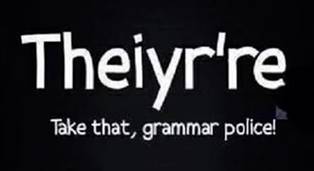
Here’s a submission from John Steinman, an answer to problems with the homonyms there, their, and they’re!

Kara Church

Technical Editor, Advisory

Symitar Documentation Services

Posted by: Jack Henry | June 28, 2016

Editor’s Corner: Zero, You’re My Hero

Hello fellow co-workers, clients, and friends!

One of you very intelligent folks brought up this topic in an email to me: What do you think about people speaking and replacing the number zero with the letter “O”? My first thought was, “Ooh, I do that sometimes when I am saying a credit card number or phone number, and sometimes I’ll say both.” My second thought was, “It’s wrong, but I don’t even realize it until after I’ve said it.”

I decided to see what the experts have to say, and I was really surprised. First, from Paul Brian’s Common Errors in English Usage, I expected him to chastise people like me. Here’s what he had to say:

When reciting a string of numbers such as your credit card number it is common and perfectly acceptable to pronounce zero as “oh.” But when dealing with a registration code or other such string of characters which mixes letters and numbers, it is important to distinguish between the number 0 and the letter O. In most typefaces, a capital O is rounder, fatter, than a zero, but that is not always the case. What looks unambiguous when you type it may come out very unclear on the other end on a computer that renders your message in a different typeface.

In technical contexts, the distinction is often made by using zeros with slashes through them, but this can create as many problems as it solves: those unfamiliar with the convention will be confused by it, numbers using such characters may not sort properly, and slashed zeros created in some fonts change to normal zeros in other fonts.

Our other expert, Grammar Girl, takes it a little farther by saying:

“…it’s actually OK in certain contexts.

For example, it’s fine—even normal—to say “oh” when you’re reading a series of numbers such as:

· A zip code (90210)

· A room number (room 404)

· A phone number (555-206-1234)

· A credit card number (1024 5026 9046 8065)

Of course, we can’t forget agent designations: James Bond (Agent 007).

You pronounce it ‘zero’ when you are talking about math or science. For example, you would say ‘five minus zero equals five’ or that the temperature is ‘below zero.’”

I read somewhere else that saying “oh” instead of zero is an American phenomenon. It still feels a little wrong to say “oh,” though, when you are talking about the number zero.

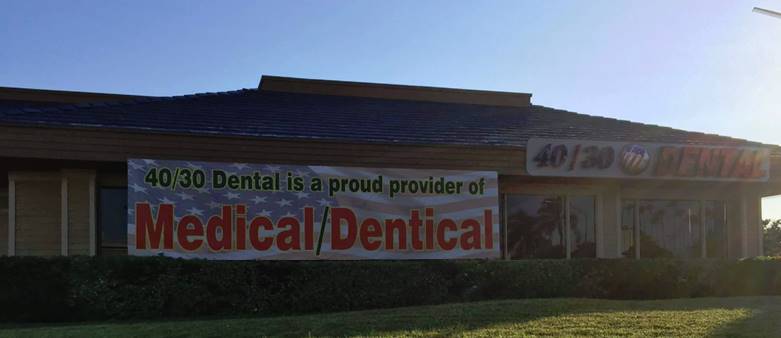
Photo Contest

This came in after the deadline, but I liked it so much I’m including it today. From Mia Murray:

Kara Church

Technical Editor, Advisory

619-542-6773 | Ext: 766773

Symitar Documentation Services

NOTICE: This electronic mail message and any files transmitted with it are intended
exclusively for the individual or entity to which it is addressed. The message,
together with any attachment, may contain confidential and/or privileged information.
Any unauthorized review, use, printing, saving, copying, disclosure or distribution
is strictly prohibited. If you have received this message in error, please
immediately advise the sender by reply email and delete all copies.
Posted by: Jack Henry | June 27, 2016

Editor’s Corner: Loose and Lose

Good morning! Not long ago, I made a careless mistake in the subject line of one of my Editor’s Corner articles. I used the word loose instead of lose. Of course, I did have the article edited, but I typed the subject line just before sending it out, and I obviously lost control of my fingers (and my senses).

A number of you caught the mistake (which makes me proud and a little embarrassed). So, to atone for my grammar sin, I’m writing today’s article on the often confused pair of words: loose and lose.

Loose (rhymes with moose) is an adjective meaning not rigidly fastened or securely attached.

Example:

· His pockets were full of loose change.

Lose (rhymes with shoes) is a verb meaning to part with in an unforeseen or accidental manner or to become deprived of or lacking in.

Examples:

· You could lose your savings if you make a poor investment.

· A blow to the head can cause you to lose your memory.

Donna Bradley Burcher | Senior Technical Editor | Symitar®

8985 Balboa Ave. | San Diego, CA 92123 | Ph. 619.278.0432 | Ext: 765432

Posted by: Jack Henry | June 24, 2016

Editor’s Corner: Skip to my lou, my darling!

Hello to all of our new readers. I thank you for joining us in the Editor’s Corner.

Now a disclaimer for today:

For those of you who don’t like reading or talking about potentially sensitive subjects, I will warn you now that this is a discussion about bathrooms. That said, let’s get to it!

The other day we were out at the San Diego Museum of Man, visiting the new Cannibals exhibit. At one point, our friend said he had to “hit the head.” We all knew what that meant and found the restroom. But that got me thinking about the term head for bathroom, and from there I couldn’t stop. Here is some information from the Online Etymology Dictionary:

head

Old English heafod "top of the body," also "upper end of a slope," also "chief person, leader, ruler; capital city," from Proto-Germanic *haubudam (source also of Old Saxon hobid, Old Norse hofuð, Old Frisian haved, Middle Dutch hovet, Dutch hoofd, Old High German houbit, German Haupt, Gothic haubiþ "head"), from PIE *kaput- "head" (source also of Sanskrit kaput-, Latin caput "head").

Modern spelling is early 15c., representing what was then a long vowel (as in heat) and remained after pronunciation shifted. Of rounded tops of plants from late 14c. Meaning "origin of a river" is mid-14c. Meaning "obverse of a coin" (the side with the portrait) is from 1680s; meaning "foam on a mug of beer" is first attested 1540s; meaning "toilet" is from 1748, based on location of crew toilet in the bow (or head) of a ship. [KC – Emphasis mine.]

loo

"lavatory," 1940, but perhaps 1922, probably from French lieux d’aisances, "lavatory," literally "place of ease," picked up by British servicemen in France during World War I. Or possibly a pun on Waterloo, based on water closet.

john

"toilet," 1932, probably from jakes, used for "toilet" since 15c

jakes

"a privy," mid-15c., genitive singular of jack (n.), perhaps a humorous euphemism.

And the “lou” in the song “Skip to my lou, my darling” is completely unrelated. It is from “a Scottish word for ‘love’,” at least that’s what Wikipedia says!

Enjoy your weekend,

Kara

NOTICE: This electronic mail message and any files transmitted with it are intended
exclusively for the individual or entity to which it is addressed. The message,
together with any attachment, may contain confidential and/or privileged information.
Any unauthorized review, use, printing, saving, copying, disclosure or distribution
is strictly prohibited. If you have received this message in error, please
immediately advise the sender by reply email and delete all copies.

Posted by: Jack Henry | June 23, 2016

Editor’s Corner: Ending a Sentence with a Preposition

One of our readers recently asked whether it is acceptable to end a sentence with a preposition. Kara and Donna discussed this topic previously, but this myth is so pervasive that it’s worth revisiting.

Ending a sentence with a preposition is acceptable and, in some cases, preferable. "What are you waiting for?" is a sensible sentence. "For what are you waiting?" sounds awkward or overly formal to many English speakers. Worse, clumsy attempts to relocate prepositions can mangle sentences beyond recognition. Consider the following examples:

Write This Not This
What are you scared of? Of what are you scared?
Where are you from? From where are you?
She had nobody to talk to. She had nobody to whom to talk.
There’s the horse I was talking about. There’s the horse about which I was talking.
Nobody likes being laughed at. Being laughed at nobody likes.
This alarm has been tampered with. Tampered with this alarm has been.

Some grammar rules are violated so often that the incorrect usage becomes acceptable. This is not one of those cases. There is not now, nor has there ever been, a widely accepted rule against ending sentences with prepositions.

Fussbudgets like John Dryden (1672), Robert Lowth (1762), and Henry Alford (1864) proposed such rules because they wanted English to follow rules of Latin grammar. But for most speakers, intelligibly is a higher goal than mimicking the sentence structure of a dead language.

Ben Ritter | Technical Editor | Symitar®
8985 Balboa Avenue | San Diego, CA 92123
619-682-3391 | or ext. 763391 | www.Symitar.com

Symitar Documentation Services

NOTICE: This electronic mail message and any files transmitted with it are intended
exclusively for the individual or entity to which it is addressed. The message,
together with any attachment, may contain confidential and/or privileged information.
Any unauthorized review, use, printing, saving, copying, disclosure or distribution
is strictly prohibited. If you have received this message in error, please
immediately advise the sender by reply email and delete all copies.
[Originally posted July 1, 2013]

Happy Monday, everyone. I hope you all enjoy this short work week. Kara is taking a well-deserved day off today. So I’m guest hosting with a brief discussion about whether or not it’s grammatically correct to end sentences with prepositions. I know! Riveting, right?

To begin, I should probably first provide, just to be clear, the definition of the word preposition.

According to Grammar Girl (http://grammar.quickanddirtytips.com/ending-prepositions.aspx), “prepositions create relationships between other words.” Some examples of prepositions are: about, at, beside, on, over,etc.

What’s the controversy?

While many of us believe that it’s wrong to end a sentence with a preposition, you may be surprised to learn that most grammarians disagree. Still, many people adhere to this mythical rule—mostly in written communication—which sometimes makes their writing stilted and draws attention to the writer and the style rather than the message.

So, what do you need to know to speak and write correctly?

Your goal should be to create simple, clear sentences. Sometimes trying not to end your sentence with a preposition leaves you with an awkward sentence. For example:

Instead of:
I am interested in the topic about which you wrote.

Say or write:
I am interested in the topic you wrote about.

While the word about is a preposition, it’s absolutely grammatically correct to use it to end a sentence. Remember, your primary goal should always be to be clear and easy to understand.

I would like to go on the record as saying that you, your families, your friends, and everyone else on the planet should avoid the phrase “Where are you at?” We hear it all the time, but in this case, the preposition at is not serving any purpose. Just say, “Where are you?”

And if you don’t want to take my word that it’s okay to end a sentence with a preposition, maybe you’ll listen to Winston Churchill:

Donna Bradley Burcher | Technical Editor | Symitar®

8985 Balboa Ave. | San Diego, CA 92123 | Ph. 619.278.0432 | Extension: 765432

NOTICE: This electronic mail message and any files transmitted with it are intended
exclusively for the individual or entity to which it is addressed. The message,
together with any attachment, may contain confidential and/or privileged information.
Any unauthorized review, use, printing, saving, copying, disclosure or distribution
is strictly prohibited. If you have received this message in error, please
immediately advise the sender by reply email and delete all copies.

Posted by: Jack Henry | June 22, 2016

Editor’s Corner: Charley Horse

Dear readers,

The other day I received an email asking me about the term “charley horse” and how it came to mean “muscle cramp.” My standard resources could not pin down the exact origin of the term, but I thought these explanations might be interesting, nonetheless.

From the Online Etymology Dictionary:

· charley horse (n.) 1887, sporting slang, origin obscure, probably from somebody’s long-forgotten lame racehorse. Charley horse seems to have been a name for a horse or a type of horse (perhaps especially a lame one) around that time.

From the Free Dictionary:

· charley horse Cramp or stiffness in a muscle, most often in the thigh, as in After working in the garden I frequently get a bad charley horse. First used in the 1880s among baseball players, the term was soon extended to more general use. Its true origin is disputed. Among the more likely theories proposed is that it alludes to the name of either a horse or an afflicted ball player who limped like one of the elderly draft horses formerly employed to drag the infield.

And lastly, from Wikipedia:

· Charley horse is a popular colloquial term in Canada and the United States for painful spasms or cramps in the leg muscles caused by a punch or knee to the thigh, typically lasting anywhere from a few seconds to about a day. It can also refer to a bruise on an arm or leg and a bruising of the quadriceps muscle of the anterior or lateral thigh, or contusion of the femur, that commonly results in a haematoma and sometimes several weeks of pain and disability. In this latter sense, such an injury is known as dead leg. In Australia, it is also known as a corked thigh or corky….

Another term, jolly horse, is used to describe simple painful muscle cramps in the leg or foot, especially those that follow strenuous exercise. [KC – Okay, I had never heard of a jolly horse, so I looked this up and didn’t find anything except for this:
Jolly Ball Horse. I don’t think that’s
what the author of this article meant.]

Kara Church

Technical Editor, Advisory

619-542-6773 | Ext: 766773

Symitar Documentation Services

NOTICE: This electronic mail message and any files transmitted with it are intended
exclusively for the individual or entity to which it is addressed. The message,
together with any attachment, may contain confidential and/or privileged information.
Any unauthorized review, use, printing, saving, copying, disclosure or distribution
is strictly prohibited. If you have received this message in error, please
immediately advise the sender by reply email and delete all copies.
Posted by: Jack Henry | June 21, 2016

Editor’s Corner: Druggist, Revisited

Good morning!

The other day, I sent out an article about druggists and chemists and pharmacists (Oh my!), and I asked for input from anyone who could verify whether the term you use depends on the region you live in. I received input from a lot of people, including a druggist’s daughter!

Before I respond, I’d like to share our coworker John Ryan’s response because I like the way he phrased things:

It may not be as much regional as generational. I grew up in Southern California seeing and hearing the term “druggist” used as being synonymous with either a pharmacy or a pharmacist. My parents were from the Midwest (Chicago and Cleveland), but it was a common term I heard used in television reruns from the ‘50s and ‘60s. Sheriff Andy Taylor’s girlfriend Ellie was referred to as a druggist on the Andy Griffith Show (originally aired from 1960-1968), as was Mr. Gower in “It’s a Wonderful Life” (1946). It seems to be a small-town term. Big cities have pharmacists, small towns have druggists. I’ve found current references on the internet to druggists in small towns in Colorado and Ohio. It’s become a quaint term.

I think John is on to something here. What I heard from most folks, across the country, was that in the ‘60s and earlier, it was called a drug store and you’d see the druggist. Something that many people also mentioned was that there aren’t many little drug stores left—it is all Rite Aid and Walgreens and big box stores where the pharmacy is only a tiny part of the establishment.

The other thing that a few of us agree on is that the word “drug” started to have a more negative connotation in the ‘70s and ‘80s. Though not all drugs are bad, Nancy Reagan’s Just Say No campaign started making it sound that way. I suspect that it became more popular to talk about pharmacists as time passed.

Whether it is generational or a blemish on the word “drugs,” I think if you refer to “the druggist” these days, you may be met with an arched eyebrow for a response.

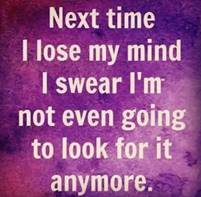
Photo Contest

From G. David Walker, an error on the back of a book jacket.

Kara Church

Technical Editor, Advisory

Symitar Documentation Services

« Newer Posts - Older Posts »

Categories