Posted by: Jack Henry | July 29, 2016

Editor’s Corner: Virgule

My apologies to all of you who registered for my class on using Microsoft® Word; I had a dental emergency and have to reschedule the class for another day.

Today’s Editor’s Corner will be almost as brief as my class! I received this definition from Dictionary.com and I liked it, so I thought I’d share it with you.

Virgule

1. a short oblique stroke (/) between two words indicating that whichever is appropriate may be chosen to complete the sense of the text in which they occur: The defendant and his/her attorney must appear in court.

2. a dividing line, as in dates, fractions, a run-in passage of poetry to show verse division, etc.: 3/21/27; “Sweetest love, I do not go/For weariness of thee.” (John Donne)

I also liked this etymology, from the Online Etymology Dictionary:

(T)hin sloping line similar to a modern backslash, used as a comma in medieval MSS and still in modern text to indicate line breaks in poetry, 1837, from French virgule (16c.), from Latin virgula "punctuation mark," literally "little twig," diminutive of virga "shoot, rod, stick."

Kara Church

Technical Editor, Advisory

619-542-6773 | Ext: 766773

Symitar Documentation Services

NOTICE: This electronic mail message and any files transmitted with it are intended
exclusively for the individual or entity to which it is addressed. The message,
together with any attachment, may contain confidential and/or privileged information.
Any unauthorized review, use, printing, saving, copying, disclosure or distribution
is strictly prohibited. If you have received this message in error, please
immediately advise the sender by reply email and delete all copies.

Posted by: Jack Henry | July 28, 2016

Editor’s Corner: Portmanteau

I learned a new word, smombie (thank you, Ron Fauset). Smombie is short for smartphone zombie. Smombies are people who are totally unaware of their surroundings. They walk around entirely absorbed in their smartphones (UrbanDictionary.com).

The word smombie made me think of word blending, or portmanteaus. A portmanteau is “a word or morpheme whose form and meaning are derived from a blending of two or more distinct forms (as smog from smoke and fog).” Portmanteau also means a trunk or suitcase that opens into two parts. The word portmanteau comes from porter “to carry” + manteau “cloak.”

Several websites give credit to Lewis Carroll for creating blended words and for calling these words portmanteaus (named after the two-part suitcase). You may recall Humpty Dumpty explaining words from the “Jabberwocky” poem to Alice in Through the Looking Glass. Humpty Dumpty compares the word slithy (slimy + lithe) to a portmanteau.

“You see it’s like a portmanteau—there are two meanings packed up into one word.”

Here are some more examples of portmanteaus. Don’t get mad at me, I didn’t make them up.

brunch: breakfast + lunch

bromance: brother + romance

carjack: car + hijack

chocoholic: chocolate + alcoholic

cosplay: costume + play

cronut: croissant + donut

emoticon: emotion + icon

Frappuccino®: frappé + cappuccino

frenemy: friend + enemy

froyo: frozen + yogurt

glamping: glamourous + camping

hangry: hungry + angry

mocktail: mock + cocktail

mockumentary: mock + documentary

moped: motor + pedal

motel: motor + hotel

Spanglish: Spanish + English

spork: spoon + fork

staycation: stay + vacation

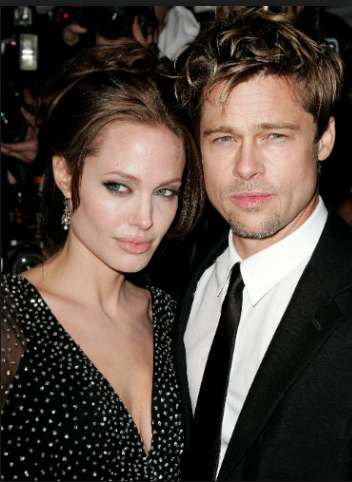
Brangelina:

Jackie Solano | Technical Editor | Symitar®

8985 Balboa Ave. | San Diego, CA 92123 | Ph. 619.542.6711 | Extension: 766711

Symitar Documentation Services

Posted by: Jack Henry | July 27, 2016

Editor’s Corner: Fragments

Yesterday we discussed main clauses and sentences. Today I want to tell you a little bit about what happens when you are missing part of a sentence.

First, remember that a sentence requires at least a main clause. You need the subject, verb, and complete thought. If you are missing one of these things, you are stuck with a sentence fragment. Just like a garment fragment, unless you’re at the beach, a fragment is not enough to cover your needs!

Examples of fragments:

· From now until then.
(Missing a subject and a verb.)
I plan to spend money from now until then.
(I=subject; plan=verb)

· On the heads of Sydney and Ronnie.
(Prepositional phrase, possibly missing a subject and verb.)
Two small birds landed on the heads of Sydney and Ronnie.
(birds=subject; landed=verb)

· Swimming and running and other activities.
(Missing a subject and a verb.)
Camp offers swimming and running and other activities.
(camp=subject; offers=verb)

As you can see, it can be very confusing and misleading when you provide someone with nothing more than a sentence fragment. Here are some additional examples from one of your co-workers who is peeved by the use of fragments. Note that the speaker seems too busy to insert the subject: I. It’s only one letter, and you need to add it to make the sentence complete and prevent peevishness!

· “Need to let you know I can’t make the meeting.”

· “Thought I could win the race yesterday.”

· “Don’t know how to respond to her.”

Kara Church

Technical Editor, Advisory

619-542-6773 | Ext: 766773

Symitar Documentation Services

NOTICE: This electronic mail message and any files transmitted with it are intended
exclusively for the individual or entity to which it is addressed. The message,
together with any attachment, may contain confidential and/or privileged information.
Any unauthorized review, use, printing, saving, copying, disclosure or distribution
is strictly prohibited. If you have received this message in error, please
immediately advise the sender by reply email and delete all copies.

Posted by: Jack Henry | July 26, 2016

Editor’s Corner: Main Clauses and Sentences

Way back in April, I received an email from one of our JHA technical writers. She was quite distraught because she couldn’t get away from people speaking in sentence fragments. Rather than getting right into sentence fragments, I thought maybe we should break up this discussion into a few pieces. Just like Maria and the Von Trapp Family, let’s start at the very beginning (since it’s a very good place to start).

Main Clause

A main clause (also called an independent clause) must contain the following:

· A subject

· A verb

· A complete thought

Examples:

· The Labrador caught the ball.
Labrador=subject; caught=verb

· Billy saw a truck crash into a utility box.
Billy=subject; saw=verb

· Bobo and Trixie have eaten all of their treats for today.
Bobo, Trixie=subjects; have eaten=verb

You may have noticed that these examples look like sentences; indeed, they are sentences. The rule behind a sentence is that it must contain at least one main clause.

Tomorrow, we will talk about what you have if your clause is missing one of those important items above (subject, verb, or complete thought).

Kara Church

Technical Editor, Advisory

619-542-6773 | Ext: 766773

Symitar Documentation Services

NOTICE: This electronic mail message and any files transmitted with it are intended
exclusively for the individual or entity to which it is addressed. The message,
together with any attachment, may contain confidential and/or privileged information.
Any unauthorized review, use, printing, saving, copying, disclosure or distribution
is strictly prohibited. If you have received this message in error, please
immediately advise the sender by reply email and delete all copies.

Posted by: Jack Henry | July 25, 2016

Editor’s Corner: Uncouth/Couth

Reader Robert Trescott asked about words that require prefixes, like the word uncouth. Based on the un- prefix, it seems like couth should also be a word. But, Robert writes, "I’ve never seen an example like, ‘Miss Manners praised the reader for being so couth.’"

Uncouth is an "unpaired word": a word that, "according to the usual rules of the language, would appear to have a related word but does not" (thanks, Wikipedia).

If Miss Manners were to break decorum and call a reader uncouth, she would mean something like the following (from Merriam-Webster):

uncouth: awkward and uncultivated in appearance, manner, or behavior; rude

But uncouth also has an earlier (now archaic) definition:

uncouth: not known or not familiar to one; seldom experienced; uncommon, rare

Uncouth is a Middle English word. It comes from the prefix un- and the Old English word cth, meaning "familiar, known." Cth survives as the Scottish word couthie, meaning "pleasant, kindly, friendly."

Over the past 900 years, uncouth changed meaning from "not known or not familiar" to "strange or clumsy in shape or appearance," and then to "awkward and uncultivated." (The idea that unfamiliar things are peculiar or unrefined also underlies the various meanings of the word strange.)

Couth did not undergo such an evolution, but in 1896, it re-entered modern English (as a back-formation from uncouth):

couth: sophisticated, polished

Although couth is not very common these days, Miss Manners could use it to praise a reader (if only her readers were as sophisticated and polished as ours).

Thank you, Robert, for your question.

Ben Ritter | Technical Editor | Symitar
8985 Balboa Avenue | San Diego, CA 92123
619-682-3391 | or ext. 763391 | www.Symitar.com

Symitar Documentation Services

NOTICE: This electronic mail message and any files transmitted with it are intended
exclusively for the individual or entity to which it is addressed. The message,
together with any attachment, may contain confidential and/or privileged information.
Any unauthorized review, use, printing, saving, copying, disclosure or distribution
is strictly prohibited. If you have received this message in error, please
immediately advise the sender by reply email and delete all copies.

Posted by: Jack Henry | July 22, 2016

Editor’s Corner: The I-5

Dear Editrix,

When you visit California, the locals say “take the 405"; in Texas, it’s just "take 635." What’s the deal?

Dear Reader,

Good observation! I thought it was because we have so many freeways here and it is easier to say the numbers than the names. It seems that has a little bit to do with it, but in the following article, by Nathan Masters, he provides more information on this phenomenon. I hope this helps!

Editrix

The 5, the 101, the 405: Why Southern Californians Love Saying “the” Before Freeway Numbers

Southern Californians have a distinctive – "Saturday Night Live’s" Fred Armisen and Kristen Wiig might say funny – way of giving directions. To get from Santa Monica to Hollywood, take the 10 to the 110 to the 101. Burbank to San Diego? The 134 to the 5. And, if you can, always avoid the 405.

Why the definite articles? After all, a resident of the Bay Area enjoys coastal drives along "101" or takes "80 east" to Sacramento. Most of North America, in fact, omits the "the" before route numbers.

The answer begins with the region’s early embrace of the freeway. Long before the National Interstate and Defense Highways Act of 1956 gave most U.S. cities their first freeways, Los Angeles had built several. These weren’t simply extensions of federal interstate highways through the city; they were local routes, engineered to carry local traffic and (partly) paid for by local funds. It only made sense that, as they opened one by one, they’d get local names, ones that succinctly denoted their route or destination. The freeway through the Cahuenga Pass thus became the Cahuenga Pass Freeway, and Angelenos knew the freeway to San Bernardino as the San Bernardino Freeway.

State highway officials did affix route numbers to these freeways. But clarity dictated that Southern Californians continue to use their descriptive names. In their early years, most Los Angeles-area freeways bore signs for multiple numbered highway routes. The Pasadena Freeway, for example, was Route 6, 66, and 99, all at once. The Harbor Freeway carried both Route 6 and Route 11. The Hollywood, Route 66 and 101. Who wouldn’t prefer the simplicity of a name over a confusing array of numbers?

Soon a shorthand emerged for describing a route through the city. Joan Didion captured this Southern California vernacular in "Play It As It Lays" (1970), in which Maria "drove the San Diego to the Harbor, the Harbor up to the Hollywood, the Hollywood to the Golden State, the Santa Monica, the Santa Ana, the Pasadena, the Ventura."

How, then, did that morph into "the 405 to the 110, the 110 up to the 101, the 101 to the 5, the 10, the 5, the 110, the 134"?

Two developments convinced Southern Californians to refer to freeways by number rather than name. In 1964, the state simplified its highway numbering system, ensuring that, with few exceptions, each freeway would bear only one route number. Around the same time, a flurry of new construction added unfamiliar freeway names to the region’s road maps. Drivers found it easier to learn new numbers like the 605 or the 91 rather than new names like the San Gabriel River Freeway or the Redondo Beach Freeway.

Although the transition was gradual – numbers only eclipsed names in common usage in the late 1970s, and Caltrans still included the old names in signage through the 1990s – Southern Californians eventually joined the rest of North America in referring to freeways by number. But when they did, they retained their old habit of prefixing a definite article, the, giving rise to a regional idiom that still confounds and amuses outsiders today.

Kara Church

Technical Editor, Advisory

619-542-6773 | Ext: 766773

Symitar Documentation Services

NOTICE: This electronic mail message and any files transmitted with it are intended
exclusively for the individual or entity to which it is addressed. The message,
together with any attachment, may contain confidential and/or privileged information.
Any unauthorized review, use, printing, saving, copying, disclosure or distribution
is strictly prohibited. If you have received this message in error, please
immediately advise the sender by reply email and delete all copies.

Posted by: Jack Henry | July 21, 2016

Editor’s Corner: Keep Your Paragraphs Short

Most people don’t have a lot of time to read their emails. If they open an email to find several long paragraphs, they probably won’t do more than skim the email, which means they could miss important information.

You may not realize it, but writing is visual. According to William Zinsser, in his book On Writing Well, writing “…catches the eye before it catches the brain. Short paragraphs put air around what you write and make it look inviting, whereas a long chunk of type can discourage a reader from even starting to read” (Zinsser 1998, 80).

Consider how different Aesop’s Fable, “The Lion and the Mouse,” looks when I “put air around” the text. The columns contain exactly the same information, but the information on the right is much more inviting.

The Lion and the Mouse
A Lion lay asleep in the forest, his great head resting on his paws. A timid little Mouse came upon him unexpectedly, and in her fright and haste to get away, ran across the Lion’s nose. Roused from his nap, the Lion laid his huge paw angrily on the tiny creature to kill her. "Spare me!" begged the poor Mouse. "Please let me go and some day I will surely repay you." The Lion was much amused to think that a Mouse could ever help him. But he was generous and finally let the Mouse go. Some days later, while stalking his prey in the forest, the Lion was caught in the toils of a hunter’s net. Unable to free himself, he filled the forest with his angry roaring. The Mouse knew the voice and quickly found the Lion struggling in the net. Running to one of the great ropes that bound him, she gnawed it until it parted, and soon the Lion was free. "You laughed when I said I would repay you," said the Mouse. "Now you see that even a Mouse can help a Lion The Moral Is: A kindness is never wasted.
The Lion and the Mouse

A Lion lay asleep in the forest, his great head resting on his paws.

A timid little Mouse came upon him unexpectedly, and in her fright and haste to get away, ran across the Lion’s nose.

Roused from his nap, the Lion laid his huge paw angrily on the tiny creature to kill her.

"Spare me!" begged the poor Mouse. "Please let me go and some day I will surely repay you."

The Lion was much amused to think that a Mouse could ever help him. But he was generous and finally let the Mouse go.

Some days later, while stalking his prey in the forest, the Lion was caught in the toils of a hunter’s net.

Unable to free himself, he filled the forest with his angry roaring. The Mouse knew the voice and quickly found the Lion struggling in the net.

Running to one of the great ropes that bound him, she gnawed it until it parted, and soon the Lion was free.

"You laughed when I said I would repay you," said the Mouse. "Now you see that even a Mouse can help a Lion."

The Moral Is: A kindness is never wasted.

This tip is important for emails but also for technical and professional writing. Keep your audience’s attention by keeping your paragraphs short and to the point.

Donna Bradley Burcher | Senior Technical Editor | Symitar®

8985 Balboa Ave. | San Diego, CA 92123 | Ph. 619.278.0432 | Extension: 765432

Symitar Technical Publications Writing and Editing Requests

NOTICE: This electronic mail message and any files transmitted with it are intended
exclusively for the individual or entity to which it is addressed. The message,
together with any attachment, may contain confidential and/or privileged information.
Any unauthorized review, use, printing, saving, copying, disclosure or distribution
is strictly prohibited. If you have received this message in error, please
immediately advise the sender by reply email and delete all copies.

Posted by: Jack Henry | July 20, 2016

Editor’s Corner: Buffalo, No Bull

A big “thank you” to Ron Fauset for supplying me with articles from the San Diego Union-Tribune so that I can enjoy them and be a little lazy now and then. Today’s article is by Richard Lederer and it’s about slang and idiomatic phrases from the word buffalo.

Buffalo buffalo buffalo Buffalo buffalo is a possible sen­tence, and it raises the question why buffalo has become a verb denoting “to confuse, frustrate, intimidate.” The answer is that, despite the slaughter of tens of millions in the United States, the animal is hard to kill individually. Buffalo are swift, tough and belligerent. The vogue meaning of buff as “well built, muscular, hunky” reflects buffalo, an image of rugged strength.

Products made from buffalo were plentiful in the 19th century, including strips of buffalo hide that were used to bring metals such as silver to a high polish. That’s where we get the verb to buff. Firemen wore buffalo robes as their winter gear. Because these buffcoats were the color of human Caucasian skin, in the buff arose as a synonym for “naked.”

Dandies who had nothing better to do than to rush to fires and watch the burning emulated the firefighters by donning the same buffcoats, as they were called. These men became known as buffs, and, by extension, a buff is anyone avidly devoted to a pursuit or hobby.

To read the remainder of this article and to take Mr. Lederer’s quiz on animal verbs, click here.

Confused by Buffalo buffalo buffalo Buffalo buffalo as a sentence? Maybe it should also include Mark Ruffalo? No, I’m kidding. Here’s an approximate “translation” for you: Buffalos (or buffaloes, or buffalo—all three are appropriate versions of the plural form for buffalo) from Buffalo, New York frustrate and intimidate other buffalos from Buffalo, New York.

Kara Church

Technical Editor, Advisory

619-542-6773 | Ext: 766773

Symitar Documentation Services

NOTICE: This electronic mail message and any files transmitted with it are intended
exclusively for the individual or entity to which it is addressed. The message,
together with any attachment, may contain confidential and/or privileged information.
Any unauthorized review, use, printing, saving, copying, disclosure or distribution
is strictly prohibited. If you have received this message in error, please
immediately advise the sender by reply email and delete all copies.

Posted by: Jack Henry | July 19, 2016

Editor’s Corner: Alphabetizing Foreign Words

As I’m sure you can tell, I am very much enjoying my new book But Can I Start a Sentence with “But”? Advice from the Chicago Manual of Style Q&A. Here’s an item that usually comes up closer to the winter holidays, since that’s when people usually send out tons of greeting cards. This one is from close to home.

Q. I have a disagreement with a coworker about how to alphabetize street names with foreign words in them. I live in San Diego, so there are a lot of Spanish street names. I, for example, would file Via Hacienda under V. She argues that because Via means “Street,” it should be under H instead. She reasons that if it were House Street, we would file it under H. My argument is that since we are not speaking Spanish, we should follow standard English alphabetizing rules.

A.You are right; there could be any number of foreign-language terms among the street names in San Diego, and unless all readers knew all the languages, the list would be useless. You can see the city government of San Francisco puts Via Bufano under V in its street guide (https://data.sfgov.org/, under Geographic Locations and Boundaries: Street Names). Another solution is to list such names in both locations, or to put in blind entries:

Via Hacienda. See Hacienda, Via
or
Hacienda, Via. See Via Hacienda

Note: This advice is similar to the advice that CMOS gives on the plural version of lots of words we learned different endings for when we were younger. For example, more than one appendix used to be the “appendices” and more than one index was referred to as the “indices.” CMOS, instead, recommends appendixes and indexes, so that we are following English rules for plurals rather than Latin rules.

Kara Church

Technical Editor, Advisory

619-542-6773 | Ext: 766773

Symitar Documentation Services

NOTICE: This electronic mail message and any files transmitted with it are intended
exclusively for the individual or entity to which it is addressed. The message,
together with any attachment, may contain confidential and/or privileged information.
Any unauthorized review, use, printing, saving, copying, disclosure or distribution
is strictly prohibited. If you have received this message in error, please
immediately advise the sender by reply email and delete all copies.

Posted by: Jack Henry | July 18, 2016

Editor’s Corner: Each vs. Every

Good morning! Recently, a friend asked me to explain the difference between each and every. I have to admit, this one wasn’t easy for me to put into simple, everyday language, but I think I’ve got it. So, sit down, pull your socks up, and let’s go.

Use each when you’re talking about a group of things or people, but you want to consider the things or people individually. Each expresses the idea of one by one.

Example: The president spoke to each of the soldiers.

In the sentence above, we are talking about a group (of soldiers) but we want to emphasize that the president spoke to each of them individually, one by one.

Use every when you are referring to a group that is lumped together as one. You regard the group as a whole (not as individuals).

Example: Every enlisted person deserves our respect.

In the sentence above, we are still referring a group, but we are referring to them in general, not individually.

Is this a minor distinction? Yes.

Do most people use these words interchangeably? Yes.

Wouldn’t you like to rise above the masses?

Donna Bradley Burcher | Senior Technical Editor | Symitar®

8985 Balboa Ave. | San Diego, CA 92123 | Ph. 619.278.0432 | Ext: 765432

« Newer Posts - Older Posts »

Categories