Posted by: Jack Henry | April 18, 2017

Editor’s Corner: Affect and Effect Annual Visitation

Can you explain the difference between affect and effect?

This is probably the most frequently asked question I get. And boy do I get it! I sometimes have problems with when to use affect and effect, too. In fact, I believe I gave a friend the incorrect information at dinner the other night, which is why I also tried to distract her with a glass of hard cider. When personally faced with this challenge, sometimes I just rewrite the sentence so I’m sure I’m using the right word.

I have generally figured out that affect is used more often as a verb, and effect is used more often as a noun. How does this help? Well, in basic circumstances like this:

· The poison in the well affected (verb) the taste of the water.

· The rainfall this year had the effect (noun) of painting the desert with wildflowers.

· A bad attitude might affect (verb) your whole evening.

· The sound effects (noun) in that movie were fantastic!

But here’s the tough part: what about when affect is a noun, and effect is a verb?

· May I please speak with someone who can effect (verb) change? No more of this nonsense with passing the buck!

· That guy had the affect (noun) of a spoiled rich kid who had never been told no.

Officially, here are some definitions from Merriam-Webster:

affect (verb): To produce an effect upon.[KC – Okay, this is from the dictionary. I’d like to say, “Thanks, but no thanks, M-W. Are you kidding me?” Let’s try again.]

· affect (verb): To act on. To cause. To produce a response in someone.

· affect (noun): psychology a set of observable manifestations of an experienced emotion : the facial expressions, gestures, postures, vocal intonations, etc., that typically accompany an emotion

· effect (verb): to succeed in doing or achieving (something) : to cause or bring about (something) : accomplish 2 : to make (something, such as a plan or policy) functional or operative : to put (something) into effect

· effect (noun): a change that occurs as a consequence of something that happens or is done : something that follows from an antecedent : result, outcome

I hope this helps!

Kara Church

Technical Editor, Advisory

619-542-6773 | Ext: 766773

Symitar Documentation Services

NOTICE: This electronic mail message and any files transmitted with it are intended
exclusively for the individual or entity to which it is addressed. The message,
together with any attachment, may contain confidential and/or privileged information.
Any unauthorized review, use, printing, saving, copying, disclosure or distribution
is strictly prohibited. If you have received this message in error, please
immediately advise the sender by reply email and delete all copies.
Posted by: Jack Henry | April 17, 2017

Editor’s Corner: Old Coot

Good morning, and happy Monday to you all!

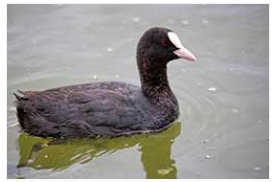
Recently, I wrote a post and used the term old coot in one of my examples. One of our esteemed subscribers commented on the term and got me to thinking. Where does old coot come from, and what does it mean exactly?

A quick search on Merriam-Webster revealed that the word coot is of Dutch origin and that the first known use was in the 15th century. Here are the definitions:

1. Any of various slaty-black birds (genus Fulica) of the rail family that somewhat resemble ducks and have lobed toes and the upper mandible prolonged on the forehead as a horny frontal shield

2. Any of several North American scoters [dbb – A scoter is a type of sea duck; the males have chiefly black plumage]

3. A harmless simple person

Merriam-Webster provides this further definition for English language learners:

· A strange and unusually old man

And the Harper Collinsdictionary offers this definition:

· An amusing or eccentric old fellow

During this quick research project, I learned two things. First, the actual meaning of coot isn’t as derogatory as I thought. Second, at least in these two dictionaries, a coot is used primarily to describe an old man.

I used it to refer to a mean old woman, so I was off base on two counts.

Coot − A duck-like, fresh water bird.

Donna Bradley Burcher | Senior Technical Editor | Symitar®

8985 Balboa Ave. | San Diego, CA 92123 | Ph. 619.278.0432 | Ext: 765432

Posted by: Jack Henry | April 14, 2017

Editor’s Corner: Mancy Pants

The other day, I ran across the word arithmancy, which means “divination by the use of numbers, especially by the number of letters in names.” Then, I thought of the word necromancy, which means “divination involving death or the dead.” I thought I’d see if there were any other words with the suffix -mancy. I was shocked with the number of words ending in -mancy! This suffix has its own web page! I’ve selected a few of the words I found on Wikipedia’s page for your enjoyment.

But first, the suffix itself:

-mancy: The act of divining; a foreseeing or foretelling of future events.

§ alphitomancy: An Ancient Greek method of divination using barley meal, used for instance to reveal guilty parties; it entailed feeding a person or group barley meal, and judging those who felt no effects to be innocent, while judging those who felt indigestion to be guilty.

§ batrachomancy (rare): Divination with frogs.

§ chronomancy: The divination of the best time to do something, or the determination of lucky and unlucky days.

§ daphnomancy (rare): Divination by laurel branches or trees, leaves etc.

§ enoptromancy: Divination by means of a mirror or other reflective surfaces.

§ felidomancy: Divination by interpreting the appearance and behavior of cats.

§ gyromancy:

o Divination where people walk on a circle of letters until dizzy; the letters they fall on are significant. Similar to Dervishing.

o Divination by whirling a coin on a circle of letters.

§ halomancy (also alomancy): Divination by use of salt. This is the origin for the superstition of spilled salt.

§ ichthyomancy:

o Divination interpreting the appearance and behavior of fish. A form of augury.

o Divination interpreting the entrails of fish. A form of aruspicy.

§ kephalomancy: Divination by the study of the skull or head of a donkey or goat. Sometimes mentioned as the roasting of an ass’s head on hot coals.  

§ lithomancy: Divination with the use of precious or semi-precious stones, gemstones, or normal stones by either interpreting the light they reflect (crystallomancy), or how they fall (sortilege).

§ molybdomancy: Divination by interpreting shapes formed when molten metal, typically lead or tin, is dropped into water.

§ nephomancy: Prophecy by use of the movement of clouds.

§ omphalomancy: Divination by means of a child’s navel, to learn how many children the mother may have.

§ pedomancy: Divination by examining the soles of the feet.

§ rhabdomancy: Divination with a wand or rod; dowsing.

§ scapulimancy: Divination using shoulder bones.

§ tasseomancy: Divination with tea leaves or coffee grounds.

§ zoomancy: Divination by means of animals.

Kara Church

Technical Editor, Advisory

619-542-6773 | Ext: 766773

Symitar Documentation Services

NOTICE: This electronic mail message and any files transmitted with it are intended
exclusively for the individual or entity to which it is addressed. The message,
together with any attachment, may contain confidential and/or privileged information.
Any unauthorized review, use, printing, saving, copying, disclosure or distribution
is strictly prohibited. If you have received this message in error, please
immediately advise the sender by reply email and delete all copies.
Posted by: Jack Henry | April 13, 2017

Editor’s Corner: How to Write About Radio Buttons

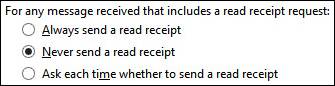
Like check boxes, radio buttons allow you to select from a set of options.

Unlike check boxes (which allow you to make multiple selections), radio buttons allow you to select only one option at a time. For example, in the previous image, selecting Always Send a Read Receipt clears the current selection (Never Send a Read Receipt).

Why Are They Called “Radio” Buttons?

Radio buttons (in a user interface) are similar to the preset buttons on older radios. Only one button could be pushed in at a time, so pressing one button caused another button to pop out.

Joe Haupt / Wikimedia Commons

Modern radios work the same way—you can’t select two preset stations at once—but without the dramatic popping-out action.

How to Describe Radio Buttons

In general, it is not necessary to say “radio button.” Refer to a radio button by its label alone; for example, “Select Always Send a Read Receipt.”

If you must refer to the button itself (for example, when describing the user interface to a software developer), use the term “radio button,” not “option button.”

Ben Ritter | Technical Editor | Symitar®
8985 Balboa Avenue | San Diego, CA 92123
619-682-3391 | or ext. 763391 | www.Symitar.com

Symitar Documentation Services

NOTICE: This electronic mail message and any files transmitted with it are intended
exclusively for the individual or entity to which it is addressed. The message,
together with any attachment, may contain confidential and/or privileged information.
Any unauthorized review, use, printing, saving, copying, disclosure or distribution
is strictly prohibited. If you have received this message in error, please
immediately advise the sender by reply email and delete all copies.

Posted by: Jack Henry | April 12, 2017

Editor’s Corner: Space Arguments

Oh my goodness! I never know when I’m going to touch a nerve with y’all, but apparently I did yesterday. I received quite a few emails from readers about the rule of using one space after a period, and most of them were not happy emails.

First, let’s calm ourselves down by looking at a photo of my new puppy, Harvey, and my old doggie, Bella. Deep breath. That’s it.

Now, for some official information:

· Our JHA Style Guide says to use one space after a colon or period.

· The Chicago Manual of Style, a reference we use, says to use one space after a colon or period.

· The Microsoft Manual of Style, also a reference we use, says: “Use only one space after a period in both printed and online content.”

I know; change can be difficult. I grew up using a manual typewriter, and then received an electric typewriter for my 18th birthday. Back then, when Courier New was the only font, two spaces made sense. Now we have many different fonts designed for printed and online material, and we don’t need that extra space. Get rid of it…it’s a pox on your paper!

If you’d like to hear from an expert, Grammar Girl has written an article on the topic here.

If you think the editors here won’t notice, well, we will. We’ve been posting about this topic for several years now, and we will go through your documents to search for (and replace) double spaces.

Still not convinced? Here are some past articles on the same topic. Viva la single space!

· https://episystechpubs.com/2013/01/08/editors-corner-one-space-period/

· https://episystechpubs.com/2014/11/20/nifty-nugget-how-many-spaces-after-a-period/

· https://episystechpubs.com/2013/04/26/editors-corner-rules-do-change/

Kara Church

Technical Editor, Advisory

Symitar Documentation Services

Posted by: Jack Henry | April 11, 2017

Editor’s Corner: One Space

This one’s for those of you who have asked, wondered, or argued about whether we should use one or two spaces after a period. From our big daddy guidebook, the Chicago Manual of Style and its April Q&A:

Q. I recognize all writing formats today say there is to be one space between the period of a sentence and the first letter of the next sentence. I believe this fails to take into account studies that refer to visual cues that assist the reading process. So I start here with you to request this be fully discussed and reviewed with the hope that we may at minimum note that two spaces are acceptable between sentences. Thank you for your consideration of this matter.

A. I’m so sorry to report that that ship sailed long ago. You are a lone voice, crying in the wilderness. Too little, too late; a bolted horse, a dollar short. No metaphor can express how hopeless this is. Our best advice to you is to look for a silver lining in the single space.

Kara Church

Technical Editor, Advisory

Symitar Documentation Services

Posted by: Jack Henry | April 10, 2017

Editor’s Corner: May I or Might I?

Last Monday, I shared a story about asking my Aunt Ola for cookies. She educated me on the difference between the words can and may.

In that post, I pointed out that some writers have been using may (giving permission) when they should be using can (indicating ability). This was my example showing the incorrect usage: “You may run the programs in any order.” I assumed that the writers were being overly polite.

A wise Editor’s Corner subscriber, Jolie L., pointed out that part of the confusion could be that, along with asking for permission, the word may also implies possibility. Her excellent example is, “You may see a crazy man in a black hat on the way to work. Just ignore him."

Jolie is absolutely right. The word may can be used to ask for permission, and it also can be used to imply a possibility. And that brings us to another word pair that we should look at: may and might.

The thing to remember with these two words is that you use may to express what is possible, factual, or could be factual:

· I may go on vacation in June.

And you use might to express what is hypothetical, counterfactual, or remotely possible:

· If I win the lottery, I might retire the next day.

It’s a matter of degree. Things that may happen are more likely to happen than things that might happen. While it’s a subtle distinction, it’s good to know the difference—just in case there’s an Aunt Ola in your life.

Donna Bradley Burcher | Senior Technical Editor | Symitar®

8985 Balboa Ave. | San Diego, CA 92123 | Ph. 619.278.0432 | Extension: 765432

Symitar Technical Publications Writing and Editing Requests

NOTICE: This electronic mail message and any files transmitted with it are intended
exclusively for the individual or entity to which it is addressed. The message,
together with any attachment, may contain confidential and/or privileged information.
Any unauthorized review, use, printing, saving, copying, disclosure or distribution
is strictly prohibited. If you have received this message in error, please
immediately advise the sender by reply email and delete all copies.

Posted by: Jack Henry | April 7, 2017

Editor’s Corner: Perspective vs Prospective

Dear Editrix,

I’ve noticed folks using the words perspective and prospective incorrectly. Could you write something about these words so that people use them correctly?

Tired Talking in Texas

Dear Tired,

It would be my pleasure to review these words! Here are some shortened definitions from Merriam-Webster (in black) and my examples (in blue).

perspective (noun)

1: the technique of representing on a plane or curved surface the space relationships of natural objects as they appear to the eye

2: the interrelation in which parts of a subject are mentally viewed : the aspect of an object of thought from a particular standpoint : configuration

3: a visible scene; especially : one giving a distinctive impression of distance : vista

4: the appearance to the eye of objects in respect to their relative distance and positions

5: a perceptible appearance

Examples:

· From the perspective at the top of the Empire State Building, everything looks tiny.

· I moved from across the room until I was almost nose-to-nose with Botticelli’s The Birth of Venus. Though the perspective was completely different from one end of the room to the other, Venus was consistently vibrant and beautiful.

prospective (adjective)

1a: likely or expected to be or become something specified in the future <a prospective mother><a prospective teacher><a prospective heir><showing homes to prospective buyers>

b: likely or expected to happen <She was so wrought up by her prospective loss that she could only think of rash, impossible, destructive things to do. — Theodore Dreiser, The Titan, 1914>

2: concerned with or relating to the future : effective in the future

Examples:

· The prospective mothers practiced their breathing and soaking in tubs during their water birth class.

· To impress the prospective clients, the sales team dressed in their finest suits and served champagne and caviar for an afternoon snack.

Kara Church

Technical Editor, Advisory

619-542-6773 | Ext: 766773

Symitar Documentation Services

NOTICE: This electronic mail message and any files transmitted with it are intended
exclusively for the individual or entity to which it is addressed. The message,
together with any attachment, may contain confidential and/or privileged information.
Any unauthorized review, use, printing, saving, copying, disclosure or distribution
is strictly prohibited. If you have received this message in error, please
immediately advise the sender by reply email and delete all copies.

Posted by: Jack Henry | April 6, 2017

Editor’s Corner: Union Jack

Good morning!

Yes, I know we earned our independence from England a long time ago, but I thought this article on the Union Jack was interesting. In addition, for your viewing pleasure, I compiled a graphic of the original flags that make up the current flag.

From The Grammarist:

Union Jack

The Union Jack is a symbol that is well known throughout the globe. We will examine the meaning of the term Union Jack, where it came from and some examples of its use in sentences.

The Union Jack is the national flag of the United Kingdom of Great Britain and Northern Ireland. The 1801 design combines the symbols pertaining to the various political factions of the time. The distinctive graphic is a result of combining the crosses representing St. George, the patron saint of England, St. Andrew, the patron saint of Scotland, and St. Patrick, the patron saint of Ireland. By this time, Wales was already considered a principality of England. The Jack in Union Jack refers to the name for a small flag flown on the jackstaff of a ship, which is a pole extending from the bow of the ship. This jack designated the nationality under which the ship was registered. Note that both words are capitalized in the term Union Jack. The national flag of Great Britain may also be called the Union Flag. The term Union Jackery is a term that means the act of enthusiastically waving the Union Jack, displaying overenthusiastic patriotism.

Kara Church

Technical Editor, Advisory

Symitar Documentation Services

Posted by: Jack Henry | April 5, 2017

Editor’s Corner: Blue Murder

Yesterday, we discussed how Americans say bloody murder to mean in a loud, violent manner. (For example: I took a bite of Dominic’s dessert and he screamed bloody murder because he hates sharing.)

It appears that while we talk about bloody murder, other English speakers refer to blue murder, but it has the same meaning. I have cut this article down for our purposes, but the full article is at World Wide Words (complete with British spelling and punctuation).

Blue murder

This idiom is largely restricted to Commonwealth countries. Americans prefer to cry bloody murder, which is more expressive and easier to understand. Either way, it means to make a noisy and extravagant protest.

As long as the bite does not come in the form of double-digit inflation, it’s all sweetness. Cross that mark, and they’re all screaming blue murder. The middle-class loves a free lunch, subsidised healthcare and education.

The Hindustan Times, 6 Aug. 2011.

Using colours as metaphors for emotion is probably as old as human language, though they’re deeply determined by culture. In English we have phrases such as white with rage, green with jealousy, see red, yellow streak and tickled pink. The emotional associations of blue are more varied than those of most colours. It has among others indicated constancy (true blue), strained with effort or emotion (blue in the face), indecent or obscene (blue movie) and fear or depression (as in blue funk, which in the UK means to be in a state of fear but in the US to be depressed)….

Bloody murder in its semi-literal sense is much older: it goes back at least to the sixteenth century:

There’s not a hollow cave or lurking-place,
No vast obscurity or misty vale,
Where bloody murder or detested rape
Can couch for fear but I will find them out.

Titus Andronicus, by William Shakespeare, c1591.

This sense was still the usual one in Britain in the period in which blue murder appeared and remained so afterwards. The figurative meaning of bloody murder is peculiarly American and began to appear in the 1860s, usually in the form yell bloody murder. There seems to be no direct link between the two phrases. In particular, blue murder doesn’t appear to be a euphemism for bloody murder….

However, most shouts of blue murder have been about more trivial matters and the expression has become a disapproving comment that points up the disparity between the amount of noise and the petty nature of the protest: “anyone would think you were being murdered, the noise you were making”.

Kara Church

Technical Editor, Advisory

619-542-6773 | Ext: 766773

Symitar Documentation Services

NOTICE: This electronic mail message and any files transmitted with it are intended
exclusively for the individual or entity to which it is addressed. The message,
together with any attachment, may contain confidential and/or privileged information.
Any unauthorized review, use, printing, saving, copying, disclosure or distribution
is strictly prohibited. If you have received this message in error, please
immediately advise the sender by reply email and delete all copies.

« Newer Posts - Older Posts »

Categories