Posted by: Jack Henry | August 9, 2017

Editor’s Corner: Gamut, Gambit, and Gambino

Today’s item is about two words that are spelled similarly and are often confused: gamut and gambit. From the Grammarist:

Gamut refers to the full scope of something, the entire range of something. Gamut also has a musical definition. In medieval musical terms, gamut is the range of notes on the scale that covers the nearly three octaves starting from bass G through treble E. The word gamut is derived from the Greek letter gamma and the Latin word ut signifying the bass G note.

KC – The play took me through a gamut of emotions—joyful, depressed, angry, afraid, and fulfilled.

A gambit is a risky opening action or comment that is designed to put one at an advantage. The word gambit is derived from the Italian word gambetto which means tripping up. [KC – Gambetto, not Gambino! See below.] Originally, the word gambit was first used to describe an opening move in the game of chess where a pawn is sacrificed in order to gain a more advantageous position on the chessboard. By 1855, the word gambit moved into mainstream English to mean any risky, opening action or comment.

KC – Juniper’s opening gambit in the union negotiations was to ask for better health care coverage; she wanted to start with the most important item first.

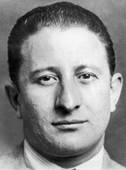
Carlo “Don Carlo” Gambino

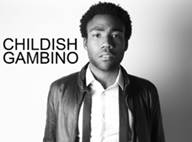
Childish Gambino (Donald Glover)

Kara Church

Technical Editor, Advisory

Symitar Documentation Services

Posted by: Jack Henry | August 8, 2017

Editor’s Corner: Floats!

Dear Editrix,

I wonder where floats got their name. Not the ice cream kind, but the parade kind. Do you happen to know?

Whatever Floats Your Boat

Dear Boat-Floater,

My guess was that parade floats are called “floats” because they are supposed to look like they are floating above the ground, sort of like they’re all hovercrafts. Apparently, though, I am wrong, as you will see in the article below. I’ve also included a few interesting tidbits about the history of floats themselves, along with some cute dog pictures, which are always welcome in Editor’s Corner. Enjoy!

From Wikipedia:

A float is a decorated platform, either built on a vehicle like a truck or towed behind one, which is a component of many festive parades, such as those of Mardi Gras in New Orleans…the United States Presidential Inaugural Parade, and the Tournament of Roses Parade. For the latter event, floats are decorated entirely in flowers or other plant material.

Parade floats were first introduced in the Middle Ages when churches used pageant wagons as movable scenery for passion plays. Artisan guilds were responsible for building the pageant wagons for their specified craft. The wagons were pulled throughout the town, most notably during Corpus Christi in which up to 48 wagons were used, one for each play in the Corpus Christi cycle.

They are so named because the first floats were decorated barges on the River Thames for the Lord Mayor’s Show.

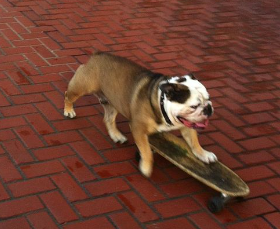
The largest float ever exhibited in a parade was a 116-foot-long (35 m) entry in the 2012 Tournament of Roses Parade that featured Tillman the skateboarding bulldog (and some of his friends) surfing in an 80-foot-long (24 m) ocean of water. The water tank held over 6,600 US gallons on a float weighing more than 100,000 pounds. It broke the previous record for the longest single-chassis parade float, which was set in 2010 by the same sponsor.

Tillman, the Skateboarding Bulldog

Surfing Bulldog (Tillman?) on Rose Bowl Parade Float

Kara Church

Technical Editor, Advisory

Symitar Documentation Services

Posted by: Jack Henry | August 7, 2017

Editor’s Corner: As Well As

In technical writing, we try to eliminate unnecessary words as much as possible. Therefore, I rarely use the phrase “as well as.” Why use three words when one word (“and”) will suffice?

However, not all writers practice minimalism. If communicating succinctly is not a concern, are the phrase “as well as” and the word “and” completely interchangeable?

In some sentences, it seems that way. For example, the following two sentences mean essentially the same thing:

· I have a turtle and a cat.

· I have a turtle as well as a cat.

Look closely, however, and you might notice a subtle difference. The word “and” gives equal weight to the two items in the list (the turtle and the cat). The second sentence subtly emphasizes the turtle and deemphasizes the cat.

Neither a pet turtle nor a pet cat is especially surprising, so the emphasis doesn’t matter much. But if you’re not careful, the phrase “as well as” can make it seem like you’re elevating something mundane over something surprising. Consider the following sentence:

· I have a Labrador retriever as well as a northern white rhino.

To me, this sentence is almost comical. It emphasizes the fact that I have a Labrador retriever (the most common dog breed) and treats as an afterthought the fact that I have a northern white rhino (of which there are three in the world).

Emphasizing the wrong part of a sentence might not be grammatically incorrect, but it can confuse your readers.

If the items in your list are equally important, use the word “and” and list the items in any order. If one of the items is more important and you decide to use the phrase “as well as,” list the most important item first.

Ben Ritter | Technical Editor | Symitar®
8985 Balboa Avenue | San Diego, CA 92123
619-682-3391 | or ext. 763391 | www.Symitar.com

Symitar Documentation Services

NOTICE: This electronic mail message and any files transmitted with it are intended
exclusively for the individual or entity to which it is addressed. The message,
together with any attachment, may contain confidential and/or privileged information.
Any unauthorized review, use, printing, saving, copying, disclosure or distribution
is strictly prohibited. If you have received this message in error, please
immediately advise the sender by reply email and delete all copies.
Posted by: Jack Henry | August 4, 2017

Editor’s Corner: Hind

As I was playing one of my favorite games the other day (Dropwords), I noticed a slightly disturbing trend of words I kept finding, including hind, hine, and hiney. Then, I get to work and what’s waiting for me? An article from Daily Writing Tips called Hind and Behind. I guess this is my version of “destiny.”

This post discusses the words in which the element hind, pertaining to location or movement in or to the rear, appear.

The adjective hind means “back” or “rear.” Hindbrain refers to the rear part of the brain. Hindquarters denotes the rear part of a four-legged animal, though the term is sometimes used informally in place of “buttocks,” and a hind shank is a cut of meat from the upper part of an animal’s hind leg. (Heinie, and its alternate spelling, hiney, are slang terms for the buttocks.)

To hinder is to hold or keep back, and something that does so is a hindrance. (Hinder is also a comparative of the adjective hind, meaning “more behind.”) Hindmost is a synonym for last, seldom used but widely known from the expression “The devil take the hindmost.” Hindsight means “perception of an event after it occurs” and is usually seen in the phrase “in hindsight” or in the expression “Hindsight is twenty-twenty,” which means that one’s vision is clear (at 20/20 acuity) in retrospect because it is easier to analyze and judge an event after the fact than before it occurs.

Hinterland, taken directly from German, means “back country,” connoting an area far inland or remote from urban areas.

Behind stems from the Old English adverb and preposition behindan, meaning “after” or “at the back of”; the first syllable means “by,” and hindan means “from behind.” The compound behindhand, serving as an adjective and an adverb, means “in a backward state” (of development or thinking) or “in the rear”—or, perhaps formed on the model of beforehand, “unable to pay.”

Kara Church

Technical Editor, Advisory

619-542-6773 | Ext: 766773

Symitar Documentation Services

NOTICE: This electronic mail message and any files transmitted with it are intended
exclusively for the individual or entity to which it is addressed. The message,
together with any attachment, may contain confidential and/or privileged information.
Any unauthorized review, use, printing, saving, copying, disclosure or distribution
is strictly prohibited. If you have received this message in error, please
immediately advise the sender by reply email and delete all copies.

I guess we should start with a definition—because seriously, how many people can explain what a conjunctive adverb is? In all the world, I think maybe twelve.

· conjunctive: serving to join; connective

· adverb: a word or phrase that modifies or qualifies an adjective, verb, or other adverb or a word group, expressing a relation of place, time, circumstance, manner, cause, degree, etc. (e.g., gently, quite, then, there)

Conjunctive adverbs join two clauses—so do coordinators (like and, but, so, etc.), but conjunctive adverbs are considered more formal and are used much more often in professional writing than they are in everyday speech. They are different from coordinators because conjunctive adverbs can move around in the sentence. Snazzy, right? Now, I’ve got your attention!

In the following sentences, the conjunctive adverbs are italicized.

· I am happy; therefore, I will sing and dance for you.

· I am a fairly good singer; however, I dance like a wounded giraffe.

Watch how deftly I can move the conjunctive adverbs:

· I am happy; I will, therefore, sing and dance for you.

· I am a fairly good singer; I dance like a wounded giraffe, however.

You can’t do that with coordinators like and, but, and so. Try moving so and but in the following sentences (while retaining the same meaning).

· I am happy, so I will sing and dance for you.

· I am a fairly good singer, but I dance like a wounded giraffe.

Coordinators are stubborn; they can’t be moved.

Why should you care? Because conjunctive adverbs have many uses that can improve the clarity of your writing; they show how two clauses are connected.

· They can add to previous information (furthermore, in addition, moreover).

· The can contrast (notwithstanding, nonetheless, nevertheless, in contrast).

· They can illustrate (for example, for instance).

· They can summarize (in short, in sum).

· They can show sequence in time or logic (consequently, therefore, thus).

· They can emphasize (certainly, indeed).

You don’t have to remember what they’re called; however, you may occasionally find conjunctive adverbs useful in your professional writing. Furthermore, you can use them in speech (when you’re at the grocery store, the gym, or the local brewery) to impress the locals. You should certainly use them sparingly so as not to sound too pretentious. In sum, conjunctive adverbs may have a confusing name, but they’re easy enough to use. Indeed, they are.

Donna Bradley Burcher | Senior Technical Editor | Symitar®

8985 Balboa Ave. | San Diego, CA 92123 | Ph. 619.278.0432 | Extension: 765432

Symitar Technical Publications Writing and Editing Requests

NOTICE: This electronic mail message and any files transmitted with it are intended
exclusively for the individual or entity to which it is addressed. The message,
together with any attachment, may contain confidential and/or privileged information.
Any unauthorized review, use, printing, saving, copying, disclosure or distribution
is strictly prohibited. If you have received this message in error, please
immediately advise the sender by reply email and delete all copies.
Posted by: Jack Henry | August 2, 2017

Editor’s Corner: The first one is free!

Dear Editrix,

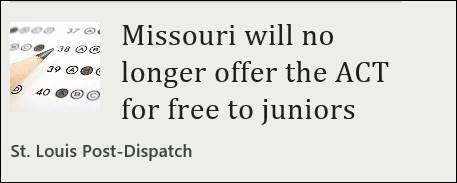
Is it correct to say “for free” in this headline… or anywhere for that matter? It just sounds awkward to me.

Sincerely,

Land of the Free

Dear Free,

As always, an excellent question from one of our readers—you are so thoughtful and smart.

As far as a definite answer, I’m afraid I don’t have one. I was looking into several resources, and here’s what I found overall.

Sticklers, strict grammarians, grammar police—whatever you may want to call them—say that for free is grammatically incorrect. Here is the rationale, from The Grammar Monster:

1) For free is grammatically unsound. A preposition must sit before something functioning as a noun (i.e., a noun, a pronoun, or a noun phrase). Since free is an adjective, it cannot be preceded by the preposition for.

2) For free is logically unsound. Strict grammarians state that for is a shortened version of in exchange for, and free is a shortened version of free of charge. So, if both were expanded to their full versions, we would have in exchange for free of charge, which is nonsensical.

So, the proper thing is to refer to something as free.

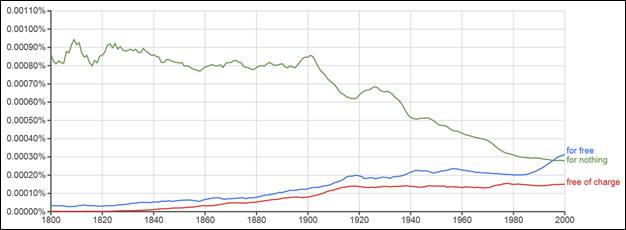
Now on the other hand, some people will tell you for free is fine. It’s a commonly used idiom, and it is used with increasing frequency. As you can see on the chart below, the use of for free has surpassed the use of free of charge and for nothing.

From Google Books Ngram Viewer:

I would suggest that you can use for free when you are talking casually, but to stick with free or free of charge when writing to a professional audience.

Kara Church

Technical Editor, Advisory

Symitar Documentation Services

Posted by: Jack Henry | August 2, 2017

Recall: Editor’s Corner: The first one is free!

Kara Church would like to recall the message, “Editor’s Corner: The first one is free!”.
NOTICE: This electronic mail message and any files transmitted with it are intended exclusively for the individual or entity to which it is addressed. The message,
together with any attachment, may contain confidential and/or privileged information.
Any unauthorized review, use, printing, saving, copying, disclosure or distribution is strictly prohibited. If you have received this message in error, please immediately advise the sender by reply email and delete all copies.

Posted by: Jack Henry | August 2, 2017

Editor’s Corner: The first one is free!

Dear Editrix,

Is it correct to say “for free” in this headline… or anywhere for that matter? It just sounds awkward to me.

Sincerely,

Land of the Free

Dear Free,

As always, an excellent question from one of our readers—you are so thoughtful and smart.

As far as a definite answer, I’m afraid I don’t have one. I looking into several resources, and here’s what I found overall.

Sticklers, strict grammarians, grammar police—whatever you may want to call them—say that for free is grammatically incorrect. Here is the rationale, from The Grammar Monster:

1) For free is grammatically unsound. A preposition must sit before something functioning as a noun (i.e., a noun, a pronoun, or a noun phrase). Since free is an adjective, it cannot be preceded by the preposition for.

2) For free is logically unsound. Strict grammarians state that for is a shortened version of in exchange for, and free is a shortened version of free of charge. So, if both were expanded to their full versions, we would have in exchange for free of charge, which is nonsensical.

So, the proper thing is to refer to something as free.

Now on the other hand, some people will tell you for free is fine. It’s a commonly used idiom, and it is used with increasing frequency. As you can see on the chart below, the use of for free has surpassed the use of free of charge and for nothing.

From Google Books Ngram Viewer:

I would suggest that you can use for free when you are talking casually, but to stick with free or free of charge when writing to a professional audience.

Kara Church

Technical Editor, Advisory

Symitar Documentation Services

Posted by: Jack Henry | August 1, 2017

Editor’s Corner: How to Write About Expanding Lists

Expandable and collapsible lists allow user interface designers to fit more content on a smaller screen (like a tablet, a phone, or a watch).

These lists don’t have a consistent appearance across all programs. The most common ways to indicate that lists can be expanded or collapsed are with arrows or with plus and minus signs.

Arrows

In Windows® 8 File Explorer, Microsoft® uses different types of arrows to indicate which folders can be expanded and collapsed.

· A blank right-pointing arrow indicates that the Desktop, Documents, and Pictures folders can be expanded.

· A darkened down-pointing arrow indicates that the This PC folder is already expanded (and can therefore be collapsed).

Tip: Some people call these arrows twisties, but this jargon could confuse readers. I prefer the more descriptive terms used in the Microsoft Manual of Style: “blank right-pointing arrow” and “darkened down-pointing arrow.”

Plus and Minus Signs

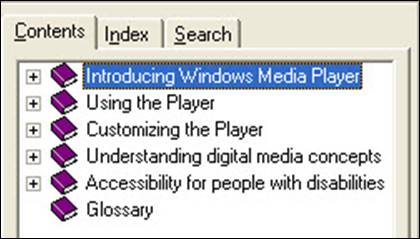
In compiled HTML (CHM) files, Microsoft uses plus and minus signs instead of arrows, as in the following screenshot.

Consider Your Audience

When deciding how to describe expandable and collapsible lists, consider your audience.

Experienced computer users will understand an instruction like, “Expand the Documents folder” without being told what to click. It is not necessary to differentiate between arrows, plus and minus signs, and other exotic icons.

Beginners might benefit from a more detailed instruction such as, “Click the blank right-pointing arrow to expand the Documents folder.”

Example (for experienced users): To view additional topics, expand Introducing Windows Media Player.

Example (for beginners): To view additional topics, click the plus sign (+) to expand the Introducing Windows Media Player book.

Ben Ritter | Technical Editor | Symitar®
8985 Balboa Avenue | San Diego, CA 92123
619-682-3391 | or ext. 763391 | www.Symitar.com

Symitar Documentation Services

NOTICE: This electronic mail message and any files transmitted with it are intended
exclusively for the individual or entity to which it is addressed. The message,
together with any attachment, may contain confidential and/or privileged information.
Any unauthorized review, use, printing, saving, copying, disclosure or distribution
is strictly prohibited. If you have received this message in error, please
immediately advise the sender by reply email and delete all copies.

Posted by: Jack Henry | July 31, 2017

Editor’s Corner: Biweekly and Bimonthly

The other day, I received an email asking if I’d heard biweekly means both “twice a week” and “every two weeks.” Oh yes, I’ve heard about it and read about it, and I’ve also been in a roomful of writers trying to confuse each other using the term. What an extra special kind of fun that was, dear readers.

Here are the definitions of biweekly and a similar word, bimonthly, from Merriam-Webster:

biweekly

1. occurring twice a week

2. occurring every two weeks : fortnightly [KC – I think we should take this opportunity to start using
fortnightly more often!]

bimonthly

1. occurring every two months

2. occurring twice a month : semimonthly [KC – Semimonthly means twice a month, not how long it takes to cross the states in an 18-wheeler.]

And here is a brief article on the topic, also from Merriam-Webster:

What do bimonthly and biweekly mean?

Many people are puzzled about bimonthly and biweekly, which are often ambiguous because they are formed from two different senses of bi-: “occurring every two” and “occurring two times.” This ambiguity has been in existence for nearly a century and a half and cannot be eliminated by the dictionary. The chief difficulty is that many users of these words assume that others know exactly what they mean, and they do not bother to make their context clear. So if you need bimonthly or biweekly, you should leave some clues in your context to the sense of bi- you mean. And if you need the meaning “twice a,” you can substitute semi- for bi-.

I think to be safe, I’d do a little more than drop a hint so people know what you’re talking about. Unless, of course, your clue is “I’ll see you twice a week,” “I’ll see you every other week,” or “Let’s meet fortnightly, Mr. Lincoln, so we can have tea parties twice a month!”

Kara Church

Technical Editor, Advisory

619-542-6773 | Ext: 766773

Symitar Documentation Services

NOTICE: This electronic mail message and any files transmitted with it are intended
exclusively for the individual or entity to which it is addressed. The message,
together with any attachment, may contain confidential and/or privileged information.
Any unauthorized review, use, printing, saving, copying, disclosure or distribution
is strictly prohibited. If you have received this message in error, please
immediately advise the sender by reply email and delete all copies.

« Newer Posts - Older Posts »

Categories