Hey folks! I hope you’re enjoying the short week. I’m back with a few more colors from the Merriam-Webster color quiz. Today I picked what I call the “calm” or “dull” colors. I think of these as wall colors (though if you saw some of my walls, you would know that I like a lot of color for those, too).
Sepia brings to mind old photography, but more on that later. First the M-W definition, the color swatch from the quiz, and then etymological information from the Online Etymology Dictionary.
greige (pronounced like beige)
1 : being in an unbleached undyed state as taken from a loom—used of textiles
2 : of a color that blends gray and beige : of the color greige

Greige is not in the etymology list. Judging by the Google™ responses, it’s all about paint colors. There was one response that said is from grège, the word for unbleached, raw silk in France. I don’t think I’m a fan.
Now, the next gray is more my style. It is more blue-gray than yellow-gray (or beige-gray or greige).
manatee
: any of a genus (Trichechus of the family Trichechidae) of large, herbivorous, aquatic mammals that inhabit warm coastal and inland waters of the southeastern U.S., West Indies, northern South America, and West Africa and have a rounded body, a small head with a squarish snout, paddle-shaped flippers usually with vestigial nails, and a flattened, rounded tail used for propulsion

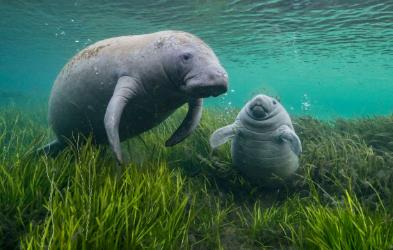
Manatee doesn’t even get the label “color” according to the dictionary. The color is named for the creature! I’ve never seen one in the wild, but I haven’t been to the right places. Here is a picture of a mamma manatee and her chubby little trooper, sporting beautiful manatee-gray skin.
And finally, sepia.
sepia
1a: a brown melanin-containing pigment from the ink of cuttlefishes
b: the inky secretion of a cuttlefish
2: a print or photograph of a brown color resembling sepia
3: a brownish-gray to dark olive-brown color

"rich brown pigment," 1815, from Italian seppia "cuttlefish," from Latin sepia "cuttlefish," from Greek sēpia "cuttlefish," a word of uncertain origin.
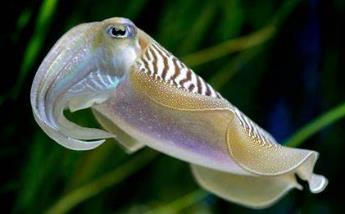
First, the common cuttlefish:
And second, why did I associate the color sepia with photos? Well, I remembered that was the color used to describe old photos, such as this:
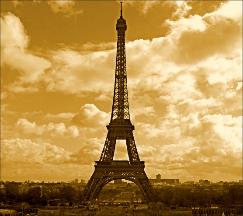
I thought that was just how old photos aged: black and white, or sepia. But there’s more to it than that. As some of you know, silver is a primary component of analog photos, as part of the film.
There were different mixes of silver involved in developing film, and eventually sepia was found to be more stable than silver. Sepia was also more resistant to pollutants, so people started using cuttlefish goo to develop film because the photos lasted longer.
Now we don’t even need to carry a camera…just a phone. Amazing.
Kara Church | Technical Editor, Advisory | Knowledge Enablement
Pronouns: she/her | Call via Teams | jackhenry.com
Editor’s Corner Archives: https://episystechpubs.com/
 Editor's Corner
Leave a comment