Good morning!
I was trying to think of some topics for the next couple of weeks, and I thought I’d check Merriam-Webster for ideas. I saw this photo and I had to see what the topic was:
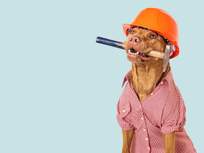
The topic? Odd Jobs Quiz.
I was curious, so I looked at the quiz. It reminded me of an article that I wrote years ago about English names that are derived from jobs our ancestors had.
Here are some of the jobs from the quiz. Enjoy!
cooper
Coopers make and repair wooden barrels and tubs. Cooper can be traced to the Latin cupa meaning “cask.” People with the last name Cooper probably have a barrel maker somewhere in their lineage.
sawyer
Lumber cutter; someone who saws.
fletcher
A person who makes arrows. The term fletcher comes from the Anglo-French word for “arrow.”
tanner
A tanner is someone who tans the hides of animals to produce leather goods. [KC – Or someone who spends a lot of time
in the sun.]
chandler
A maker or seller of tallow or wax candles and usually soap.
Chandler can be added to other products to indicate someone is a retailer in that specific area (e.g., a yacht chandler).
I had to look at the etymology for chandler to see if they mention “chandeliers.” It can’t be a coincidence that both candles and chandeliers are sources of light. According to the Online Etymology Dictionary:
"maker or seller of candles," late 14c., attested as a surname from late 13c. (also, from early 14c. "candle-holder;" see chandelier), from Old French chandelier (n.2) "candle-maker, candle-seller; person in charge of lighting a household, monastery, etc.," from Medieval Latin candelarius "a candle-maker," from candela "candle" (see candle). Native candleman is attested from mid-13c. By 1580s the word also came to mean "dealer in provisions, merchant."
wainwright
A wagon-builder.
wain from the Old English for “wagon;” wright comes from an Old English word for “worker.”
lapidary
A cutter, polisher, or engraver of precious stones usually other than diamonds.
Derived from the Latin lapis meaning “stone,” a lapidary cuts, polishes, and engraves precious gems. The word can also be used as an adjective to describe that which is precise and elegant.
stevedore
Stevedores load and unload ships at a port. Stevedore can be traced to the Spanish estibar, meaning “to pack.”
haberdasher
In the U.S., haberdasher means “a dealer in men’s clothing and accessories.” In British English, it refers to someone selling sewing supplies like needle and thread. [KC – Before I moved here from Seattle, I lived over a haberdashery. They only sold hats, but there was something very freaky about it, especially at night.]
farrier
Farriers specialize in shoeing horses, a practice that includes shaping the shoe as well as trimming and cleaning the hoof. Farrier can be traced back to the Latin word ferrum meaning “iron.”
sexton
A sexton is “a church officer or employee who takes care of the church property and performs related minor duties (such as ringing the bell for services and digging graves).”
cordwainer
I grabbed this information from the Online Etymology Dictionary because it is a more thorough definition:
"shoemaker, leatherworker," originally "a worker in Cordovan leather," mid-14c.; mid-12c. as a surname, from Anglo-French cordewaner, from Old French cordoan "(leather) of Cordova," the Spanish city whose leather was famous for quality.
catchpole
A catchpole usually refers to a sheriff’s deputy who arrests those who fail to pay a debt. Catchpole comes from the Anglo-French cachepole meaning “chicken chaser.”
Kara Church | Technical Editor, Advisory | Technical Publications
Pronouns: she/her | Call via Teams | jackhenry.com
Editor’s Corner Archives: https://episystechpubs.com/
 Editor's Corner
Leave a comment