Good morning! Today I’m going to let you in on a little pondering I’ve been doing.
During vacation, one of our stops was the Monarch Grove Sanctuary near Monterrey, California. The Monarch butterflies “winter” in Pacific Grove where the milkweed and climate is to their liking. A young woman was there with her son, singing him a lullaby about butterflies in French. A few days later, we went to dinner and I noticed the menu included farfalla pasta, which we translate as “bowtie” pasta, but it actually means “butterfly” pasta in Italian.
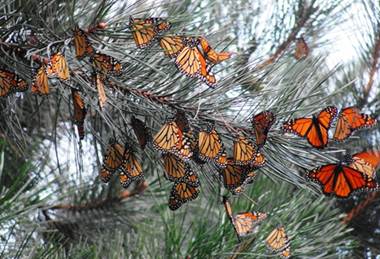
Monarch Butterflies
So this got me thinking about the words for “butterfly” in other languages. Butterfly, farfalla, papillon—why are they so different? Anyway, I found a web page where someone else was curious about the different words for butterflies. Here is my best translation and editing of the additional information from that page and from Merriam-Webster:
· English: butterfly from Middle English butterflie, from Old English buterflēoge, from butere butter + flēoge fly. Perhaps from the belief that butterflies (or witches in the shape of butterflies) stole milk and butter.
· Italian: farfalla
· French: papillon from Latin papilio
· Catalan: papallona (also from Latin papilio)
· Spanish (Castillian): mariposa from Mari (short for Maria, or “mari” [wife]) + the verb posar (pose)
· German: Schmetterling from a high-Saxon dialect and the Czech word for “cream.” This relates to the propensity of butterflies to flutter around milk pails or butter churns. German and English folklore are similar, that witches transformed into butterflies to steal milk products.
· Modern Greek: πεταλούδα (petalouda) meaning petal or leaf, reflecting the shape of butterfly wings.
Kara Church
Senior Technical Editor

 Editor's Corner
Leave a comment