Good afternoon! Today we’re going to cover one of the questions I’ve received several times in the last month.
Dear Editrix,
Sometimes I get a little confused with the wide selection of prepositions available in English. When I am in the back yard, should I jump on to the trampoline, or should I jump onto the trampoline?
Sincerely,
Trampoline Tilly
Dear Tilly,
Here are some brief rules and examples for “on to” and “onto” from grammarbook.com. If you want even more on the subject (and pictures) try the Purdue OWL (http://owl.english.purdue.edu/owl/resource/594/02/).
On To vs. Onto
Rule 1: In general, use onto as one word to mean on top of, to a position on, upon. Use onto if you can use up before on.
Examples:
He climbed (up) onto the roof.
Let’s step onto the dance floor.
She held on to her child in the crowd.
I’m going to log on to the computer.
Rule 2: Use onto when you mean fully aware of; informed about.
Example: We canceled Julia’s surprise party when we realized she was onto our plan.
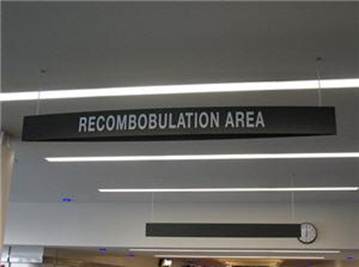
And this, from Kevin Campion, is a new word from the Milwaukee airport. It seems they have a good sense of humor.
NOTICE: This electronic mail message and any files transmitted with it are intended
exclusively for the individual or entity to which it is addressed. The message,
together with any attachment, may contain confidential and/or privileged information.
Any unauthorized review, use, printing, saving, copying, disclosure or distribution
is strictly prohibited. If you have received this message in error, please
immediately advise the sender by reply email and delete all copies.
 Editor's Corner
Leave a comment